June 12, 2023
by Joseph Fitsanakis
 THE 49-PAGE GRAND JURY indictment, filed last week in Florida by the United States Department of Justice, contains 37 criminal charges against former president Donald Trump. The charges can be summarized into a two-fold accusation: Trump is alleged to have stolen more than 300 classified documents upon leaving the White House in January 2021. Moreover, he allegedly schemed with a group of advisors and aides in order to obstruct efforts by the government to retrieve the stolen documents. Both accusations are spelled out in stark detail in the pages of the indictment.
What remains unanswered, however, is the motive. Why did Trump allegedly take several hundred classified documents from the White House? Did he select specific documents to purloin? And, if so, why these specific documents? Lastly, why did the former president go to such pains to frustrate the government’s efforts to recover the documents? There has been intense public speculation about the answers to these questions. Yet the grand jury indictment does not appear to attempt to establish the possible motive behind the alleged crime. Nor  does it need to. Establishing a motive is not required in order to demonstrate the need for a trial, or indeed a conviction. Given the high stakes of this case, however, establishing a motive can provide much-needed clarity in the public sphere.
Accidental or Malicious?
It is important to clarify with precision what the grand jury indictment does not state: its pages do not contain any suggestion that Trump took possession of the classified documents in order to share them with specific individuals or entities, American or foreign. Nor does the indictment suggest that the former president intended to use the classified information in his possession for personal financial gain —for instance to promote his investment ventures at home or abroad, or to gain leverage and win over potential business partners.
So, why did Trump do it? As The New York Times explained on Sunday, the indictment does offer some hints of motives, if one reads between the lines. One possible explanation stems from Trump’s time in the White House, during which he learned to associate his access to classified information as a paramount perk that came with being president of the United States. It follows that, retaining access to classified information was a way for him to maintain control over the office of the presidency. That strong need intensified even more after January 2021, as Trump was clearly “not ready to let go of the perks of holding the highest office in the country”. Indeed, the indictment describes several examples that reveal the strong sense of ownership that the former president felt about the classified documents he kept at his private residence at Mar-a-Lago, as well as  his determination to keep them in close proximity to his office and sleeping quarters.
Tertiary Motives
A plausible tertiary motive for Trump’s alleged crimes is the leverage and status that access to secrets can bestow upon an individual. It is possible that Trump viewed the classified documents as the apogee of the long list of his material prizes and trophies —as an important physical legacy of the zenith of his career. That would also explain why he allegedly fought so determinedly to keep the documents in his possession, even after he was told in no uncertain terms by the government that they did not belong to him. Moreover, as The Times notes, the former president may view his classified document collection as a way to insure his legacy —for instance as a means of rebutting critics of his policies and decisions while he was in office, or even as potential “payback against perceived enemies”.
But these motives are probably less prominent in Trump’s mind. A strong and deeply held sense of ownership of government information, no matter their classification grade, is likely the driving motive behind the alleged crimes. As The Washington Post noted in an insightful article in 2022, aides to the former president said that he appeared sincere and genuine about his conviction that the classified documents “were his, not the government’s”. When he was advised otherwise by his own aides, he noticeably “gravitated toward lawyers and advisers who indulged his  more pugilistic desires”, according to the paper. His attitude was not a show. It was sincere. Moreover, there is no reason to believe that it has subsided since his indictment.
A Genuine Conviction of Ownership
Trump’s latest legal woes are rooted in his genuine belief that access to classified information is something he is owed —not simply because he served as president of the United States, but because, in his mind, he should still be in the Oval Office. These deeply entrenched beliefs are unlikely to be abandoned by the former president, regardless of the cost. More importantly, these same beliefs are passionately shared by millions of his supporters. The latter are sufficient in number to wreak havoc in the Republican Party and radically reshape American politics for years to come. If Trump avoids trial or a prison sentence, his support base will view such an outcome as a form of noble victory against the “deep state”. It is therefore likely to be energized, possibly like never before. Should Trump be jailed or seek political asylum abroad in order to evade incarceration, the American political landscape will undergo a major earthquake. Regardless of the outcome of this unprecedented saga, stormy waters seem to lie ahead.
► Author: Joseph Fitsanakis | Date: 12 June 2023 | Permalink
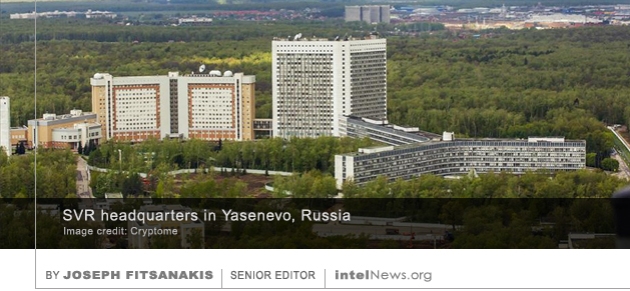 MEMBERS OF A PROLIFIC hacker group that many associate with Russian intelligence impersonated Microsoft technicians in order to compromise nearly 40 government agencies and companies around the world. Microsoft security researchers said last week that the “highly targeted” social engineering campaign was guided by “specific espionage objectives” by the hackers.
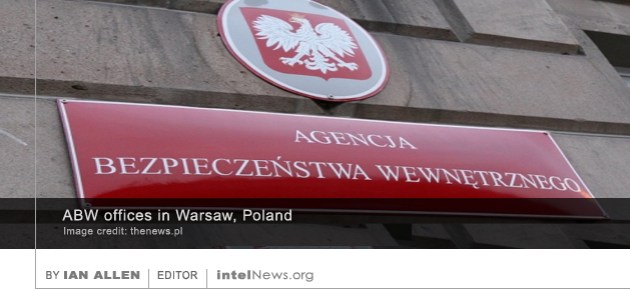 DURING THE COLD WAR, Poland hosted the Eastern Bloc’s only known intelligence training facility for operations officers situated outside of the Soviet Union. The highly secretive training facility operated out of a heavily guarded compound located near the northern Polish village of Stare Kiejkuty in Gmina Szczytno county, approximately 65 miles from the Polish-Soviet border. Today, 50 years after its establishment, the facility continues to train the operations officers of post-communist Poland’s intelligence services.
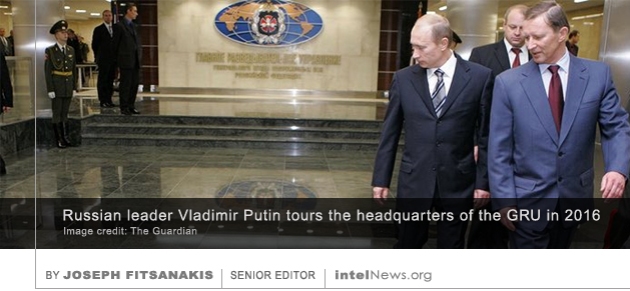 THE BRAZILIAN GOVERNMENT IS blocking requests from the United States and Russia to extradite an alleged Russian deep-cover spy, whose forged Brazilian identity papers were discovered by Dutch counterintelligence. Sergey Cherkasov was
 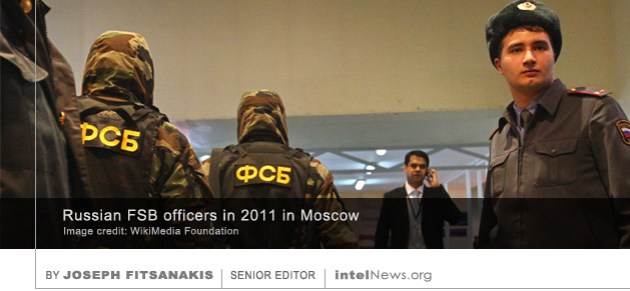 AN INVESTIGATIVE REPORT BY the Wall Street Journal discusses a little-known Russian counterintelligence unit that targets foreign diplomats in ways that often “blur the lines between spycraft and harassment”. Among other activities, this secretive unit is likely behind a string of operations targeting American citizens, which have led to the arrest of at least three of them since 2018. These include the Wall Street Journal correspondent Evan Gershkovich, who earlier this year became the first American reporter to be held in Russia on espionage charges since the Cold War.
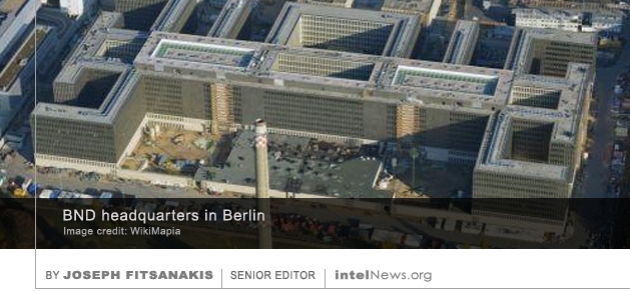 CONTRARY TO EARLIER CLAIMS that the German intelligence agencies failed to anticipate last month’s showdown between PMC Wagner and the Kremlin, German intelligence did in fact have foreknowledge of the mercenary group’s uprising, a new investigative report has concluded. The report further claims that German intelligence had unique and real-time insights into the negotiations between Wagner PMC leader Yevgeny Prigozhin and Belarussian President Aleksandr Lukashenko, who intervened in the dispute.
 AUTHORITIES IN BRAZIL HAVE launched a nationwide probe into the abuse of the country’s citizenship documentation system by Russian spies, who are allegedly using it to build forged identities.
 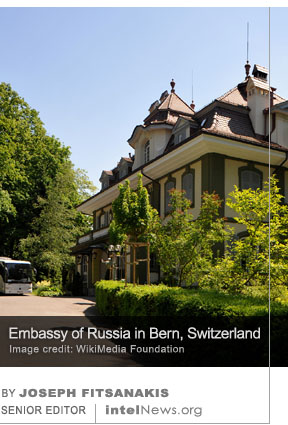 INTENSIFYING COMPETITION BETWEEN THE superpowers has turned Switzerland into an espionage battlefield, with more foreign spies being active there than in most other European countries, according to a new report. The
 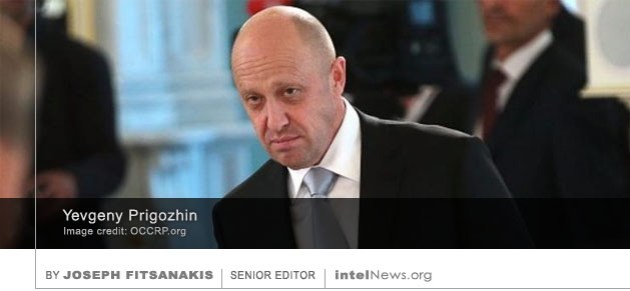 IN THE EARLY HOURS of June 23, PMC Wagner leader Yevgeny Prigozhin declared the launch of an armed campaign against the Ministry of Defense of the Russian Federation. Within hours, several thousand soldiers belonging to Wagner, one of the world’s largest private military companies, had abandoned their positions in eastern Ukraine and were en route to Moscow. Their mission, according to Prigozhin, was to arrest Minister of Defense Sergei Shoigu and Chief of the General Staff Valery Gerasimov, and try them for mismanagement and corruption.
 Wagner leader has repeatedly expressed his dismay at being viewed as an outsider by the Ministry of Defense, which it views as an elitist and incompetent bureaucracy. His experience in Ukraine, where Wagner’s forces faced stiff resistance from the local population and the Ukrainian military alike, added fuel to his rage against a host of Russian defense officials. Prigozhin has been voicing his denunciations of the way these officials have managed the war since March of 2022, just two weeks into the invasion of Ukraine.
 THE RUSSIAN INTELLIGENCE SERVICES planned to assassinate a Russian former intelligence officer, who had defected to the United States and was living in an apartment complex in Florida, according to a new report. The alleged assassination plan is discussed in the forthcoming book Spies: The Epic Intelligence War Between East and West (Simon and Schuster), authored by Harvard University academic Calder Walton.
 THE FORMER DEPUTY DIRECTOR of Luxembourg’s intelligence service, who is wanted by the United States for his role in a $4 billion cryptocurrency scam, reportedly vanished last month while under house arrest in France. Frank Schneider, 53, a citizen of Luxembourg, served as deputy director for operations in Luxembourg’s spy agency, the Service de Renseignement de l’État Luxembourgeois (SREL). In 2008, he left that post to start his own security and consultancy firm, Sandstone. His name came up frequently in the context of a
 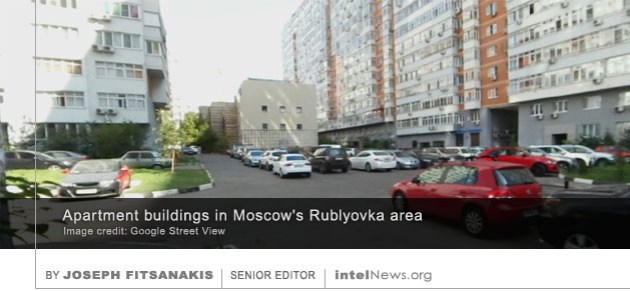 A SERIES OF COORDINATED drone strikes that struck Moscow last week were not random, but may in fact have targeted the homes of senior Russian intelligence officials, according to a new report by an American television network, which cited knowledgeable sources and data by an open-source research firm.
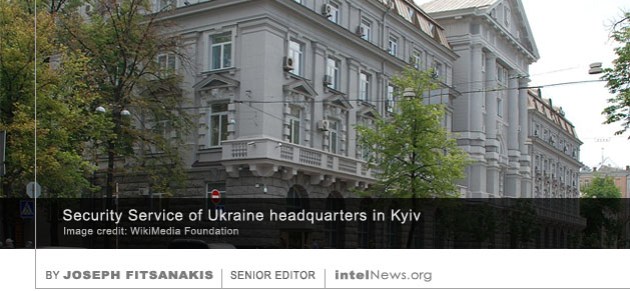 THE UKRAINIAN INTELLIGENCE SERVICES are training and arming cells of saboteurs inside Russia, who are responsible for several acts of sabotage on Russian soil, including a recent attack on the Kremlin, according to CNN. In an
 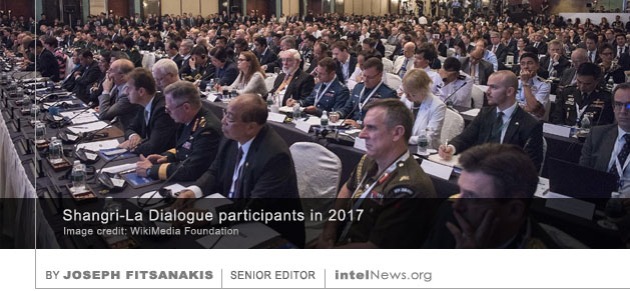 SENIOR REPRESENTATIVES FROM OVER 20 intelligence agencies from around the world, including the United States and China, reportedly participated in a secret meeting in Singapore last week. The meeting allegedly took place in parallel to the Shangri-La Dialogue, a high-level security conference held annually in Singapore. The conference, focused on security issues in the Asia-Pacific region, has been organized since 2002 by the International Institute for Strategic Studies (IISS), a London-based think-tank.






 intelNews.org
China’s intelligence modernization has outpaced military increases: British report
August 9, 2023 by Joseph Fitsanakis 4 Comments
The redacted version of the report was issued last month by the British Parliament’s Intelligence and Security Committee, which monitors the activities of the British intelligence community. It concentrates on China’s domestic and global ambitions and discusses the role of the Chinese intelligence services in these pursuits. A theme that permeates the 222-page report is that China’s domestic and international ambitions are interconnected, as Beijing does not distinguish between its key national interests in the domestic and foreign domains. Moreover, the report notes that the Chinese intelligence community plays a central role in both facets.
The report notes that China “almost certainly maintains the largest state intelligence apparatus in the world”, dwarfing those of its Western rivals. The latter are forced to concentrate their counterintelligence work “on those aspects that are most demanding”. The official Chinese intelligence agencies are three, the report notes; they consist of the Ministry of State Security and the Ministry of Pubic Security —both of which are civilian— as well as the Strategic Support Force of the Chinese People’s Liberation Army. The latter provides signals intelligence support, whereas the two civilian agencies carry out a host of intelligence and counterintelligence duties.
Nevertheless, the Chinese state’s “whole-of-government” approach on matters of security means that almost every government agency fulfils some type of intelligence-related role. This makes it difficult to calculate with accuracy the full extent of the Chinese intelligence apparatus, the report notes.
Notably, Chinese intelligence agencies are focused primarily on what the Chinese government perceives as domestic threats to its rule, which Beijing has termed “the five poisons”. According to the report, these consist of: the Taiwanese independence movement; the separatist movements in Tibet and Xinjiang; the Falun Gong religious movement; and pro-democracy activism inside China. Intelligence collection and other operations that relate to the so-called “five poisons” include intelligence activities that take place abroad and target Chinese expatriate communities.
It is also worth noting that, according to the report, Beijing spends “almost 20% more on domestic security than on external defence”. Moreover, the rise in expenditures for intelligence infrastructure and operations is impressive by any standards of assessment and “has outpaced even China’s recent dramatic military modernization” of recent years, the report notes. The increase in spending “appears to have led to an improvement in capability”, the report concludes.
► Author: Joseph Fitsanakis | Date: 09 August 2023 | Permalink
Filed under Expert news and commentary on intelligence, espionage, spies and spying Tagged with China, Chinese Ministry of State Security, intelligence funding, Ministry of Public Security (China), Strategic Support Force (China)