Ex-NATO supreme commander warns of ‘Grexit security nightmare’
July 2, 2015 4 Comments
 An American former supreme allied commander of the North Atlantic Treaty Organization has warned that a possible Greek exit from the Eurozone “could become a geopolitical nightmare” for the European Union and NATO. James Stavridis, a retired four-start US Navy admiral, who served as NATO’s 16th Supreme Allied Commander Europe from 2009 to 2013, said solving the Greek crisis should not be left to the central bankers. In an article published Wednesday in Foreign Policy, Stavridis said the financial administrators that are handling the Greek crisis were not sufficiently cognizant of the massive geostrategic implications of a possible “Grexit”.
The retired admiral said that if the Greek economy continues its downward spiral, the country may not be able to fulfil its defense obligations to NATO, in which Greece has held full membership since 1952. As a result, the country may leave not only the EU, but also NATO. Neither organization has ever lost a member-state, said Stavridis, adding that such a development would constitute terra incognita and would “shake both organizations in fundamental ways” by weakening their broader ideological cohesion.
However, said Stavridis, chances are that Greece will remain a member of EU and NATO despite possibly exiting the Eurozone. But it would be “an angry disaffected and battered nation”, he said, and could thus wreak havoc in both organizations. The latter are consensus-driven, meaning that their actions depend on the unanimous agreement of all member-states. If Greece adopted an “uncooperative” attitude, it would easily bring both organizations to a halt when it comes to pressing issues, such the refugee crisis in the Mediterranean, sanctions against Russia over the war in Ukraine, the Iranian nuclear program, or even negotiations about transatlantic trade. Currently, Greece’s important geographic position means that its naval bases constitute the maritime flank of NATO during a critical time of tension in the eastern Mediterranean, said Stavridis.
And what if Greece, shunned by the West, started to look elsewhere for support? Russia, which shares strong historical and religious links with Greece, could be a “prospective partner” for Athens, argued Stavridis. If Moscow offered even marginal economic assistance to Athens, Greece could be tempted to further distance itself from its Western partners, both diplomatically and militarily.
Admiral Stavridis’ warning came a day after NATO Secretary-General Jens Stoltenberg said Greece had played “an important role in southern Europe as a NATO member” and urged Athens not to make cuts in its defense spending due to the ongoing economic crisis.
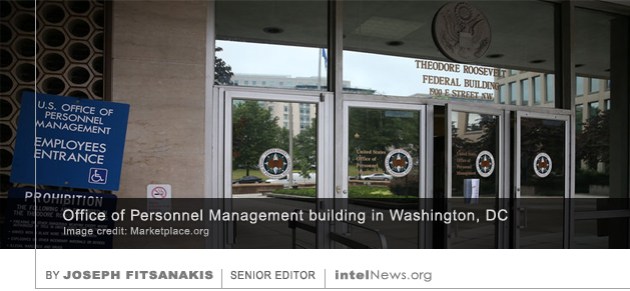 United States intelligence officials expressed concerns about a federal database containing details of security-clearance applications in the years prior to a massive cyber hacking incident that led to the theft of millions of personnel records. Up to
 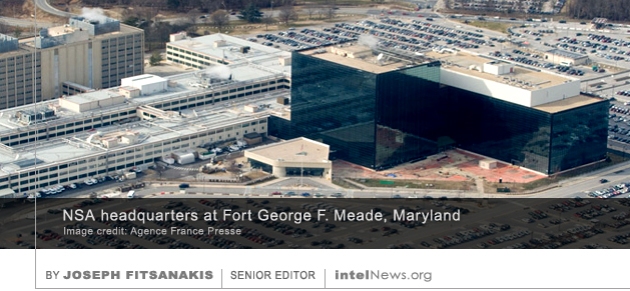 New information published by international whistleblower website WikiLeaks seems to suggest that the United States National Security Agency (NSA) collected information on export contracts by French companies and sought inside information on France’s position in international trade negotiations. According to the website, which
 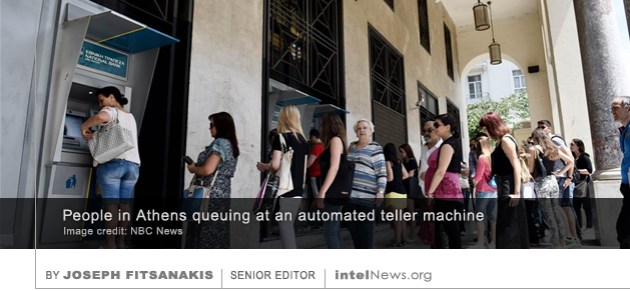 Several Western countries issued travel warnings for Greece on Sunday, as the Greek government shut down all banks and imposed capital controls following the breakdown of talks between Athens and the European Union.
 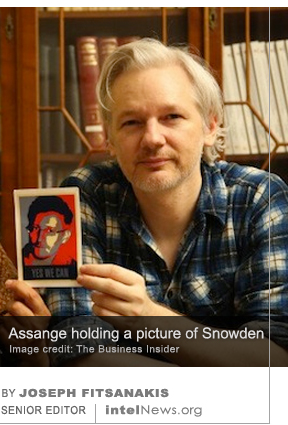 Leaders from all sides of the French political spectrum urged the French government on Thursday to offer political asylum, and even French citizenship, to the American defector Edward Snowden and to WikiLeaks founder Julian Assange. The calls were made in response to
  n in Syria and Iraq, the continuing crises in Ukraine and in Libya, as well as the financial meltdown in Greece. So there is a recognition that their intelligence agencies must continue to work together on several pressing issues.
 routine practice. However, I do believe that this regimen can easily be changed to address particular needs, through what is called a “presidential finding”, basically a direct order issued by the president of the United States to target an individual foreign leader.
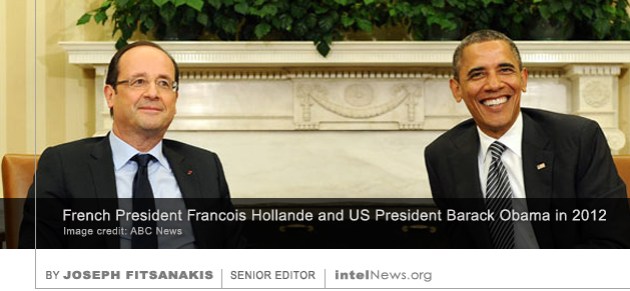 The president of France has convened an emergency meeting of the country’s highest national security forum in response to revelations that the United States spied on three French presidents. The Conseil de la Défense is to convene in Paris on Wednesday to discuss the emergence of documents that appear to implicate the US National Security Agency (NSA) in spying on Jacques Chirac and Nicolas Sarkozy, who ruled France from 1995 to 2012. The documents further indicate that the NSA may have also targeted the personal communications of Francois Hollande, France’s current head of state.
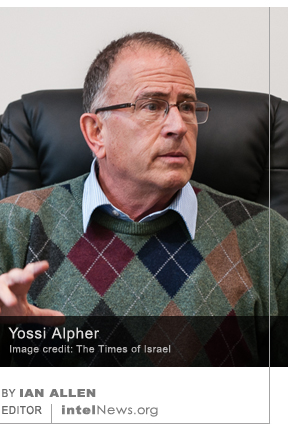 Yossi Alpher, a former Israeli intelligence officer, who was directly involved in numerous top-secret operations during his spy career, has published a new book that analyzes the overarching strategy behind Israel’s spy operations. Alpher served in Israeli Military Intelligence before joining the Mossad, where he served until 1980. Upon retiring from the Mossad, he joined Tel Aviv University’s Jaffee Center for Strategic Studies, which he eventually directed. Throughout his career in intelligence, Alpher worked or liaised with every Israeli spy agency, including the Shin Bet –the country’s internal security service.
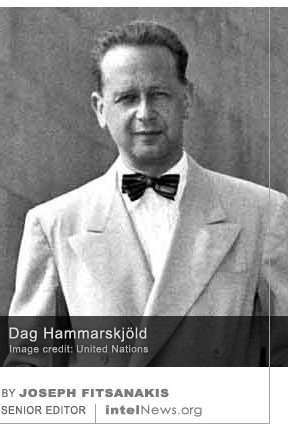 A panel of experts commissioned by the United Nations is about to unveil fresh evidence on the mysterious death in 1961 of UN secretary general Dag Hammarskjöld, who some claim was murdered for supporting African decolonization. The evidence could spark a new official probe into the incident, which has been called “one of the enduring mysteries of the 20th century”.
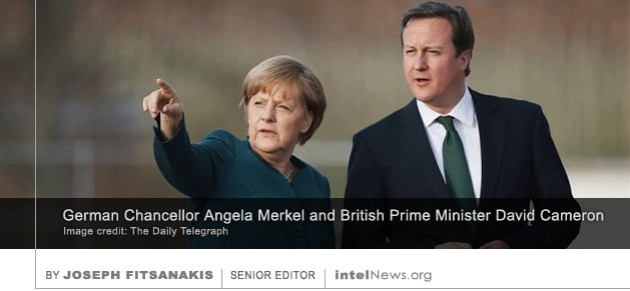 A German parliamentary committee investigating spying operations may take the German government to court in order to force it to give up secret documents on Berlin’s intelligence cooperation with Britain. The Committee of Inquiry into Intelligence Operations was set up in 2014, after files leaked by American defector Edward Snowden
 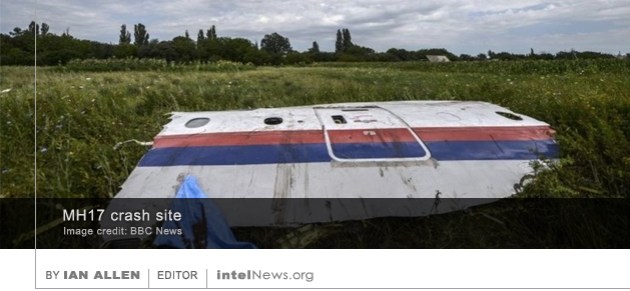 A German investigator, who is probing the downing of a civilian airliner over Ukraine nearly a year ago, says that an informant has claimed a multimillion reward for information pointing to those responsible for the attack. The investigator, Josef Resch, of Lübeck, Germany, says that a binding non-disclosure agreement does not allow him to reveal his client, who offered the $47 million reward. But he told German business magazine Capital that he is hopeful his client will soon reveal the details, since “people who pay that kind of money in exchange for information do not keep it for themselves”. However, he also hinted that his client may be an intelligence agency, who may decide to “deal with the matter without fanfare”.
 Australian law enforcement and intelligence agencies routinely use paid informants in Indonesia and Pakistan as part of a decade-old covert war against human traffickers in the Indian Ocean. This information has been revealed by The Australian newspaper in response to
 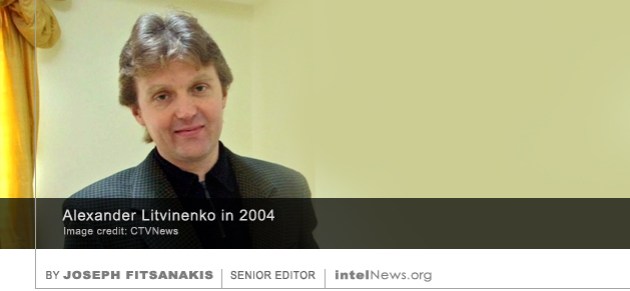 A Russian former intelligence officer, who is accused by the British government of having killed a former KGB spy in London, has agreed to testify at a public inquiry to be held in the British capital next month. British government prosecutors believe Russian businessman Dmitri Kovtun, who worked for the KGB during the Cold War, poisoned his former colleague in the KGB, Alexander Litvinenko, in 2006. Litvinenko was an officer in the Soviet KGB and one of its successor organizations, the FSB, until 2000, when he defected with his family to the United Kingdom. He soon became known as a vocal critic of the administration of Russian President Vladimir Putin. In 2006, Litvinenko came down with radioactive poisoning soon after meeting Kovtun and another former KGB officer, Andrey Lugovoy, at a London restaurant. He was dead less than two weeks later.
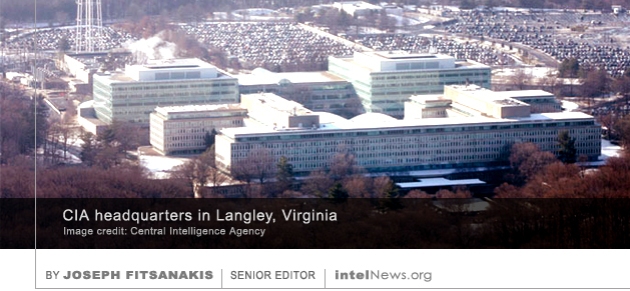 American Congressional lawmakers have voted to cut funding for the Central Intelligence Agency’s secret operations in Syria, in a surprise move that indicates growing concern on Capitol Hill with Washington’s strategy on the Syrian Civil War. The CIA’s involvement in the Syrian Civil War began in 2012, when US President Barack Obama






 intelNews.org
Cold War files show secret war between CIA and KGB in Canada
July 3, 2015 by Ian Allen Leave a comment
Much of the espionage activity by the two spy agencies concentrated on Toronto’s sizable Eastern European expatriate community, especially on immigrants with Ukrainian and Polish roots. In one document dating from 1959, a CIA officer details the profiles of 18 Canadian citizens, most of them Toronto residents, who were suspected by Langley to be working for the KGB. Most of them were believed to be non-official-cover operatives, or NOCs, as they are known in the US Intelligence Community. The term typically refers to high-level principal agents or officers of an intelligence agency, who operate without official connection to the diplomatic authorities of the country that employs them. The declassified document explains that the suspected NOCs had secretly traveled to the USSR after being recruited by the KGB. They were then trained as spies before returning to Canada years later under new identities.
Others, like a naturalized Canadian identified in the documents as Ivan Kolaska, were believed by the CIA to have immigrated to Toronto as part of a broader KGB effort to infiltrate the ranks of the anti-communist Eastern European expatriate community in Canada. Some of these infiltrators were able to settle in Canada, marry locals, get jobs and have families, while living a double life. The Star spoke to one Ukrainian immigrant to Canada whose name features in the declassified CIA files. Natalie Bundza, now 78, worked as a travel agent in 1950s’ Toronto and regularly led tourist groups to communist countries. She was a Ukrainian nationalist and anticommunist, but the CIA believed she was pretending to have these beliefs in order to infiltrate the Ukrainian expatriate community in Toronto. The American agency kept tabs on her and was able to compile a sizable file with information about Bundza’s friends and associates, her travel itineraries, and even the contents of her suitcases she took with her on international trips.
► Author: Ian Allen | Date: 3 July 2015 | Permalink: https://intelnews.org/2015/07/03/01-1728/
Filed under Expert news and commentary on intelligence, espionage, spies and spying Tagged with Canada, CIA, Cold War, declassification, history, immigration intelligence, Ivan Kolaska, Natalie Bundza, News, non-official-cover, Toronto (Canada), United States, USSR