Australia to deport Kazakh-born Irish woman for allegedly spying for Russia

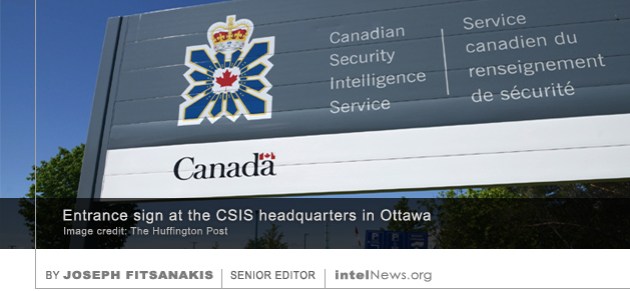
Irish National Space CentreTHE GOVERNMENT OF AUSTRALIA has ordered the deportation of a Kazakh-born Irish citizen, who is believed to be a spy for the Russian Federation, according to reports from Australia and Ireland. The woman in question has been identified as Marina Sologub, 39, an ethnic Russian who was born in Kazakhstan, but grew up in the Republic of Ireland.
Sologub reportedly spent her teenage years in Glanmire, a suburb of the city of Cork, located on Ireland’s southern coastline. She eventually enrolled at University College Cork, where she graduated with a degree in Politics and Governance. While still at university, Sologub worked for Bernard Allen, a member of parliament for Ireland’s center-right Fine Gael political party. She then worked full-time at the office of Willie Penrose, a parliamentarian for the left-of-center Labour Party, which is far smaller than Fine Gael.

In 2011, when she was in her late 20s, Sologub was hired by Ireland’s National Space Centre in Middleton, Cork, where she remained for 7 years. According to media reports, Sologub has claimed that she was instrumental in “the development of intergovernmental agreement between Republic of Ireland and Russia Federation in use of space for civil purposes” during her time at the National Space Centre.

In 2020, Sologub’s impressive résumé landed her a job with the British-headquartered international consultancy firm Deloitte in Australia. She moved to Australia in September of that year and worked for Deloitte for about a year, at which point she was hired by a private firm specializing in the space industry. She subsequently entered employment with the city council of Marion, a small suburb of Adelaide, the capital of South Australia.

On February 22, the Australian Security Intelligence Organisation (ASIO), which is tasked with counterintelligence, announced that Sologub’s visa was under investigation on suspicion of her role in international espionage. It was reported that Sologub had had “extensive interactions with diplomatic staff from the Russian embassy” in Australia, which began soon after she entered the country in 2020. Now Australia has announced Sologub’s deportation from the country. According to media reports, Sologub’s deportation is part of a wider operation that aims “to identify Russian intelligence workers among high-ranking employees” in Australian government and industry.

Author: Joseph Fitsanakis | Date: 27 February 2023 | Permalink

Russia covertly mapping key energy infrastructure for sabotage, Dutch report warns

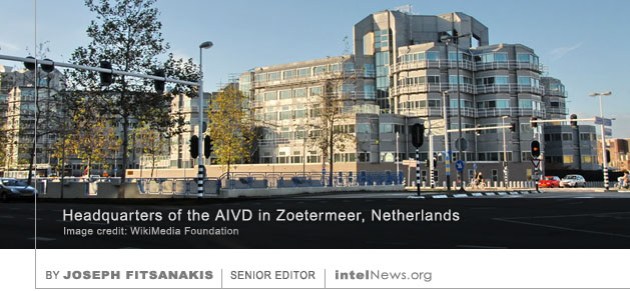
AIVD HollandTHE RUSSIAN INTELLIGENCE SERVICES are “covertly mapping” the energy infrastructure of the North Sea, in preparation for acts of disruption and sabotage, according to a new report form the Dutch government. The 32-page report was published this week, ahead of the one-year anniversary of the 2022 Russian invasion of Ukraine. It was authored collaboratively by the two main intelligence agencies of the Netherlands, the General Intelligence and Security Service (AIVD) and the Military Intelligence and Security Service (MIVD).
The report notes that Russian spy ships, drones, satellites and human agents are engaged in an unprecedented effort to chart the energy and other “vital marine infrastructure” of the North Sea. The purpose of this effort is to understand how the energy and other key infrastructure works in the North Sea. The term North Sea refers to the maritime region that lies between France, Belgium, the Netherlands, Germany, Denmark, Norway and the United Kingdom. It hosts key energy infrastructure, including oil, natural gas, wind and wave power installations, which supply energy to much of northern Europe.

According to the report, Russian intelligence and espionage activities in the North Sea “indicate preparatory acts of disruption and sabotage. These appear to be aimed at energy systems, but also other vital infrastructure, such as undersea power and communication cables, and even drinking water facilities. Consequently, physical threats toward any and all of these facilities should be viewed as conceivable, the report warns.

On Saturday, the Dutch government said it would expel an undisclosed number (believed to be at least ten) of Russian diplomats. It also accused Moscow of engaging in constant efforts to staff its diplomat facilities in the Netherlands with undercover intelligence officers. On the same day, the Dutch government said it would shut down its consulate in Russia’s second-largest city, St. Petersburg, and ordered Russia to shut down its trade mission in the port city of Amsterdam.

Author: Joseph Fitsanakis | Date: 21 February 2023 | Permalink

Russia’s spy networks in Europe see greatest post-Cold War setback, experts claim

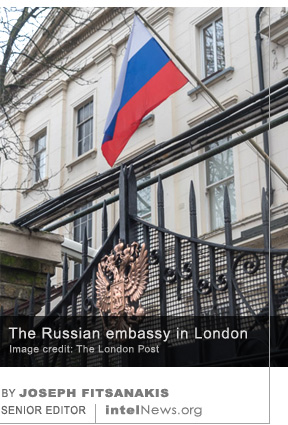
Russian embassy LondonRUSSIA’S ABILITY TO CONDUCT human intelligence operations in Europe has suffered greater damage in recent years than at any time since 1991, according to some experts. These setbacks have partly been caused by what The Washington Post refers to in a recent article as “a campaign to cripple Russian spy networks”, which is taking place across the continent. This Europe-wide campaign has grown in momentum since the Russian invasion of Ukraine and supplements boarder efforts to arm Ukraine in its war against the Kremlin.
The initial blow against the Kremlin’s spy network was delivered last year, when a wave of mass expulsions of Russian diplomats resulted in more than 400 suspected Russian intelligence officers being ordered to leave various European capitals. According to observes, the expelled Russian diplomats were in reality intelligence officers, who were active across Europe under diplomatic cover. Since that time, European counterintelligence agencies have launched a series of “precision strikes” against what remains of Russia’s human intelligence network across the continent.

The recent wave of expulsions of Russian intelligence personnel was not unprecedented. But it does suggest a degree of collaboration between Europe’s counterintelligence agencies that is difficult to match with historical examples. An interesting element in this collaboration is what The Washington Post describes as a “post-Ukraine shift in mind-set” in countries that had previously taken a softer approach toward the Kremlin. These include Germany, as well as Britain, which since 2018 has “refused on national security grounds over 100 Russian diplomatic visa applications”.

Russia’s response has been noticeably muted, and may mean that Moscow was caught off-guard by this Europe-wide counterintelligence campaign. The Post quotes Antti Pelttari, director of the Finnish Security and Intelligence Service (SUPO), who claims that the Russian capability to conduct human intelligence operations in Europe “has been degraded considerably”. This would imply that the Kremlin’s ability to carry out covert political action, such as political influence campaigns and related psychological operations, has been curtailed. Moreover, it is likely that the Russian intelligence services are unable to adequately assist the Kremlin’s decision-making capabilities with actionable information. Read more of this post

Tension mounts as South Korea launches largest anti-spying operation in 30 years

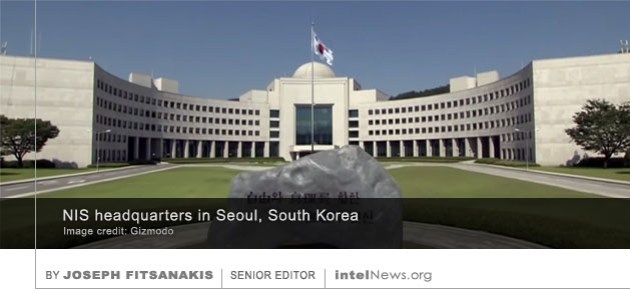
NIS South KoreaTENSION IS MOUNTING BETWEEN the government and opposition forces in South Korea, as the conservative administration of President Yoon Suk Yeol appears to be behind an effort to probe alleged links between senior liberal political figures and North Korean intelligence. The effort, which some commentators suggest could be the largest counter-espionage operation in the country’s history since 1992, is being led by the National Intelligence Service (NIS).
The operation came to light on January 18, when hundreds of police officers, led by NIS officers, conducted search raids at a number of regional offices of the Korean Confederation of Trade Unions (KCTU). Founded in the mid-1990s, the KCTU is South Korea’s second-largest labor coalition, representing over 1.1 million members. It is politically aligned with the Democratic Party of Korea (DPK), a left-of-center liberal coalition which was in government until last year. Since its establishment in 2014, the DPK has been engaged in a bitter political rivalry with the People Power Party (PPP), a conservative coalition that currently governs South Korea.

According to reports, the NIS is investigating charges that members of the KCTU formed “a clandestine organization” that engaged in protests against the United States and organized “various subversive campaigns under instructions from North Korea”. According to the NIS, the clandestine organization was led by a senior KCTU official, who was handled by clandestine operatives of North Korea’s ruling political party, the Workers’ Party of Korea (WPK). The NIS claims that the official met repeatedly with WPK operatives during trips to countries like Vietnam and Cambodia, between 2016 and last year.

On January 18, a large police force appeared to be trying to enter the KCTU headquarters in Seoul, in an attempt to arrest the trade union official, who has not been named. Video footage appeared on South Korean social media, which appeared to show a standoff between law enforcement and KCTU officials. The latter attempted to be trying to prevent the police and NIS representatives from entering the building. Eventually, the authorities were able to enter the building, while also attempting to prevent some individuals barricaded inside from leaving. Read more of this post

Espionage allegations prompt sharp exchanges between ex-CIA officials

CIAA BOOK BY A former Central Intelligence Agency (CIA) case officer, which alleges that a senior Agency official sabotaged American counterintelligence efforts on orders from Moscow, has prompted a series of fiery exchanges by retired CIA personnel. The primary figures in the dispute are the book’s author, Robert Baer, and Paul J. Redmond, who served as the CIA’s Associate Deputy Director of Operations for Counterintelligence.


Baer’s book, The Fourth Man: The Hunt for a KGB Spy at the Top of the CIA and the Rise of Putin’s Russia (Hachette Books, May 2022), focuses on the period following the arrests of three American intelligence insiders, who were found to have spied for the Kremlin: Federal Bureau of Investigation (FBI) agent Robert Hanssen, and CIA officers Aldrich Ames and Edward Lee Howard. By 2002, Hanssen and Ames were serving life sentences for espionage, while Howard had died in Russia where he had fled while under investigation by the FBI. Collectively, these three had been responsible for some of the CIA’s gravest operational setbacks against the Soviet KGB and its Russian successor agencies.

Some in the CIA, however, remained convinced that not all of the CIA’s failures in the 1980s and 1990s could be explained away in this fashion. They held on to the suspicion that Moscow had been able to recruit a senior CIA executive, who —among other things— had sabotaged numerous probes by some of the Agency’s most committed spy-hunters. Baer’s book discusses how, in the mid-1990s, the CIA’s Directorate of Operations actively pursued those suspicions, by setting up a Special Investigations Unit (SIU). This new unit was led by one of the CIA’s most talented counterintelligence officers, Paul Redmond.

CONTROVERSY

This is precisely the point at which Baer’s book turns wildly controversial: it alleges that the missing spy, whom Baer refers to as “the fourth man”, is none other than Redmond himself. The retired CIA case officer further alleges that even the SIU eventually concluded that Redmond —i.e. its leading member— was a spy for Moscow. The author claims that the SIU presented those findings at a briefing with Redmond among the audience. The presentation prompted Redmond to storm out of the meeting, Baer alleges.

Importantly, Baer describes his case as “inconclusive”, and claims that he relies on information from some of his former CIA colleagues. He also admits that the very idea of a “fourth man” may be nothing more than a chimera. Nevertheless, the SIU probe did occur. It also appears that the FBI opened an investigation into the matter in 2006. Baer claims to have received a visit by two FBI agents in 2021, in which he was asked about what he knew about Raymond. This, he says, left him with the impression that some sort of counterintelligence effort to find the “fourth man” was “ongoing then and is continuing” now. Moreover, according to Baer, this counterintelligence investigation is no longer confined in-house at CIA; the FBI has now taken the lead.

REDMOND’S SIDE RESPONDS

Remarkably, Baer appears to have spoken to Redmond at least twice while preparing his book. On each occasion, the retired CIA senior executive fiercely rejected Baer’s claims that he was a spy for Moscow. In recent months, Redmond voiced his dismay at Baer’s claims publicly. As SpyTalk reports, the first time Redmond spoke publicly about Baer’s book was in November of last year, during an event held by the Association of Former Intelligence Officers. Read more of this post

[Updated] Self-styled creator of pro-Russian ‘Z’ symbol reportedly assassinated

UkraineA LEADING RUSSIAN NATIONALIST, who styled himself as the originator of ‘Z’, the symbol of the Russian campaign in Ukraine, has reportedly died after being shot in the head in an apparent assassination. Igor Mangushev, 36, is a prominent figure in Russia’s nationalist circles. A vocal supporter of Russian premier Vladimir Putin, Mangushev’s hardline and unapologetically nationalist social media presence has helped popularize the Kremlin’s policies among younger Russians.

By the late 2010s, Mangushev had spent nearly a decade in Russian ultra-nationalist street gangs. Eventually a pro-Kremlin paramilitary group he founded and led, known as Svetlaya Rus (Light Rus), was conscripted by the Russian military to assist in grey zone operations in the separatist regions of eastern Ukraine. It was in Ukraine that Mangushev’s group merged with other armed ultra-nationalist clusters to form the so-called Yenot (Raccoon) private military company, or Yenot PMC. Soon after the outbreak of the war in Ukraine, Mangushev began to describe himself (without evidence) as the creator of the ‘Z’ symbol that the Kremlin uses as a sign of support for the Russian military campaign.

In the ensuing years, Yenot PMC paramilitaries saw action in several battles in Ukraine and in Syria. In the meantime, Mangushev worked alongside close Putin ally Yevgeny Prigozhin, the alleged owner of the Wagner Group, one of the world’s largest private military companies. There was much fanfare in Russian nationalist social media circles last year, when Mangushev (using the moniker “Bereg”) announced he had joined the Russian Armed Forces at the rank of captain. It is believed, however, that Mangushev’s Russian military title was nominal, and that continued to operate as leader of the Yenot PMC. Read more of this post

Comment: Is Germany’s external spy agency a liability for Europe?

BND GermanyGERMANY’S EXTERNAL INTELLIGENCE AGENCY, the Federal Intelligence Service (BND), constitutes a liability for Europe’s security and is in desperate need of a drastic and immediate overhaul. That is the conclusion of a blunt editorial penned last week by James Crisp, the Brussels-based Europe editor of Britain’s Daily Telegraph newspaper.

Founded in the early stages of the Cold War under American tutelage, the BND operated for several decades on the frontlines of the existential clash between the United States and the Soviet Union. Deservedly, the agency received strong criticism about the Nazi past of some of its senior officials in the early days. Yet, like West Germany as a whole, by the 1970s it had largely managed to democratize its institutional structure and practices.

Crisp argues, however, that the BND, once one of Europe’s most important intelligence agencies, has been “hollowed out since the Cold War” and is today viewed by its European counterparts as “complacent and arrogant”. Consequently, the string of embarrassments that the BND has suffered lately, culminating in the discovery of an alleged Russian spy in its ranks, is hardly coincidental, according to Crisp. Even this recent discovery appears to have occurred only after the BND was tipped off by an allied intelligence agency.

The German spy agency has not fared much better in the American-led war in Afghanistan, or during the latest phase of the Russo-Ukrainian war. Unlike the American intelligence agencies, the BND did not subscribe to the view that Moscow would invade its neighbor to the west. Bruno Kahl, the agency’s president, was actually in Ukraine for consultations when Russian tanks began to head toward Kyiv. In what has rightly been described as a humiliation, Kahl was trapped inside Ukraine and had to be smuggled out of the country by a German special forces unit, just as Russian bombs began falling on the Ukrainian capital.

How does one account for the current state of the BND? To some extent, the spy agency’s culture has been shaped by that of the broader postwar German state, which has gone out of its way to reconcile with Russia. Successive German administrations have viewed their rapprochement with Moscow as a cornerstone of Europe’s security trajectory. Consequently, it can be said that Berlin has a history of underestimating the security threat posed by Russia. Read more of this post

Austria expels four more Russian diplomats for espionage, sources say

Austria Foreign Affairs MinistryTHE MINISTRY OF FOREIGN Affairs of Austria announced Thursday that it has ordered the expulsions of four Russian diplomats from its territory. It is highly unusual for Austria, which is traditionally reluctant to take sides in international political disputes, to expel Russian diplomats.

According to the ministry, two of the diplomats are stationed at the Embassy of Russia in the Austrian capital, Vienna. The other two diplomats are members of the Permanent Mission of Russia to the United Nations office in the same city. All four have been declared personae non gratae (unwelcome persons) in accordance with Article 9 of the Vienna Convention on Diplomatic Relations. They are being expelled for allegedly “committing actions incompatible with their diplomatic status”.

Although Austrian authorities have refused to provide details about the expulsions, the phrase “actions incompatible with [one’s] diplomatic status” is often used in diplomatic lingo to refer to activities relating to espionage or other clandestine operations. The Reuters news agency cited “officials speaking on condition of anonymity” in claiming the four Russian diplomats were indeed involved in espionage. However, the Russian embassy in Vienna declined media requests for comment.

The Russian diplomats have been ordered to leave Austria by the end of Wednesday, February 8. The last time Austria expelled Russian diplomats was 2020, prompting Russia to expel an Austrian diplomat in response. Since that time, and including this week’s expulsions, Austria has expelled a total of nine Russian spies from its territory. According to media reports, over 140 diplomats are currently based at the Embassy of Russia in Vienna.

Author: Joseph Fitsanakis | Date: 03 February 2023 | Permalink

Germany arrests alleged collaborator of intelligence officer who spied for Russia

BND GermanyTHE GERMAN GOVERNMENT ANNOUNCED last week the arrest of a man believed to have acted as a courier between Russian intelligence and another German spy, who was arrested in December and is awaiting trial. The new arrest is bound to attract even more international attention to this unfolding case of espionage, whose urgency has reportedly alarmed Western intelligence services.

On December 22, German authorities arrested a senior German intelligence official, who has been charged with treason and remains in custody. The official, named only as “Carsten L.”, in compliance with Germany’s strict privacy laws, worked in the signals intelligence (SIGINT) wing of the Federal Intelligence Service (BND). As Germany’s foreign intelligence agency, the BND is tasked with collecting intelligence on foreign targets, a mission that makes it broadly equivalent to the United States Central Intelligence Agency (CIA).

As intelNews reported earlier this month, Carsten L.’s seniority within the BND allowed him to access several compartmentalized areas of information, including secrets shared with the BND by other Western intelligence agencies. For this reason, it was reported that some Western intelligence officials were “most incensed” with this case. One source reported that British intelligence leaders were “considering whether they will continue to provide the BND with their most sensitive information”.

Now a second arrest has come to arguably add to the gravity of this case. On January 22, the German Federal Criminal Police Office announced the arrest of “Arthur E.”, who was captured at the Munich International Airport. Apparently, Arthur E. is a German citizen who has German-Russian background. According to the press release issued by the German government, Arthur E. was arrested through a collaborative effort between the BND and the United States Federal Bureau of Investigation (FBI). Apparently, the FBI became suspicious when Arthur E. attempted to frantically leave the United States after Carsten L.’s arrest. Read more of this post

Analysis: A murky assassination that could radically alter Turkish politics

Sinan Ates Turkey Grey WolvesON FRIDAY, DECEMBER 30, 2022, an assailant on a motorcycle opened fire on Sinan Ateş, the leader of Turkey’s most feared paramilitary force, known as the Grey Wolves. By that evening, the 38-year-old Ateş had expired in an Ankara hospital, prompting analysts to forewarn that Turkish politics had entered new and unchartered territory. Indeed, some observers claim that Ateş’ assassination may impact Turkey’s upcoming presidential elections in unpredictable ways. The leading political figures in this strategically important NATO member-state, including its authoritarian leader, Recep Tayyip Erdoğan, are paying close attention.

Turkey’s Far-Right Shock Troops

Known officially as the Idealist Clubs Educational and Cultural Foundation, the Grey Wolves organization is the paramilitary arm of the Nationalist Movement Party (MHP), a militant political force that occupies most of the far-right space of Turkish politics. The MHP espouses authoritarian and anti-Western views and is violently opposed to negotiations with Turkey’s ethnic minorities, including the Kurds. Its politics appeal to ultra-conservative voters, who are usually male and over the age of 35. The Grey Wolves operate as the MHP’s shock troops, often engaging in bloody street fights against Kurds, leftists, and other popular forces that stand in opposition to the Turkish far-right. Known for their machismo and violent bravado, the Grey Wolves appeal to working-class men in their teens and twenties. In essence, therefore, the MHP and the Grey Wolves are two sides of the same coin.

In 2015, the MHP formed an electoral pact with President Erdoğan’s Justice and Development Party (AKP). The formation of this pact, known as the People’s Alliance, marked the culmination of a long process of informal cooperation between the two sides, which had been going on since at least 2007. The People’s Alliance has been instrumental in preserving the AKP’s domination of Turkish political life in recent years, despite the loss of popularity that President Erdoğan has been experiencing. Currently the AKP relies directly on the MHP’s parliamentary support to rule Turkey with a minority government. The Grey Wolves, which tend to be more unruly than their parent organization, are nominally in support of Erdoğan, but tend to see him as too mellow and not sufficiently authoritarian.

The Fragmentation of the MHP

The MPH likes to project itself as a unified militant organization. In reality, it has always been the product of an uneasy alliance between disparate far-right groups. Its membership ranges from social conservatives to ultranationalists, Hanafi (Sunni) puritans and even neo-fascists. In 2017, when the MHP and the AKP formed the People’s Alliance, several of these groups voiced serious misgivings about aligning themselves with Erdoğan. Eventually, a vocal faction of pro-Western and secularist conservatives left the party over concerns that the MHP would be completely absorbed by the pro-Islamist and anti-Western AKP. Read more of this post

Separate investigations focus on ex-FBI special agent’s Russian and Albanian ties

FBIAUTHORITIES IN THE UNITED States have launched at least two separate investigations into the business dealings of Charles McGonigal, the highest-ranking former employee of the Federal Bureau of Investigation (FBI) to face criminal charges in recent times. Much has been written about McGonigal’s alleged connection with Kremlin-linked Russian billionaire Oleg Deripaska. On the contrary, relatively little is known about his purported dealings with Albanian and other Balkan officials and middlemen, some of whom appear to have intelligence links. There is also the question of whether the criminal charges against McGonigal and his alleged co-conspirator, former Soviet and Russian diplomat Sergey Shestakov, are strictly financial in nature, or may eventually expand to include an espionage angle.

McGonigal, 54, retired in 2018 after a 22-year career at the FBI, during which he served as head of counterintelligence in New York, home of one of the Bureau’s largest field offices. He was arrested on Saturday in New York, upon returning to the United States from a trip to Sri Lanka. He faces charges of conspiring with Shestakov, a naturalized US citizen, to provide under-the-table services to Deripaska. The latter is among a long list of Kremlin-linked oligarchs, who have been subject to strict US sanctions since 2018. In working for Deripaska, McGonigal is accused in the state of New York of violating US government sanctions and engaging in money laundering, among five other charges.

However, the former FBI special agent is facing nine more charges in Washington, which involve illicit activities that he allegedly engaged in while still serving in the FBI. This is in contrast with his business relationship with Deripaska, which he is believed to have entered after his retirement from the Bureau. According to the indictment, McGonigal received in excess of $225,000 from an Albanian-born American businessman, who is also a former employee of Albanian intelligence. In return, McGonigal allegedly helped promote the businessman’s interests in the US and abroad. Throughout that time, McGonigal reportedly failed to disclose his alleged financial links with the businessman, as is required of all FBI employees. Read more of this post

Russian diplomat offered to fund British Conservative Party, complaint alleges

MI5 Security ServiceA DIPLOMAT STATIONED AT the embassy of the Russian Federation in London proposed to channel Russian funds to the British Conservative Party, according to a formal complaint made by a Conservative Party activist. The information was reportedly disregarded by Britain’s counterintelligence agency, the Security Service (MI5), and has now been filed as a complaint with the Investigatory Powers Tribunal (IPT). Established in 2000, the IPT is an independent judicial body that handles public complaints about the British intelligence services.

The source of the complaint is Sergei Cristo, a former reporter with the World Service of the British Broadcasting Corporation (BBC) and longtime Conservative Party organizer. Cristo’s allegations center on the Conservative Friends of Russia (CFoR), a high-profile lobby group founded by prominent Conservative Party parliamentarians, including Nigel Evans, Andrew Rosindell, John Whittingdale and Robert Buckland. The CFoR’s first honorary president was Sir Malcolm Rifkind, who served as Foreign Secretary under Conservative Prime Minister John Major.

The founding of CFoR in 2012 was celebrated at a lavish outdoor reception hosted by the Russian Ambassador to London, Alexander Yakovenko. It was followed by an all-expenses-paid trip to Russia, organized by the Russian embassy, for a group of select CFR members. Among them were prominent Euroskeptics, who later became leading figures in the campaign that resulted in Britain’s exit from the European Union. A few years later, the group was renamed the Westminster Russia Forum (WRF). In 2022, following the Russian invasion of Ukraine, the WRF disbanded altogether.

During the CFoR’s early days, In December 2010, nearly two years before CFoR was founded, Cristo says he was approached by Sergey Nalobin, first secretary of the Russian embassy’s political section. According to Cristo, Nalobin was interested in Cristo’s role as a volunteer in the finance department of the Conservative Campaign Headquarters (CCHQ). Known also as the Conservative Central Office, the CCHQ operates as the head office of the British Conservative Party. Cristo claims that Nalobin told him of his intention to introduce CCHQ officials to “Russian companies who would donate money to the Conservative party” —a proposition that was illegal under British law. Read more of this post

Colombian intelligence spied on Russian and Cuban diplomats, reports claim

Russian embassy in Bogota, ColombiaCOLOMBIAN INTELLIGENCE CARRIED OUT surveillance operations against Russian and Cuban diplomats stationed in Colombia between 2016 and 2019, according to media reports that surfaced earlier this week. The reports claim that Colombia’s National Intelligence Directorate (DNI) was behind the operations, which involved physical, as well as electronic, surveillance.

One of the operations was reportedly codenamed CATEDRA, and targeted three senior staff members of the Russian embassy in the Colombian capital Bogota. In addition to the diplomats themselves, DNI agents allegedly spied on the diplomats’ spouses and their children. In some cases, DNI agents disguised themselves as “street vendors” in order to spy on the homes of the diplomats. The agency also planted electronic devices in hotels around Colombia —notably in the resort town of Melgar in central Colombia, where over a dozen staff members of the Russian embassy holidayed in 2017.

Allegedly, Operation CATEDRA also involved the interception of communications of at least two Russian diplomats. These were identified as Denis Viktorovich Khromov, who served as the second secretary at the Russian embassy in Bogota, as well as Aleksandr Nikolayevich Belousov, who in late 2020 was declared persona non grata and expelled by the Colombian government on charges of espionage. Colombian media said at the time that Belousov had been outed as an intelligence officer, following a two-year DNI operation codenamed ENIGMA.

The DNI also spied on at least 10 Cuban diplomats and other members of the embassy of Cuba in Bogota, according to the same reports. The operation, codenamed MATIAS, investigated alleged “Cuban interference” in Colombia, and took place while the Cuban government was hosting peace talks between the Colombian government of then-president Juan Manuel Santos and leaders of the country’s largest militant groups, the Revolutionary Armed Forces of Colombia (FARC) and the National Liberation Army (ELN).

According to the reports, the DNI recruited a Cuban embassy worker, instructing her to “install [surveillance] devices and extract information from the building where control targets [were] located”. This eventually enabled the DNI to gain “access to security cameras and rooms throughout the building” of the Cuban embassy, the reports claim. Operations MATIAS and CATEDRA were reportedly concluded in 2019.

Author: Joseph Fitsanakis | Date: 18 January 2023 | Permalink

CIA helped Ukraine foil two Russian plots on Zelenskyy’s life, new book claims

Volodymyr ZelenskyINFORMATION PROVIDED BY THE United States Central Intelligence Agency helped Kyiv foil two Russian plots against the life of Ukraine’s President, Volodymyr Zelenskyy, in the crucial early stages of the Russo-Ukrainian war, according to a new book. The claim is made in The Fight of His Life – Inside Joe Biden’s White House (Scribner) by Chris Whipple, the longtime investigative writer behind several books on American intelligence —most recently The Spymasters How the CIA Directors Shape History and the Future (2021, also by Scribner). Whipple’s latest book is scheduled for release today.

Throughout late 2021 and early 2022, the government of President Zelenskyy repeatedly dismissed American warnings, which came as early as November 2021, that Moscow was preparing to launch an unprovoked military invasion of Ukraine. Zelenskyy himself urged Washington to temper its public warnings about a possible war, because they were creating an atmosphere of panic in Ukrainian business circles. In his public statements, the Ukrainian leader insisted that Kyiv had a long history of facing —and staying calm in the face of— Russian threats against his country.

All that changed in January of 2022, just weeks before Russia launched its invasion of Ukraine. According to Whipple, Zelenskyy received a secret visit by CIA director William Burns. The two men met in Zelenskyy’s office in Kyiv, where Burns told the Ukrainian leader that he had been authorized by United States President Joe Biden to share with him “precise details of […] Russian pots”. According to Whipple, these plots were not only against Ukraine, but were aimed at Zelenskyy himself. This information, Whipple claims, “immediately got Zelenskyy’s attention; he was taken aback, sobered by this news”. Whipple suggests that the information Burns shared with Zelenskyy was specific enough to surprise and alarm the Ukrainian president. According to Whipple, the CIA’s information about the Kremlin’s assassination plots was “so detailed, that it would help Zelenskyy’s security forces thwart two separate […] attempts on his life” by Russian Special Forces.

The author further claims that the CIA also shared with Ukraine a precise “blueprint of [Russian President Vladimir] Putin’s invasion plan”. The intelligence given to Ukraine by the CIA included the Kremlin’s plans to attack the Antonov International Airport (also known as Hostomel Airport) northwest of Kyiv. The intelligence contributed substantially to Ukraine’s victory in the Battle of Antonov Airport, which took place on February 24 and 25. Ukrainian forces were successful in repelling a Russian air assault on the airport, thus keeping the airstrip under Ukrainian control during the crucial opening stages of the war. That success is often credited with preventing Russian forces from using the Antonov Airport as a strategically important staging location from which to entering and sack Kyiv in February of 2022.

Author: Joseph Fitsanakis | Date: 17 January 2023 | Permalink

Iran executes former deputy defense minister, accusing him of being an MI6 spy

Ali ShamkhaniIRAN ANNOUNCED ON SATURDAY one of the most high-profile executions in its recent history, involving Alireza Akbari, who served as the Islamic Republic’s deputy minister of defense in the 2000s. Akbari, 61, a dual Iranian-British citizen, was reportedly executed by hanging on or before January 14.

As a government official, Akbari was associated with the Iranian Reformists, who were particularly prominent in the early 2000s during the presidency of Mohammad Khatami. Akbari served as deputy defense minister under Defense Minister Ali Shamkhani (1997-2005), a two-star general. General Shamkhani (pictured), an Iranian Arab, currently chairs Iran’s Supreme National Security Council. He is among the few Reformists who today remain in positions of power in Iran.

Akbari’s tenure was cut short in 2005, when Khatami was succeeded in the presidency by Mahmoud Ahmadinejad, a hardliner, who made sweeping changes in government administration. After he was briefly detained by pro-Ahmadinejad hardliners, Akbari moved to the United Kingdom in 2008, and established a small but reputable think-tank. By 2019, he had acquired British citizenship and was active in Iranian politics, but from afar. But in 2019, Akbari was invited to visit Iran by an unnamed “senior Iranian diplomat”, ostensibly to assist in negotiations with Western powers over Iran’s nuclear program. Having previously helped in international negotiations at the conclusion of the Iran-Iraq War in the late 1980s, Akbari agreed to travel to Tehran.

However, the invitation was part of what the Iranians later described as a “deception operation”, which marked the culmination of a “long and multi-layered process involving counterintelligence”. Akbari’s arrest in Tehran’s Imam Khomeini International Airport was the last time Akbari was seen in public. Iranian prosecutors later described Akbari as a “key spy” for Britain’s Secret Intelligence Service (MI6) and accused him of working for an MI6 front company. In that role, they claimed, Akbari gave MI6 information about nearly 200 Iranian officials, for which he was paid over $2 million in a variety of currencies. Read more of this post