US surveillance or Merkel’s phone prompts angry German reaction

Philipp Rösler and Angela MerkelBy JOSEPH FITSANAKIS | intelNews.org
News of an invasive intelligence-gathering operation by the United States, which allegedly targeted the official communications of German chancellor Angela Merkel, has prompted angry responses from the European Union. The news prompted the French government to request that US surveillance of European heads of state be discussed during an upcoming EU summit, while The New York Times warned yesterday that “invasive American intelligence gathering” against Europe could “severely damage […] decades of hard-won trans-Atlantic trust”. The latest row between Washington and Brussels was sparked by a report aired on ARD, Germany’s state television station. It said that the National Security Agency (NSA), America’s foremost communications interception agency, had monitored the official cellular telephone of German Chancellor Angela Merkel. A spokesperson for the German government told journalists yesterday that the German leader had “angrily” called US President Barack Obama and demanded assurances that her communications were “not the target of an American intelligence tap”. The German leader reportedly told Mr. Obama that there should be “no such surveillance of the communications of a head of government” belonging to a “friend and partner of the US”. The Times reported that Washington’s responded by assuring Chancellor Merkel that her communications were “not the target of current surveillance and would not be in the future”. But the White House is said to have refused to enter into a discussion of past interception activities. Mrs. Merkel’s telephone call was the second time in less than two days that Mr. Obama had to provide assurances of privacy to a European head of state. Read more of this post

News you may have missed #855

Jean-Claude JunckerBy IAN ALLEN | intelNews.org
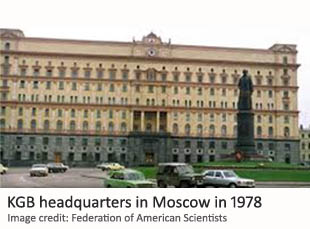
►►Russian spy agency seeks to expand internet surveillance. Under an order drafted by Russia’s Communications Ministry, communications service providers would have to install equipment that would record and save all internet traffic for at least 12 hours and grant the security services exclusive access to the data. The draft order, made public on Monday, has been drafted with the help of the Federal Security Service (FSB), the successor to the Soviet-era KGB spy agency. It would take effect in July if it receives final government approval.
►►World War I spy Mata Hari’s birthplace gutted by fire. A fire in the Netherlands has gutted the birthplace of exotic dancer and World War I spy Mata Hari, Dutch media said on Sunday. Mata Hari was born as Margaretha Geertruida Zelle on August 7, 1876, the daughter of a local shopkeeper. She was arrested and executed by firing squad in October 1917, aged 41, after being accused of being a German spy during the First World War. The fire consumed the hair salon that now occupies the place of Mata Hari’s birth, the only remainder untouched by the flames was a small statuette of her dancing, erected outside the shop.
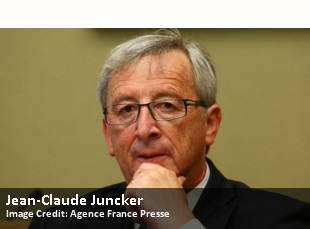
►►Luxembourg PM survives spy scandal in elections. Luxembourg’s Christian Democrat party of long-serving Prime Minister Jean-Claude Juncker easily remained the biggest party and the first choice to form a new coalition government following yesterday’s elections. Luxembourg was shocked into snap elections this summer after Juncker failed to contain a spying scandal centering on allegations of eavesdropping and wiretapping on politicians, and the keeping of files on ordinary citizens and leading figures dating back to the Cold War.
Revealed: NSA spied on millions of French, Mexican phone calls

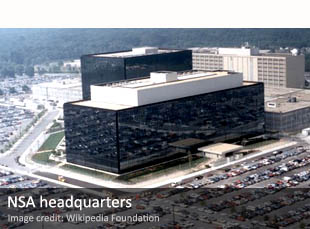
NSA headquartersBy JOSEPH FITSANAKIS | intelNews.org
The United States has been spying on millions of private telephone communications in France and Mexico, and even managed to hack into the Mexican president’s personal email account, according to media reports from France and Germany. French newspaper Le Monde said on Monday that France has been targeted for years by the US National Security Agency (NSA). The NSA, America’s largest intelligence agency, is tasked with intercepting communications messages from around the world. The newspaper alleged that most targets of the NSA’s interception have no links to terrorism; instead, the US target list is primarily focused on “high-profile individuals in the politics and business domains”. Le Monde said it acquired the information on the NSA operations in France from former NSA and Central Intelligence Agency technical expert Edward Snowden. Snowden defected from the US last summer and is currently living in Russia, were he has been offered political asylum. According to the French daily, over 70 million French telephone exchanges were intercepted by the NSA between December 10, 2012, and January 8, 2013, under an NSA collection program codenamed US-985D. The number represents over 2.5 million intercepted telephone calls per day in France. Another report, which appeared in German newsmagazine Der Spiegel, claimed that the NSA targeted the email communications of the Mexican government, and managed to hack personal email accounts belonging to numerous senior Mexican government officials. The article, which appeared on Sunday, said that the American signals intelligence agency had implemented Operation FLATLIQUID, which aimed at exploiting mail servers used by senior government officials in Mexico. Read more of this post

Turkey ‘disclosed identities of Mossad spies’ operating in Iran

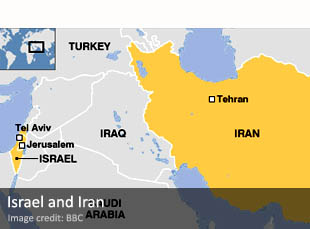
Israel and IranBy JOSEPH FITSANAKIS | intelNews.org
The government of Turkey disclosed to Iranian counterintelligence the identities of Mossad spies operating in Iran, according to the Washington Post. The newspaper’s associate editor, David Ignatius, cited “knowledgeable sources” on Thursday, in claiming that up to 10 spies were captured as a result of the Turkish disclosure. The alleged spies, who are all Iranian citizens, are said to have been operating inside Iran on behalf of Israel’s foremost external intelligence agency. Ignatius said the Turkish action, which appears to have been authorized by Turkey’s Prime Minister, Recep Tayyip Erdoğan, resulted in a “significant loss of intelligence” for the Mossad’s Iran office. Turkey and Israel forged strong bilateral ties in the 1990s and early 2000s. But they fell out in dramatic fashion in May of 2010, when Israel attacked a convoy of civilian ships in international water. The ships, known as the “Gaza Freedom Flotilla”, were carrying humanitarian aid and construction materials to the Gaza Strip. But Israel claimed that the ships’ pronounced intention to break the Israeli-Egyptian blockade of the Gaza Strip, was an affront to Israel’s national security and subverted Israeli political jurisdiction, expressed through the blockade. The attack on the flotilla by Israeli commandos resulted in the death of 10 Turkish civilians, one of whom was also an American citizen. Following the Israeli attack, Turkey recalled its ambassador to the Jewish state, terminated several joint military projects with Israel, and called an emergency meeting of the United Nations Security Council. Relations between the two countries, which reached a low point in May of 2010, have yet to recover. Read more of this post

News you may have missed #854 (SIGINT edition)

NSA/GCHQ listening station in Menwith HillBy IAN ALLEN | intelNews.org
►►British ex-minister accuses GCHQ of ignoring surveillance fears. Nick Brown, a former Labour Party cabinet minister, has warned that GCHQ and Britain’s other intelligence agencies appear to be undertaking mass surveillance without parliament’s consent because the country’s coalition failed to get the communications data bill –-dubbed the “snoopers’ charter” by critics– passed into law after Liberal Democrat opposition. Brown said there was an “uncanny” similarity between the GCHQ surveillance programs exposed by the US whistleblower Edward Snowden and proposals in the first part of the bill.
►►Analysis: The NSA’s new codebreakers. Matthew Aid writes: “There was a time when the codebreakers of the National Security Agency actually took the lead in solving enemy encryption systems. These days, not so much. In today’s NSA, it’s hackers, break-in artists, corporate liaisons, and shadow salesman using front companies who are at the forefront of this effort. Even so-called “hacktivists” play an unwitting role in helping the NSA gain access to computer networks –both hostile and friendly. Just about the only place that’s somewhat immune to the NSA’s new style of codebreaking attacks? North Korea, because it’s so disconnected from the rest of the world’s networks”.
►►UKUSA treaty countries collecting data for NSA. The latest leaks from former US intelligence contractor Edward Snowden reveal a new dimension to the US-led electronic eavesdropping, with address books and ”buddy lists” from Yahoo!, Hotmail, Facebook and Gmail accounts being harvested across the globe. The documents, published by The Washington Post on Tuesday, show the clear involvement of Australia along with the US, Britain, Canada and New Zealand —the so-called “five eyes” intelligence-sharing nations.

KGB ‘ran two Australian politicians as agents’ in 1970s: document

Geronty Lazovik (left) in 1971By JOSEPH FITSANAKIS | intelNews.org
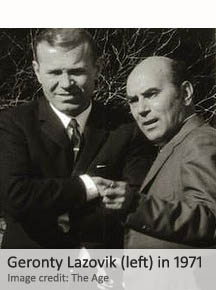
Soviet intelligence recruited and ran at least two Australian elected politicians as agents for the USSR in the 1970s, according to a confidential account authored by an Australian counterintelligence officer. The report’s author is allegedly an unnamed former employee of the Australian Security Intelligence Organisation (ASIO), which is tasked with counterespionage. Australia’s Fairfax Media, which claimed yesterday to have accessed the report, described it as “an unusually candid document”. It allegedly describes Soviet intelligence activities on Australian soil during the last two decades of the Cold War and names known Soviet intelligence officers operating in Australia at the time. Among those named is Vladimir Yevgenyevich Tulayev, described in the confidential report as “a hard-eyed, well-dressed thug” who was “aggressively involved in intelligence operations in Australia”. The document also names Geronty Lazovik, considered by AFIO as a “definite agent runner”. Australian counterintelligence described Lazovik as a far more refined operative than Tulayev and kept tabs on him as he developed and cultivated “a wide range of contacts” across Australia’s Federal Parliament. The report suggest that Australian Labor Party politicians, aides and lobbyists were among Lazovik’s “contacts” in Australia, though it does not explicitly name them as agents of the Soviet KGB. Arguably the most important allegation made in the report is that another KGB operative in Australia, Vladimir Aleksandrovich Aleksyev, was able to recruit and run “two Australian politicians as agents” in the late 1960s and early 1970s. The document states that Aleksyev was able to handle the two alleged recruits “using tradecraft of a fairly high order”, suggesting that he was perhaps one of the KGB’s most successful known case officers in Australia. The confidential report alleges that the ASIO leadership approached the Australian government with information about the operations of the KGB officers. Read more of this post

Medical review article considers Arafat poisoning theory

Yasser Arafat in Tunis in 1993By IAN ALLEN | intelNews.org
The publication of a peer reviewed article in one of the world’s leading medical journals has reinforced the possibility that the late Palestinian leader Yasser Arafat may have died of poisoning. A nine-month study into the possible poisoning of the founder of Palestinian nationalist group Fatah, was commissioned in 2012 by Qatari news channel Al Jazeera. It was undertaken by a team of researchers at the Institut de Radiophysique (IRA) in Lausanne, Switzerland. According to the results, announced in July of that year, significant traces of the radioactive substance polonium 210 were discovered on the personal artifacts that Arafat used during his final days while in hospital in Paris, France, in 2004. According to the IRA, some of the Fatah leader’s personal belongings, including his underwear and his toothbrush, contained levels of polonium that were as many as ten times higher than those in random samples used as control subjects in the study. Shortly after the IRA study, Arafat’s wife and daughter filed an official complaint with French judicial authorities, who in turn decided to open an official murder investigation into the death of the late Palestinian national leader. Now British medical journal The Lancet has published a peer reviewed analysis of the IRA research, which outlines and endorses its conclusions. The article, entitled “Improving forensic investigation for polonium poisoning”, was authored by a group of researchers at the IRA in Lausanne and at the University Centre of Legal Medicine, which is also in Switzerland. It explains the procedures followed during the forensic investigation of  Arafat’s belongings, and examines the theory that Arafat may have been poisoned. The researchers state that the “findings [of the investigation] support the possibility of Arafat’s poisoning with 210Po”. Read more of this post

The story of a suspected KGB mole who shook the FBI in the 1960s

By JOSEPH FITSANAKIS | intelNews.orgKGB
Readers of this blog will know about the infamous case of James Jesus Angleton, who headed the counterintelligence department of the Central Intelligence Agency from the 1950s to the 1970s, and led the biggest mole hunt in the Agency’s history. David Wise, author of several intelligence-related books, including the best-selling Spy, about FBI double agent Robert Hanssen, writes in a new article that the Federal Bureau of Investigation (FBI) was also shaken by a similar mole hunt, which never became public. In an article published in this month’s Smithsonian Magazine, Wise claims that the probe constituted “the first mole hunt in the history of the FBI” and that it was “one of the most sensitive investigations” in the history of the Bureau. Wise suggests that the mole hunt began in the spring of 1962, when Aleksei Kulak, a 39-year-old Soviet scientific consultant to the United Nations, who was in fact KGB operative, defected to the FBI. He was instructed by his American handlers to operate as an agent-in-place and supplied the FBI for a decade with secret information from the Soviet Union. The FBI gave him the codename FEDORA, also known in Bureau files as “Source 10”. In his article in The Smithsonian, which is based on interviews with no fewer than 30 current and former FBI agents, Wise describes FEDORA as “one of the most important sources the FBI had” at the time. Kulak and another KGB agent, Valentin Lysov, who defected to American intelligence in the mid-1960s, told the FBI that the Soviet Union kept a source inside the FBI, known as “Dick”. But neither defector knew whether Dick was the source’s real name, or whether it was simply a KGB operational codename. The FBI, says Wise, gave the alleged mole the code term UNSUB (“unknown subject”) Dick, and began a massive mole hunt. Read more of this post

News you may have missed #853

NSA's Utah Data CenterBy IAN ALLEN | intelNews.org
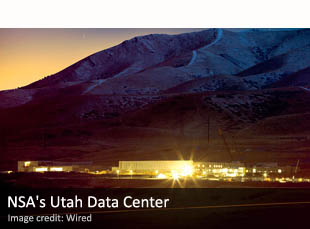
►►Meltdowns hobble NSA data center. Electrical surges at the National Security Agency’s massive data center in Utah have delayed the opening of the facility for a year as well as destroying hundreds of thousands of dollars in kit, the Wall Street Journal reports. Ten “meltdowns” in the past 13 months have repeatedly delayed the Herculean effort to get the spy agency’s colossal snooping facility up and running, according to project documents reviewed by the newspaper.
►►Uganda expels Sudan diplomat accused of spying. Sudanese diplomat Jad-el-Seed Mohammed Elhag has been expelled from Uganda on suspicion of espionage, Ugandan foreign ministry officials said Tuesday. “The reasons why he was expelled was that the activities he was involved in were beyond the norms and requirements of his tenure”, Uganda Ministry of Foreign Affairs spokesman Tayebwa Katureebe said. “These are issues of diplomacy and of two countries, which are not addressed normally in the press, but basically the main reason was espionage”, he said, declining to go into detail.
►►FBI accused of using no-fly list to recruit informants. A lawsuit in New York alleges that the FBI is violating the law by putting Muslim-Americans on the no-fly list not because of a “reasonable suspicion” of terrorist associations, but as a form of blackmail to coerce them into becoming informants at mosques and in their communities. Is this the beginning of the end for the US federal government’s no-fly list? According to the complaint, New York resident Muhammad Tanvir landed on the no-fly list after refusing an FBI request to work as an informant in his predominantly Muslim community.

Brazil accuses Canada of economic espionage

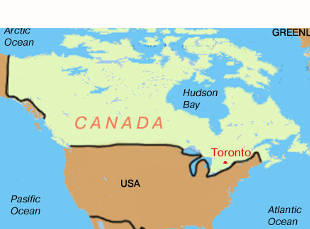
CanadaBy JOSEPH FITSANAKIS | intelNews.org
The Brazilian government has demanded that Canada explain the role of its intelligence services in “unacceptable” incidents of espionage, which targeted the Latin American country’s Ministry of Mines and Energy. The announcement came just hours after a television report accused Canada of spying on Brazil’s mining and energy sector, allegedly for commercial gain. The report, which aired on O Globo television on Sunday night, said the spying had been carried out by Canada’s Communications Security Establishment Canada (CSEC). Staffed by around 2,200 employees, the CSEC is Canada’s foremost signals intelligence agency, tasked with carrying out communications interception around the world. According to O Globo, the CSEC collected the metadata of emails and calls associated with computer and telephone systems belonging to the Ministry of Mines and Energy. The information allowed Canadian intelligence to effectively map the communications structure of the government Ministry, through a network mapping program codenamed OLYMPIA. O Globo said its report was based on a CSEC PowerPoint presentation titled “Advanced Network Tradecraft”, which was produced in the summer of 2012 and shared with Canada’s allies, including the United Kingdom and the United States. The television station said that the information was based on a batch of documents leaked by former Central Intelligence Agency and National Security Agency technical expert Edward Snowden. Snowden defected from the US last summer and is currently living in Russia, were he has been offered political asylum. The Brazilian television station spoke to Edison Lobao, Brazil’s Mines and Energy Minister, who said that Canada’s primary economic interests in Brazil centered on “the mining sector”, and hinted that the alleged CSEC spying might have “served corporate interests”. Read more of this post

Killing of Iranian cyberwarfare expert sparks rumors of assassination

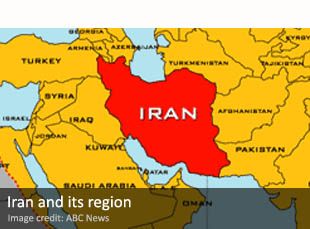
Iran and its regionBy JOSEPH FITSANAKIS | intelNews.org
The Iranian and Israeli governments have remained silent about the recent killing of a member of an Iranian cyberwarfare unit, who was found shot dead near his home in Iran. The dead body of Mojtaba Ahmadi, who is said to have worked for the cyberwarfare command of Iran’s Islamic Revolutionary Guard Corps (IRGC), was found on October 2. Witnesses said the victim was discovered in a wooded area near his home in Karaj, a town situated 12 miles west of Iranian capital Tehran. One eyewitness is said to have claimed that Ahmadi’s body bore two bullet wounds in his chest, and that he appeared to have been shot at close range, execution-style. The news has sparked widespread speculation that the IRGC member fell victim to an assassination operation orchestrated by Israeli intelligence agency Mossad. Others seem to believe that Ahmadi was killed as a consequence of a power struggle inside IRGC, sparked by Tehran’s apparent diplomatic rapprochement toward Washington. The IRGC, whose formal name is Army of the Guardians of the Islamic Revolution, is a branch of the Iranian military, whose mission is to protect the Islamic system by which the country is governed. It includes the Quds Force, which is the IRGC unit tasked with exporting the Iranian Revolution abroad. But the IRGC has so far dismissed rumors that Ahmadi died as a result of an assassination. Last week, Sepah News, a website that carries IRGC-approved information, termed Ahmadi’s murder “a horrific incident”, but said that “the motive of the attacker [had] not been specified” and was “being investigated”. Read more of this post

Canada denies reports of spy devices found in military complex

Former Nortel campusBy JOSEPH FITSANAKIS | intelNews.org
The government of Canada has denied media reports that surreptitious listening devices were found in an Ottawa building complex that is currently being prepared to house Canada’s Department of National Defence. Canadian media reported on Monday that the mysterious spy devices were found by workers employed at the former headquarters of Nortel Networks, a Canadian telecommunications company that went bankrupt in 2009. Canada’s conservative government purchased Nortel’s former headquarters in Ottawa in 2011, and has invested close to C$1 billion (US$960 million) on a plan to move the country’s Defence Department to the site. The media reports did not specify whether the alleged eavesdropping devices were installed recently, or whether they date from the time when Nortel was headquartered at the site. In 2009, when the company declared bankruptcy, there were intense rumors that its operations had been harmed irreparably by an aggressive industrial espionage campaign conducted by Chinese hackers. On Monday, Canada’s CTV News reported that the country’s Department of National Defence was considering scrapping plans to move to the former Nortel complex, due to the discovery of the listening devices. On Monday, the Department of National Defence refused to comment directly on the allegations, stating simply that it could not provide “any information regarding specific measures and tests undertaken to secure a location or facility for reasons of national security”. On Tuesday, however, Canadian government officials told The Ottawa Citizen newspaper it had been assured by the Defence Department that “no listening devices” had been found at the former Nortel site. Read more of this post

News you may have missed #852

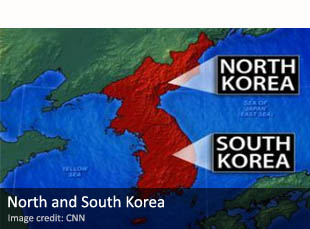
North and South KoreaBy IAN ALLEN | intelNews.org
►►Did US deny entry to German author because he criticized the NSA? Questions have arisen after the German author Ilija Trojanow was denied entry to the United States, apparently without reason. Trojanow had been invited to a German language convention in the US city of Denver. However, he was left stranded at Salvador da Bahia airport, in Brazil. A colleague of the writer claims his call for clarity about US spying activity is the answer. A spokeswoman for Trojanow’s publisher said he was on his way back to Germany on Tuesday.
►►Analysts stress ‘sophisticated tradecraft’ after Iranian spy arrested in Israel. Israeli officials over the weekend released details regarding the arrest of an Iranian-Belgian citizen accused of conducting extensive espionage against Israeli and American targets inside the Jewish state, deepening concerns regarding the scope and sophistication of Iranian intelligence tradecraft. Ali Mansouri, in his mid-50s, was arrested on September 11 at Tel Aviv’s Ben-Gurion Airport by the Shin Bet intelligence service. One Israeli military correspondent observed that, in the case of Mansouri, “Iran followed the playbooks of the most advanced intelligence agencies in the world”.
►►Northern spy lifts cloak on Koreas’ deadly rivalry. Kim Dong-sik is a North Korean agent captured in the South in 1995. He underwent four years of interrogations before joining the South Korean military counterintelligence command. He is now an analyst at the Institute for National Security Strategy, a research organization affiliated with the National Intelligence Service. His tale, detailed in a new memoir, provides a rare, firsthand look at the often lethal spy war that the rival Koreas waged for decades and that many fear may persist today.

Israel arrests Belgian citizen for ‘spying for Iran’

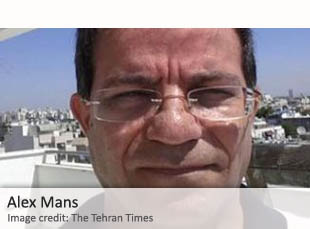
Alex MansBy JOSEPH FITSANAKIS | intelNews.org
A Belgian citizen has been arrested in Israel on suspicion of spying on behalf of the Islamic Republic of Iran. The man, Alex Mans, was arrested two weeks ago, but the Israeli government kept the incident under wraps until Sunday. Israeli media reports state that Mans was arrested by Israeli Police and officers of Shin Bet, Israel’s internal security service. He was reportedly detained at Ben-Gurion International Airport as he was preparing to leave Israel. According to Israeli security officials, Mans made frequent trips to Israel, during which he presented himself as a Belgian investor interested in export opportunities in Israel. He allegedly used his business venture in selling windows and roofing material for commercial buildings in order to establish contacts with businesses in Tel Aviv. But officials at Shin Bet maintain that Mans’ business operations, which included seemingly legitimate websites and social media profiles, served as a cover for his spy activities. These are alleged to have included “intelligence gathering [and support for] terrorism”, as well as efforts to “bypass the embargo on trade and financial transactions with Iran”. Israeli security officials believe that Mans was born in Iran in 1958 and had the name Ali Mansouri. He is thought to have moved to Turkey in 1980, aged 22, where he lived for nearly 20 years. In 1997 he received an immigration visa to Belgium, where he met and married a Belgian citizen and changed his name to Mans. Soon afterwards, however, he divorced, and in 2007 he moved back to Iran, where he married a local woman. According to Israeli media reports, Mans told Shin Bet interrogators that he was approached in 2012 by the Islamic Revolutionary Guards Corps (IRGC) and offered up to $1 million to spy on Israel on behalf of the Iranian government. He reportedly agreed and was handled by Haji Mustafa, of the IRGC’s Special Operations Unit. Read more of this post

Files reveal names of Americans targeted by NSA during Vietnam War

NSA headquartersBy JOSEPH FITSANAKIS | intelNews.org
The names of several prominent Americans, who were targeted by the United States National Security Agency (NSA) during the height of the protests against the Vietnam War, have been revealed in declassified documents. The controversial communications interception operation, known as Project MINARET, was publicly acknowledged in the mind-1970s, during Congressional inquiries into the Watergate affair. We know that MINARET was conducted by the NSA between 1967 and 1973, and that it targeted over a thousand American citizens. Many believe that MINARET was in violation of the Agency’s charter, which expressly prevents it from spying on Americans. But despite the media attention MINARET received during the Watergate investigations, the names of those targeted under the program were kept secret until Wednesday, when the project’s target list was declassified by the US government. The declassification decision was sparked by a Freedom of Information Request filed by George Washington University’s National Security Archive. The two Archive researchers who filed the declassification request, William Burr and Matthew Aid, said MINARET appears to have targeted many prominent Americans who openly criticized America’s involvement in the Vietnam War. The reason for the surveillance was that US President Lyndon Johnson, who authorized the operation, was convinced that antiwar protests were promoted and/or supported by elements outside the US. The newly declassified documents show that Dr. Martin Luther King, Jr., was a major surveillance target of the government. Read more of this post