Austrian pro-Kremlin officials planned to launch shadow spy agency, report claims
September 12, 2022 3 Comments
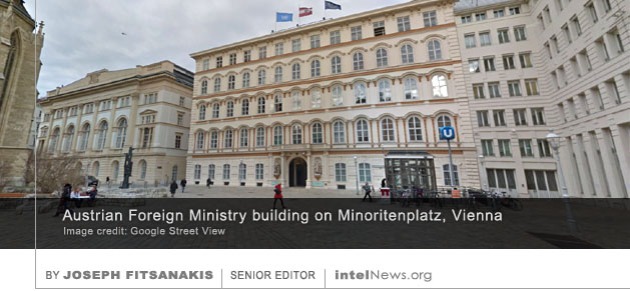 THE AUSTRIAN STATE HAS launched a probe into an attempt by alleged pro-Russian government officials in Vienna to create a brand new intelligence service in 2018, according to news reports. The effort did not succeed. Some claim, however, that, had it become operational, the new spy service in this European Union state would have been under Russian influence. There are also questions about whether Austria’s foreign minister at the time, Karin Kneissl, was aware of this effort, which appears to have emerged from within her ministry.
The alleged effort to create a new intelligence agency in Austria occurred during the government of Chancellor Sebastian Kurz, a conservative politician belonging to the center-right Austrian People’s Party (ÖVP). Having failed to secure a majority in parliament in the 2017 national election, Kurz’s ÖVP formed a government through an uneasy coalition with the Freedom Party of Austria (FPÖ), a rightwing populist alliance of euro-skeptics, anti-immigration campaigners and strong critics of Islam. In joining Kurz’s governing coalition, the FPÖ was successful in installing Kneissl as Austria’s Minister for Europe, Integration and Foreign Affairs.
Although previously a supporter of the ÖVP, Kneissl had worked closely with the FPÖ —though never officially joined it— in the run-up to the 2017 national election. Prior to that, she had spent nearly a decade with Austria’s Foreign Office, where she had been able to utilize her near-fluent command of English, French, Spanish, and Arabic (she had spent much of her childhood in Jordan, where her father worked as a pilot). Even prior to heading the Foreign Affairs Ministry, Kneissl —and the FPÖ as a whole— was seen by her critics as being too close to the Kremlin. At her wedding in 2018, the list of guests included Russian President Vladimir Putin. Kneissl stepped down from her ministerial post in the summer of 2019. She has since blogged for the Kremlin-funded Russia Today television channel, while also serving —until earlier this year— on the board of the Moscow-headquartered energy company Rosneft. Read more of this post
 THE UNPRECEDENTED GROWTH OF digital access in our time has revolutionized online user access to information. Yet, the same phenomenon is behind the growing power of individuals, groups and state actors to create and disseminate misinformation and disinformation with unprecedented intensity. In the case of misinformation, false, mistaken or otherwise misleading information is disseminated by unsuspecting users. When these actors are acting deliberately with the intention to mislead, deceive or confuse, their actions amount to disinformation.
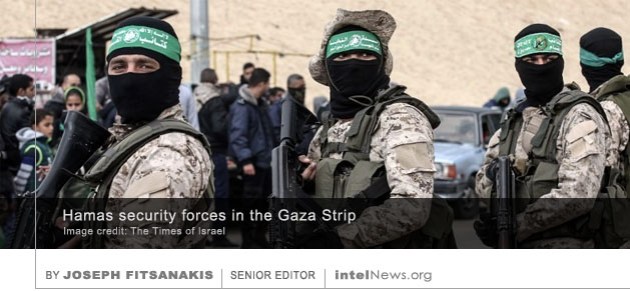 A NEW STUDY SHEDS light on the little-studied topic of counterintelligence operations launched against Israel by the Islamic Resistance Movement, better known as Hamas. Hamas is a Palestinian Sunni Islamist and nationalist organization with a 35-year history, which has controlled the Gaza Strip since 2007. As is typically the case with Middle Eastern non-state actors, Hamas is a complex umbrella organization that combines social-service and administrative functions with armed elements. The latter include internal policing components and a full-time military wing, as well as reserve armed forces.
 A NEW PAPER, PUBLISHED by the United Kingdom’s Royal United Services Institute (RUSI) for Defence and Security Studies, sheds light the complex relationship between Italy and the West’s two principal adversaries, Russia and China. Italy is a major global economic power. It is a prominent member of the Group of Seven (G7), which collectively account for more than 50 percent of global net wealth. It is also a member of the North Atlantic Treaty Organization (NATO) and the European Union (EU).
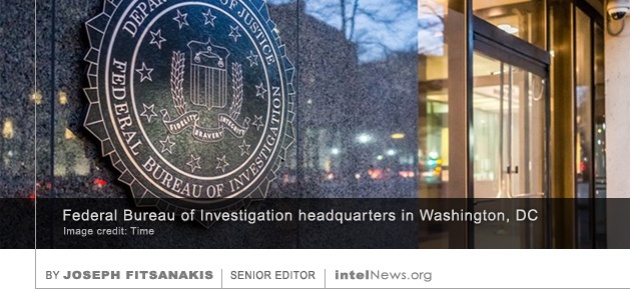 A SECURITY BULLETIN ISSUED jointly by the United States Department of Homeland Security (DHS) and the Federal Bureau of Investigation (FBI)
 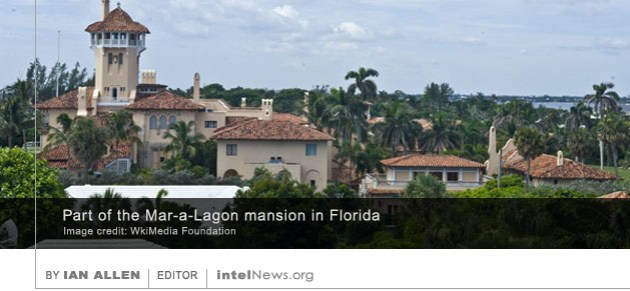 MULTIPLE NEWS OUTLETS CLAIMED on Wednesday that Monday’s search by authorities of a Florida residential compound belonging to former United States President Donald Trump was based on information provided to the Federal Bureau of Investigation by a confidential human source. The source reportedly gave the FBI details about a number of classified documents that were allegedly hidden in Trump’s Florida estate, as well as their precise location.
 A GROWING CONVERGENCE BETWEEN the Central Intelligence Agency (CIA) and the United States military has been one of the most notable changes in American intelligence after 9/11.
  THE NORTHERN IRISH CONFLICT was a 30-year irregular war involving the government of the United Kingdom and an assortment of paramilitary groups. By the mid-1990s, when most of these groups had declared ceasefire, over 3,600 people had been killed and over 40,000 injured. The major paramilitary groups that participated in the conflict were the separatist Provisional Irish Republican Army (IRA) and Irish National Liberation Army (INLA), and the pro-UK, or ‘loyalist’, Ulster Volunteer Force (UVF) and Ulster Defence Association (UDA).
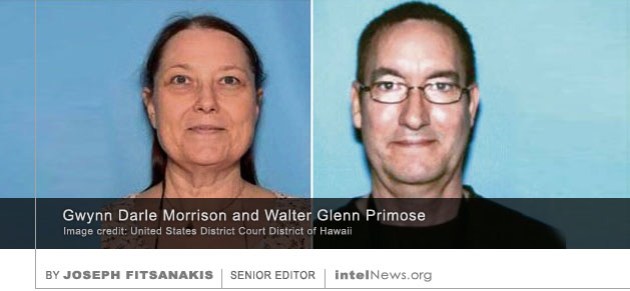 A FEDERAL JUDGE IN HAWAII has denied bail to a married American couple, who are believed to have assumed the identities of dead children in order to lead double lives for over 20 years, according to prosecutors. Local media reports
 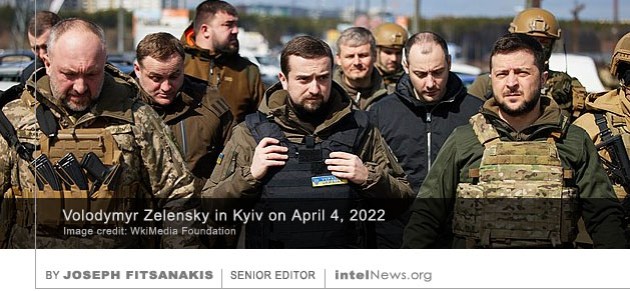 ON SUNDAY, JULY 17, the Ukrainian administration of President Volodymyr Zelenskiy announced the most extensive shake-up of the nation’s security leadership since the Russian military invasion. Two key members of Zelenskiy’s inner circle, Ukraine’s Prosecutor General Iryna Venediktova and domestic security chief Ivan Bakanov, were
  invariably, no. In fact, even the Ukrainians themselves are not in a position to trust their own intelligence services.
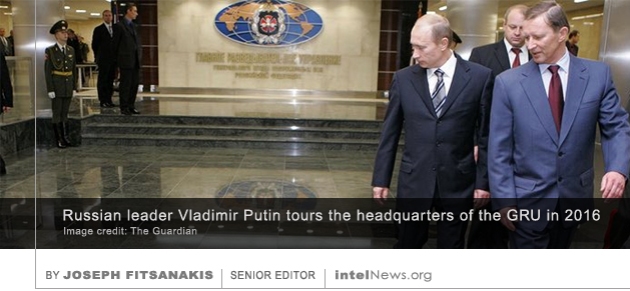 AN ALLEGED RUSSIAN SPY, who used a forged Brazilian identity to travel internationally, has been jailed in Brazil after he was denied entry in Holland, where he had traveled to work as an intern. IntelNews has
 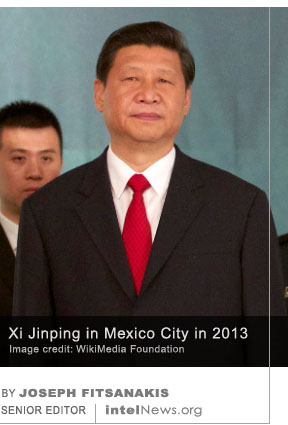 INTELLIGENCE OBSERVERS OFTEN REFER to the Communist Party of China (CPC) as “the world’s largest secret society”. Barring brief periods of relative openness in the late 1990s and early 2000s, the closed decision-making system of the CPC has presented Western intelligence analysts with cascading intractable enigmas for over half a century. This problem has become even more pressing under the decade-long leadership of Xi Jinping, during which the imposition of rigorous counterintelligence measures have turned China into a text-book hard intelligence target.
 social media, to social-science-based quantitative studies. Sverdrup-Thygeson and Stenslie explain that the two extremes of Beijingology are invariably disconnected from what is actually happening on the ground in China, and are thus of limited value.
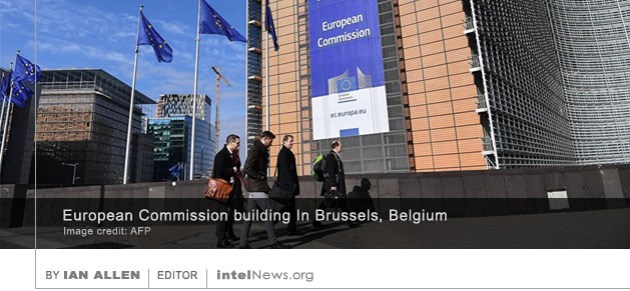 THE POLITICAL FALLOUT OF the Russian invasion of Ukraine is prompting the European Union (EU) to radically upgrade the security of its facilities, according to a series of internal memoranda. On July 14, the EUObserver, an EU-focused news agency based in Brussels,
 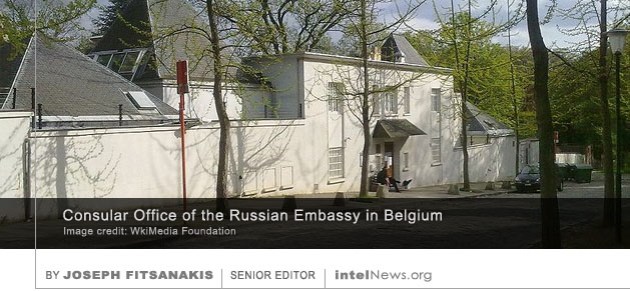 A BRUSSELS-BASED NEWSPAPER has publicized the names and backgrounds of nearly two dozen Russian diplomats, who were recently expelled by the Belgian government on suspicion of espionage. A total of 21 Russian diplomats were expelled from Belgium in April, in co-ordination with dozens of European governments. The move was part of a broader European wave of diplomatic expulsions of Russian diplomatic personnel, in response to the Russian invasion of Ukraine.
 diplomats are expelled in a possible tit-for-tat move by an adversary. It is therefore highly unusual for information concerning expelled diplomatic personnel to be made public. And yet that is precisely what happened earlier this week, when the EUObserver, an English language newspaper based in Brussels, published
  EUObserver said that some of the information about the alleged spies was unearthed by The Dossier Center, a British-based open-source information outlet, which is similar to Bellingcat. The Dossier Center is funded by the oligarch Mikhail Khodorkovsky, who is a critic of the Russian President Vladimir Putin.






 intelNews.org
Tip by Belgian spy agency helped US foil Islamic State plot to kill George Bush
September 19, 2022 by Joseph Fitsanakis 2 Comments
Shihab, 52, had applied for political asylum in the United States. However, he had reportedly joined the Islamic State in secret, and had devised a scheme to kill Bush during a speech that the former president had been scheduled to deliver in Dallas, Texas. For several weeks, Shihab had allegedly surveilled Bush’s Texas homes in Dallas and Crawford, capturing footage in cellphones and video cameras. Shihab had the support of thee other alleged Islamic State supporters, who had traveled to the United States from Iraq through Denmark, Egypt and Turkey.
In a report that aired late last week, Belgium’s Flemish-language state broadcaster VRT, said that the plan to kill Bush had been foiled thanks to a tip shared with the United States by Belgian intelligence. Specifically, the information was reportedly shared by the State Security Service (VSSE), Belgium’s counterintelligence and counterterrorism agency. According to the VRT, the VSSE gave actionable intelligence about Shihab to the United States Secret Service, which then worked with the FBI to foil the alleged plot. The VRT report suggests that the VSSE was able to collect the intelligence through its systematic monitoring of Belgian Islamists, who fought in the Middle East between 2014 and 2016, before eventually making their way back to Belgium.
► Author: Joseph Fitsanakis | Date: 19 September 2022 | Permalink
Filed under Expert news and commentary on intelligence, espionage, spies and spying Tagged with assassinations, Belgium, George W. Bush, intelligence cooperation, Islamic State, News, United States, VSSE (Belgium)