News you may have missed #810 (Petraeus resignation edition)
November 10, 2012 9 Comments
 By JOSEPH FITSANAKIS | intelNews.org |
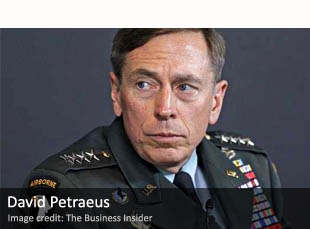
►►How did Petraeus’ affair come to light? CIA Director David Petraeus resigned after a probe into whether someone else was using his email. The probe eventually led to the discovery that he was having an extramarital affair, according to The Wall Street Journal, which cites “several people briefed on the matter”. An FBI inquiry into the use of Petraeus’s Gmail account led agents to believe the woman or someone close to her had sought access to his email. An extramarital affair has significant implications for an official in a highly sensitive post, such as that held by Petraeus, because it can open an official to blackmail.
►►Who did Petraeus have an affair with? The woman with whom General David Petraeus was having an affair is Paula Broadwell, a West Point graduate and the author of a recent hagiographic book about him, entitled All In: The Education of General David Petraeus, co-written with Vernon Loeb. Slate‘s Fred Kaplan reports that “it had long been rumored that something was going on between Petraeus and Broadwell. When she was embedded with him in Afghanistan, they went on frequent 5-mile runs together. But Petraeus went on 5-mile runs with many reporters, and few people who knew him took the rumors seriously”.
►►Who is leading the CIA now? With General David Petraeus stepping down as director of the CIA, following reports of an extra-marital affair, the agency’s current deputy director will take over as director on an interim basis. His name is Michael Morell, and he was a senior CIA aide in the White House to President George W. Bush. Morell had served as deputy director since May 2010, after holding a number of senior roles, including director for the agency’s analytical arm, which helps feed intelligence into the President’s Daily Brief. He also worked as an aide to former CIA Director George Tenet.
 By JOSEPH FITSANAKIS | intelNews.org |











Opinion: When Did Obama Know About CIA Director’s Affair?
November 12, 2012 by Joseph Fitsanakis 8 Comments
The standard reaction to last week’s resignation of Central Intelligence Agency Director David Petraeus, following the revelation of his extramarital affair, has been stunned silence. Not so much because of the affair itself —what is one more affair in the slippery world of Washington politics?— but because it involved the eminent figure of Petraeus. Former aides to the retired General have been confiding to journalists that “never in a million years” would they have thought that the high-achieving CIA Director would have risked his career and reputation in such a reckless fashion. Many thought that the relationship between him and his biographer, Paula Broadwell, had grown suspiciously close in recent years; but Petraeus had a general way of seeming beyond reproach.
It is worth pointing out that much of this unfolding story is so far based on hearsay, as opposed to concrete, verifiable information. It is suggested that Petraeus’ extramarital tryst was accidentally discovered by agents of the Federal Bureau of Investigation, who were looking into a seemingly unrelated case. Some news outlets, mostly in the UK, suggest that a female employee of the US military’s Joint Special Operations Command contacted the FBI after receiving threatening messages from Broadwell, warning her to “stay away from [her] man” —allegedly Petraeus. While investigating the Gmail account from which the threatening messages were allegedly sent, the FBI allegedly discovered “thousands” of messages exchanged between the CIA Director and Broadwell, some of which were sexually explicit. Read more of this post
Filed under Expert news and commentary on intelligence, espionage, spies and spying Tagged with Analysis, CIA, David Petraeus, extramarital affairs, Joseph Fitsanakis, Paula Broadwell, resignations, United States