North Korea uses stolen cryptocurrency to fund its missile program, UN report claims

Kim Jong-un North Korea DPRKTHE NORTH KOREAN MISSILE program has developed rapidly in the past year, partly due to an influx of stolen cryptocurrency, which has now become “an important revenue source” for Pyongyang, according to a United Nations report. The confidential report was produced for the United Nations’ Security Council, by a committee tasked with monitoring the impact of the supranational body’s sanctions on the North Korean economy.

The United Nations imposed sanctions on North Korea in 2006, in response to its announcement that it possessed nuclear weapons. These sanctions have increased over the years, as Pyongyang has continued to advance its nuclear and ballistic missile programs. The sanctions have targeted the communist country’s export industry sectors, including fisheries, textiles, raw materials such as iron, lead and coal, as well as refined energy products.

Now a new report, produced for the United Nations Security Council, suggests that, not only have the sanctions failed to degrade Pyongyang’s nuclear and missile weapons programs, but that the latter actually saw a “marked acceleration” in 2021. The report was delivered last week to the United Nations Security Council by a committee tasked with monitoring the effects of international sanctions on North Korea. According to the Reuters news agency, which accessed the confidential report, it states that North Korea has been able to demonstrate “increased capabilities for rapid deployment, wide mobility (including at sea), and improved resilience of its missile forces”.

Much of this ability comes from funding derived through “cyberattacks, particularly on cryptocurrency assets”, which have now become “an important revenue source” for the North Korean government. These cyberattacks are conducted by North Korean hackers, who regularly target “financial institutions, cryptocurrency firms and exchanges”. According to the report, North Korean hackers were recently able to steal cryptocurrency valued at over $50 million, by attacking just three cryptocurrency exchanges in a period of just 18 months.

The United Nations report comes in the heels of another report, published last month by cybersecurity firm Chainalysis, which alleged that Pyongyang was able to acquire digital assets worth nearly $400 million in 2021 alone. That made 2021 one of the most successful years for North Korean government-sponsored hackers, according to the report. To this one must add cyberattacks that do not target cryptocurrency, which also generate foreign cash supplies for the North Korean government. These generate several hundred million dollars each year, according to research.

Author: Joseph Fitsanakis | Date: 07 February 2022 | Permalink

Ukraine relies on expanded intelligence relationship with the US, sources claim

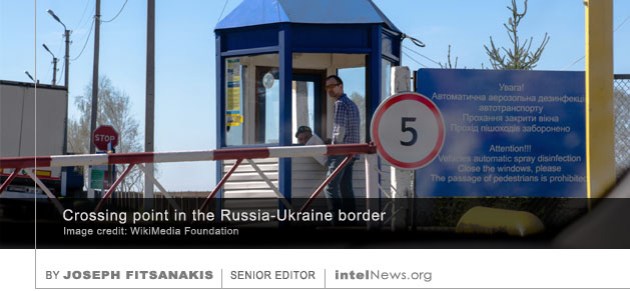
Ukraine Russia borderUKRAINE IS INCREASINGLY RELIANT on its close intelligence relationship with the United States, which has grown dramatically in depth and intensity since Russia’s annexation of Crimea in 2014, according to a new report. The report, authored by Zach Dorfman, national security correspondent for Yahoo News, cites “more than half a dozen former US intelligence and national security officials”. It suggests that the intelligence relationship between Ukraine and the US has been “mutually advantageous” in recent years, and is “as robust […] as just about [any other] in Europe”.

On the American side, the intelligence cooperation effort is led by the Central Intelligence Agency and the National Security Agency, two agencies that frequently exchange information with their Ukrainian counterparts. The information, which includes intelligence obtained from intercepted communications, has largely concentrated as of late on Russian military operations and activities. The two agencies have also participated in intelligence exchanges with the Ukrainians, with officials from the two sides engaging in reciprocal visits “to swap information” and provide training.

According to Yahoo News, CIA paramilitary operations officers have been training Ukrainian special operations forces personnel, as well as Ukrainian intelligence officers, since 2015. The training takes place “at an undisclosed facility in the southern United States”, the report states. Moreover, the NSA has engaged in offensive cyber operations against Russian government targets jointly with Ukrainian government agencies. This collaboration is especially lucrative for the NSA, whose collection capabilities in Eastern Europe are relatively limited.

Lastly, the Ukrainians have been providing US government agencies like the Department of the Treasury with financial intelligence on Russian efforts to evade economic sanctions. This information often includes data on the collusion between Russian and Ukrainian oligarchs, as many of the latter have close ties to the Russian government.

Author: Joseph Fitsanakis | Date: 03 February 2022 | Permalink
Taliban have executed over 100 ex-security forces personnel, UN report says

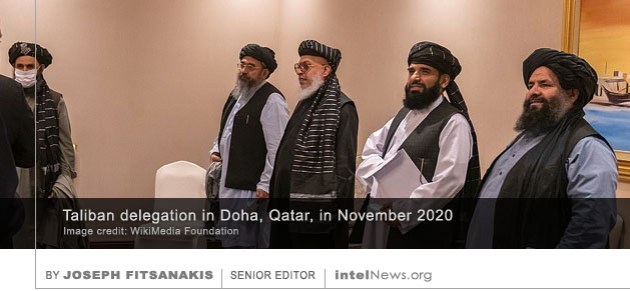
TalibanTHE AFGHAN TALIBAN HAVE executed over 100 members of the now-defunct Afghan government, with a majority of those killed consisting of security forces personnel and Afghan employees of Western military forces. This information is included in a confidential report by the United Nations Political Mission in Afghanistan, which was produced earlier this month.
The Taliban completed their swift take-over of Afghanistan on August 15 of last year. On that day, they entered the Afghan capital Kabul, facing almost no resistance by the Afghan National Army and the country’s security forces. Shortly afterwards, senior Afghan officials pledged that their regime would extend a “general amnesty” to government employees, including Afghans who worked with the United States-led International Security Assistance Force (ISAF).

But according to a confidential report produced earlier this month by the United Nations, the Taliban have executed at least 100 Afghan former government employees since taking power. The report was authored by staff of the United Nations Assistance Mission in Afghanistan (UNAMA), which is the Afghan branch of the United Nations’ Political Mission office. Established in 2002, the UNAMA is among the very few international bodies that have remained on the ground in Afghanistan since the Taliban took control the country.

The report was produced for the United Nations Security Council. According to the Associated Press, which accessed a copy of the report, it contains “credible allegations” that most of those who were executed did not receive even a rudimentary form of trial. Instead, their deaths were the result of “extrajudicial killings”, which were carried out “by the Taliban or its affiliates”. In addition to those killings, the United Nations report contains “credible allegations” of at least 50 extrajudicial killings of alleged members of the Islamic State-Khorasan Province. The Taliban have been engaged in a brutal war against the Islamic State branch in Afghanistan since 2015.

The report also details what it describes as systematic violent actions by Taliban against civil society activists. These include enforced disappearances, temporary arrests and detentions, physical beatings, as well as systematic threats and various forms of intimidation issued against growing numbers of Afghans. A substantial portion of the targets of these activities are former members of Afghanistan’s security forces and ISAF employees, according to the report.

Author: Joseph Fitsanakis | Date: 01 February 2022 | Permalink

Lawyers of alleged Venezuelan coup mastermind claim CIA knew about his activities

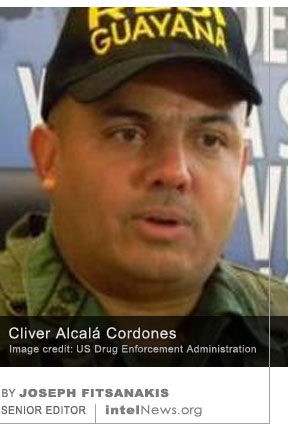
Cliver Alcala CordonesLAWYERS FOR A FORMER Venezuelan military officer, who tried to topple President Nicolás Maduro in 2020 with the help of American former soldiers, have claimed that senior officials in the United States Central Intelligence Agency were aware of his activities “at the highest levels”. The court case centers on Major General Clíver Alcalá Cordones, a retired member of Venezuela’s Bolivarian Army, who is being tried in a Manhattan court. Alcalá is accused of being a member of a drug smuggling ring that worked closely with Colombian terrorist organizations to smuggle over 250 metric tons of cocaine to the US.

Prior to his arrest for drug trafficking, Alcalá had been living in Colombia since at least 2019, from where he allegedly masterminded the so-called “enfrentamiento en El Junquito” (“El Junquito raid”), or “Operación GEDEÓN”. GEDEÓN refers to a failed coup plot against Maduro, which was carried out on May 3 and 4 by a group of up to 60 armed men. It is alleged that the coup was launched from Colombia with the support of Silvercorp USA, a private security group led by Jordan Goudreau, a Canadian-born former sergeant in the US Green Berets. At least six coup plotters, who participated in the first phase of the operation, are believed to have been killed by the Venezuela military. Many more were arrested before being able to reach a network of safe houses that had allegedly been set up their supporters inside Venezuela. At least two of the arrestees, Airan Berry and Luke Denman, are American citizens and former soldiers.

On January 28, the Associated Press reported that lawyers for Alcalá have filed a letter that claims his “efforts to overthrow the Maduro regime have been well known to the United States government”. This is because these activities were “reported to the highest levels of the Central Intelligence Agency, National Security Council, and the Department of the Treasury”, according to Alcalá’s lawyers. The letter provides no details about which officials in the US government allegedly knew about Alcalá’s activities. In an accompanying document, however, the lawyers for the accused are seeking “documents and information” containing relevant communications between a number of US officials, including former Attorney General William Barr, former Secretary of State Mike Pompeo, senior White House officials, as well as the CIA station in Colombia.

According to the news agency, Alcalá’s lawyers hope that, by providing proof that the US government knew about their client’s paramilitary activities, his argument that he was not operating illegally will be bolstered. More broadly, however, the accusation raises fresh questions about what the administration of US President Donald Trump knew about the coup plot in Venezuela, which involved several American citizens. The government of the United States has consistently rejected allegations by the Venezuelan government that the coup was planned with American assistance or knowledge. The Associated Press said it contacted the CIA for comment, but received no response.

Author: Joseph Fitsanakis | Date: 31 January 2022 | Permalink

America’s most senior intelligence officer says its classification system is broken

Avril HainesTHE MOST SENIOR INTELLIGENCE officer in the United States has said in a letter that the nation’s system of classification is flawed and undermines its national security. This view was expressed by Avril Haines, who heads the Office of the Director of National Intelligence, the body that directs and coordinates America’s 18 intelligence agencies. Haines, 52, was appointed to the position last year by President Joe Biden, and is seen as a potential reformist of the US intelligence community.
Haines stated her view on classification in a letter sent to two Senators, Jerry Moran (R., Kan.) and Ron Wyden (D., Ore.). The letter was in response to a formal query submitted by the two members of Congress. The query concerns the mounting backlog of classified information that is currently awaiting declassification on historical or ‘right-to-know’ legal processes. The latter require government agencies to release information to the public domain.

Some of the contents of Haines’ letter, marked “for official use only”, were reported on Thursday by The Wall Street Journal. According to the paper, Haines opined that “deficiencies in the current classification system undermine our national security, as well as critical democratic objectives, by impeding our ability to share information in a timely manner”. This affects the work of policy makers, the public’s perception of the American system of government, and the nation’s ability to share critical information with its allies, said Haines.

What is more, ongoing efforts to limit the “exponential growth” of classified information in government vaults “are simply not sufficient”. This is “a fundamentally important issue that we must address”, said Haines. In an essay she authored shortly before becoming Director of National Intelligence, Haines had criticized the government’s tendency to overclassify information, claiming that “it actually encourages leaking”. In response to Haines’ letter, Senators Moran and Wyden issued a statement saying the DNI “clearly recognizes that the current broken classification system harms US national security while eroding the public’s trust in government”.

Author: Joseph Fitsanakis | Date: 28 January 2022 | Permalink

British state uses rare ‘breach of confidence’ clause to stop spy’s media exposure

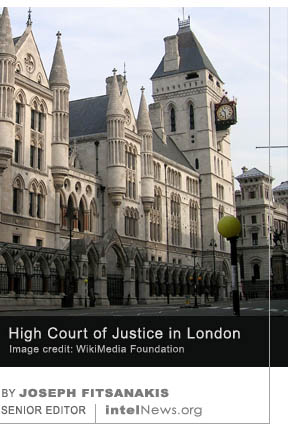
High CourtTHE BRITISH GOVERNMENT IS citing a rarely used “breach of confidence” clause in an effort to stop the country’s public broadcaster from revealing the identity of a British intelligence officer working abroad. According to reports, this is the first time the “breach of confidence” clause has been cited by British government lawyers since the so-called Spycatcher affair of 1987. The term refers to the memoir authored by Peter Wright, senior intelligence officer for the Security Service (MI5), which the government of Prime Minister Margaret Thatcher tried to stop from being published.
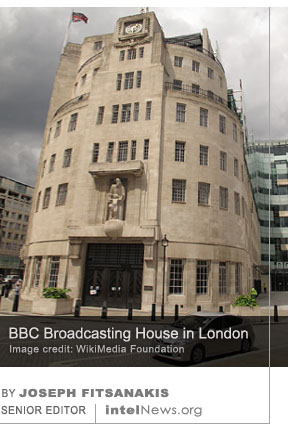
As intelNews reported on January 24, British newspaper The Telegraph revealed that Britain’s attorney general was seeking an injunction against the British Broadcasting Corporation (BBC). The purpose of the injunction was to stop the BBC from airing a story that would  “allegedly identify […] a spy working overseas”. No information has emerged about the details of the case. On Wednesday, however, a High Court of Justice judge in London heard from lawyers representing the two sides in the dispute. According to The Telegraph, a lawyer representing the government argued before Justice (Martin) Chamberlain that the BBC’s attempt to air the news story involved “matters of national security and breach of confidence”.

Lawyers for the BBC, however, asked the judge to oppose the injunction sought by the attorney general, and asked for future hearings on the case to take place in public, rather than behind closed doors. They also censured the efforts by the government’s lawyers, describing them as “a departure from the open justice principle”. Justice Chamberlain concluded the hearing by saying that he was personally committed to the case being heard in public to the maximum extent possible. He also warned the government’s lawyers that he would not order to the case to be moved behind closed doors unless “secrecy is compellingly justified” by the constraints of national security. An interim hearing has been scheduled for March 1 and 2 in London.

Author: Joseph Fitsanakis | Date: 27 January 2022 | Permalink

Iranian websites use fake Israeli contact data to lure spies, researchers claim

Computer hackingA NUMBER OF WEBSITES sponsored through Google Ads, which seek to hire Iran and Hezbollah experts for “research and consultancies” in Israel, are part of an Iranian counterintelligence program, according to observers. The investigative news website Daily Beast said on Monday it discovered at least 16 such websites, all of which appear to employ the same language, visuals, as well as telephone numbers with Israeli area codes.
The websites’ stated purpose is to employ individuals with inside knowledge of Iranian intelligence and security, as well as individuals with a background in Lebanon’s Hezbollah. The prospective employers claim to be Israeli “consultancy” firms, with names such as “VIP Human Solutions”. The latter describes itself as a “VIP center for recruitment of the most distinguished in the military and security services of Syria and Hezbollah in Lebanon”, according to the Daily Beast.

The websites feature Israeli flag visuals, and claim to be associated with recognizable think-tanks and media organizations, including the Gatestone Institute, the Begin-Sadat Center, the Jerusalem Post and Business Insider. However, these purported connections appear to be fictitious and to be designed to give those websites an air of legitimacy. In reality they appear to be hosted by an obscure Bulgarian web hosting company. At times they disappear, but then reappear under a different title and domain name. The oldest among them has been active for just over four years.

The Daily Beast cites a number of Iran observers, as well as intelligence insiders in the United States and elsewhere, who claim that the websites are part of a sting operation by Iranian counterintelligence. They share a number of “behavioral similarities” to prior phishing campaigns perpetrated by hacker groups with documented links to Iranian intelligence agencies, according to the Daily Beast. The purpose of the websites is to lure unsuspecting Iranian and Lebanese nationals who aspire to provide information to Israel in exchange for money, according to the report.

Author: Joseph Fitsanakis | Date: 25 January 2022 | Permalink

British government seeks injunction against BBC report that could reveal spy’s identity

BBCTHE BRITISH GOVERNMENT IS seeking to stop the nation’s public broadcaster from airing a story that would allegedly reveal the identity of a British intelligence officer working abroad. The news emerged on Friday, when London-based newspaper The Telegraph said the British government had taken the unusual step of seeking an injunction against the British Broadcasting Corporation (BBC), in order to prevent it from “allegedly identifying a spy working overseas”.
Since then, the BBC and British government officials have refused to disclose even vague information about the program in question, or the precise nature of the injunction. However, the BBC did confirm on Saturday that the government had “issued proceedings against the BBC with a view to obtaining an injunction”. The purpose of the injunction, said the BBC, was to “prevent publication of a proposed BBC news story”.

When asked to provide information about the broad theme of the story, BBC representatives said they were “unable to comment further at this stage”. They did, however, stress that the broadcaster would not have been insistent on publishing the information, unless it felt it was “overwhelmingly in the public interest to do so” and unless it was “fully in line” with the BBC’s own editorial values and standards.

Meanwhile, the office of the United Kingdom’s attorney-general, Suella Braverman, has also confirmed that “an application” had been made against the BBC. A spokesperson added that it would be “inappropriate to comment further while proceedings are ongoing”. A court hearing is expected to take place on Thursday behind closed doors at the High Court in London. It is likely that a High Court judge could issue a ruling on the same day.

Author: Joseph Fitsanakis | Date: 24 January 2022 | Permalink

Havana syndrome unlikely to be caused by adversary action, CIA report finds

CIAMOST CASES OF THE so-called “Havana syndrome”, a mysterious medical condition affecting mostly American government officials abroad, are unlikely to have been caused by a directed energy weapon or other device constructed by a foreign adversary, according to the United States Central Intelligence Agency. The condition is believed to have afflicted around 1,000 American and Canadian diplomats around the world in recent years, and many claim it is the result of a mystery weapon built by Russia or other adversaries of the United States.

The matter first came to light in 2017, when Washington recalled the majority of its personnel from its embassy in Havana, Cuba, and at least two more diplomats from its consulate in the Chinese city of Guangzhou. The evacuees reported experiencing “unusual acute auditory or sensory phenomena” and hearing “unusual sounds or piercing noises”. Subsequent tests showed that the diplomats suffered from sudden and unexplained loss of hearing, and possibly from various forms of brain injury. In the most recent known case, “about two dozen” personnel at the US embassy in Vienna showed Havana syndrome symptoms in the first half of 2021.

But now a study by the CIA has concluded that the vast majority of Havana syndrome cases could be “explained by environmental causes, undiagnosed medical conditions or stress”. The study, described as “comprehensive” by CIA sources, supports the view that environmental causes, rather than “a sustained global campaign by a foreign power”, could explain most Havana syndrome cases. According to The Times, the conclusion of the CIA study is broadly shared by other members of the United States intelligence community, though confidence levels vary.

The Director of the CIA, William Burns, said yesterday that the agency had “reached some significant interim findings”, but would continue to investigate the Havana syndrome, given that two dozen cases remained difficult to explain. However, the conclusions of the study appear to have displeased many victims, according to The Times. One organized group of victims described the CIA study as “interim” and said that its results “cannot and must not be the final word on the matter”.

Author: Joseph Fitsanakis | Date: 21 January 2022 | Permalink

Chinese officials reward fishing crews for finding underwater spy devices

Jiangsu ChinaGOVERNMENT OFFICIALS IN THE Chinese province of Jiangsu have publicly rewarded two fishing crews for finding and turning in to security authorities a number of “suspicious” underwater devices. In a leading article on its website, China’s state-owned Xinhua news agency said on Tuesday that other fishing crews should come forward upon finding similar devices, to prove their patriotism and claim financial rewards from the state.

Tuesday’s rewards were handed out by state officials in Jiangsu, a largely coastal region in China’s east. It is located north of Shanghai and is among the most densely populated provinces in the country. According to Xinhua, local officials held a “Special Commendation and Reward Symposium for Coastal National Security and People’s Defense Lines”. During the ceremony, state officials reportedly commended and rewarded 11 fishing crew members and 5 land-based personnel for “salvaging and turning over” a number of “suspicious underwater” devices. The latter were described in the article as “reconnaissance devices” that had been “secretly deployed by foreign countries” in China’s territorial waters.

The report relayed an incident that prompted the initial discovery of a “device shaped like a torpedo”. The latter was collected by a member of a fishing crew and turned over to the Ministry of State Security (MSS). The device was reportedly found to pose “a national security risk”, as it had likely been deployed by “a new type of marine unmanned underwater vehicle, developed by a major country”. This alleged underwater vehicle is said to deploy reconnaissance devices that “can measure hydrological data and environmental parameters around China’s coasts”, according to the report. The report did not specify the name of the “major country” that is allegedly behind these devices.

The Xinhua report said that fishing crews in Jiangsu have found 10 underwater surveillance devices since 2020, and included a photograph of a display containing images of some of these devices. It claimed all were “foreign made”. The report concluded by congratulating the fishing crews for turning in the devices to the MSS, and urging more fishing crews to come forward with similar discoveries, so as to claim sizeable monetary awards and receive public commendations.

Author: Joseph Fitsanakis | Date: 19 January 2022 | Permalink

Swedish spy agency investigates drone sightings at three nuclear power plants

Ringhals Nuclear Power PlantSWEDEN’S DOMESTIC SECURITY AGENCY said it had taken over from the police an investigation into sightings of unmanned aerial vehicles, commonly known as drones, at three nuclear power plants. On Monday, the Swedish Security Service, known by its Swedish acronym, SAPO, confirmed earlier reports that a large-size drone had been spotted on Friday by security guards over the Forsmark Nuclear Power Plant. The facility is located just short of 95 miles north of Sweden’s capital, Stockholm. It is known as the country’s largest producer of electricity, generating one sixth of its electricity supply.

Later, however, reports emerged about sightings of what appeared to be surveillance drones over Sweden’s two other nuclear power plants—namely the Oskarshamn Nuclear Power Plant, located on Sweden’s southeastern Baltic Sea coast, and the Ringhals Nuclear Power Plant, which is situated on the Värö Peninsula, on Sweden’s western coast. According to reports, the drones appeared to be large enough to withstand the gale force winds that were blowing over much of Sweden at the time. The drones disappeared without trace, and Swedish authorities say they have no suspects so far.

On Monday, SAPO said that it had assumed control of the probe into the drone sightings, “in order to be able to investigate the incidents in more detail”. In a report last weekend, the Reuters news agency pointed out that the drone sightings occurred a day after the Swedish military began patrolling the city of Visby, on the island of Gotland. According to Reuters, the patrols were sparked by “increased tensions” between Russia and the North Atlantic Treaty Organization (NATO). Like its neighboring Finland, Sweden is not a member of NATO, but there have been frequent calls in recent months for it go join, in light of renewed tensions between Russia and Ukraine.

Author: Joseph Fitsanakis | Date: 18 January 2022 | Permalink

Israel busts alleged Iranian spy ring made up of middle-aged women

Shin BetAUTHORITIES IN ISRAEL CLAIM they busted a ring of spies for Iran, which was composed solely of middle-aged Jewish women. The Israel Security Agency, known as Shin Bet, said on Thursday that it had arrested four Jewish women, all of them Iranian-born Israeli citizens. The four women were charged with espionage against the state of Israel. The Shin Bet described the case as “serious” and as part of a broader plan by Iran to build a sophisticated espionage network inside the Jewish state.

According to news reports, the women were recruited via the Facebook social networking platform by a user using the name Rambod Namdar. Namdar claimed to be a Jewish man living in Iran. After recruiting the women, Namdar operated as their handler, and provided them with regular payments in exchange for taking photographs of sensitive military sites and civilian government buildings. According to the Shin Bet, these included the buildings of the Ministry of Interior and the Ministry of Welfare and Social Affairs. The women were allegedly also asked to take photographs of the embassy of the United States, as well as commercial facilities, including shopping malls.

At least two of the women were asked to befriend Israeli politicians and government officials, according to the Shin Bet. The agency also claims that the women were asked to convince their sons to serve their mandatory military service by joining military intelligence units. In one case, according to the indictment, the son of one of the women did serve in an intelligence post in the Israeli military, which allowed his mother to pass a number of military documents to her Iranian handler.

Reports in the Israeli media and the BBC mention that Namdar communicated with the four women “for several years” using the encrypted messaging service WhatsApp. WhatsApp is owned by Meta, the same company that owns Facebook and Instagram.

Author: Joseph Fitsanakis | Date: 14 January 2022 | Permalink

Ex-director of Danish spy agency charged with treason in ‘unprecedented’ case

Lars FindsenIN A CASE THAT observers have described as “unprecedented”, the recently dismissed director of Denmark’s external intelligence agency has been charged with committing acts of treason against the state. Lars Findsen directed the Danish Defense Intelligence Service (FE, or DDIS in English) from 2015 until his sudden dismissal in 2020. Prior to that, he directed the DDIS’ domestic counterpart, namely the Danish Security and Intelligence Service, or DSIS. As intelNews reported at the time, Findsen was dismissed from his DDIS post in August of 2020. His dismissal was announced with a brief statement by the Danish Ministry of Defense, which said simply that Findsen had been “relieved of duty for the time being”, pending an investigation.
Now it has been revealed that Findsen was among four current and former members of the DDIS and the DSIS, who were arrested last month. The Danish government made use of an obscure secrecy clause to bar the nation’s media from reporting the arrests. As a result, Findsen’s whereabouts were not known until Monday, when a court lifted the reporting ban after an early-morning closed-door hearing. Shortly afterwards, the Danish Broadcasting Corporation, Denmark’s public broadcaster, reported that Findsen was arrested on the morning of December 8, 2021, at the Copenhagen Airport.

According to the report, Findsen has been charged with acts of treason related to disclosing state secrets to Danish journalists. Back in 2020, intelNews reported that Findsen’s dismissal was likely related to a damning assessment that had been issued by the Danish Oversight Board, known as TET, which is responsible for overseeing the work of Denmark’s spy agencies. The assessment had blasted the DDIS for effectively lying about its intelligence-collection practices while in full knowledge that they were in violation of Danish privacy law. Later that year, however, Danish intelligence agencies were severely criticized, after reports surfaced that they had secretly helped the United States spy on Western countries, including France, Sweden, Germany and Holland.

The above revelation have prompted strong criticism of the Danish spy services all over Europe. But it is not known whether Findsen’s arrest is connected with any of them. Reports said last night that the other three current and former intelligence personnel who were arrested alongside Findsen had been released on bail. Findsen, however, remains in detention, and faces charges that carry a 12-year prison sentence. Speaking to reporters following his court arraignment, Findsen said he looked forward to the opportunity to dispute the charges against him, which he described as “absolutely insane”.

Author: Joseph Fitsanakis | Date: 12 January 2022 | Permalink

Sweden becomes the latest Western country to create an anti-disinformation agency

Swedish Psychological Defence AgencyA FEW MONTHS AFTER France’s establishment of an agency to combat foreign disinformation, Sweden has announced the creation of a new government authority, whose mission is to defend against disinformation by foreign actors. Based in Karlstad, a city 200 miles west of Stockholm, the Swedish Psychological Defense Agency (PDA) was formally established on January 1. Its stated mission is to “safeguard [Sweden’s] open and democratic society, the free information of opinion and Sweden’s freedom and independence”.
The agency says it plans to carry out its mission by working “both preventively and operationally and [by pursing] its tasks in peacetime and in war”. In addition to “identifying, analysing and responding to inappropriate influences and other misleading information directed at Sweden or Swedish interests”, the PDA vows to target disinformation by foreign actors that  aim to weaken “the country’s resilience and the population’s will to defend itself”. Moreover, the new authority aims to provide support against disinformation by foreign actors to various national agencies, local authorities, media organizations, voluntary groups and the population at large. Its ultimate goal is to “develop and strengthen society’s overall capacity of psychological defence”.

The establishment of this new government authority comes several months ahead of the Sweden’s general election, which has been scheduled for September 11 of this year. According to the Swedish government, there is no evidence that foreign actors carried out systematic psychological operations against the Swedish state and its population in the run-up to the most recent general election, which was held in 2018. However, according to the Swedish Security Service (SAPO), “foreign powers [plan to exert] influence on Sweden in the long term”.

Sweden’s announcement of the establishment of the PDA comes six months after the creation of a similarly tasked government agency in France. Established in June of last year, France’s Secretariat-General for National Defense and Security (SGDSN) aims to combat foreign disinformation campaigns that attempt to “undermine the state”. The SGDSN is reported to employ 60 officers at the present time. Other countries, such as the United States and Britain, have set up units within agencies whose mission is to combat foreign disinformation. But France and Sweden appear to be the only Western countries so far that have created independent agencies tasked with such a mission.

Author: Joseph Fitsanakis | Date: 11 January 2022 | Permalink

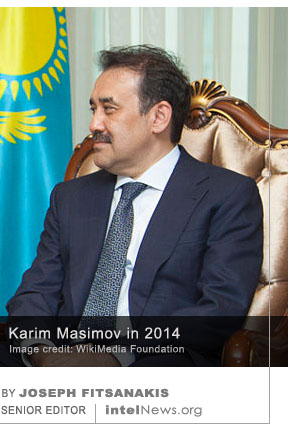
Kazakhstan arrests spy chief for treason as rift inside government widens

Karim MasimovIN A SIGN OF WIDENING disagreements within the government of Kazakhstan, the once supremely powerful head of the country’s internal intelligence agency has been fired. He was subsequently arrested by his own agency for alleged treasonable acts. Karim Masimov (or Massimov) served twice as prime minister of Kazakhstan under his political mentor, former President Nursultan Nazarbayev. Nazarbayev, who is traditionally referred to as the “father of the nation” kept Masimov in his inner circle of confidants throughout his nearly 30-year rule.


Masimov also served as director of Kazakhstan’s all-powerful National Security Committee (NSC). Founded in 1992, the NSC is one of several successor agencies to the Soviet-era Committee for State Security (KGB). The agency performs a wide array of counterintelligence functions, while also commanding a sizeable border guard force and having responsibility for counter-terrorism and covert action operations. It works closely with the Foreign Intelligence Service (also known as Syrbar, or KNB), which is Kazakhstan’s primary external intelligence agency.

In a surprise move, the government of Kazakh President Kassym-Jomart Tokayev, Nazarbayev’s hand-picked successor, fired Masimov from his NSC post on Wednesday. Masimov was reportedly replaced with his chief bodyguard. Less than 24 hours later, the NSC announced it had arrested Masimov, along with several other current and former government officials. In a statement posted on its website, the NSC said Masimov had been arrested as part of a “pre-trial investigation into high treason”. It is not currently known if this move is linked to the ongoing nationwide protests, which have resulted in the deaths of over 160 and the arrests of nearly 5,000 people.

In a report published on Friday, The New York Times, which was able to access the NSC statement about Masimov’s arrest, suggests that Masimov firmly belongs to the pro-Nazarbayev faction of the Kazakh government. This faction is now coming under increasing pressure by the pro-Tokayev faction, which wants to be seen as taking action against the corruption and nepotism associated with the Nazarbayev years. In doing so, President Tokayev is hoping to draw attention away from the shortcomings of his own rule, according to The Times.

Author: Joseph Fitsanakis | Date: 10 January 2022 | Permalink