Ex-CIA analyst accused of spying for South Korea had prior warnings from FBI, CIA
July 22, 2024 3 Comments
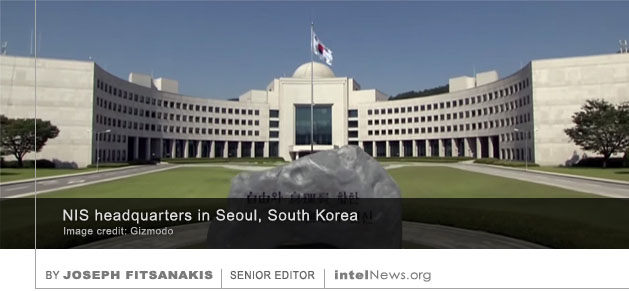 A FORMER INTELLIGENCE ANALYST for the Central Intelligence Agency (CIA), who is married to a high-profile columnist for The Washington Post, remains under arrest for allegedly spying for South Korea. According to an indictment unsealed last Tuesday in the Southern District of New York, the former CIA analyst is Sue Mi Terry, 54, of New York. Terry is a naturalized American citizen born in Seoul, South Korea, who grew up in Virginia and received a PhD from Tufts University in Massachusetts.
Terry joined the CIA in 2001 but resigned in 2008, allegedly “in lieu of termination” because her employer “had ‘problems’ with her contact with” officers from South Korea’s National Intelligence Service (NIS). After leaving the CIA, Terry worked briefly for the National Security Council and the National Intelligence Council, before transitioning to academia. Her most recent post was that of a senior fellow at the Council on Foreign Relations, where she became known as an exert on East Asian affairs with a focus on the Korean Peninsula. For over a decade, Terry has made frequent appearances on television and radio, as well as on several podcasts. She is married to the Washington Post columnist Max Boot.
The Department of Justice accuses Terry of failing to register under the Foreign Agents Registration Act and deliberately conspiring to violate that law, thus effectively operating as an unregistered agent of a foreign power. The indictment claims that Terry was gradually recruited by the NIS, beginning in 2013, two years after she stopped working for the United States government. Terry allegedly continued to work for the NIS for a decade, during which she was handled by NIS intelligence officers posing as diplomats in South Korea’s Washington embassy and permanent mission to the United Nations in New York.
It is alleged that throughout that time Terry provided her NIS handlers with access to senior US officials, disclosed “nonpublic US government information” to the NIS, and promoted pro-South Korean policy positions in her writings and media appearances. In return, Terry is alleged to have received luxury goods, free dinners at expensive restaurants, and nearly $40,000 in “covert” funding, nominally to operate a public policy program on Korean affairs. It is worth noting that, according to the unsealed indictment, the Federal Bureau of Investigation warned Terry that she should be wary of being approached by NIS officers seeking to offer her funding. Read more of this post
 THE UNITED STATES SECRET Service is among the world’s most prestigious law enforcement agencies. Its institutional experience in protecting US presidents and presidential candidates dates to 1901. Given its high-stakes protective mission —safeguarding the executive leadership of the world’s most powerful nation— the agency has historically placed emphasis on flawlessness: it simply can’t afford to fail.
 THE FORMER DIRECTOR OF the Netherlands’ intelligence service has been

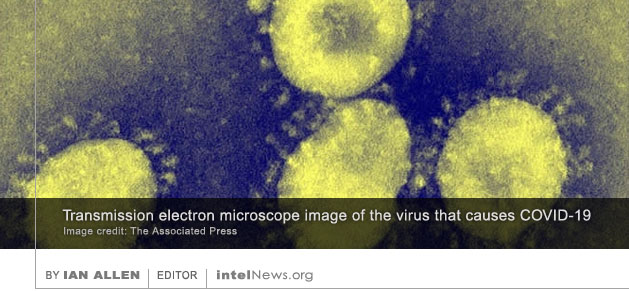 THE UNITED STATES DEPARTMENT of Defense ran a secret psychological operation on multiple social media platforms, aimed at undermining Chinese-manufactured vaccines against COVID-19. The controversial campaign was met with objections by several U.S. government officials, but continued for over a year, spanning both the Trump and Biden administrations.
 A RUSSIAN WOMAN IS under arrest in Denmark, reportedly in connection with a surreptitious legal fund that is allegedly connected to intelligence operations conducted by the Kremlin. The Danish Security and Intelligence Service (PET)
 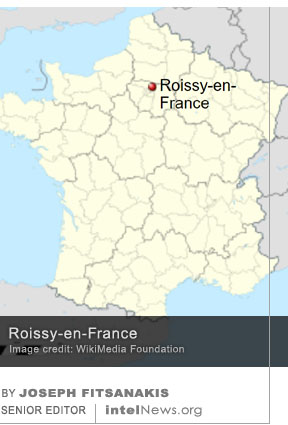 AN INVESTIGATION HAS BEEN launched in France after a Ukrainian-born Russian national reportedly detonated explosives in a hotel room near Paris, suffering severe burns in the process.
  FRENCH POLICE ARRESTED THREE foreign nationals on Monday, accusing them of having deposited five coffins draped in French flags at the foot of the Eiffel Tower. The flags bore the inscription “French Soldiers of Ukraine”, while the coffins were found to contain sacks of plaster, according to
  THE SPY CONFLICT BETWEEN China and the United Kingdom escalated last week, as the Chinese government accused a married couple of carrying out espionage missions on behalf of British intelligence. In a rare statement to the press, China’s Ministry of State Security (MSS)
  THE 5TH SYMPOSIUM ON the Law of Intelligence Services (Symposium zum Recht der Nachrichtendienste) took place in Berlin, Germany, on March 21-22. In view of the
  SEVERAL CASES OF CHINESE espionage have been
 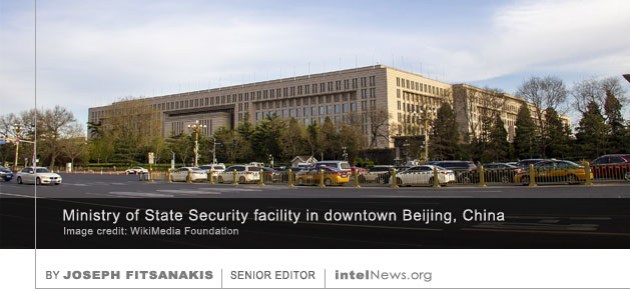 AUTHORITIES IN GERMANY HAVE arrested a sixth person in less than a month, in connection with three separate cases of espionage orchestrated by Russian or Chinese intelligence. Last Tuesday, police in the east German city of Dresden arrested an assistant to a leading politician of the far-right Alternative für Deutschland party (AfD). The assistant, who is a dual German-Chinese citizen, is accused of spying for Chinese intelligence, while the far-right politician who employed him is also being investigated, according to reports.
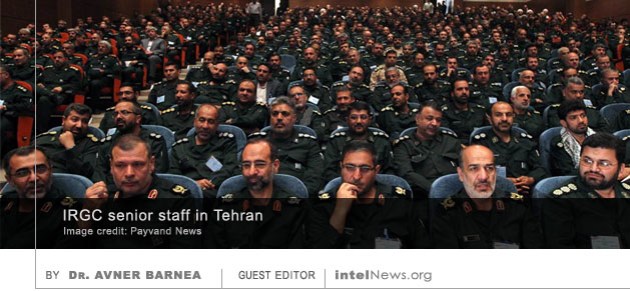 THE TARGETED KILLING OF Hassan Mahdawi, a high-ranking member of Iran’s Islamic Revolutionary Guards Corps (IRGC) and the commander of the Quds Force in Syria and Lebanon, was carried out by Israel on April 1, 2024. The actual assassination was based on precise operational intelligence, while Israel’s assessment of Iran’s response was wrong.






 intelNews.org
South Korea’s top HUMINT agency probes potentially catastrophic data breach
July 29, 2024 by intelNews 1 Comment
Formed under American tutelage in 1946, KDIC is today considered South Korea’s most secretive intelligence agency. It operates under the Defense Intelligence Agency (DIA), which makes it part of the Ministry of National Defense’s chain of command. Unlike DIA’s civilian counterpart, the National Intelligence Service, KDIC rarely surfaces in unclassified news reporting, and it almost never issues press releases. Its operations primarily involve HUMINT activities, thus making it South Korea’s most active HUMINT-focused agency.
Predictably, KDIC’s primary intelligence target is North Korea. The agency gathers much of its intelligence on the North through an extensive network of undercover officers operating with diplomatic credentials. KDIC also handles non-official cover (NOC) operatives, who are located mostly in Asia. There have been periodic claims in the unclassified literature that some KDIC NOCs have operated inside North Korea at times –though such claims remain speculative.
On Saturday, the Seoul-headquartered Yonhap News Agency alleged that classified information relating to KDIC had been “leaked”. According to Yonhap, the leak included personally identifiable information about KDIC official and non-official cover personnel stationed abroad. The report claimed that the leak was discovered by South Korean authorities a month ago, and that the discovery had resulted in the recall of several KDIC undercover operatives serving overseas “due to concerns over their identities being exposed”.
The Yonhap report claimed that, according to an ongoing probe, the leak may have originated from a personal laptop computer belonging to a civilian KDIC employee. The employee has since claimed that the laptop had been hacked, but some investigators believe the suspect may have “intentionally left the laptop vulnerable to hacking by North Koreans”.
According to an official statement released on Sunday by the Ministry of National Defense, the case is “currently under investigation by military authorities”.
► Author: Joseph Fitsanakis | Date: 29 July 2024 | Permalink
Filed under Expert news and commentary on intelligence, espionage, spies and spying Tagged with Defense Intelligence Agency (South Korea), HUMINT, KDIC (South Korea), Korea Defense Intelligence Command, News, non-official-cover, North Korea, official cover, South Korea