France accuses Russia of disinformation campaign using Star of David graffiti in Paris

Star of David graffitiTHE FRENCH GOVERNMENT HAS accused Russia of carrying out a disinformation campaign using stenciled images of Stars of David that mysteriously appeared in the streets of Paris late last month. The stars, between 60 and 80 in number, were found in the 14th arrondissement of the French capital, as well as in several Parisian suburbs in the early hours of October 31. The stars (see accompanying picture) are all blue and all have the same size. They appear to have been hurriedly stenciled and have no accompanying text.

A statement issued on November 8 by the prosecutor for the city of Paris, Laure Beccuau, said that police had identified and arrested a man and a woman in connection with the graffiti. Referencing surveillance camera footage, Beccuau’s statement said the two suspects had stenciled the stars overnight, working in unison with a third individual who took photographs of the graffiti. The statement added that the alleged perpetrators of the graffiti may have contacts with another couple, consisting of an unnamed 28-year-old Moldovan woman and a 33-year-old Moldovan man. Police had arrested the Moldovans in Paris on October 27, for painting the same stenciled Start of David on a building in Paris.

The statement by the Paris prosecutor alleges that both couples had been in contact “with the same third party”, a Russian-speaking individual who had offered to pay them in exchange for graffitiing the stars. “It therefore cannot be ruled out that the tagging of the blue Stars of David in the Paris region was carried out at the explicit request of a person living abroad”, the statement concludes. Some reports speculated that the graffiti may have been part of a campaign by a “foreign actor trying to undermine French social cohesion”.

Last Thursday, the French Ministry for Europe and Foreign Affairs openly accused Russia for carrying out a disinformation campaign aimed at amplifying the Star of David graffiti on social media, allegedly in order to discredit France. The ministry said the disinformation campaign reflected “a persisting opportunistic and irresponsible strategy of using international crises to create confusion and tensions in the public debate in France and in Europe”. Later on the same day, the Embassy of the Russian Federation in Paris issued a statement on social media, condemning France’s “groundless attempts to seek out a ‘Russian connection’ in events having no connection with our country and pin responsibility on Russia with the sole aim of discrediting it”.

Author: Joseph Fitsanakis | Date: 13 November 2023 | Permalink

Analysis: Israel’s misjudgment of Hamas caused the October 7 intelligence failure

Gaza StripSINCE OCTOBER 7, WHEN Hamas launched its surprise attack on Israel, many more details about the intelligence failure have emerged. It appears that Israeli intelligence officials have warned for years about military exercises held by Hamas in the Gaza Strip, which have included practice raids on cities deep inside Israel. However, the Israel Military Intelligence (IMI) did not heed to the warnings, because it considered Hamas operationally incapable of carrying out such raids. Instead, the IMI estimated that the Hamas leadership aimed to arrive at a settlement with Israel. That seems like the result of a highly successful disinformation operation, which added significantly to the effectiveness of the sudden attack on Israel on October 7.

It now appears that several months after the Israel Defense Forces (IDF) Operation Guardian of the Walls, which targeted Hamas in the Gaza Strip in May of 2021, Hamas began to train for a large-scale operation against Israel. However, the IMI estimated that Hamas was not capable of attacking aQ Quote large number of settlements simultaneously. It also believed that such an operation would go against the spirit of Hamas leadership’s spirit intention to settle with Israel.
As early as 2022, the IMI had analyzed videos of Hamas’ military exercises, which Hamas itself had made available on social media networks. Meanwhile, the intelligence information that emerged from the Gaza Strip showed that the professionalization of Hamas’ military arm, the Izz ad-Din al-Qassam Brigades, was improving. However, IMI officials rejected the need to build an operative response to the mass-attack scenario that these exercises pointed to, because they saw them simply as exercises.

Israeli intelligence also analyzed the communications discourse between the commanders of Hamas, which it had acquired through intercepts. It purportedly indicated that Hamas intended to carry out raids on Israeli communities located near the fence between Israel and Gaza, but also on targets located deeper inside Israel. The communications discourse also indicated that such attacks could occur, not only using tunnels, but with incursions above ground and even through aerial methods.

One of the methods that Hamas trained on, and one that was known to Israeli intelligence, focused on disabling the highly sophisticated observation posts, sensors and remote-controlled machine guns, which Israel has installed along the border fence with the Gaza Strip. The purpose of these exercises was to enable an attack on the fence and overtake it these sophisticated tools with Hamas operatives, thus effectively blinding the Israeli forces. However, Israeli authorities made no effort to prepare for such a scenario by protecting these installations.

The broad picture that is emerging raises serious questions about why the IDF did not take a reasonable course of action against Hamas’ operational plan —and why it failed to do so despite being aware of the intensity of the Hamas exercises, and despite being aware of the group’s stated intentions. Q QuoteIndeed, a preventive course of action should have been in place even in the absence of specific intelligence warnings —if only to enable the IDF to repel a surprise attack by Hamas. There was no need to estimate what Hamas would do in order to prepare for a surprise attack.

Yet it is now patently obvious that there was ample intelligence about Hamas’ intentions. The latter were both apparent and known. Even without the wisdom of hindsight, it is clear there was enough intelligence to enable Israel to act in a timely manner against Hamas’ plan. Yet Israel severely misjudged Hamas’ intentions. In retrospect, it appears that ample intelligence about Hamas’ intentions had been gathered, that the IMI and Shin Bet were severely underprepared for a surprise attack, that the precise details of Hamas’ attack were missed, and that Hamas’ intentions were misjudged. These are the reasons why Israel was caught unprepared and suffered a catastrophic surprise on October 7.

Author: Dr. Avner Barnea | Date: 10 November 2023 | Permalink

Dr. Avner Barnea is research fellow at the National Security Studies Center of the University of Haifa in Israel. He served as a senior officer in the Israel Security Agency (ISA). He is the author of We Never Expected That: A Comparative Study of Failures in National and Business Intelligence (Lexington Books, 2021).

China accuses ‘foreign governments’ of installing fake weather stations to collect data

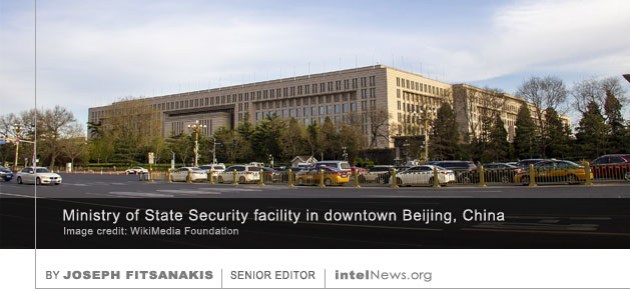
Chinese Ministry of State SecurityBEIJING HAS ACCUSED “FOREIGN governments” of collecting data on China through hundreds of fake meteorological stations that have been illegally installed throughout Chinese territory. The announcement appears to form part of a broader “people’s anti-espionage war” that the Communist Party of China launched in 2015 in order to create a “positive atmosphere of national security” across the nation.

On Tuesday of last week, China’s civilian spy agency, the Ministry of State Security (MSS), shared information about the alleged fake meteorological stations on its WeChat social media account. The agency said it had discovered hundreds of fake stations in over 20 Chinese provinces. The discovery resulted from an investigation of 10 firms that specialize in installing meteorological stations, which was broadened to include a probe of over 3,000 “foreign-linked” meteorological stations across China.

The MSS claims that some of the foreign companies involved in installing meteorological stations had not obtained the required administrative licenses. Furthermore, some of the stations had been placed in the vicinity of food-production hubs or defense-related installations, allegedly in order to record geolocational data. The latter were transmitted abroad in real time, the MSS said.

According to the spy agency, some of the fake meteorological stations were “directly funded by foreign governments”. However, there was no mention in the statement of the specific governments that allegedly funded these stations. Instead, the statement noted that “the illegal collection and cross-border transmission of meteorological data endangers China’s sovereignty, security, and development interests”.

It is rare for the reclusive and secrecy-prone MSS to make any public announcements relating to counter-espionage. In the past year, however, it has announced the arrests of several Chinese officials who allegedly spied on China for the United States Central Intelligence Agency. There is no information about whether the alleged fake meteorological stations are connected to prior arrests of Chinese officials for espionage.

Author: Joseph Fitsanakis | Date: 06 November 2023 | Permalink

Ex-Russian spy can sue British government for revealing his identity, court rules

High Court UKA FORMER SOVIET KGB officer, who now lives in the United Kingdom under witness protection, can sue the British state for revealing his identity to Latvian authorities, which may have put his life in danger, a judge has ruled. Boris Karpichkov, 64, joined the Soviet KGB in 1984, but became a defector-in-place for Latvian intelligence in 1991, when the Soviet Union disintegrated.

He then allegedly spied on Latvia for one of the KGB’s successor agencies, the Federal Security Service, before switching sides again and spying on Russia for the Latvians. He also claims to have spied on Russia for French and American intelligence. In 1998, carrying two suitcases filled with top-secret Russian government documents, and using forged passports, he arrived with his family in Britain, where he has lived ever since. Shortly after he was granted asylum, the British government issued Karpichkov with a new identity to protect him from the Russian security services. In 2018, Karpichkov claimed that, despite the British government’s efforts to protect him, Russian intelligence had tried to kill him three times since 2006.

Since Karpichkov’s relocation to the United Kingdom, Latvian authorities have twice attempted to have him extradited there. A High Court judge rejected the first extradition request, ruling that Karpichkov’s life would be in danger if he were to be handed over to Latvia. But in 2018 the Latvian authorities issued a follow-up request for Karpichkov’s extradition. At that time the United Kingdom’s National Crime Agency (NCA), which manages the UK Protected Persons Service, shared information about Karpichkov’s protected identity with the Latvians. A judge later quashed that extradition request too, warning that the former KGB intelligence officer had “an abundance of dangerous enemies in both Latvia and Russia”.

Karpichkov claims that the information that the NCA shared with the Latvians during the extradition negotiations, resulted in him receiving death threats from his enemies abroad. The NCA claims it was under a European Arrest Warrant legislation mandate to disclose Karpichkov’s protected identity to the Latvian authorities. On Friday, however, a High Court judge ruled that Karpichkov had the right to sue the NCA for unlawfully disclosing Karpichkov’s details in violation of data protection rules. This means Karpichkov is now entitled to file a lawsuit against the British government for allegedly misusing his private information.

Author: Joseph Fitsanakis | Date: 30 October 2023 | Permalink

Ukraine’s spy services are using assassinations as weapons or war, report claims

Security Service of Ukraine SBUTHE GROWING LIST OF assassinations of prominent Russians and Ukrainian separatists shows that the Ukrainian intelligence services are using “liquidations” as a weapon of war, according to The Washington Post. Citing “current and former Ukrainian and United States officials”, the paper said on Monday that funding and training by the Central Intelligence Agency (CIA) explains much of the success of Ukraine’s covert operations against Russia. However, the CIA is not involved in Ukraine’s state-sponsored assassination efforts at the operational level, and some US officials are uneasy about these activities.

A CIA Spy Directorate in Ukraine

In 2014, when Russia invaded Crimea, Ukrainian intelligence services were in an almost paralytic state. Like most of Ukraine’s state sector, the intelligence agencies were endemically bloated and closely resembled Soviet-style bureaucracies in sluggishness and corruption. More importantly, they were “riddled with Russian spies, sympathizers and turncoats”, according to observers. Few were surprised when, almost as soon as Russia annexed Crimea, the local head of the domestic security agency, the Ukrainian Security Service (SBU) defected to Russia.


According to The Washington Post, immediately after the Russian invasion of Crimea, the CIA sought to prevent further Russian encroachment in Ukraine. That is why in 2015 it built the SBU’s Fifth Directorate. That entirely new directorate was —and today remains— insulated from the rest of the SBU. The CIA also reportedly built a new division, complete with a brand-new headquarters building, inside Ukraine’s Main Directorate of Intelligence (GUR), which operates as the intelligence wing of the Ministry of Defense.

Active-Measures Training

Seeing the GUR as a more agile and flexible agency than the SBU, the CIA began to train GUR paramilitary “spetsnaz” divisions in “active measures” —a term that describes methods of political warfare, ranging from propaganda, sabotage operations, and even assassinations. However, The Washington Post claims that the CIA training focused on “secure communications and tradecraft” with an eye to enabling GUR teams to operate covertly behind enemy lines using clandestine maneuvers. Targeted assassinations were not included in the training. Read more of this post

In entering Gaza, the IDF will be facing not just Hamas, but Iran’s ‘Axis of Resistance’

Hamas GazaARGUABLY NO COUNTRY BENEFITED more from the American invasion of Iraq than the Islamic Republic of Iran. In a war that lasted over a decade, Washington spent over $2 trillion of its own funds to eliminate one of Iran’s most powerful regional adversaries. In the process, the invasion facilitated the rise of Iraq’s militant Shia movement, which today forms the core of the Iraq’s Popular Mobilization Forces (PMF). Although it is technically an auxiliary branch of the Iraqi security forces, the PMF regularly looks to Tehran for guidance.

The PMF belongs to what Iranian leaders refer to as the ‘Axis of Resistance’ (mehvar–e moqâvemat in Farsi), a term that denotes the extraordinary expansion of Iran’s influence in the Middle East and Central Asia in recent years. In addition to the PMF in Iraq, the Axis of Resistance incorporates an international coalition of dozens of armed groups, militant factions, Shia tribes, and political parties. They range from the Houthis in Yemen and the Hezbollah in Lebanon, to entire branches of the Syrian Armed Forces, and even Shia militias in Afghanistan, Azerbaijan, and Bahrain. The coalition also includes a complex mosaic of armed Palestinian groups, such as Palestinian Islamic Jihad and —increasingly after 2018— Hamas.

These actors are certainly disparate, and often contrast with each other. For instance, relations between Hamas and the Syrians have been strained for years. All of them, however, are united in their common anti-Western stance and contempt for pro-Western states in the Middle East, including Saudi Arabia and Israel. Moreover, their ties under the Axis of Resistance umbrella remain informal and relatively loose. However, they all receive support —including funding and training— from Iran’s Islamic Revolutionary Guards Corps (IRGC), a branch of the Iranian Armed Forces that protects and promotes the ideological inheritance of the 1979 Islamic Revolution.

Since 2011, the IRGC has viewed the Axis of Resistance as a vital element of its asymmetric military strategy. Its purpose is to help Iran successfully confront its much stronger adversaries, two of which —the United States and Israel— are nuclear-armed. That is precisely why Tehran has invested nothing short of a fortune to transform Hezbollah into what experts describe as “a force multiplier” that can give Israel a run for its money. In 2014, Tehran launched a similar effort in the Gaza Strip, initially with Palestinian Islamic Jihad —a group that, very much like Hamas, emerged out of the Egyptian Islamic Brotherhood in the 1980s.

The financial arrangement between Palestinian Islamic Jihad and Iran alarmed Hamas, which has controlled Gaza since 2008. Over time, however, Hamas too began to flirt with Iran’s Axis of Resistance, enticed by the lucrative funding and training opportunities offered by Tehran. By 2020, Hamas was actively engaging with the IRGC under the Axis of Resistance umbrella. To a significant extent, the operational sophistication of the October 7 attack on Israel, which was jointly led by Hamas and Palestinian Islamic Jihad, provided clear evidence of Iran’s patronage of these two militant groups. Because of Iran, the Palestinian armed factions in Gaza are today better-armed and better-trained than at any time in the past. They will likely demonstrate that in the coming days or weeks, as the Israel Defense Forces (IDF) begin their ground offensive on Gaza.

The big question, however, is how the other components of the Axis of Resistance will respond to the impending IDF attack. Read more of this post

Analysis: How Israeli Intelligence Failed to Anticipate the Hamas Attack

Hamas GazaSEVERAL DAYS HAVE PASSED since October 7, the day when Hamas stunned Israel with a surprise attack against several settlements near the Gaza border. It is now clear that Israeli intelligence was in possession of warning indicators about the attack, and that these indicators were misjudged.

The IMI and ISA Assessment

It is important to note that the intelligence division of the Israel Defense Forces (IDF), known as Israeli Military Intelligence (IMI), and the  Israel Security Agency (ISA), have been monitoring Hamas for years. These two agencies are believed to have conducted a situation assessment approximately two weeks before the October 7 attack. The assessment concluded that Hamas was deterred and had no interest in changing the status quo by attacking Israel in the short run. This assessment was communicated to Prime Minister Benjamin Netanyahu and Minister of Defense Yoav Gallant.

It appears that this assessment was not supported by concrete intelligence. The agencies that produced it relied primarily on monitoring the recent behavior of Hamas, including the fact that it was allowing Palestinians living in Gaza to work inside Israel. Additionally, the assessment noted the fact that Hamas was receiving funds from Qatar to help the poverty-stricken residents of Gaza. In retrospect, this assessment appears to have been based on wishful thinking.

The Egyptian Warning

It is now known that Abbas Kamel, Director of the Egyptian General Intelligence Directorate, sent a warning to Israel a few days before Hamas’ attack. Kamel allegedly warned of “something unusual, a terrible operation”, which was about to take place from the direction of Gaza. The warning was forwarded to Prime Minister Netanyahu’s office. The Israeli newspaper that published this report, Yedioth Ahronot, is known for its serious reputation and quality sources inside the Egyptian establishment. According to the report, Kamel was told by the Israelis that they were focused on preventing terrorist attacks in the West Bank.

Yet, in a speech that Netanyahu delivered immediately after the October 7 attack broke out, he denied claims about the Egyptian warning and claimed that they were fake news. However, American Congressman Michael McCaul, Chairman of the House Foreign Affairs Committee, said on October 11: “We know that Egypt […] warned the Israelis three days prior that an event like this could happen”. Speaking to reporters following a closed-door intelligence briefing on the crisis for American lawmakers, McCaul added: “I don’t want to get too much into classified [details], but a warning was given”. An Egyptian government source also asserted that Egyptian intelligence officials warned their Israeli counterparts that Hamas was planning “something big” ahead of the October 7 surprise onslaught. But this intelligence appears to have been ignored. Read more of this post

Analysis : Attack on Israel Points to Systemic Failure at All Levels

Hamas Israel - BarneaTHE COMPARISON BETWEEN THE October 2023 attack on Israel and the Yom Kippur War is reasonable. We still have an obscured perspective on what happened on October 7. But even this partial picture makes it possible to draw a preliminary comparison. Undoubtedly, there is no precedent for such a monumental failure in the history of Israeli intelligence.

The most striking difference between the two case studies is that in 1973 the system as a whole did not fail. The failure was personal, on the part of several key people, who did not perform according to expectations. The events of 2023 point to a systemic failure at all levels, not personal mistakes. The failure is at the level of intelligence warning, the military response to the attack, and even the actions of Israel’s political leadership.

An Intelligence and Military Failure

In 1973, the intelligence-gathering system was working well, and Egypt’s war intentions were known. Thousands of reports from observations along the Suez Canal spoke of the Egyptian preparations. The wireless transmissions that were issued testified to preparation for war in the Egyptian army. All this did not translate into a warning of war, due to the failed performance of some senior officers in the Israeli Military Intelligence (IMI), who stuck to their preconceived notions until the last moment.

In 2023, the failure is systemic. It involves both the level of collection and at the level of assessment. It relates both to the IMI and the Israel Security Agency (ISA). It has already become clear that the intelligence collection mechanisms failed to detect large-scale preparations for an all-out attack from the Gaza Strip. A massive intelligence system failed to detect the preparatory actions of the assailing forces.

When the perceived enemy is Palestinian civilians and when Israel Defense Forces (IDF) soldiers spend their time guarding settlements and worshipers, instead of engaging in hard training, the result is catastrophic. On October 7, we witnessed the operations of an army whose main mission is occupation. Given what we saw on that day, namely more than 1,000 civilian and military casualties and approximately 150 kidnapped Israelis, it is not clear how this army will be able to face the upcoming challenges in this war. The need for the professionalism and resilience of the IDF, which was there in 1973, continues to exist.

A Political Failure

The comparison between the political leadership of 1973 and 2023 is also discouraging. Back then, the root of the failure was that the intelligence information the leadership received from Eli Zeira, the director of IMI, who was the nation’s most senior intelligence officer, was distorted and false. It is now understood that the IMI’s assessments were based on the concept of reassuring the political leadership. Yet, Prime Minister Golda Meir and Minister of Defense Moshe Dayan were challenged after the war, and were eventually removed from their positions. However, they acted responsibly.

In contrast, there is not much to say about Israel’s current political leadership. It suffices to look at the composition of the Security Cabinet and the first leaks that have already begun to emanate from it, or at the surge of slander that members of the governing coalition have begun to heap on the finest of the IDF’s officers. It is nothing short of a disgrace and a disaster.

This war has just begun. It is still too early to draw conclusions. But we can examine the conclusions from the Yom Kippur War and assess their relevance to today. When Israeli Prime Minister Benjamin Netanyahu talks about revenge, it is advisable to remember those lessons. The conflict with the Palestinians is long and bitter. They will not give up their ambition for their state. It is now time to comprehend the full cost of the continuation of the conflict.

► Author: Avner Barnea | Date: 11 October 2023 | Permalink

Dr. Avner Barnea is research fellow at the National Security Studies Center of the University of Haifa in Israel. He served as a senior officer in the Israel Security Agency (ISA). He is the author of We Never Expected That: A Comparative Study of Failures in National and Business Intelligence (Lexington Books, 2021).

How Did Israel Miss This Attack? Some Likely Explanations

Gaza HamasTHE HAMAS-LED OPERATION al-Aqsa Flood, which began on October 7, marked the first large-scale conflict within the borders of Israel since the 1948 Arab-Israeli War. However, unlike the coalition of Arab armies it faced in 1948, Israel now confronts an alliance of sub-state groups. Led by Hamas’ military wing, the al-Qassam Brigades, this alliance includes the Syrian- and Iranian-backed Palestinian Islamic Jihad and a number of secular groups, such as the Fatah-aligned al-Aqsa Martyrs’ Brigades, the Popular Front for the Liberation of Palestine (PFLP) and the Democratic Front for the Liberation of Palestine (DFLP).

Such groups are lesser-known than Hamas; however, they often bring with them expertise in niche areas, such as handling networks of informants inside Israel, building sophisticated explosives, employing unmanned combat drones, or procuring specialized weaponry. They are therefore likely to have contributed greatly to the outcome of Operation al-Aqsa Flood. Their participation also enabled Hamas to launch what essentially amounted to a combined arms assault on Israel. The latter included coordinated land, sea and air elements, which were purposefully low-tech. That may explain why the assailants were able to short-circuit and overwhelm the purportedly impregnable security perimeter that Israel maintains around the Gaza Strip.

Iranian and Lebanese Coaching

Putting aside the individual low-tech elements of the operation, its overall level of tactical organization almost certainly points to considerable support from actors beyond the Gaza Strip. Such actors likely include networks of informants within Israel, as well as possibly Iran and its Lebanese proxy, Hezbollah. Both are well-versed in hybrid warfare and have studied Israeli defense systems more extensively than any other regional actor. Additionally, Iran’s Islamic Revolutionary Guard Corps (IRGC) and Hezbollah’s Lebanese Resistance Brigades are seasoned practitioners of deception operations. They likely coached Hamas, not only on how to carry out Operation al-Aqsa Flood, but more importantly on how to prevent Israel and its allies from gathering intelligence about it.

There is no question that an operation of such a magnitude must have taken months —possibly even years— to conceive, develop and organize. Such a complex process would have taken place under the watchful eyes and ears of Israeli and Egyptian intelligence agencies, who have historically faced little resistance in penetrating Palestinian militant groups, including Hamas. Yet none seem to have collected enough intelligence to anticipate the attack. It is equally stunning that the meticulous planning of Operation al-Aqsa Flood appears to have escaped the attention of American intelligence agencies, whose presence in the Middle East is significant. How was that even possible? Read more of this post

NSA, CIA senior officials address artificial intelligence threats and opportunities

Paul NakasoneLAST WEEK, TWO SENIOR UNITED States intelligence officials shared rare insights on artificial intelligence, as they discussed some of the opportunities and threats of this new technological paradigm for their agencies. On Wednesday, Lakshmi Raman, Director of Artificial Intelligence at the Central Intelligence Agency, addressed the topic during an on-stage interview at Politico’s AI & Tech Summit in Washington, DC. On Thursday, the National Security Agency’s outgoing director, Army General Paul Nakasone, discussed the same subject at the National Press Club’s Headliners Luncheon in the US capital.

Nakasone (pictured) noted in his remarks that the US Intelligence Community, as well as the Department of Defense, have been using artificial intelligence for quite some time. Thus, artificial intelligence systems are already integral in managing and analyzing information on a daily basis. In doing so, such systems contribute in important ways to the decision-making by the NSA’s human personnel. At the same time, the NSA has been using artificial intelligence to develop and define best-practices guidelines and principles for intelligence methodologies and evaluation.

Currently, the United States maintains a clear advantage in artificial intelligence over is adversaries, Nakasone said. However, that advantage “should not be taken for granted”. As artificial intelligence organizational principles are increasingly integrated into the day-to-day functions of the intelligence and security enterprise, new risks are emerging by that very use. For this reason, the NSA has launched its new Artificial Intelligence Security Center within its existing Cybersecurity Collaboration Center. The mission of the Cybersecurity Collaboration Center is to develop links with the private sector in the US and its partner nations to “secure emerging technologies” and “harden the US Defense Industrial Base”.

Nakasone added that the decision to create the Artificial Intelligence Security Center resulted from an NSA study, which alerted officials to the national security challenges stemming from adversarial attacks against the artificial intelligence models that are currently in use. These attacks, focusing on sabotage or theft of critical artificial intelligence technologies, could originate from other generative artificial intelligence technologies that are under the command of adversarial actors.

Last Wednesday, the CIA’s Raman discussed some of the ways that artificial intelligence is currently being put to use by her agency to improve its analytical and operational capabilities. Raman noted that the CIA is developing an artificial intelligence chatbot, which is meant to help its analysts refine their research and analytical writing capabilities. Additionally, artificial intelligence systems are being used to analyze quantities of collected data that are too large for human analysts to manage. By devoting artificial intelligence resources to the relatively menial and low-level tasks of data-sifting and sorting, the CIA enables its analysts to dedicate more time to strategic-level products.

At the same time, however, the CIA is concerned about the rapid development of artificial intelligence by nations such as China and Russia, Raman said. New capabilities in artificial intelligence, especially the generative kind, will inevitably provide US adversaries with tools and capabilities that will challenge American national security in the coming years, she concluded.

Author: Joseph Fitsanakis | Date: 02 October 2023 | Permalink

Canada expels Indian diplomat, accuses India of assassinating Canadian citizen

Sikh KhalistanTHE GOVERNMENT OF CANADA expelled a senior Indian diplomat on Monday, after accusing “agents of the government of India” of having perpetrated the assassination of a Canadian citizen on Canadian soil last June. Canadian Prime Minister Justin Trudeau released information about the alleged assassination during a rare emergency statement to parliament on Monday morning. He also warned India that Canada would continue to work with its allies around the world, including the United Kingdom, to unearth further intelligence about the alleged assassination.

The case involves the killing of Hardeep Singh Nijjar, who was gunned down on June 18, 2023, outside a Sikh cultural center in Surrey, British Columbia. Nijjar was an outspoken activist and a member of Canada’s Sikh community. The adherents of Sikhism follow a monotheistic religion that originated during the late 15th century in what today in northern India’s Punjab region. Many Sikhs support the creation of Sikh homeland, which they refer to as Khalistan —an aspiration that has sparked numerous armed conflicts in India’s history. The government of India considers such aspirations a threat to its national security and regularly refers to leading Sikh activists as terrorists.

Over half of the 1.4 million Canadians of Indian origin identify as Sikhs. This makes Canada’s Sikh population the largest in the world outside of the Punjab region of India. Canadian Sikhs tend to be outspoken in their criticism of the government of India. Many of them campaign openly about what they see as the need for the establishment of an independent Sikh homeland. Nijjar was one such outspoken activist, having risen “to become a prominent advocate for the creation of Khalistan”, according to one recent biographical article. Indian authorities had accused Nijjar of terrorism and had issued a warrant for his arrest.

On Monday, Prime Minister Trudeau referred to Nijjar’s assassination as “an unacceptable violation of [Canada’s] sovereignty, adding that the murdered man was Canadian citizen. He went on to state that Canadian security agencies had been “actively pursuing allegations of a potential link” between Nijjar’s death and “agents of the government of India”. The Canadian leader also called on the government of India “to cooperate with Canada to get to the bottom of this matter”. As of early this morning local time, the Indian embassy in Ottawa was not responding to requests for comment.

Author: Joseph Fitsanakis | Date: 19 Septembrer 2023 | Permalink

Germany charges two with ‘high treason’ for spying for Russia

FSB RussiaGERMANY HAS CHARGED TWO men, among them a German intelligence officer, with spying for Russia, in a case that has shocked German public opinion and alarmed Germany’s allies. The two men have been identified only as “Carsten L.” and “Arthur E.”, in compliance with Germany’s privacy laws. Carsten L. is accused of having provided the Russian Federal Security Service (FSB) with intelligence about the Russo-Ukrainian war, in return for nearly $500,000. Arthur E. is believed to have been Carsten L.’s accomplice and to have acted as an intermediate between him and his Russian handlers.

The German prosecutor general has charged both men with “high treason in a particularly serious case”. However, there is no public information about the timeline of Carsten L.’s recruitment by the FSB and his espionage for the Russians. He reportedly met his accomplice, Arthur E., a Russian-born German diamond trader, in Bavaria in 2021. After being recruited by Carsten L., Arthur E. is believed to have traveled frequently between Germany and Russia. During those trips, he is thought to have met with FSB officers in order to provide them with intelligence and receive payments.

When they announced the arrests of the two men back in January of this year, German officials said they had been tipped by a foreign intelligence agency. The foreign intelligence agency had allegedly found a document from the BND’s internal files in the possession of an unnamed Russian spy agency. However, the identity of the intelligence agency that provided the tip to the Germans is among several important details about this case that remain unknown for the time being. Among them are the estimated duration of Carsten L.’s alleged espionage for Moscow, the damage he caused to German intelligence, as well as his motives for spying for the FSB.

Author: Joseph Fitsanakis | Date: 12 September 2023 | Permalink

Two arrested in Britain for spying for China, report reveals

House of Commons Parliament Britain United KingdomAUTHORITIES IN BRITAIN HAVE arrested two individuals on charges of espionage, among them a researcher for the British parliament who is being investigated for spying for China. According to the British newspaper The Sunday Times, the two individuals were arrested on March 13 of this year in two different addresses. One of the suspects, reportedly in their 30s, was arrested in or around the city of Oxford. The other, reportedly an individual in their mid-20s, was apprehended in the Scottish capital Edinburgh.

A third address, located in an eastern borough or London, was also searched by the Counter-Terrorism Command of the Metropolitan Police, which is leading the investigation into the two suspects. Notably, the parliamentary researcher had worked for prominent members of the Conservative Party, including members of parliament. These reportedly included Alicia Kearns, who chairs the Foreign Affairs Select Committee of the British House of Commons. The Times reported that the suspect had also worked for the Minister of State for Security Tom Tugendhat. The Guardian newspaper reported that Tugendhat said he had not been in touch with the suspect since he assumed his current ministerial role in September of 2022. Kearns did not comment on the case.

The last time a British newspaper reported claims of Chinese espionage was in February of 2021, when The Telegraph reported on the expulsion of three Chinese citizens, who were working as journalists. The paper claimed that the three had been “quietly expelled” after they were caught carrying out espionage. Citing an anonymous “government source”, The Telegraph said that, according to Britain’s Security Service (MI5), the three Chinese journalists were in reality employees of China’s Ministry of State Security. The report did not provide details about when the three Chinese citizens had been expelled, saying only that the expulsions had occurred at different times in the previous year.

According to The Times, the two suspects who were arrested in last March were initially transferred to a south London police station, where they were arraigned. They were then released on bail and are expected to appear in court in October.

Author: Ian Allen | Date: 11 September 2023 | Permalink

Alleged Israeli spies with Russian citizenship arrested in Lebanon

Rafic Hariri International Airport Beirut LebanonLAST WEEK, LEBANON’S GENERAL Security Directorate charged two Russian citizens with spying for Israel. The two Russians, who appear to be legally married to each other, were detained by authorities at Beirut’s Rafic Hariri International Airport as they were attempting to leave the country. The detentions were reported by the Lebanese newspaper Al-Akhbar, which is affiliated with the Lebanese militant group Hezbollah.

According to the Al-Akhbar report, one of the suspects admitted that he had been recently recruited into Israeli intelligence. He also reportedly admitted that, as part of his espionage activities, he received maps of sites and instructions about gatherings at facilities in Lebanon belonging to the Hezbollah organization. He added that he had been instructed to access, inspect and, if possible, photograph these facilities. He also reportedly admitted that he had visited southern Lebanon and entered Hamas-controlled areas of southern Beirut, where he had collected data and verified it against the information available to his handlers.

The report added that the suspect’s wife, who was also arrested, admitted under interrogation that she was aware of her husband’s work and that she had assisted him in his tasks. According to the report the General Security Directorate had suspected the Russian citizen, because he had traveled in southern Lebanon several times. Lebanese authorities were able to track his movements and connections, eventually tracing his place of residence. He was arrested along with his wife soon after being notified by his handlers that he should leave the country immediately.

Al-Akhbar added that, prior to the arrest, the General Security Directorate had informed the Russian Embassy in Beirut of its intention to arrest the Russian citizens. The agency’s Director, Elias Elbisri, said following the arrest: “A spy ring for the benefit of the Israeli enemy was foiled at the Beirut airport, consisting of two people who tried to leave Lebanon”. According to Elbisri, “we carried out the necessary investigations; this cell posed a threat to Lebanon”.

Israeli authorities did not respond to news about the incident. It should be noted that, if Russian citizens were indeed recruited and employed by Israeli intelligence, this development could further-damage the relationship between Israel and Russia, which is already fragile due to ongoing developments in Syria and Ukraine. Israel regularly launches attacks on Iranian facilities and equipment in Syria —a Russian ally. Israel is also believed to provide security assistance to Ukraine, which is engaged in a bloody war over territory with Russia.

In recent days, there have been leaks in Israel that an intense debate took place in the Israeli Security Cabinet, following the rise in Palestinian acts of terrorism in Israel, which, according to Israeli security agencies, are guided by Hezbollah and Hamas. As a result, Hamas operatives in the Gaza Strip are taking protective actions, fearing the renewal of targeted killings by Israeli forces. Salah al-Aruri, commander of Hamas’ Izz ad-Din al-Qassam Brigades, who is directing his forces against Israel from abroad, could also be a target for the Israeli intelligence community.

Author: Avner Barnea | Date: 04 September 2023 | Permalink

Dr. Avner Barnea is research fellow at the National Security Studies Center of the University of Haifa in Israel. He served as a senior officer in the Israel Security Agency (ISA). He is the author of We Never Expected That: A Comparative Study of Failures in National and Business Intelligence (Lexington Books, 2021).

Leading German university suspends Chinese state-funded researchers

FAU UniversityONE OF GERMANY’S LEADING universities has suspended researchers funded by the Chinese government, citing concerns about academic freedom and industrial espionage. The Friedrich Alexander University of Erlangen-Nuremberg (FAU) announced the suspension of Chinese government-funded researchers in June of this year. In announcing the measure, the university stated that the move was designed to protect academic freedom and freedom of expression among its faculty and staff. Earlier this week, however, German media reported the contents of an internal FAU email, which expressed concerns that the Chinese state could be utilizing government-funded researches as spies.

Founded in Bavaria in 1743, FAU is among Germany’s leading universities. On June 1, it became the first university in Germany to suspend researchers funded by the China Scholarship Council (CSC). The CSC is an outreach unit of the Chinese Ministry of Education, which funds the work of Chinese researchers in foreign universities, while also providing scholarships to foreign citizens who apply to study in China. In January 2023, Swedish daily Dagens Nyheter reported that, in order to become recipients of CSC scholarships, Chinese citizens were required to pledge “support [to] the leadership of the Chinese Communist Party […] and to have a correct world view, outlook on life, and values system”.

On June 1, the FAU leadership announced that the CSC funding methods conflicted with Germany’s Basic Law (the country’s Constitution). Furthermore, according to the FAU leadership, the CSC funding methods violated the principles of academic freedom and freedom of expression for its faculty, as practiced in Germany. On Saturday it was reported that, according to an internal FAU email, university officials also expressed concerns that the Chinese state could use CSC researchers to spy on FAU scientific and industrial research, and to compromise FAU’s data security and intellectual property practices.

FAU’s decision was reportedly met with support by Germany’s Minister for Education, Bettina Stark-Watzinger, who said that German universities and research establishments have “a responsibility to safeguard themselves against espionage activities conduced by students receiving scholarships from the Chinese government”. It is also reported that other universities in Germany and elsewhere in Western Europe are considering following FAU in suspending CSC-funded Chinese researchers.

Author: Joseph Fitsanakis | Date: 31 August 2023 | Permalink