Rare case of female lone-wolf dissident republican ends in conviction in N. Ireland
June 22, 2017 1 Comment
 A British court has convicted a lone-wolf female dissident Irish republican, who plotted attacks against police officers after using Facebook to lure two men into joining a fictitious militant organization. Her two male accomplices took their own lives in recent months. The rare case centers on Christine Connor, a 31-year-old resident of Northern Ireland and self-described dissident republican.
The term ‘dissident republican’ refers to secessionist militants who campaign for the union between Northern Ireland —which currently belongs to the United Kingdom— and the Republic of Ireland, which gained its independence from the United Kingdom in 1922. In 1998, after a decades-long armed campaign, the majority of Irish republicans surrendered their weapons and accepted the terms of the Good Friday agreement, which outlines a peaceful resolution to the problem of Northern Ireland’s status. But some republican activists rejected the agreement and vowed to continue to use violence to achieve the union of Northern Ireland with the Republic of Ireland. These are known as dissident republicans and typically support a number of paramilitary secessionist groups, such as the Continuity Irish Republican Army and the Real Irish Republican Army.
But Christine Connor did not belong to any of these groups. Instead, she used Facebook to create a fictitious dissident republican organization called ‘United Struggle’, and declared war on the Police Service of Northern Ireland. She then created another fictitious social media account using the image of Sanne Alexandra Andersson, a Swedish model and fashion personality. Connor then used her fake online persona to lure two men into joining the militant organization that she claimed to lead. One of them was Stuart Downes, an Englishman from the town of Shrewsbury, near the Welsh-English border. She convinced him to build explosive devices, which the police described as “sophisticated, fully functioning bombs”. In May of 2003, Connor used the devices in an unsuccessful attempt to kill two police officers in north Belfast.
The lone-wolf militant used her fake social media accounts to lure another man, an American called Zachary Gelvinger, into joining ‘United Struggle’. Gelvinger, who sent hundreds of dollars to Connor’s organization, had his home searched by the Federal Bureau of Investigation, and was arrested in the United Kingdom while attempting to visit Connor in prison, in July of 2013. Downes, the Englishman, was arrested by police in Shrewsbury shortly after making a phone call from a public phone box to claim responsibility on behalf of ‘United Struggle’ for Connor’s failed attempt to kill the police officers in Belfast. Tragically, Downes killed himself in June of 2016. Gelvinger, the American member of ‘United Struggle’, killed himself in May of this year.
Remarkably, neither of the two men had any connection to Northern Ireland or any previous involvement in republican politics in or out of the United Kingdom. Last month, Connor pleaded guilty to a score of offenses, including terrorism. Last Tuesday, she was sentenced to 16 years in prison.
► Author: Ian Allen | Date: 22 June 2017 | Permalink
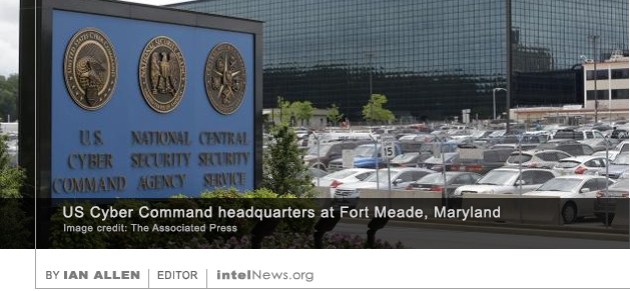 The global reach of the Islamic State through the use of the internet remains “largely intact” despite relentless efforts by some of America’s most advanced cyber warfare experts to neutralize the group’s online presence. It is now over a year since the United States Department of Defense announced that it had launched a cyber war against the Islamic State —the militant Sunni Muslim group that today controls large parts of Syria and Iraq.
 The Mossad, Israel’s primary intelligence agency, is preparing to launch a technology investment fund that will support Israeli-based hi-tech startups, with an eye to utilizing cutting-edge technologies in its spy operations. Israeli spy services are known internationally for their advanced use of technology in intelligence collection and special operations. But the planned investment fund is expected to systematize the Mossad’s use of cutting-edge technological solutions to intelligence challenges. It is
 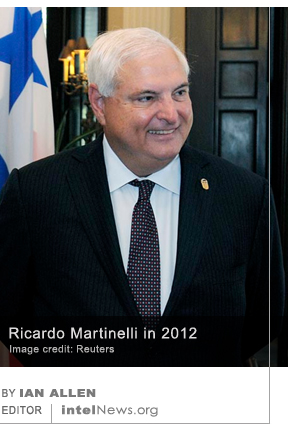 Police in the United States have arrested Panama’s former president Ricardo Martinelli, who is wanted in the Central American country on charges of using state resources to spy on his political opponents and business rivals. The center-right US-educated businessman won the 2009 presidential election in the country with a landslide, receiving over 60 percent of the national vote. His election prompted positive comments from Washington, because it marked a rare ascent to power of a conservative Latin American leader in a sea of socialist heads of state. But the euphoria did not last long. In 2014, Martinelli was succeeded in the presidency by his Vice President, Juan Carlos Varela. Varela promptly launched nearly 200 criminal investigations against his former political partner on issues ranging from embezzlement of state funds to political espionage.
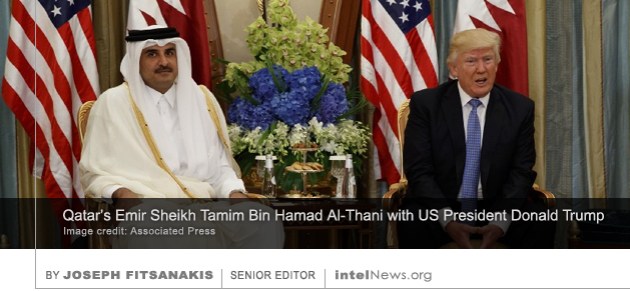 A former director of Qatar’s intelligence agency broke ranks with the government of Qatar and accused Doha of supporting terrorism. He also warned that the United States, which has a base in Qatar, would not allow the presence of foreign troops there.
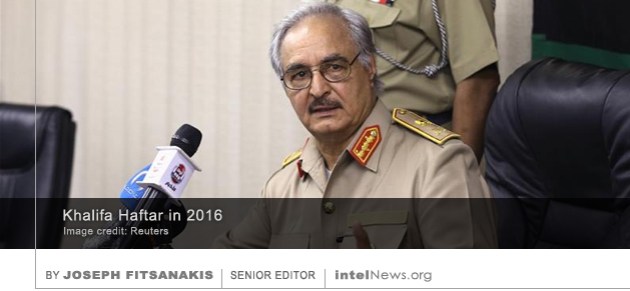 Secret military assistance from the United Arab Emirates and Saudi Arabia, which violates United Nations sanctions, is helping Libya’s eastern-based rebels prevail in the civil war there, according to a new report. Libya has remained in a state of anarchy since 2011, when a popular uprising backed by the West and its allies led to the demise of the country’s dictator, Muammar Gaddafi. Currently the strongest faction in the post-2011 Libyan Civil War is the eastern-based Tobruk-led Government, which is affiliated with the Libyan National Army (LNA). The commander of the LNA is Field Marshal Khalifa Haftar, an old adversary of Colonel Gaddafi, who lived in the US under Washington’s protection for several decades before returning to Libya in 2011.
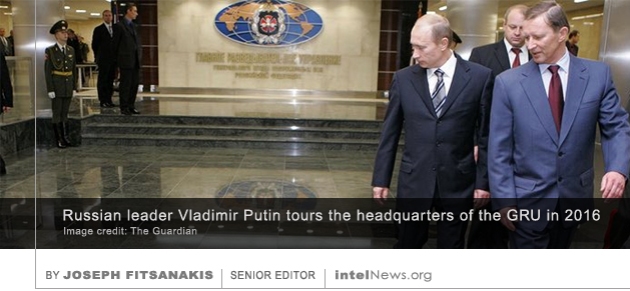 New information about carefully targeted attempts by Russian operatives to compromise the November 2016 presidential elections in the United States have emerged in a newly published intelligence document. The document, which dates from May of this year, was produced by the US National Security Agency and
  The security map of the Middle East changed within a few hours on Wednesday, when the Islamic State managed to strike Iran for the first time. Six assailants —five men and a woman— stormed the Islamic Consultative Assembly, which serves as the parliament of Iran, and the mausoleum of the founder of the Islamic Republic, Ayatollah Khomeini. By the time they killed themselves, or were killed by security forces, the six had murdered 12 people and injured over 60. The Islamic State, which carried out the attack, had warned for several months that it would launch a direct assault at the heart of
  the world’s largest Shiite state. It tried to do so before, several times, and failed. But
 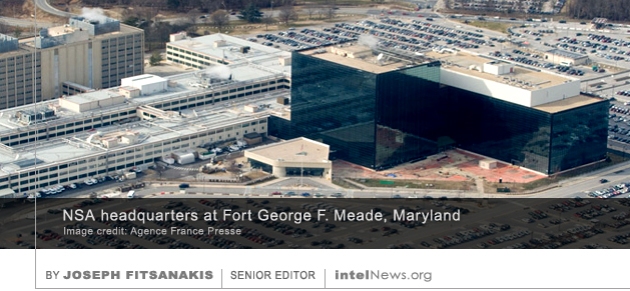 At first sight, the case of Reality Leigh Winner, a United States federal contractor who has been
  between leakers based on their motives. It does, however, distinguish between simple leakers and whistleblowers. If a US government employee uncovers evidence of abuse of power, or becomes aware of a specific and critical threat to the security of Americans, he or she is required to notify his or her superiors. If the latter refuse to take action, then the employee is justified under the law in taking all necessary actions to warn the public of impending peril. That is precisely the function of the 1989 Whistleblower Protection Act, which affords protection to insiders who expose abuses of authority, or a concrete and critical threat to public safety.
 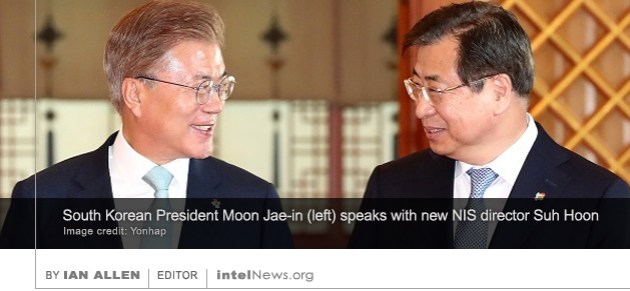 The new president of South Korea has officially banned the country’s spy agency from engaging in domestic intelligence gathering, in a move that some say signals an era of sweeping security reforms in the country. South Korea’s intelligence agency, the National Intelligence Service (NIS) fell into disrepute in recent years, after many of its officers were found to have secretly sided with conservative political candidates for public office. In 2015, the NIS’ former director, Won Sei-hoon, was
  Russian espionage in the United States has become increasingly sophisticated and brazen, and American counterintelligence professionals are finding it difficult to contain it “after years’ worth of inattention” according to sources.
  Ukrainian security service personnel raided the offices of a Russia-based internet search engine firm in two cities on Tuesday, as part of a treason investigation. The probe is reportedly related to the ongoing dispute between Kiev and Moscow, which intensified after 2014, when Russia unilaterally annexed the Russian district of Crimea. The Ukrainian government also accuses the Kremlin of clandestinely supporting pro-Russian insurgents in southeastern Ukraine, something that Moscow denies.
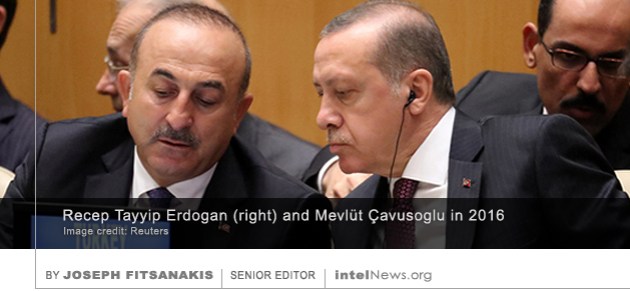 In a further sign of worsening relations between Turkey and the West, Turkey’s foreign minister has accused Western countries of secretly employing journalists to spread “terrorist” propaganda against his country. His claims come just days after European leaders strongly criticized Ankara for imprisoning foreign journalists without trial. During a meeting of North Atlantic Treaty Organization (NATO) leaders in Brussels last week, the German Chancellor Angela Merkel protested the arrest of Deniz Yücel, a reporter for German newspaper Die Welt, who was arrested in Turkey in February. Yücel, who is a German citizen, has remained imprisoned without trial for more than three months. Germany’s protests were
  The exiled half-brother of North Korea’s leader, who was assassinated in Malaysia in February, is thought to have met with a man believed to be an American intelligence officer shortly before he was killed, according to reports. Kim Jong-nam the grandson of North Korea’s founder Kim Il-Sung,






 intelNews.org
German intelligence agency spied on thousands of targets in the United States
June 23, 2017 by Joseph Fitsanakis 2 Comments
According to Der Spiegel, the list of targets in the United States includes officials in the White House, the Department of the Treasury and the Department of State. Their work and private phone numbers, and often emails, are listed in the BND document. The latter also focuses on the American military sector, paying particular attention to the US Air Force and the Marine Coprs. Other targets include the National Aeronautics and Space Administration and the Defense Intelligence Agency, the US Pentagon’s intelligence organization. In addition to US government targets, the BND exercised surveillance on American companies with ties to the state, such as Lockheed Martin, as well as state-owned universities. The leaked list also includes targets in international organizations that have an institutional presence in the US, such as the International Monetary Fund and the Arab League, which has an office in Washington. Hundreds of foreign embassies and consulates in the US were also targeted, said Der Spiegel.
German-American relations suffered a major setback in 2013, when it was revealed that Washington had spied on the personal cell phone of German Chancellor Angela Merkel. In response to the revelations, Germany expelled the Central Intelligence Agency’s station chief in Berlin —the most senior American intelligence officer in the country. It remains to be seen whether Thursday’s revelations will affect the current relations between the two transatlantic allies. Neither the BND nor the US embassy in Berlin responded to questions about Der Spiegel‘s report.
► Author: Joseph Fitsanakis | Date: 23 June 2017 | Permalink
Filed under Expert news and commentary on intelligence, espionage, spies and spying Tagged with BND, diplomacy, Germany, intelligence cooperation, News, United States