Israel revises intel-sharing rules with US, after alleged disclosure to Russians

Donald Trump and Benjamin NetanyahuAuthorities in Israel have revised their intelligence-sharing protocols with the American government after it became known that United States President Donald Trump inadvertently exposed Israeli secrets to Russia. The alleged exposure of Israeli secrets came earlier this month, during a meeting between Mr. Trump and a delegation of Russian government officials, which included Foreign Minister Sergey Lavrov and Sergey Kislyak, Moscow’s Ambassador to Washington.

During the meeting, the US President allegedly gave the two Russians details about plans by the Islamic State to smuggle explosives onboard airplanes, by hiding them inside laptop computers. However, according to reports in the American press, the information shared by Mr. Trump originated from Israel, which had voluntarily shared it with US intelligence. What is more, Tel Aviv had not authorized Washington to share the precise details behind this intelligence with other countries. Some reports in the US media suggest that Mr. Trump shared the Israeli-derived intelligence with the Russians in such a way as to expose ‘sources and methods’ —that is, the most sensitive aspects of the intelligence business, which intelligence agencies typically never disclose to adversaries. Additionally, even though the US president claims he never disclosed the source of the information, American media reports suggest that the Russians could easily determine that it came from Israel.

Israeli sources allegedly complained strongly to Washington, claiming that the intelligence shared by the US president “had put an [Israeli] agent’s life in peril”. Tel Aviv’s reaction appears to have been swift. On Wednesday, Israel’s Defense Minister Avigdor Liberman said in an interview that Tel Aviv promptly “did our checks” and “clarified [things] with our friends in the United States”. Speaking to Israel Army Radio, the official radio station of the Israel Defense Forces, Mr. Liberman said that Israel had done “a spot repair”, prompting the Voice of America to claim that the Jewish state had altered its intelligence-sharing methods with the US. Liberman was asked by the Israel Army Radio to clarify, but refused to specify what changes had been made in the Israel-US intelligence-sharing arrangements. He only added that “there is [now] unprecedented intelligence cooperation with the United States”.

Author: Joseph Fitsanakis | Date: 25 May 2017 | Permalink

US Special Forces carry out 100 missions ‘at any given time’ in Africa

US Special Operations forcesTeams of United States Special Forces are carrying out “nearly 100 missions at any given time” in the continent of Africa, according to American military documents released to the media. Operating under the US Special Operations Command (USSOCOM), US Special Forces are trained to carry out missions using unconventional tactics. Much of their work is classified. However, a Freedom of Information Act request by the New York-based Vice News has revealed extensive deployment of US Special Forces in Africa in recent times.

Information provided to Vice News by the USSOCOM appears to show that operations by US Special Forces in Africa have seen dramatic growth in recent years, possibly more than any other region of the globe. According to documents, US Special Forces in Africa represented just over 1 percent of all US Special Forces personnel stationed abroad in 2006. By 2010, that number had risen to approximately 3 percent —a significant increase but still relatively low in comparison to USSOCOM deployment in other regions of the world. But by 2016, over 17 percent of US Special Forces stationed abroad were based in Africa. Information unearthed by Vice News shows that 1,700 US Special Forces troops were stationed in 20 different African countries in 2016. This number indicates that there are now more US Special Forces troops stationed in Africa than in any other region of the world barring the Middle East.

Vice News said it obtained a report by US Special Operations Command Africa (SOCAFRICA), which states that US Special Forces were deployed in “at least 32 African nations in the 12 months of 2016”. Only the Middle East saw more deployments of US Special Forces than Africa. The report’s author, General Donald Bolduc, the commander of SOCAFRICA, wrote that the increasing presence of US Special Forces in the continent reflects the significance of the region for the US. “Africa’s challenges could create a threat that surpasses [that faced] from conflict in Afghanistan, Iraq and Syria”, wrote General Bolduc. The report does not specify how many missions USSOCOM carries out per year. The US Department of Defense did not respond to questions on the subject.

Author: Joseph Fitsanakis | Date: 23 May 2017 | Permalink
China dismantled large CIA spy network in 2010, say sources

CIAA few years ago, China busted an extensive network of secret operatives run by the United States Central Intelligence Agency. The CIA has yet to recover from the massive blow to its operations, say sources. The CIA has devoted substantial resources to gathering intelligence in China in recent years, and has painstakingly built a network of spies. The latter are Chinese nationals recruited by CIA officers to spy on Beijing on behalf of the United States. But, according to The New York Times, in early 2010 the CIA’s assets began to disappear one by one. By 2012, the Agency’s network of secret operatives in China had been all but wiped out.
According to the Times report, published on Saturday, the CIA lost as many as 20 agents on the ground in China, who were either executed or imprisoned by the authorities in Beijing. The paper cites “ten current and former American officials”, who claim that many of the agents had operated for years deep inside the Chinese state apparatus prior to their capture. At least one of them, say sources, was executed “in front of his colleagues in the courtyard of a government building” in an attempt to dissuade other government employees from spying on the Chinese state. At least 12 of the CIA’s assets in the country were executed between 2010 and 2012, according to The Times.

The damage to the CIA has been incalculable, according to sources, and the Agency is still recovering from the loss of an extensive network of operatives that took years to assemble. Sources described the loss of the network to the Times as “one of the worst in decades” and compared it to the loss of assets caused in the 1980s and 1990s by two notorious American spies for the Soviet Union and Russia, CIA officer Aldrich Ames and Federal Bureau of Investigation agent Robert Hanssen. At that time, dozens of agents and over 100 intelligence projects were compromised.

According to the report, the FBI and the CIA set up Project HONEY BADGER, a joint counterintelligence investigation into the China breach. But the results of the investigation reportedly remain inconclusive. Some argue that such a major dismantling of a network of assets could only have originated from a mole inside the US Intelligence Community. Others believe that the arrests of CIA agents resulted from a sophisticated Chinese computer hacking operation that targeted the CIA. A third theory posits that the breach was caused by the infiltration of the intelligence community of Taiwan, an important American ally in Southeast Asia.

Since 2012, the CIA has been trying to rebuild its network in China, but it will take it years to reach the level of sophistication in had achieved in 2010. The New York Times said it reached out to the CIA and FBI for comment but received no responses.

Author: Joseph Fitsanakis | Date: 22 May 2017 | Permalink

North Korea accuses US of murder plot as CIA opens new DPRK mission center

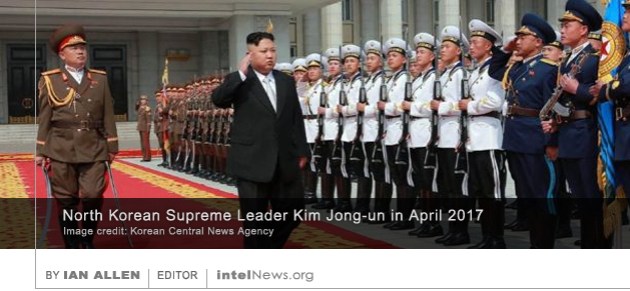
North KoreaThe United States Central Intelligence Agency has announced the establishment of a new center focusing on North Korea, shortly after Pyongyang accused Washington of plotting to assassinate its supreme leader. Last week, the regime’s Vice Minister of Foreign Affairs, Han Song Ryol, said the CIA tried to kill North Korean Supreme Leader Kim Jong-un. He was speaking during a meeting with foreign diplomats in the North Korean capital, where he repeated previously stated claims by government officials that American spies had tried to assassinate their country’s leader. According to Pyongyang, the plot involved an attack by a North Korean CIA agent, who had been trained in the use of a biochemical weapon by his handlers. The North Koreans also accuse South Korea of collaborating with the alleged CIA assassination plot, claiming that Seoul either bribed or blackmailed the would-be assassin.
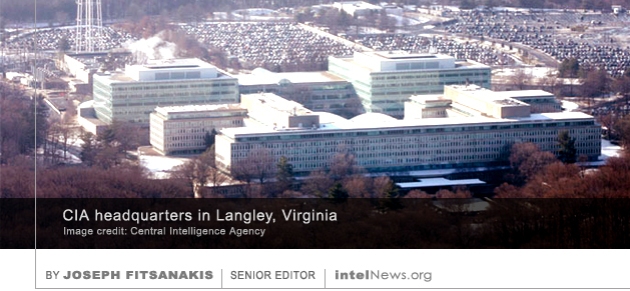
Meanwhile, the CIA announced last week that it has established a dedicated center focusing on developments in the Korean peninsula. The purpose of the center, said the CIA, is to “address […] the nuclear and ballistic missile threat posed by North Korea”. There are only 11 such centers in the CIA, which the Agency calls “Mission Centers”. They focus on specific issues or locations around the world, in accordance with the geopolitical priorities of the US policymaker community, led by the White House. The establishment of a dedicated Korean Mission Center is designed to reflect the elevation of the North Korean government’s missile program to a critical foreign-policy issue by the administration of US President Donald Trump.

The new Mission Center will be located at the CIA headquarters in Langley, Virginia, and will bring together several intelligence analysts and even operations officers from a variety of directorates and units across the Agency. The goal of the new Center, according to the CIA, is to “integrate [these individuals] in one entity” in order to produce regular situation reports and analytical forecasts from the troubled region. Speaking to reporters late last week, CIA spokeswoman Heather Fritz Horniak said that the new Mission Center would allow Langley to “harness the full resources, capabilities and authorities of the Agency” in dealing with Pyongyang. But she refused to comment on North Korea’s allegations that the CIA tried to assassinate the communist state’s leader.

Author: Ian Allen | Date: 17 May 2017 | Permalink

Canada suspected Soviets of stealing prime minister’s private diary

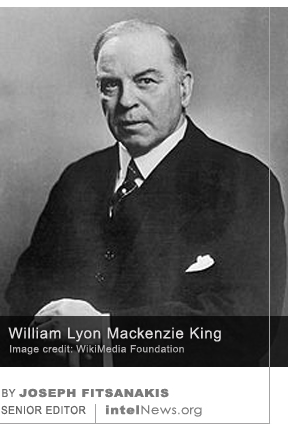
William Lyon Mackenzie KingCanadian officials speculated that Soviet spies stole a missing volume from the private diary collection of William Lyon Mackenzie King, Canada’s longest-serving prime minister, who led the country in the run-up to the Cold War. A liberal anticommunist, Mackenzie King was Canada’s prime minister from 1925 to 1948, with a break from 1930 to 1935. He is known for having led the establishment of Canada’s welfare state along Western European standards.
When King died in 1950, he left behind instructions asking for his private diaries to be destroyed. However, the executioners of his will decided instead to turn over King’s private papers —including his diaries— to the Canadian state. In 1975, the Library and Archives of Canada began releasing King’s private diaries to the public. The diaries contain daily entries that span over half a century, up until King’s death. One crucial volume, however, is missing. It covers the last two months of 1945, when Canada was engaged in intensive deliberations with the Allies about the shape of postwar Europe and Asia. These deliberations also involved frank discussions between King and his British and American counterparts about the atom bomb, and possibly measures to uncover suspected infiltration of Western government institutions by communist sympathizers.

Now a new book, written by Trent University history professor Christopher Dummitt, reveals
that Soviet spies were suspected of stealing the missing volume. The book, Unbuttoned: A History of Mackenzie King’s Secret Life, claims that the Canadian Security Intelligence Service (CSIS) was notified of the missing diary volume in 1969. Shortly afterwards, the CSIS launched an investigation into the missing memoir. In 1985, says Dr. Dummitt, a CSIS memo speculated that an agent of the Soviet KGB might have stolen the diary, because it contained information that was of interest to Moscow. Interestingly, however, the previous diary volume, which covers the case of Igor Gouzenko, is not missing. Gouzenko was a cipher clerk at the Soviet embassy in Ottawa, whose 1945 defection to Canada is sometimes credited with starting the Cold War. Why would a Soviet spy not steal that volume as well, the skeptics ask?

Professor Dummitt entertains a simpler idea in his book, which is that Jean-Louis Daviault, an employee of the Library and Archives of Canada, may have stolen the volume. Daviault, who had been tasked with photographing King’s diary collection, was caught trying to sell parts of the diary to a Canadian newspaper. It was probably he who stole the missing volume, in order to sell it to the press, or a rival intelligence agency, argues Dr. Dummitt.

Author: Joseph Fitsanakis | Date: 17 May 2017 | Permalink

New book reveals how MI5 infiltrated the British communist party

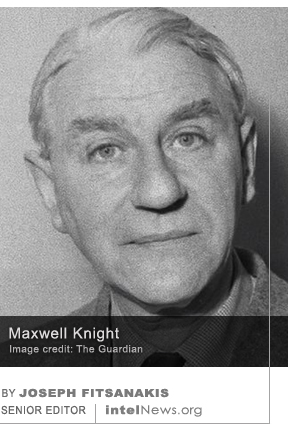
Maxwell KnightA new biography of famed British Security Service spymaster Maxwell Knight reveals that a number of prominent British communists were secret government agents in the 1930s. After serving in the British Royal Navy during World War I, Knight was recruited by the Security Service, Britain’s domestic intelligence agency, which is commonly known as MI5. He eventually rose to lead the agency’s Section B5(b), which was responsible for using agents to infiltrate political groups deemed radical by the authorities. During the interwar years, under Knight’s leadership, Section B5(b) focused largely on British fascist organizations, but also infiltrated the Communist Party of Great Britain. Knight, who died in 1968, left an indelible mark on the character and operations of MI5. He also served as a model for the character of ‘M’, the fictional director of the British Secret Intelligence Service (MI6) in the novels of Ian Fleming, creator of James Bond.
Now Preface Publishing has issued a new biography of Knight, authored by British author Henry Hemming. The book, entitled M: Maxwell Knight, MI5’s Greatest Spymaster, is largely based on the diaries of Knight. It reveals the identities of a number of MI5 agents that worked for the late spymaster in Section B5(b). They included British intellectuals, artists, activists and at least one barrister, Vivian Hancock-Nunn. A leftwing legal counsel, Hancock-Nunn provided pro-bono legal services to the publications of the Communist Party of Great Britain. However, is is now believed that he was agent M/7, run by Knight’s Section B5(b). Another agent, codenamed M/1 by Knight, was Graham Pollard, son of a highly respected British historian, who broke ranks with his wealthy family to join the Communist Party in the 1920s. By 1933, Pollard was a prominent and influential member of the Party, and regularly penned fiery articles in the Daily Worker, the Party’s newspaper. Hemming’s book, however, reveals that Pollard was an agent of MI5, who went as far as marrying a prominent communist activist in order to build his cover.

Hemming notes that some of the most prolific agents run by Knight were women. Three of them, Kathleen Tesch, Olga Grey and Mona Maund, infiltrated various levels of the Communist Party, which was known for its relatively inclusive treatment of women at the time. Knight relied on them for regular reports about the Party’s activity, despite the objections of his superiors, who believed that women should have no place in intelligence operations. The book’s author also notes that he was not able to confirm the identities of these agents in MI5 archives, because they remain classified. However, he told British newspaper The Guardian that he was “99.9 percent certain” of the accuracy of his information.

Author: Joseph Fitsanakis | Date: 12 May 2017 | Permalink

FBI acting head says he will report attempts to stop Russia probe

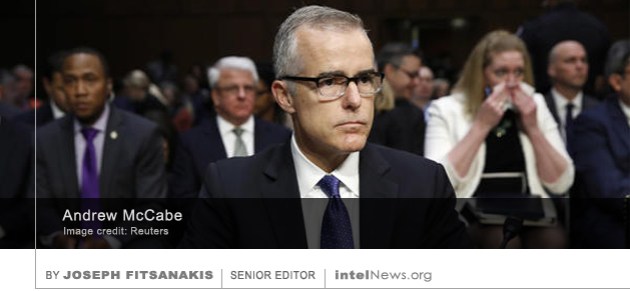
Andrew McCabeThe interim director of the Federal Bureau of Investigation has told an intelligence panel in the United States Senate that he will not hesitate to report any attempts by the White House to interfere with an official investigation into Russia’s role in the 2016 presidential election. Andrew McCabe assumed the leadership of the FBI on Tuesday, after US President Donald Trump abruptly fired the Bureau’s director, James Comey. A trained lawyer who joined the FBI in 1996, McCabe amassed significant experience in countering organized crime and terrorism before being appointed Deputy Director of the Bureau in 2016.
It is worth noting that Republican Party officials have criticized McCabe for being close to former Democratic Party presidential candidate Hillary Clinton. McCabe’s wife, Dr. Jill McCabe, campaigned for a seat in the Virginia State Senate in 2015, on a Democratic Party ticket.

McCabe spoke on Thursday before the US Senate’s Select Committee on Intelligence, along with the directors of five other American intelligence agencies, including the Central Intelligence Agency and the National Security Agency. During their testimony, the six intelligence officials repeated their agencies’ previously stated claims that Moscow engaged in systematic efforts to assist the election of Donald Trump in last November’s presidential elections. McCabe also responded to specific questions by Democratic senators about alleged attempts by the White House to prevent probes in to Russia’s alleged intervention.

When asked by Democratic Senator Mark Warner whether he would inform the Senate’s Select Committee on Intelligence of attempts by the Trump administration to stop the probe, McCabe responded saying: “I absolutely do”. There are currently at least three parallel investigations into Russia’s alleged involvement in the US presidential elections, of which the Senate’s is one. The US House of Representatives and the Department of Justice are also conducting separate investigations.

Author: Joseph Fitsanakis | Date: 12 May 2017 | Permalink

Israeli spy agencies’ budget has doubled in ten years

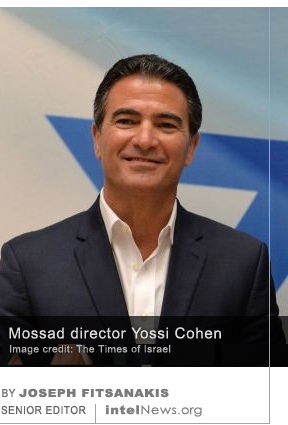
Yossi CohenThe combined budget of the two primary intelligence agencies of Israel, the Mossad and the Shin Bet, has doubled in the past decade, according to a report issued by the Israeli Ministry of Finance. Shin Bet is Israel’s domestic intelligence service, and is primarily responsible for counterterrorism and counterintelligence. The Mossad is Israel’s primary intelligence service, which means that it collects intelligence from foreign targets. The secretive agency also conducts covert and clandestine operations when authorized to do so by Israel’s government. The two agencies tend to work together with varying degrees of succces, but have distinct budgets.
Last week saw a rare instance of the release of a government report on the finances of these two agencies, which tend to shy away from discussing details about their financial scope. The information was included in a larger report about the Israeli government budget for 2018. The Finance Ministry report said that the 2018 budget for the Shin Bet and the Mossad will reach 8.6 billion shekels in the coming year. That amounts to approximately $2.5 billion. The ministry report noted that the budget for the two spy agencies has increased by just under 10 percent since last year. The same budget for 2017 was 7.8 billion shekels. That represented an increase of 300 million shekels from the 2016 budget.

Observers noted, however, that, although seemingly incremental, Israel’s spy budget for the Shin Bet and the Mossad appears to have doubled in just a decade. In 2006, under the leadership of Israeli Prime Minister Ehud Olmert, the combined Shin Bet/Mossad annual budget was below 4.5 billion shekels. By 2009, when Olmert was succeeded by Benjamin Netanyahu, the budget for the Shin Bet and the Mossad had reached 5.3 billion shekels. But Netanyahu, who promotes his image as a big believer in the capabilities of the Israeli intelligence community, presided over large budgetary increases for the Shin Bet and the Mossad alike. During his presidency, the Israeli intelligence community has seen near-unprecedented rates of growth in both its size and wealth.

Author: Joseph Fitsanakis | Date: 08 May 2017 | Permalink

Swiss officials defend alleged spying on German tax-fraud investigators

SwitzerlandSenior Swiss government officials, including the defense minister and the director of the country’s intelligence agency, have defended Switzerland’s right to spy on European tax-fraud investigators who meddle in Swiss affairs. Earlier this week, German authorities announced the arrest of a Swiss national who was allegedly spying on the activities of German tax-fraud investigators in Frankfurt. According to German officials and media reports, the man, identified only as Daniel M., is an employee of the Swiss Federal Intelligence Service. The agency, known by its German-language initials, NDB, is Switzerland’s main intelligence organization.
As intelNews reported on Monday, Daniel M. was said to be monitoring the activities of German tax-fraud investigators who have been trying for years to stop German citizens from having secret bank accounts abroad. In the past decade, German authorities have paid nearly $100 million to employees of Swiss banks in return for information about the identities of German bank account holders in the small alpine country. The Swiss government has strongly criticized Berlin for encouraging Swiss banking sector employees to steal internal corporate information, a practice that goes against Switzerland’s stringent privacy laws. On Tuesday, Germany’s Foreign Minister, Sigmar Gabriel, summoned Switzerland’s ambassador to Germany, Christine Schraner Burgener, to the Foreign Ministry, in order discuss Daniel M.’s arrest. A press statement that the Foreign Ministry sent on Tuesday to the German media said that the meeting had been called “in the interest of German-Swiss friendship”.

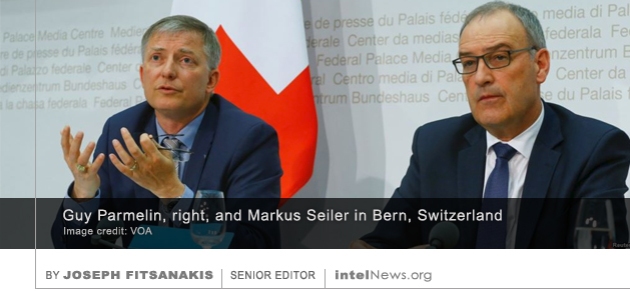
But the Swiss do not appear to be interested in discussing. On Tuesday, Markus Seiler, Director of the NDB, defended his agency’s right to spy on anyone who “uses illegal methods in Switzerland to steal state or business secrets”. Seiler, who was speaking in Bern, classified all such practices as espionage targeting the the Swiss economy. Asked by reporters whether Daniel M. was an NDB employee, Seiler said he could not comment. But he defended the NDB’s right to “fight the theft of business secrets” and “uphold Swiss laws”. He also refused to specify whether the NDB is active in Germany, stating instead that the agency is “active at home and abroad”. Switzerland’s Minister of Defense, Guy Parmelin, who supervises the NDB’s activities, was equally general when asked to discuss the arrest of Daniel M. He said simply that he and other Swiss government officials had to “protect [the NDB’s] methods and sources”.

Author: Joseph Fitsanakis | Date: 04 April 2017 | Permalink

CIA director makes unannounced visit to South Korea to discuss tensions

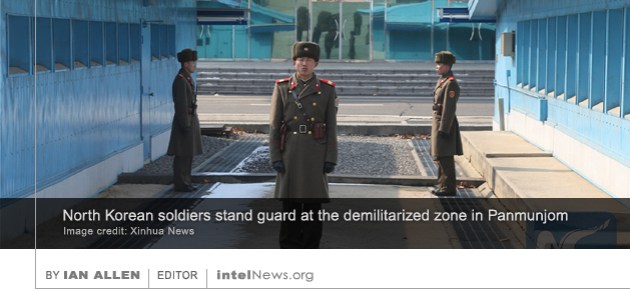
Korean DMZThe director of the United States Central Intelligence Agency made an unannounced visit to South Korea over the weekend, to discuss the rising tensions in the Korean Peninsula with his South Korean counterpart and other senior officials. A spokesperson from the US embassy in Seoul made an official announcement on Monday, in which he revealed the visit by Mike Pompeo, the CIA director who was appointed by US President Donald Trump in January of this year. When asked for details, however, the spokesperson refused to provide them. Consequently, Pompeo’s date of arrival to Seoul remains unknown, as is his date of departure. It is believed that he is now back in the US.

During his visit to the South Korean capital, Pompeo met with South Korean counterpart, Lee Byung-ho, who heads South Korea’s National Intelligence Service. South Korean media reports said Pompeo also met with senior officials in the office of the South Korean president. Additionally, he is said to have held several meetings with American intelligence and military officials stationed in South Korea, including a meeting with General Vincent Brooks, commander of United States Forces Korea. Reports in local media outlets said Pompeo’s visit aimed to coordinate American and South Korean intelligence responses to what Washington claims is increasing provocation by North Korea. The United States objects to North Korea’s repeated missile tests in recent weeks. On Saturday, Pyongyang attempted to launch a missile without success. The attempt, the third one in a month, elicited strong criticism from Washington and Seoul.

Pompeo’s trip to Seoul marked the fourth visit to South Korea by a senior US government official in recent weeks. The CIA director’s unannounced visit was preceded by separate official visits to Seoul by US Vice President Mike pence, Secretary of State Rex Tillerson, and Secretary of Defense James Mattis. Additionally, last Wednesday the White House organized an “extraordinary national security briefing” about North Korea for members of the United States Senate. The briefing featured presentations by senior American diplomats and military officials.

Author: Ian Allen | Date: 02 May 2017 | Permalink

Germany arrests Swiss spy who was monitoring tax-fraud investigators

Frankfurt AirportAuthorities in Germany have announced the arrest of a Swiss national who was allegedly spying on the activities of German tax-fraud investigators in Frankfurt. According to prosecutors in the German state of Hesse, of which Frankfurt is the largest city, the Swiss man was arrested on Friday and is currently in custody. He has been identified only as Daniel M., and is believed to be in his mid-50s. According to news reports, German counterintelligence officers had been monitoring the suspect for over a year. They were issued a warrant for his arrest in December of last year, but waited until he was on German soil to arrest him. He was arrested at Frankfurt Airport.
German federal prosecutors said simply that Daniel M. was employed in the financial and banking sectors of Germany until early 2012. However after that time, he is believed to have been employed by “the intelligence service of a foreign power”. German officials refused to identify the “foreign power”. However, the Berlin-based German newspaper Die Welt said on Sunday that the Swiss man arrested on Friday is an employee of the Swiss Federal Intelligence Service. The agency, known by its German-language initials, NDB, is Switzerland’s main intelligence agency, tasked with safeguarding the security of the small alpine nation by collecting and analyzing information.

The question is, what was a Swiss spy doing in Germany, and why was he arrested? According to Die Welt, Daniel M. was monitoring the activities of German tax-fraud investigators who have been trying for years to stop German citizens from having secret bank accounts abroad. The German government believes that billions of euros are deposited by its citizens in banking institutions in European tax-havens like Liechtenstein, Switzerland or Monaco. For the past decade, German authorities have resorted to bribing whistleblowers in offshore banks in order to acquire internal documents that reveal the identities of German citizens who are hiding their money in foreign bank accounts. It is estimated that over a hundred million dollars have been paid to whistleblowers by German authorities since 2006. The latter argue that the proceeds collected from unpaid taxes and fines more than justify the payments made out to whistleblowers. But the Swiss government has strongly criticized Berlin for encouraging Swiss banking sector employees to steal internal corporate information that often breaks Switzerland’s stringent privacy laws.

It is believed that Daniel M. was arrested while monitoring efforts by German tax-fraud investigators to approach potential whistleblowers working in the Swiss banking sector. Soon after the Swiss man’s arrest, officers from Germany’s Federal Criminal Police Office (BKA) searched a hotel room, several apartments and a number of business premises in Frankfurt and nearby cities. It is worth noting that Frankfurt is a major global financial center, which also hosts the headquarters of the European Central Bank. If found guilty, Daniel M. could face up to 10 years in prison for espionage.

Author: Joseph Fitsanakis | Date: 01 May 2017 | Permalink

French spy agencies conclude Assad government was behind Syria gas attack

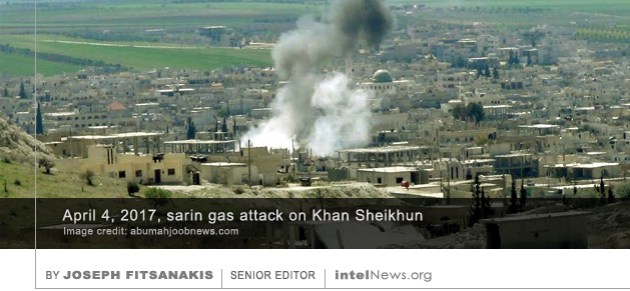
Khan SheikhunA comprehensive report released yesterday by the French Intelligence Community concludes with certainty that the government of Syrian President Bashar al-Assad was behind the April 4 sarin gas attack in northwestern Syria. The report, a “national evaluation” based on France’s own intelligence sources and scientific analysis of samples collected from the site of the attack, indicates that the poison gas used in the attack came from stockpiles that belong to the Syrian government.

The sarin gas attack targeted Khan Sheikhun, a town of approximately 50,000 people in the southern region of Syria’s Idlib Governorate. The city is located on the main highway that connects the Syrian capital Damascus with the city of Aleppo in the north of the country. The surprise attack killed nearly 100 people and drew near-universal condemnation from the international community. It also sparked a military attack by the United States, which launched a missile attack at a Syrian military base from where the sarin gas attack allegedly originated.

On Wednesday, France’s Minister of Foreign Affairs, Jean-Marc Ayrault, announced the publication of a report, which, he said, proves conclusively that the Syrian government perpetrated the attack. The six-page declassified version of the report concludes that “the Syrian armed forces and security services perpetrated a chemical attack using sarin against civilians”. It alleges that the conclusion rests on “intelligence collected by our services”, which includes “samples from the scene of the attack”. The latter are reportedly identical with samples collected from sites of previous chemical attacks perpetrated by the Syrian government. Additionally, the French report concludes that the attack was conducted with the use of airplanes, which the Syrian rebel forces do not have.

The French intelligence report comes after a similar report from the United States concluded that Assad’s government was behind the attack on Khan Sheikhun. A few days after the attack, medical tests conducted on victims of the attack by Turkish experts showed that sarin gas had been used, but did not implicate a specific culprit. The Syrian and Russian governments deny all involvement in the attack and claim that it was carried out by al-Qaeda-linked rebels.

Author: Joseph Fitsanakis | Date: 27 April 2017 | Permalink

Same hacker group is targeting French and German elections, says report

Konrad Adenauer FoundationThe same group cyber-spies that attacked the campaign of French presidential candidate Emmanuel Macron is now attacking German institutions that are connected to the country’s ruling coalition parties, according to a report by a leading cyber-security firm. The Tokyo-based security software company Trend Micro published a 41-page report on Tuesday, in which it tracks and traces the attacks against French and German political targets over the past two years. The report, entitled From Espionage to Cyber Propaganda: Pawn Storm’s Activities over the Past Two Years, concludes that the hackers are seeking to influence the results of the national elections in the European Union’s two most powerful nations, France and Germany.
The Trend Micro report focuses on a mysterious group that cyber-security experts have dubbed Pawn Storm —otherwise known as Sednit, Fancy Bear, APT28, Sofacy, and STRONTIUM. It says that the group has launched an aggressive phishing campaign against German political institutions, which has intensified in the past two months. The group allegedly set up fake computer servers in Germany and the Ukraine, and used them to try to infiltrate the computer networks of two elite German think-tanks, the Konrad Adenauer Foundation (KAF) and the Friedrich Ebert Foundation (FEF). The KAF is connected with the Christian Democratic Union party, which is led by Germany’s Chancellor, Angela Merkel. The FEF has strong ties with the centrist Social Democratic Party, which is part of Germany’s governing alliance.

The report’s leading author, cyber-security expert Feike Hacquebord, told the Reuters news agency that the hackers were possibly seeking to infiltrate the two think-tanks as a means of gaining access to the two political parties that are connected with them. Some cyber-security experts in Europe and the United States have said that the Russian Main Intelligence Directorate, the country’s military intelligence agency, known as GRU, is behind the cyber-attacks on France, Germany and the United States. But the Trend Micro report did not attempt to place blame on Moscow or any other country for the cyber-attacks. The Kremlin has denied involvement with the alleged hacking operations.

Author: Ian Allen | Date: 26 April 2017 | Permalink

Iranian spies second most active in Germany, says Interior Ministry

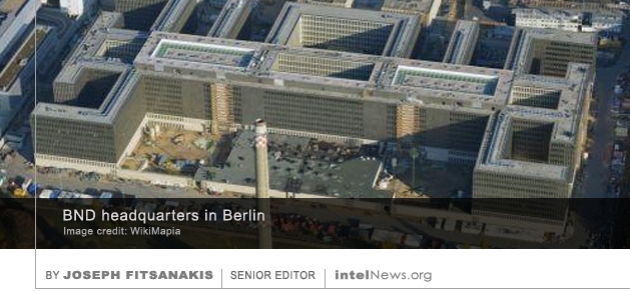
BND GermanyIranian intelligence operatives are the second most active in Germany after Russian spies, with much of their activity focusing on Israeli targets in the country, according to the German Interior Ministry. The information is contained in a report that was issued in response to a request by a member of Germany’s Bundestag last week. It states that Iranian spies have engaged in nearly two dozen known intelligence operations on German soil since 2007, and have even targeted individuals for assassination.
The Interior Ministry’s report reveals that German authorities initiated counterintelligence investigations against 22 cases of espionage by Iranian agents during the past decade. These account for over 17 percent of all counterintelligence cases conducted by the German state since 2007. Of the remaining cases, 27 concerned Russian spies, while China and Turkey are believed to be behind 15 spy cases each. Syrian intelligence operatives were found to be behind a total of eight spy operations conducted on German soil in the past decade. According to the report, the majority of intelligence operations conducted in Germany by Iranian agents were attempts to secure material and technologies that could be used in Iran’s nuclear program. Approximately half of Germany’s federal states reported attempts by Iranian agents to secure nuclear-related goods in recent years.

But Tehran has also allegedly been implicated in attempted assassinations of German citizens, according to the report. One example mentioned in the document is that of Mustafa Haidar Syed-Naqfi. Sayed-Naqfi, who is a Pakistani national, was arrested in the northern German city of Bremen in January of this year for spying on behalf of Iran. According to German authorities, the Pakistani man compiled lists of potential targets for assassination by Iran. As intelNews reported at the time, Syed-Naqfi’s list of targets included prominent Jews or German-Israelis living in northern Germany. Among them was Reinhold Robbe, a politician with the center-left Social Democratic Party (SPD), who served for a number of years as president of the German-Israeli Congress. According to reports, the spy had compiled detailed maps of Robbe’s daily movements, which outlined his travel routines and the routes he took from his home to the DIG headquarters in Berlin. German officials believe that the type of surveillance that Sayed-Naqfi. carried out against Robbe indisputably leads to the conclusion that the politician’s assassination was being planned.

German authorities believe that Syed-Naqfi worked for the Quds Force, a Special-Forces unit of Iran’s Revolutionary Guards Corps, which is responsible for covert operations outside Iran. Last month, the Pakistani man was given a four-year prison sentence by a Berlin court for engaging in espionage on German soil.

Author: Joseph Fitsanakis | Date: 25 April 2017 | Permalink

EU Council president grilled in closed-door probe of Polish-Russian spy deal

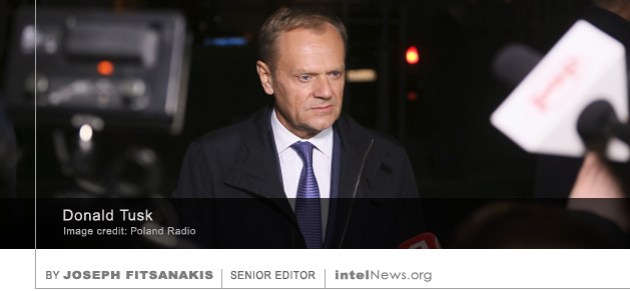
Donald TuskSenior European Union official Donald Tusk was grilled for several hours on Wednesday, in the context of a Polish government probe into an intelligence agreement between Warsaw and Moscow. But Tusk, who is the current president of the European Council, and served as Poland’s prime minister from 2007 to 2014, dismissed the probe as politicized and said it was deliberately designed to harm his political career. The investigation was launched by the government of Poland earlier this year. Its stated goal is to investigate an agreement that was struck in late 2013 between Poland’s Military Counterintelligence Service (MCS) and the Federal Security Service (FSB) of the Russian Federation. The agreement allegedly took place in secret, but was never implemented. The government of Poland canceled it in 2014, after accusing Moscow of illegally annexing the Ukrainian region of Crimea.


On Wednesday, Tusk spent nearly three hours at the office of the prosecutor in Warsaw, in a question-and-answer session that was held entirely behind closed doors. As he was leaving the building, the former Polish prime minister said he could not comment on the content of his testimony. But he used strong words to dismiss the entire investigation as “extremely political”, while accusing those behind it as holding a vendetta against him. Tusk and his supporters believe that the probe was primarily initiated by Jarosław Kaczyński, leader of the conservative Law and Justice party. They also claim that Kaczyński, who is Tusk’s political arch-foe in Poland, is spearheading a campaign of personal vindictiveness against him.

The rivalry between the two men began in 2010, when an airplane carrying a Polish government delegation to a World War II commemoration event in Russia crashed near the Russian city of Smolensk, killing everyone onboard. Among the dead was Polish President Lech Kaczyński, Jarosław Kaczyński’s brother. Since the air disaster, the leader of the Law and Justice party has maintained that the Russian government deliberately brought down the plane. He also accuses Tusk, who was Poland’s prime minister at the time, of colluding with Moscow to eliminate his brother. These allegations remain unsubstantiated, but they have contributed to the emergence of a venomous political climate in Poland that has dominated national politics for years.

On Wednesday, during Tusk’s three-hour testimony, several thousands of his supporters demonstrated outside the office of the prosecutor, urging Tusk to run for president in a few years. It is a common expectation in Poland that Tusk will soon turn his attention to domestic Polish politics and run for the highest office in the land in 2020.

Author: Joseph Fitsanakis | Date: 21 April 2017 | Permalink


