Russian spies allegedly impersonated Microsoft staff to hack government agencies

SVR hqMEMBERS OF A PROLIFIC hacker group that many associate with Russian intelligence impersonated Microsoft technicians in order to compromise nearly 40 government agencies and companies around the world. Microsoft security researchers said last week that the “highly targeted” social engineering campaign was guided by “specific espionage objectives” by the hackers.

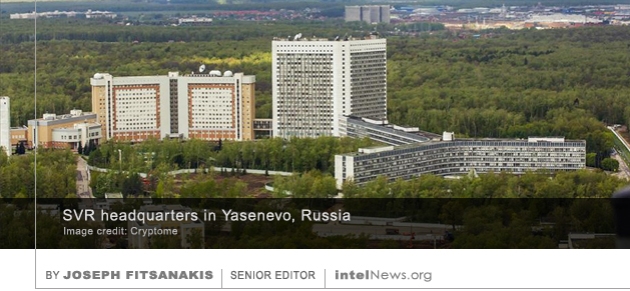
According to Microsoft, the hackers behind the spying campaign are associated with a prolific hacker group named APT29 (also known as “Cozy Bear” and “Midnight Blizzard”) by cybersecurity researchers. It rose to infamy in 2020, when it was connected with the worldwide SolarWinds attack, which some experts described as possibly being among “the most impactful espionage campaigns on record”. It is believed that APT29 is closely associated with the Russian Foreign Intelligence Service (SVR, pictured).

Starting in late May 2023, APT29 hackers used several previously compromised Microsoft 365 accounts in order to set up internet domains with technical support-themed names. They then used these domains to contact a number of “highly targeted” individuals through Microsoft Teams, pretending to be Microsoft technical support representatives. Eventually, some of their targets were persuaded to provide the hackers with information they received through Microsoft’s multifactor authenticator system, thus granting them full access to their user accounts.

Microsoft did not disclose the identities of the targets, saying only that they were nearly 40 in number, and included government agencies, various multinational technology and manufacturing firms, media companies, as well as non-governmental organizations.

Author: Joseph Fitsanakis | Date: 07 August 2023 | Permalink

Poland’s super-secretive ‘school of spies’ marks 50 years of operation

ABW PolandDURING THE COLD WAR, Poland hosted the Eastern Bloc’s only known intelligence training facility for operations officers situated outside of the Soviet Union. The highly secretive training facility operated out of a heavily guarded compound located near the northern Polish village of Stare Kiejkuty in Gmina Szczytno county, approximately 65 miles from the Polish-Soviet border. Today, 50 years after its establishment, the facility continues to train the operations officers of post-communist Poland’s intelligence services.

During World War II, and in the immediate post-war period, Soviet authorities trained Polish intelligence personnel in Kuybyshev (in 1991 renamed to Samara) in southwestern Russia. This setup continued following the establishment of the Soviet-controlled Polish intelligence community. By the 1960s, the Polish intelligence community was being led by the Ministry of Public Security, referred to by its Polish initials, SB. The SB’s elite operations officers, which staffed its First Department, were all trained in the Soviet Union and in a Soviet-controlled facility in Warsaw.

But in 1970, Poland’s reformist President, Edward Gierek, put in motion a plan to modernize the Polish intelligence services. Gierek’s goal was for Polish intelligence to catch up with the pace of technological development, especially in the emerging digital realm. He also wanted Polish spy organizations to be able to compete directly against rival agencies in Western Europe. The rapid establishment of the Intelligence Personnel Training Centre near Stare Kiejkuty was the centerpiece of Gierek’s intelligence reforms.

Construction began in 1971 and was mostly completed within two years. In 1973, the heavily guarded training facility, which had been disguised as a “holiday resort” in official government maps, welcomed its first students. Students were taught how to operate undercover in the West and how to recruit sources in countries like West Germany, France and the United Kingdom. They were taught about Western European lifestyles and had access to Western products, including soft drinks and vending machines, which were absent from Polish life. Read more of this post

Brazil judges block international requests to extradite alleged Russian spy

GRUTHE BRAZILIAN GOVERNMENT IS blocking requests from the United States and Russia to extradite an alleged Russian deep-cover spy, whose forged Brazilian identity papers were discovered by Dutch counterintelligence. Sergey Cherkasov was expelled by authorities in the Netherlands in June 2022, after he attempted to enter the country using a Brazilian-issued passport under the name of Victor Muller Ferreira.

Within a few days of his expulsion, Dutch and American counterintelligence had outed Cherkasov as an intelligence officer of the Main Directorate of the Russian Armed Forces’ General Staff, which is commonly known as GRU. Cherkasov is alleged to have built his forged identity over several years, while operating in Brazil and the United States. Upon returning to Brazil, Cherkasov was sentenced to 15 years in prison for using forged Brazilian identity documents.

Last week, Cherkasov’s sentence was reduced to 5  years, after a court in Brazil dropped some of the initial charges that had been filed against him by the Brazilian government prosecutor’s office. Cherkasov’s lawyers are now arguing that their client does not pose a flight risk and should therefore be allowed to serve the remainder of his sentence outside of prison, wearing an electronic tagging device.

These recent developments are of concern to authorities in the United States. The latter have filed an extradition request for Cherkasov, claiming that he spent several years as a graduate student in an American university while using his forged Brazilian identity papers. During that time, Cherkasov is alleged to have repeatedly communicated with his Russian intelligence handlers, supplying them with information about American politics and policy.

However, the Ministry of Justice and Public Security of Brazil said on Friday that Washington’s extradition request had been denied and that Cherkasov would remain in Brazil. The apparent reason for the denial is that Brazil’s Supreme Federal Court had already approved a similar extradition request for Cherkasov, which was filed in April by the Russian government. Moscow claims that Cherkasov is wanted in Russia for narcotics trafficking. The Russians also deny that the alleged spy worked for the GRU or any other government agency.

Yet, despite claims to the contrary, the Brazilian government appears to be essentially stalling on Moscow’s extradition request. On Friday, Flávio Dino, who serves as Minister of Justice under the administration of President Inácio Lula, stated that Cherkasov would continue to serve his prison sentence in Brazil until further notice. In the United States, CBS News reported that Cherkasov’s extradition to Russia would take place “only […] after the final judgment of all of his cases here in Brazil” has been issued, according to the accused spy’s lawyers.

Author: Joseph Fitsanakis | Date: 31 July 2023 | Permalink

Revealed: Little-known Russian counterintelligence unit that targets foreigners

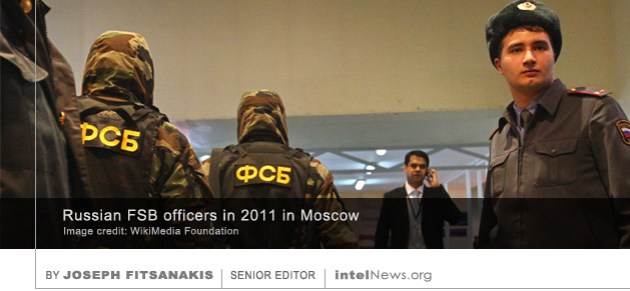
FSB - JFAN INVESTIGATIVE REPORT BY the Wall Street Journal discusses a little-known Russian counterintelligence unit that targets foreign diplomats in ways that often “blur the lines between spycraft and harassment”. Among other activities, this secretive unit is likely behind a string of operations targeting American citizens, which have led to the arrest of at least three of them since 2018. These include the Wall Street Journal correspondent Evan Gershkovich, who earlier this year became the first American reporter to be held in Russia on espionage charges since the Cold War.

The Journal Text highlights the activities of the Department for Counterintelligence Operations, or DKRO, a highly clandestine unit belonging to the counterintelligence arm of Russia’s Federal Security Service (FSB). It is believed that the DKRO is responsible for monitoring the activities of foreigners living in Russia. The unit reports to Vladislav Menshchikov, director of the counterintelligence arm of the FSB. Prior to his current post, Menshchikov headed the Office of Special Presidential Programs, a Kremlin outfit that operates and safeguards secret underground facilities in Russia’s metropolitan areas.

According to the paper, the DKRO consists of sub-units that focus on various nationalities of foreigners living in Russia, including diplomats. Its first and largest section, known as DKRO-1, focuses on Americans and Canadians. The operations of this sub-unit have intensified significantly in recent times, as relations between Washington and Moscow have worsened. The Journal’s information reportedly came from “dozens of interviews” with senior Western diplomats in Europe and the United States, American citizens that were previously detained and imprisoned in Russia, as well as Russian analysts and journalists who now live abroad.

In addition to Menshchikov, the DKRO has been behind operations that led to the arrests of two other Americans, Paul Whelan (arrested in 2018) and Trevor Reed (arrested in 2019), both of whom were charged with carrying out espionage for the United States. However, most of the activities of the DKRO focus on monitoring the activities of foreign subjects inside Russia. These include journalists and diplomats. Many of the DKRO’s targets have been subjected to campaigns of harassment and intimidation, the Journal claims. Examples include following diplomats’ children to school, breaking into diplomats’ residences to plant recording devices, sabotaging diplomatic vehicles, and even “cutting the power to the residence of the current U.S. Ambassador”.

The paper also reports that, according to American diplomatic staff, the Russian police officers that are posted along the perimeter of the United States embassy in Moscow are in fact “DKRO officers in disguise”. The Journal said it reached out to the FSB and the Kremlin for comment on these allegations, but received no response. The paper also reached out to the United States embassy in Moscow and to the State Department, but officials there declined to comment.

Author: Joseph Fitsanakis | Date: 12 July 2023 | Permalink

German spy services had foreknowledge of Wagner mutiny, report claims

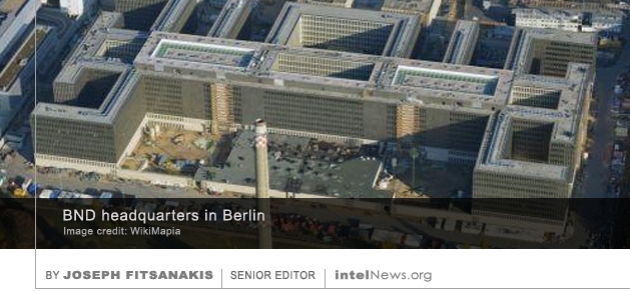
BND GermanyCONTRARY TO EARLIER CLAIMS that the German intelligence agencies failed to anticipate last month’s showdown between PMC Wagner and the Kremlin, German intelligence did in fact have foreknowledge of the mercenary group’s uprising, a new investigative report has concluded. The report further claims that German intelligence had unique and real-time insights into the negotiations between Wagner PMC leader Yevgeny Prigozhin and Belarussian President Aleksandr Lukashenko, who intervened in the dispute.

In the days following the June 23 mutiny by soldiers of the Russian private military firm Wagner Group, German intelligence agencies were publicly criticized for allegedly failing to warn Berlin about the unprecedented incident. Specifically, it was claimed that Germany’s primary foreign intelligence agency, the Federal Intelligence Service (BND), did not issue an actual warning about the mutiny until Saturday —a full 12 hours after the first clashes had erupted between Wagner mercenaries and forces loyal to the Russian Ministry of Defense.

Much of the criticism came from the ranks of the center-left German Social Democratic Party (SPD), which is the primary political party behind the government of German Chancellor Olaf Scholz. However, criticism also came from the Green Party, which supports Scholz’s administration, and the liberal center-right Free Democratic Party (FDP), which also supports Scholz’s government. The criticism intensified after June 28, when, during a live television interview, Chancellor Scholz appeared to confirm speculation that the BND had left his administration in the dark about the Wagner mutiny until it was too late.

Late last week, however, a joint investigation by two of Germany’s most respected public television broadcasters, the Hamburg-based NDR and the Cologne-based WDR, concluded that the BND had been far more informed about the Wagner mutiny than its critics have claimed. The investigation concluded that, not only did the BND have foreknowledge of the mutiny nearly a week before it materialized, but that it was able to listen-in to the frantic telephone conversations between Prigozhin and Belarussian President Lukashenko, as the latter tried to dissuade the Wagner leader from storming the Russian capital with his heavily armed band of mercenaries.

According to the NDR-WDR report, the BND had been able to hack into Wagner’s internal communications system up for over a year. However, its operation was betrayed by “Carsten L.”, a German intelligence officer who was arrested late last year for spying for Russia. However, the German spy service was able to continue to monitor the internal affairs of Wagner through other sources and had access to channels of information within Wagner in the months leading up to the mutiny. Thus, according to the report, the BND had “vague indications of an imminent uprising by Wagner” about a week prior to June 23.

However, the agency was unsuccessful in verifying these indications through other sources, including its foreign counterpart agencies. For this reason, it chose not to notify the German Chancellery in concrete terms.

Nevertheless, the BND did issue a warning on Friday evening, a few hours before the Wagner mutiny began. The warning was issued a full day prior to the takeover of Wagner’s armed takeover of the Russian armed forces’ operational headquarters in Rostov, which occurred on Saturday. The two state broadcasters reportedly reached out to the BND for confirmation of the report’s findings. However, a BND spokesperson declined to comment on the matter, saying simply that the BND “generally does not comment publicly on matters relating to intelligence findings or operations”.

Author: Joseph Fitsanakis | Date: 11 July 2023 | Permalink

Brazil launches investigation into illegal activities of Russian deep-cover spies

José Giammaria Mikhail MikushinAUTHORITIES IN BRAZIL HAVE launched a nationwide probe into the abuse of the country’s citizenship documentation system by Russian spies, who are allegedly using it to build forged identities. According to The Wall Street Journal, Brazil was placed “in an uncomfortable international profile” in the past year, after at least three alleged Russian deep-cover spies were outed by intelligence services in the Netherlands, Norway and Greece.

In June of 2022, authorities in the Netherlands expelled Sergey Cherkasov after he attempted to enter the country using a Brazilian-issued passport under the name of Victor Muller Ferreira. As intelNews explained at the time, Dutch and American counterintelligence outed Cherkasov as an intelligence officer of the Main Directorate of the Russian Armed Forces’ General Staff, which is commonly known as GRU. Cherkasov is alleged to have built his forged identity over several years, while operating in Brazil and the United States. Cherkasov is currently serving a 15-year prison sentence in Brazil for using forged identity documents. He is wanted in the United States for espionage. The alleged spy has reportedly admitted to the use of forged documents, but is denying he worked as a Russian intelligence officer.

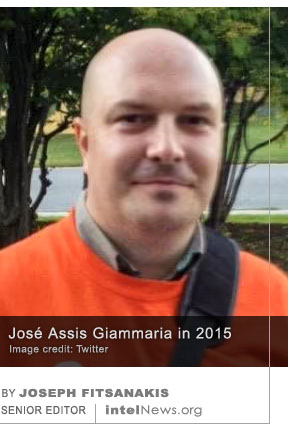
In October of last year, the Norwegian police arrested another Brazilian citizen, José Assis Giammaria (pictured), accusing him of operating under deep cover on behalf o the GRU. According to the Office of the Norwegian state prosecutor, the suspect’s actual name is Mikhail Mikushin. He is believed to have been operating as a deep-cover spy in Brazil, Canada and Norway since 2006. Mikushin is now facing charges of “aggravated intelligence-gathering activity targeting state secrets”, which carry a maximum prison term of 10 years.

In early 2023, Gerhard Daniel Campos Wittich, a resident of Rio de Janeiro, disappeared while traveling abroad. A few months later, he was connected to Irena Shmyrev, a Russian deep-cover spy who was living in Greece under an assumed Greek identity, until she disappeared without trace, reportedly leaving the country in a hurry. According to Greek counterintelligence investigations, Wittich was Irena A.S.’s Russian husband who, like her, worked as a deep-cover intelligence operative out of Brazil.

According to The Wall Street Journal, an official investigation is currently underway in Brazil into how many Russian deep-cover intelligence operatives may be using forged Brazilian citizenship documents to “lurk undetected within the country or around the world”. The paper says that Brazilian investigators have shared “few public details about their probe”. However, it cites “people familiar with the matter” in claiming that the probe centers on “security gaps within Brazil’s documentation system”, which appear to be exploited by undercover spies. Such security gaps allegedly include the ability to obtain a Brazilian identity card and a passport with the use of a single document, namely a birth record.

Author: Joseph Fitsanakis | Date: 03 July 2023 | Permalink

Switzerland overrun with foreign spies, Swiss intelligence service warns

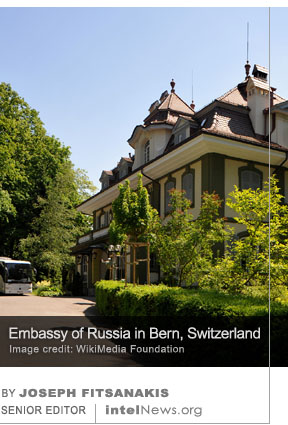
Russian embassy SwitzerlandINTENSIFYING COMPETITION BETWEEN THE superpowers has turned Switzerland into an espionage battlefield, with more foreign spies being active there than in most other European countries, according to a new report. The report, published earlier this week by the Swiss Federal Intelligence Service (FIS), notes that Russian operatives are particularly active in the alpine country. Many Russian intelligence officers have relocated there after being expelled by a host of European countries in the past 18 months, according to the report.

Traditionally neutral Switzerland has not joined most other European countries in expelling Russian intelligence officers —posing as diplomats— following Russia’s full-scale invasion of Ukraine in 2022. Therefore, as Russia tries to rebuild its shattered intelligence-gathering networks in Europe, it is using Switzerland as a forward-operating base, according to the FIS. As of 2023, the number of Russian intelligence personnel stationed on Swiss soil, and the ensuing espionage activity, “is notably high”, states the report.

According to the FIS report, that the lion’s share of Russian intelligence officers —“several dozen”— are stationed “at the Russian diplomatic and consular missions in Geneva”. A major international diplomatic hub, Geneva is an “ideal operational environment” for foreign intelligence agencies. It hosts a significant number of international organizations —including one of the four major offices of the United Nations. Additionally, it is situated close to the largely unmonitored French border. This allows intelligence operatives to move seamlessly in and out of European Union soil.

Furthermore, as Western intelligence agencies increase their presence in Switzerland, in order to counter Russian intelligence activities there, “espionage levels […] are continuously rising”, according to the FIS report. This situation is unlikely to change in the coming year, as “intensifying competition between superpowers” is expected to continue to involve Switzerland as an espionage battlefield that draws in rival intelligence agencies, the FIS report concludes.

Author: Joseph Fitsanakis | Date: 28 June 2023 | Permalink

Analysis: Prigozhin’s goal was to survive, not to remove Putin from power

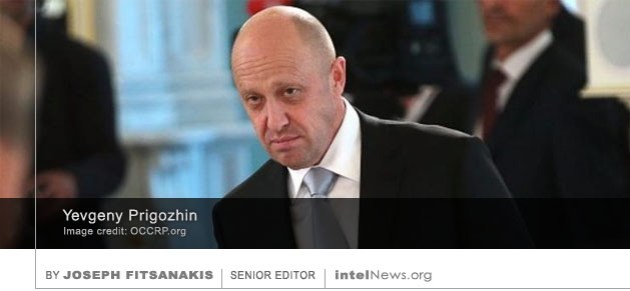
Yevgeny PrigozhinIN THE EARLY HOURS of June 23, PMC Wagner leader Yevgeny Prigozhin declared the launch of an armed campaign against the Ministry of Defense of the Russian Federation. Within hours, several thousand soldiers belonging to Wagner, one of the world’s largest private military companies, had abandoned their positions in eastern Ukraine and were en route to Moscow. Their mission, according to Prigozhin, was to arrest Minister of Defense Sergei Shoigu and Chief of the General Staff Valery Gerasimov, and try them for mismanagement and corruption.

In the ensuing hours, National Guard units along the M-4, a 1,100-mile-long expressway that connects the northeastern shores of the Black Sea to Moscow, began blocking or destroying critical junctures across that vast road network, in an attempt to obstruct the Wagner convoy. In a televised nationwide address, a visibly shaken Vladimir Putin accused Prigozhin of leading an armed insurrection, and warned those who followed him that they would be treated as traitors. Meanwhile, tickets on flights from Moscow to several visa-free international destinations were sold out within hours, as Muscovites braced for the outbreak of civil war.

Yet, within fewer than 24 hours, Prigozhin, who had repeatedly vowed to reach Moscow or die trying, was on his way to Belarus. He had seemingly accepted a deal to abandon his loyal troops in exchange for amnesty and a life in exile. Prigozhin’s sudden about-face surprised many observers, who had expected to see firefights between Spetsnaz units and Wagner forces in Moscow’s southern districts by Sunday afternoon. Even some of Prigozhin’s own troops took to social media to openly accuse their former leader of betrayal, and vow revenge.

PRIGOZHIN: A RATIONAL AND CALCULATED ACTOR

How are we to explain this unexpected turn of events? The difficulty of such a task is amplified by the lack of reliable reporting from Russia, along with the inherent chaos of war and the rapidly changing nature of events. It must be stressed, however, that Prigozhin is neither impulsive nor irrational. His maneuvers over the past week were calculated and almost certainly pre-planned and choreographed —most likely long in advance. His ultimate decision to seek political asylum in Belarus —one of the few countries in the world that is unlikely to turn him over to the United States— makes sense under one premise: that the motive behind his “justice march” to Moscow was not to challenge Putin, but to save his life.

To begin with, the bitter feud between Prigozhin and the Russian Ministry of Defense is not new. It has been raging for years. It both precedes and exceeds Russia’s ongoing military campaign in Ukraine. The Wagner leader has repeatedly expressed his dismay at being viewed as an outsider by the Ministry of Defense, which it views as an elitist and incompetent bureaucracy. His experience in Ukraine, where Wagner’s forces faced stiff resistance from the local population and the Ukrainian military alike, added fuel to his rage against a host of Russian defense officials. Prigozhin has been voicing his denunciations of the way these officials have managed the war since March of 2022, just two weeks into the invasion of Ukraine.

PRIGOZHIN’S DISILLUSIONMENT

The disastrous Russian military campaign in Ukraine only served to sharpen Prigozhin’s criticism of his country’s defense establishment. One can observe this in the evolution of his critiques over time. In recent months, the Wagner leader has not only criticized the Ministry of Defense, accusing his leadership of corruption, but he has increasingly directed his ire against broad segments of Russian society. In his video tirades, he often decries what he describes as “the Russian elite” and the “oligarchy”, whom it accuses of living in luxury, while Russia’s working class fights and dies in Ukraine, Syria, Libya, and elsewhere. Read more of this post

Russian intelligence planned to assassinate SVR defector living in the United States

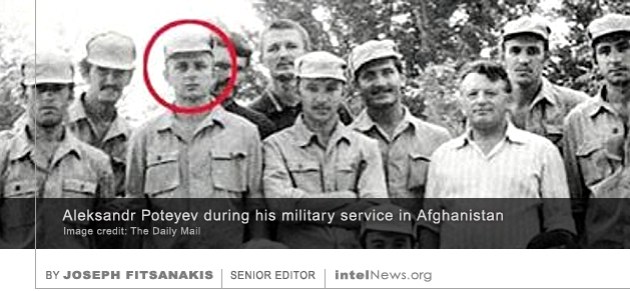
Aleksandr PoteyevTHE RUSSIAN INTELLIGENCE SERVICES planned to assassinate a Russian former intelligence officer, who had defected to the United States and was living in an apartment complex in Florida, according to a new report. The alleged assassination plan is discussed in the forthcoming book Spies: The Epic Intelligence War Between East and West (Simon and Schuster), authored by Harvard University academic Calder Walton.

According to Dr. Walton, Russian intelligence targeted Aleksandr Poteyev, who served as Deputy Director of the Russian Foreign Intelligence Service (SVR) from 2000 until 2010. Poteyev was reportedly in charge of the SVR’s Directorate “S”, which oversees the work of illegals —a term that refers to SVR operations officers who work in without official cover around the world. It is believed that Poteyev began working for the United States Central Intelligence Agency (CIA) in 1999, as an agent-in-place.

By 2010, when he openly defected to the United States, Poteyev had provided the CIA with information that led to the high-profile arrest of 10 Russian illegals by the Federal Bureau of Investigation (FBI). Some believe that the SVR defector was also responsible for the arrests of Russian spies in Germany and Holland. In 2011, a Russian court tried Poteyev in absentia and sentenced him to 25 years in prison. Poteyev remains at large and is believed to be living in the United States under the protection of the CIA’s National Resettlement Operations Center.

On Monday, The New York Times reported that it had independently confirmed Dr. Walton’s claims, with the help of “three former senior American officials who spoke” to the paper “on the condition of anonymity”. According to The Times, a 2016 report by the Moscow-based Interfax news agency, which claimed that Poteyev had died in the United States, was part of a deliberate disinformation operation by the SVR, which was aimed at enticing the defector to emerge from his hideout.

When that attempt failed, the SVR allegedly recruited a Mexican scientist who lived in Singapore, Hector Alejandro Cabrera Fuentes, to travel to Miami, Florida, in 2020, in order to locate Poteyev. But Fuentes attracted the attention of the authorities while driving around in Miami and was subsequently detained by US Customs and Border Protection agents as he was trying to board a flight to Mexico City. Fuentes then provided details of his mission to the FBI. The Bureau eventually determined that the goal of the SVR had been to assassinate Poteyev.

According to The New York Times, the realization that the SVR had planned to carry out an assassination operation on American soil “spiraled into a tit-for-tat retaliation by the United States and Russia”, which included cascading sanctions and diplomatic expulsions on both sides. The paper reports that, in April 2021, the White House ordered the expulsion of 10 Russian diplomats from the United States, including the SVR’s chief of station, who had two years left on his Washington, DC, tour. The Kremlin responded by expelling an equal number of American diplomats from Russia, including the CIA station chief in Moscow.

Author: Joseph Fitsanakis | Date: 21 June 2023 | Permalink

Luxembourg ex-spy official and FBI fugitive vanishes while under house arrest

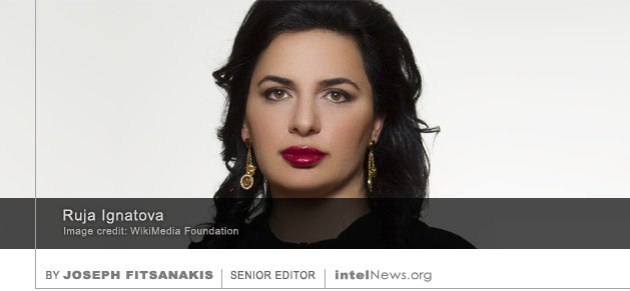
Ruja IgnatovaTHE FORMER DEPUTY DIRECTOR of Luxembourg’s intelligence service, who is wanted by the United States for his role in a $4 billion cryptocurrency scam, reportedly vanished last month while under house arrest in France. Frank Schneider, 53, a citizen of Luxembourg, served as deputy director for operations in Luxembourg’s spy agency, the Service de Renseignement de l’État Luxembourgeois (SREL). In 2008, he left that post to start his own security and consultancy firm, Sandstone. His name came up frequently in the context of a spy scandal that eventually brought down Luxembourg’s Prime Minister, Jean-Claude Juncker.

In recent years, Schneider had been working for Dr. Ruja Ignatova, 44, a Bulgarian-born businesswoman who was the alleged architect behind the cryptocurrency scam known as OneCoin. In 2014, the Oxford University-educated Ignatova founded OneCoin, a cryptocurrency firm that claimed to operate on an investment model similar to Bitcoin’s. Later, however, investigators discovered that OneCoin operated as a fraudulent scheme, with no actual cryptocurrency backing it. Ignatova was subsequently indicted on multiple charges of money laundering, securities fraud and wire fraud.

However, Ignatova disappeared in 2017, after boarding a Ryanair flight from the Bulgarian capital Sofia to Athens, Greece. Ignatova remains at large and is widely seen as responsible for one of history’s largest cryptocurrency frauds, which is estimated to have defrauded investors of at least $4 billion. The Federal Bureau of Investigation (FBI) is currently offering a reward of up to $250,000 in return for information leading to Ignatova’s arrest.

On April 29, 2021, French police arrested Schneider, a resident of France, in Audun-le-Tiche, a small town on the French-Luxembourg border and not far from the Belgian and German borders. His arrest took place pursuant to an international warrant, which was later confirmed to have been issued by authorities in New York. It was reported at the time that Schneider’s arrest involved the deployment of members of Brigade de recherche et d’intervention —France’s equivalent of the Special Weapons And Tactics (SWAT) teams in the United States.

The Luxembourger is accused by governments in several national jurisdictions of having worked as a fixer and troubleshooter for Ignatova, and in doing so enabling her to prolong her fraudulent schemes. Schneider remained at the Nancy-Maxéville prison until November 2021, when he was placed under house arrest in France. At that time, he was fitted with an ankle monitor equipped with Global Positioning System capabilities, which tracked his physical whereabouts in real time.

Throughout that time, French authorities worked with the government of the United States, where Schneider faces a maximum sentence of 40 years in prison for money laundering and fraud. On February 15 of this year, French Prime Minister Élisabeth Borne approved Schneider’s extradition to the United States. The decision was later endorsed by Nancy’s Court of Appeal, following an attempt by Schneider’s legal team to prevent his extradition to the United States.

Last week, however, it was revealed that Schneider had gone missing while under house arrest in France. How he did so remains unknown, thought it was reported that the former intelligence official had managed to disable and subsequently evade his ankle monitoring system. Moreover, the BBC reported that Schneider went missing in May, but the French government did not publicly reveal the information until June 8.

Author: Joseph Fitsanakis | Date: 19 June 2023 | Permalink

Still unanswered: Trump’s motive for withholding classified documents

Trump 2016THE 49-PAGE GRAND JURY indictment, filed last week in Florida by the United States Department of Justice, contains 37 criminal charges against former president Donald Trump. The charges can be summarized into a two-fold accusation: Trump is alleged to have stolen more than 300 classified documents upon leaving the White House in January 2021. Moreover, he allegedly schemed with a group of advisors and aides in order to obstruct efforts by the government to retrieve the stolen documents. Both accusations are spelled out in stark detail in the pages of the indictment.

What remains unanswered, however, is the motive. Why did Trump allegedly take several hundred classified documents from the White House? Did he select specific documents to purloin? And, if so, why these specific documents? Lastly, why did the former president go to such pains to frustrate the government’s efforts to recover the documents? There has been intense public speculation about the answers to these questions. Yet the grand jury indictment does not appear to attempt to establish the possible motive behind the alleged crime. Nor Q Quotedoes it need to. Establishing a motive is not required in order to demonstrate the need for a trial, or indeed a conviction. Given the high stakes of this case, however, establishing a motive can provide much-needed clarity in the public sphere.
Accidental or Malicious?

It is important to clarify with precision what the grand jury indictment does not state: its pages do not contain any suggestion that Trump took possession of the classified documents in order to share them with specific individuals or entities, American or foreign. Nor does the indictment suggest that the former president intended to use the classified information in his possession for personal financial gain —for instance to promote his investment ventures at home or abroad, or to gain leverage and win over potential business partners.

So, why did Trump do it? As The New York Times explained on Sunday, the indictment does offer some hints of motives, if one reads between the lines. One possible explanation stems from Trump’s time in the White House, during which he learned to associate his access to classified information as a paramount perk that came with being president of the United States. It follows that, retaining access to classified information was a way for him to maintain control over the office of the presidency. That strong need intensified even more after January 2021, as Trump was clearly “not ready to let go of the perks of holding the highest office in the country”. Indeed, the indictment describes several examples that reveal the strong sense of ownership that the former president felt about the classified documents he kept at his private residence at Mar-a-Lago, as well as his determination to keep them in close proximity to his office and sleeping quarters.
Tertiary Motives

A plausible tertiary motive for Trump’s alleged crimes is the leverage and status that access to secrets can bestow upon an individual. It is possible that Trump viewed the classified documents as the apogee of the long list of his material prizes and trophies —as an important physical legacy of the zenith of his career. That would also explain why he allegedly fought so determinedly to keep the documents in his possession, even after he was told in no uncertain terms by the government that they did not belong to him. Moreover, as The Times notes, the former president may view his classified document collection as a way to insure his legacy —for instance as a means of rebutting critics of his policies and decisions while he was in office, or even as potential “payback against perceived enemies”.

But these motives are probably less prominent in Trump’s mind. A strong and deeply held sense of ownership of government information, no matter their classification grade, is likely the driving motive behind the alleged crimes. As The Washington Post noted in an insightful article in 2022, aides to the former president said that he appeared sincere and genuine about his conviction that the classified documents “were his, not the government’s”. When he was advised otherwise by his own aides, he noticeably “gravitated toward lawyers and advisers who indulged his more pugilistic desires”, according to the paper. His attitude was not a show. It was sincere. Moreover, there is no reason to believe that it has subsided since his indictment.
A Genuine Conviction of Ownership

Trump’s latest legal woes are rooted in his genuine belief that access to classified information is something he is owed —not simply because he served as president of the United States, but because, in his mind, he should still be in the Oval Office. These deeply entrenched beliefs are unlikely to be abandoned by the former president, regardless of the cost. More importantly, these same beliefs are passionately shared by millions of his supporters. The latter are sufficient in number to wreak havoc in the Republican Party and radically reshape American politics for years to come. If Trump avoids trial or a prison sentence, his support base will view such an outcome as a form of noble victory against the “deep state”. It is therefore likely to be energized, possibly like never before. Should Trump be jailed or seek political asylum abroad in order to evade incarceration, the American political landscape will undergo a major earthquake. Regardless of the outcome of this unprecedented saga, stormy waters seem to lie ahead.

Author: Joseph Fitsanakis | Date: 12 June 2023 | Permalink

Ukrainian drone strikes may have targeted Moscow homes of Russian spies

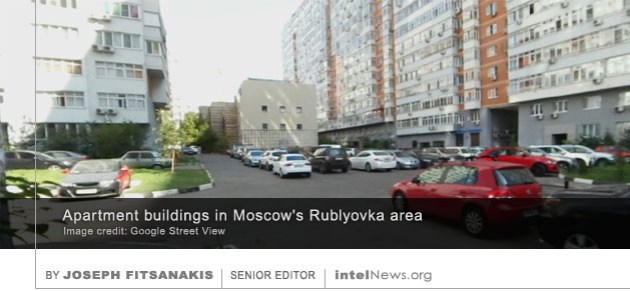
Rublyovka, MoscowA SERIES OF COORDINATED drone strikes that struck Moscow last week were not random, but may in fact have targeted the homes of senior Russian intelligence officials, according to a new report by an American television network, which cited knowledgeable sources and data by an open-source research firm.


In the early morning hours of May 30, a fleet of at least six unmanned aerial vehicles (UAVs) struck what appeared to be residential apartment blocks in Moscow’s southeastern suburbs. The targets were all located in Moscow’s Rublyovka area, which contains some of the wealthiest neighborhoods in the Russian capital. Many expressed surprise at the airborne assault, as it was the first known attack against residential targets in Moscow since the latest phase of the Russian invasion of Ukraine, which began in February 2022.

Upon initial inspection, the targets of the early-morning attack appeared to have been chosen at random. Yesterday, however, the American television network NBC claimed that the targets of the attack had been carefully selected as “a part of Ukraine’s strategy of psychological warfare against Russia”. Citing “multiple sources familiar with the strikes”, including a senior United States official and a congressional staffer, NBC said that the targets of the attacks were all residences of Russian government personnel.

The television network also cited data by Strider Technologies, an open-source strategic intelligence company located in the American state of Utah, according to which at least one of the buildings that were struck by the UAVs housed a Russian state-controlled military contractor. According to Strider Technologies, the contractor provides services to a military unit that is known to be a front for Russia’s Foreign Intelligence Service (SVR). NBC further claimed that other targets in the alleged Ukrainian operation targeted the residences of senior Russian intelligence personnel.

Author: Joseph Fitsanakis | Date: 08 June 2023 | Permalink

Ukraine is running networks of saboteurs inside Russia, report claims

Security Service of Ukraine SBUTHE UKRAINIAN INTELLIGENCE SERVICES are training and arming cells of saboteurs inside Russia, who are responsible for several acts of sabotage on Russian soil, including a recent attack on the Kremlin, according to CNN. In an exclusive report published on Monday, the American television channel cited “multiple people familiar with US intelligence on” the activities of Ukrainian “agents and sympathizers” inside Russia.

According to the report, pro-Ukrainian saboteurs may be responsible for a growing number of incidents involving mysterious explosions, fires and malfunctions of Russian critical infrastructure. In recent months, such incidents have caused serious damage on Russian military warehouses, energy pipelines, fuel depots and refineries, railway networks, and military enlistment offices. Last month saw a widely reported attack by a fleet of unmanned aerial vehicles (UAVs) on the Kremlin, which serves as the official residence of the Russian president in Moscow.

The CNN report claims that the UAV attack on the Kremlin, and possibly other similar incidents that have taken place inside Russia in recent months, represent the “culmination of months of effort” by the Ukrainian government. The latter has now allegedly assembled and is operating semi-autonomous sabotage cells inside Russia. These cells are said to consist of Ukrainian nationals operating in an undercover capacity, as well as of Russian nationals who sympathize with Ukraine. They also include Russians who are militantly opposed to the administration of President Vladimir Putin.

These cells have been “well-trained” in sabotage and have been provided with lethal hardware —including UAVs or UAV components— by the Ukrainian government, CNN said. These provisions reach the saboteurs through “well-practiced smuggling routes” that the Ukrainians have established across the Ukrainian-Russian border. The latter is “vast and very difficult to control”, and has been so for decades, according to the report. In most cases, the weaponry used in acts of sabotage is assembled and operated from within Russia, rather than from command centers in Ukraine, the CNN report claims.

The broad strategic parameters of the saboteurs Russia have reportedly been established by the highest echelons of the Ukrainian government, under the direct supervision of President Volodymyr Zelensky. However, the Security Service of Ukraine (SBU) officers who handle, train and arm the saboteurs have deliberately given them significant autonomy in terms of targeting and tactics. CNN said it contacted the Ukrainian government for comment on this report. The SBU did not confirm or deny that it was involved in handling cells of saboteurs inside Russia. However, a SBU spokesperson told CNN that “the mysterious explosions and drone strikes inside Russia would continue”.

Author: Joseph Fitsanakis | Date: 06 June 2023 | Permalink

Senior representatives of dozens of spy agencies held secret meeting in Singapore

Shangri-La DialogueSENIOR REPRESENTATIVES FROM OVER 20 intelligence agencies from around the world, including the United States and China, reportedly participated in a secret meeting in Singapore last week. The meeting allegedly took place in parallel to the Shangri-La Dialogue, a high-level security conference held annually in Singapore. The conference, focused on security issues in the Asia-Pacific region, has been organized since 2002 by the International Institute for Strategic Studies (IISS), a London-based think-tank.

The Shangri-La Dialogue is typically attended by defense ministers of major Western powers and regional Asian powers, along with security and intelligence representatives from participating nations. However, the existence of a separate closed-door meeting of intelligence officials has never been reported before. On Saturday, the Reuters news agency cited discussions with “five sources”, who claimed that such a meeting occurred between June 2 and 4.

According to Reuters, the meeting was discreetly organized by the Singaporean government and held at a separate venue alongside the security summit. This type of meeting has reportedly been taking place annually for several years, but was previously undisclosed. The secret meeting is believed to have included representatives from approximately two dozen major intelligence agencies from countries such as the United States, China, and India. The United States intelligence community was represented by Avril Haines, the Director of National Intelligence, according to the news agency.

The Reuters report did not mention whether the Russian intelligence community participated in the event. When asked about the alleged secret meeting, a spokesperson from the Singapore Ministry of Defense said that participants at the Shangri-La Dialogue included “senior officials from intelligence agencies”, who “also take the opportunity to meet their counterparts”. The spokesperson added that the Singapore Ministry of Defense “may facilitate some of these bilateral or multilateral meetings”, because “participants have found such meetings held on the sidelines of the [main event] beneficial”.

The governments of the United States, China and India did not respond to requests for comment by Reuters.

Author: Joseph Fitsanakis | Date: 05 June 2023 | Research Credit: C.E. | Permalink

Russia says it uncovered U.S. operation to compromise Apple phones

Apple iPhoneRUSSIAN OFFICIALS SAID THEY uncovered a sophisticated espionage effort by the United States government, which targeted the smartphones of thousands of Apple users living in Russia, including foreign diplomats. According to the Russians, the operation was carried out by the National Security Agency (NSA), an American intelligence agency that specializes in gathering foreign signals intelligence and securing the United States government’s information and communication systems.

The source of the allegation is the Federal Security Service (FSB), Russia’s primary counterterrorism and counterintelligence agency. On Thursday, the FSB said that “an intelligence action of the American special services” had been uncovered by FSB officers with the assistance of the Federal Protective Service. Known in Russia by its initials, FSO, the Federal Protective Service operates federal emergency communications systems and provides personal security for high-ranking government officials.

According to the FSB, “several thousand Apple telephones” were targeted in the alleged NSA operation, including devices belonging to “domestic Russian subscribers”, as well as devices belonging to foreign diplomats stationed in Russia. The latter allegedly include diplomats from Israel, Syria and China, according to the FSB. The Russian agency also claimed that Russia-based foreign diplomats from North Atlantic Treaty Organization member-states had their phones targeted, as well as diplomats from former Soviet states.

In the same press release, the FSB accused the NSA and Apple of working in “close cooperation” with each other —an allegation that the Russian government has been making for several years. In a follow-up media statement, the Russian Ministry of Foreign Affairs accused the United States of engaging in “hidden data collection” and dismissed Apple iPhones as “absolutely transparent”.

Kremlin spokesman Dmitry Peskov urged Russians to avoid using Apple products and lamented reports that one in three Russian government workers continue to utilize Apple products for their personal use. When asked by reporters if the Russian government had plans to outlaw the use of Apple products by government employees, Peskov responded that the Kremlin did “not have the power to even recommend that”, except for those government employees with access to classified information.

Author: Joseph Fitsanakis | Date: 02 June 2023 | Permalink