News you may have missed #847

Abdel Baset al-MegrahiBy IAN ALLEN | intelNews.org |
►►Secret letter shows arms deal behind Lockerbie bomber release. An email sent in 2008 by Sir Vincent Fean, the then British ambassador in Tripoli, details how the release by Britain of Lockerbie air disaster bomber Abdelbaset al-Megrahi, was linked to a commercial deal. According to The Daily Telegraph, the email specifies that al-Megrahi would be released once Libya “fulfilled its promise” to buy an £400 million air defense system.
►►Is the US ramping up a secret war in Somalia? The US has expanded its secret war in Somalia, stepping up assistance for federal and regional Somali intelligence agencies that are allied against the country’s Islamist insurgency. It’s a move that’s not only violating the terms of an international arms embargo, according to UN investigators, but it also shows that Washington’s signature victory against al-Qaeda’s most powerful African ally may be in danger of unraveling.
►►Indonesian government ‘angry’ at alleged Western spying. The Indonesian government has reacted strongly to revelations in the Australian media that the country’s President and senior diplomats were spied upon during the 2009 G20 conference in London. The revelations appear to be based on leaks on intelligence-gathering techniques by US whistleblower Edward Snowden.

New documents reveal massive NSA surveillance capabilities

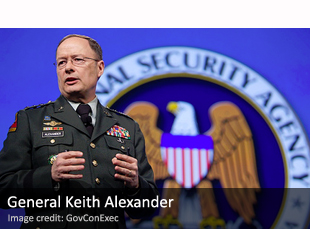
General Keith AlexanderBy JOSEPH FITSANAKIS | intelNews.org |
Documents provided by American former intelligence technician Edward Snowden show that the United States National Security Agency has unprecedented surveillance capabilities, which allow it to monitor nearly every online activity of targeted Internet users. Snowden, a self-styled whistleblower, who is currently in Russia, provided British newspaper The Guardian with an NSA training presentation. The visually based presentation explains the inner workings of an intelligence collection program called XKeyscore, which the NSA describes as its “widest-reaching” digital collection program. The system allows NSA data collectors to sift through massive online databases containing millions of individual users’ browsing histories, emails and chats —what the NSA calls digital network intelligence (DNI). According to the training presentation, authorized NSA analysts are able to target individual Internet users by entering their name, email address, IP address or telephone number. The presentation states that, upon entering the identifying information, an NSA analyst can tap into “nearly everything a typical user does on the Internet”, including the content and metadata of emails, website browsing and search terms used. Snowden told The Guardian that an NSA analyst only needs to know a user’s personal email address in order to “wiretap anyone [while] sitting at [his] desk, from you or your accountant to a federal judge or even the President”. What is more, it appears that NSA analysts are able to target individual Internet users by simply “filling in an […] on-screen form”, and by giving only a very broad justification for the probe. Additionally, individual digital collection operations are not approved by a court or senior NSA officers. According to Snowden, all an NSA analyst has to do is suspect that the targeted online user is in contact with “a foreign target”. Meanwhile, NSA Director Keith Alexander was jeered by participants during his keynote speech at the Black Hat Technical Security conference in Las Vegas on Wednesday. Read more of this post

Is mismanagement driving away some of the CIA’s best talent?

CIA headquartersBy IAN ALLEN | intelNews.org |
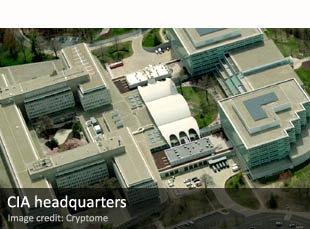
Poor management practices and a culture that tolerates blunders by senior officials are generating cynicism and disillusionment among employees at the United States Central Intelligence Agency, according to an internal study. Completed in 2010 by the CIA’s Office of the Inspector General, the study was released in heavily redacted form last week, in response to a Freedom of Information Act request. The Los Angeles Times, which filed the request in 2011, said the report identifies mismanagement and unaccountability among senior leadership as major factors contributing to the CIA’s “retention challenges”. It cites a 2009 Agency-wide anonymous survey, which found that around 12% of the CIA’s workforce was considering resigning. Over half of those said they wanted to leave because of “poor management and a lack of accountability for poor management” among senior-level staff. This feeling is stronger among younger recruits, “who have exhibited high resignation rates in current years”, according to the report. Operations officers at the National Clandestine Service —the CIA’s covert-action arm— are also more disturbed than other Agency employees by perceived mismanagement. The report also notes that the CIA has failed to introduce mechanisms for encouraging accountability, in response to growing concerns by lower-level staff. The Times said it spoke to “more than 20 former [CIA] officers”, who said the 2010 report echoed “longstanding concerns about the CIA’s culture”. Read more of this post

Scotland sees Nordic spy agencies as post-independence models

United Kingdom and IrelandBy JOSEPH FITSANAKIS | intelNews.org |
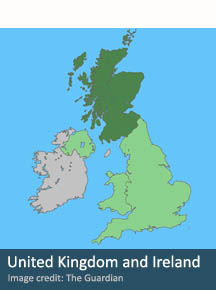
Government administrators in Scotland, which may soon become independent from the United Kingdom, are looking to possibly model their intelligence agencies after those of Scandinavian countries, according to sources. An agreement for an independence referendum, to be held in September 2014, was struck last year between the devolved Scottish Government and the British state. According to the agreement, residents of Scotland, which has been ruled by English-dominated Britain for over 700 years, will be asked whether they agree that the territory should form an independent country. In January of this year, Nicola Sturgeon, Deputy First Minister of Scotland, told the Scottish Parliament’s Committee on Foreign Affairs that an independent Scotland would have to build a domestic intelligence agency to combat security threats such as terrorism, organized crime and cyber attacks. Sturgeon, who is also Deputy Leader of the pro-independence Scottish National Party, opined that, even though a Scottish intelligence agency would serve the interests of the Scottish government and people, it would inevitably maintain “very close intelligence sharing with the rest of the UK”. But Committee members opposed to independence warned Sturgeon that Scottish intelligence agencies would have to prove that they were reliable and safe before they struck intelligence-sharing arrangements with British and American organizations. It appears that, in response to such criticisms, Scottish civil servants have initiated contacts with intelligence experts abroad, in an attempt to replicate the intelligence-agency model of Nordic countries. Read more of this post

S. Korea parliament probes spy agency’s elections meddling

Won Sei-hoonBy JOSEPH FITSANAKIS | intelNews.org |
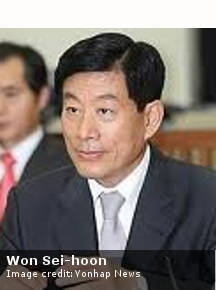
A parliamentary probe began last week into whether South Korea’s main intelligence agency tried to steer voters away from the liberal candidate during the 2012 presidential election. The country’s National Intelligence Service (NIS) is accused of having deliberately leaked a classified document in order to embarrass the late South Korean President Roh Moo-hyun, who was also a member of the liberal Uri Party (now Democratic Party) of South Korea. IntelNews readers will recall that Won Sei-hoon, who headed NIS from 2008 to 2013, was recently indicted for meddling in the 2012 Presidential Election. According to the indictment, Won ordered a group of NIS officers to “flood the Internet” with messages accusing DP candidates of being “North Korean sympathizers”. Prosecutors allege that Won initiated the Internet-based psychological operation because he was convinced that “leftist adherents of North Korea” were on their way to “regaining power” in the South. The NIS affair has gripped South Korea’s media headlines for months, but fuel was added to the fire in June, when the NIS “mistakenly” declassified an internal document describing a series of secret North-South Korean negotiations. The document, from 2007, shows that the then-President of Korea, Roh Moo-hyun, from the Uri Party, had proposed to North Korean officials the establishment of a “maritime peace zone” along the disputed border between the two nations. Liberal politicians allege that, according to South Korean declassification laws, the document should have remained secret for many decades, and accuse the NIS of deliberately leaking it in order to promote the image of South Korean liberals as “North Korean sympathizers”. Meanwhile, another senior South Korean security official, former Seoul metropolitan police chief Kim Yong-pan, has also been indicted for allegedly hampering a police investigation into Won’s internet campaign. This series of apparently interlinked events is now at center stage in the parliamentary probe, as rival parties prepare to clash over the allegations. Read more of this post

Ex-MI6 head ‘might air memoirs’ to set Iraq War record straight

Sir Richard DearloveBy JOSEPH FITSANAKIS | intelNews.org |
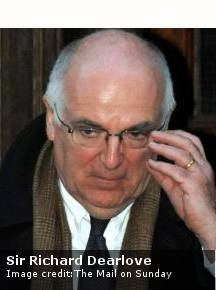
The former director of Britain’s external spy service has hinted he might publish his personal account of the decisions that led to Britain’s entry in the Iraq War, if he is criticized in a public inquiry on the subject. Sir Richard Dearlove led the UK’s Secret Intelligence Service, known as SIS or MI6, from 1999 until his retirement in 2004. He is currently on sabbatical from his post as Master of Cambridge University’s Pembroke College, in order to research and author his autobiography. The memoir is believed to be largely preoccupied with the intelligence that led to the British government’s decision to enter the United States-led 2003 war in Iraq. Sir Richard had previously indicated that he intended to make his memoirs posthumously available as a resource to academic researchers. But in an email to British tabloid The Mail on Sunday, he hinted he would consider publishing his personal account if he finds himself criticized by the Iraq Inquiry. Known in Britain as the Chilcot Inquiry, after its Chairman, Sir John Chilcot, the Iraq Inquiry was commissioned by the British government in 2009 to investigate the executive decisions that led the country to participate in the invasion of Iraq. One of the inquiry’s many goals was to evaluate the intelligence provided by MI6 to the government of Prime Minister Tony Blair. There have been rumors that the inquiry’s declassified findings, which are scheduled for publication soon, are critical of MI6’s performance and place particular blame on Sir Richard’s role in the debacle. Read more of this post

CIA finances geoengineering study on climate change

CIA headquartersBy JOSEPH FITSANAKIS | intelNews.org |
The United States Central Intelligence Agency (CIA) is among the principal funding bodies of a scientific research program on using geoengineering to slow down or halt climate change. The 21-month $630,000 study will be administered by the US National Academy of Science (NAS). Alongside the CIA, the project is funded by the National Oceanic and Atmospheric Administration (NOAA) and the National Aeronautics and Space Administration (NASA). The science of geoengineering encompasses techniques of large-scale intervention on the Earth’s climatic system, aimed at controlling solar radiation and removing carbon dioxide from the environment. Its ultimate goal is to reduce global warming by removing a portion of greenhouse gasses from the atmosphere and by causing the planet to absorb reduced amounts of solar radiation. The NAS study will be the first one of its kind at the Academy to be financially backed by an intelligence agency. In addition to exploring technical ways of altering the course of climate change, the study aims to evaluate the implications of geoengineering efforts on international security and American national security in particular. The CIA’s interest in climate science is not new. Since the middle of the last decade, intelligence agencies have shown interest in the national security ramifications of climate change, as well as in climate change negotiations between governments. In 2009, the CIA opened its Center on Climate Change and National Security, a small unit led by senior specialists from the Agency’s Directorate of Intelligence and the Directorate of Science and Technology. Read more of this post

UK to pardon genius wartime cryptanalyst convicted of ‘indecency’

Alan TuringBy IAN ALLEN | intelNews.org |
One of the greatest mathematical minds of modern times, who is widely considered the father of computer science and is credited with helping the Allies win World War II, is to receive a posthumous pardon by the British government, who in 1952 convicted him of homosexuality. Alan Turing, a mathematician and logician, with careers at the universities of Cambridge and Princeton, worked as a cryptanalyst for the British government during World War II. His work for Britain’s Government Code and Cypher School (GC&CS) at Bletchley Park, the British Armed Forces’ wartime joint codebreaking center, was instrumental in helping the British crack German military ciphers. Turing is personally credited with devising a complex method for compromising the Enigma machine, a highly secretive message-encoding device used by the German military and intelligence services. In 1952, while working for the Department of Mathematics at the University of Manchester, Turing was charged with “gross indecency” under Section 11 of the Criminal Law Amendment Act of 1885, which criminalized homosexuality. After pleading guilty to having a sexual relationship with a 19-year-old unemployed man, Turing was convicted and given a choice of imprisonment or undergoing “chemical castration”. The latter was a hormonal treatment based on injections of synthetic estrogen, aimed at reducing a person’s sexual drive. Turing chose the latter option, which rendered him impotent and caused massive chemical imbalance in his brain. Read more of this post

UK to probe Chinese telecoms firm over security concerns

Huawei TechnologiesBy IAN ALLEN | intelNews.org |
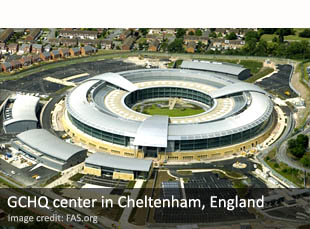
The British government has confirmed that it will review the involvement of a Chinese telecommunications hardware manufacturer in a cybersecurity testing center in Oxfordshire, England. The facility, called Cyber Security Evaluations Centre, has been operating since 2010 in the town of Banbury, 64 miles northeast of London. Its establishment was part of a 2005 agreement between firm British Telecom and Chinese telecommunications hardware manufacturer Huawei. According to the stipulations of the agreement, British Telecom would purchase switches and other hardware equipment from the Chinese company, if the latter agreed to set up “the Cell”, as it is known, in Banbury, to test the equipment’s security features. However, last month, a report (.pdf)  by the British Parliament’s Intelligence and Security Committee (ISC) raised strong concerns about Huawei’s involvement at the Centre. The ISC report called the government’s attention to “the risks of Huawei effectively policing themselves” and stressed that Britain’s national security could potentially be compromised by Huawei’s alleged links to the Chinese military. The report based its concerns on the fact that virtually every member of staff at the Banbury testing facility is an employee of Huawei, barring its Director, who is a former deputy director of Britain’s General Communications Headquarters (GCHQ). The parliamentary report urged the government to overcome its “fear of jeopardizing trade links with Beijing” and pressure British Telecom to amend its agreement with Huawei. Instead of Huawei technicians, the ISC report suggested that the Banbury Centre should be staffed exclusively with personnel from GCHQ —Britain’s communications intelligence agency. Late last week, the UK Cabinet Office announced it was in agreement with the principal recommendations of the ISC report and said that a review of the Banbury testing facility will take place. Read more of this post

Former CIA station chief arrested in Panama ‘has been released’

Panama-Costa Rica borderBy JOSEPH FITSANAKIS | intelNews.org |
A former station chief for the Central Intelligence Agency, who was detained in Panama last week for his alleged role in the kidnapping of a Muslim cleric in Italy, returned to the United States on Friday. The US Department of State said Robert Seldon Lady had been released by Panamanian authorities 24 hours after he was detained near Panama’s border with Costa Rica. Lady was the CIA’s station chief in Milan in February 2003, when a team of 23 Americans, most of them CIA operatives, abducted Mustafa Osama Nasr. The CIA suspected the Egyptian-born Nasr, also known as Abu Omar, of working as a recruiter for a host of radical Islamist groups, including al-Qaeda. In 2005, Italian authorities, which had not authorized Nasr’s kidnapping, convicted Lady, along with 22 other Americans, of abduction. The convictions were delivered in absentia, as the Americans had earlier left the country. Washington has refused to extradite them to Rome. Lady was crossing from Panama into Costa Rica at a remote jungle border crossing early on Thursday, when, according to Costa Rican authorities, “a check on his passport triggered an INTERPOL alert”. Following negotiations between Costa Rican and Panamanian authorities, Lady was detained by Panamanian border guards, who alerted INTERPOL and Italy. Late on Friday, State Department spokeswoman Marie Harf declined to offer details on the case, but confirmed that Lady was “either en route or back in the United States”. A Panamanian foreign ministry source told Reuters that Lady was released because “Panama does not have an extradition treaty with Italy and because documentation sent by Italian officials was insufficient”. Read more of this post

Panama arrests ex-CIA chief of station wanted by INTERPOL

Panama-Costa Rica borderBy JOSEPH FITSANAKIS | intelNews.org |
A retired 21-year veteran of the United States Central Intelligence Agency, who is wanted by INTERPOL for participating in the abduction of a Muslim cleric in Italy, has been detained by police in Panama. Robert Seldon Lady was the CIA’s station chief in Milan in 2003, when a team of 23 Americans, most of them CIA officers, abducted Mustafa Osama Nasr. The CIA suspected the Egyptian-born Nasr, known also as Abu Omar, of working as a recruiter for a host of radical Islamist groups, including al-Qaeda. On February 17, 2003, Nasr was seized in dramatic fashion by a group of CIA operatives in broad daylight in Milan. He was stuffed into an unmarked white van and eventually ended up in Egypt, where he was tortured before being released. Nasr’s case helped raise awareness of the US government’s extraordinary rendition program. Under the controversial program, suspected terrorist operatives were secretly taken to third-party countries where they were subjected to aggressive interrogation techniques. Italian authorities were irritated by Nasr’s kidnapping, which they claimed took place without the consent of the Italian government. There are also reports that the Italian intelligence services were monitoring Nasr at the time and were trying to recruit him as a source, which might explain why they were incensed when the Egyptian was snatched by the CIA without their authorization. Read more of this post

US court dismisses lawsuit against CIA over scientist’s death

CIA headquartersBy JOSEPH FITSANAKIS | intelNews.org |
A United States federal court has dismissed a lawsuit filed against the Central Intelligence Agency over an alleged murder of an American Department of Defense scientist, which occurred in 1953. The lawsuit concerned the case of Dr. Frank Olson, a specialist in biological warfare working for the US Pentagon at Fort Detrick, Maryland. It appears that Olson, who studied the effects of toxic substances on the brain, participated —knowingly or unknowingly— in Project MKNAOMI/ MKULTRA. The project was a joint effort by the CIA and the US military to study the effects of substances such as heroin and LSD on the human brain. On November 28, 1953, Dr. Olson fell to his death from the window of his room on the 13th floor of New York City’s Statler Hotel. In an internal report that was declassified in 1975, the US government admitted that Dr. Olson had been assigned the task of military-scientific liaison with the CIA’s Technical Services Staff —the unit in charge of MKULTRA. Moreover, the report disclosed that the late scientist had been administered LSD by his CIA colleagues without his knowledge nine days prior to his sudden death. Ever since the report was aired, Dr. Olson’s family has maintained that the scientist did not voluntarily plunge from his hotel window on November 28, 1953. Rather, they claim, he was pushed to his death by CIA personnel, after he raised strong objections against the testing of chemical and biological substances on non-consenting human subjects by the Agency’s Technical Services Staff. But US District Judge James Boasberg ruled that, although the CIA had yet to come clean on the controversial history of MKULTRA, the lawsuit by Dr. Olson’s family had been “filed too late”; he added in his ruling that an earlier settlement between the dead scientist’s family and the US government effectively barred the possibility of a new lawsuit. Read more of this post

News you may have missed #846

North and South KoreaBy IAN ALLEN | intelNews.org |
►►Cuba confirms it hid weapons on seized N. Korean ship. Cuba has admitted being behind a stash of weapons found on board a North Korean ship seized in the Panama Canal. The ship was seized by Panama last week after “undeclared military cargo” was found hidden in a shipment of sugar. United Nations sanctions prohibit the supply of arms to North Korea in the continuing dispute over its nuclear program. But the Cuban foreign ministry said the ship was carrying “obsolete arms” from Cuba “for repair” in North Korea.
►►British undercover officers stole identities of dead children. Britain’s Metropolitan Police Service, which is responsible for policing most of the city of London, has admitted that its undercover police officers expropriated the identities of at least 43 dead children. But police officials refused to inform the children’s families at the time, saying the practice was considered “essential to protect covert officers who were working inside dangerous extremist groups”.
►►Snowden has ‘thousands’ of damaging NSA documents. The Guardian’s Glenn Greenwald, who first reported on the disclosures of former CIA employee Edward Snowden, has said that the self-styled whistleblower has “literally thousands of documents” in his possession, which are essentially an “instruction manual for how the NSA is built”. The information could allow someone to evade or mimic NSA surveillance tactics, the journalist said.

Russia ‘considering spy swap with Germany’

Andreas and Heidrun AnschlagBy JOSEPH FITSANAKIS | intelNews.org |
The Russian government has allegedly approached Germany with an offer to swap a number of jailed spies, including a couple of Russian sleeper agents sentenced for espionage earlier this month in Stuttgart. Russia’s Kommersant newspaper alleged on Monday that that the Russian intelligence services are pressing the Kremlin for the repatriation of Andreas and Heidrun Anschlag, a married couple who were arrested in Germany in October of 2011. The two were convicted on July 2, 2013, of having spied on Germany since at least 1990 for the Soviet KGB’s First Chief Directorate and its post-Soviet successor organization, the Foreign Intelligence Service (SVR). German federal prosecutors also accuse the couple of document forgery, since their Austrian passports, which they used to enter West Germany from Mexico in 1988 (Andreas) and 1990 (Heidrun) were shown to be counterfeit. In return for the Anschlags, Moscow would be prepared to hand over “at least one spy” convicted in Russia for spying for the West, said Kommersant. Possible candidates would be Andrei Dumenkov, who is currently serving a 12-year sentence for allegedly giving German military intelligence blueprints of Russian missile designs, and Valery Mikhailov, a Russian counterintelligence officer said to be one of the United States Central Intelligence Agency’s “most successful agents [in Russia] in recent years”.   Read more of this post

Canada intelligence agency warns officials of espionage, honey traps

Richard FaddenBy IAN ALLEN | intelNews.org |
Canada’s foremost intelligence agency has authored a publication warning government officials they are as much targets of espionage today as they were during the Cold War. The warning is contained in a 2012 publication titled Far From Home: A Travel Security Guide for Government Officials, penned by the Canadian Security Intelligence Service (CSIS). It is aimed at Canadian diplomats and other federal employees who may, according to CSIS, become the targets of international espionage activities while traveling abroad. A copy of the guide was accessed by the Canadian Press agency under Canada’s Access to Information Act. In a brief forward to the guide, the then Director of CSIS, Richard Fadden, warns readers that international espionage is believed to be “at a level equal to that seen during the Cold War” (intelNews readers will remember Fadden has made similar claims in public before). He adds that Canada remains a “valued target” on the international intelligence scene, due to its sophisticated technology, energy and financial services sectors. Fadden, who left CSIS in May to become Canada’s Deputy Minister of National Defense, goes on to state that Canada is spied on by foreign intelligence agencies because of its “prized political connections” with the United States and its membership in “important international bodies”. In the guidebook, Canadian federal employees are advised to consider the information they carry with them while abroad as “a prized target” and to take conscious steps to protect it. Advice includes being cautious of information shared with taxi drivers, waiters or bar tenders, keeping personal electronic devices under watch at all times, and avoiding the use of hotel safes to store confidential material, as “intrusions are frequently accomplished with the co-operation of […] hotel staff”. The instructional book, stamped “For Official Use Only”, makes specific mention of “honey traps” —espionage lingo for intelligence collection through sexual seduction. It notes that honey traps often involve clandestine recordings of intimate encounters, which are later used to blackmail or publicly embarrass the target of the espionage operation. Read more of this post