Snowden exposes ‘unprecedented’ US intelligence budget details
September 2, 2013
 By JOSEPH FITSANAKIS | intelNews.org |
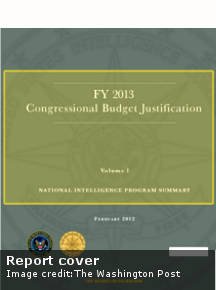
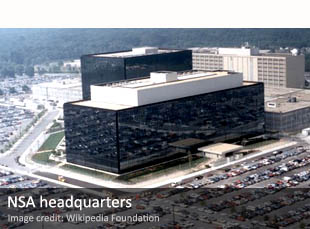
In what experts call an unprecedented move, The Washington Post has published excerpts from the classified United States intelligence budget, obtained from American defector Edward Snowden. Snowden, a former technical expert for the Central Intelligence Agency (CIA) and the National Security Agency (NSA), is currently in Russia, where he has been granted political asylum. He gave The Washington Post a top-secret document containing the 2012 budget summary for the US National Intelligence Program. A new version of this document is produced each year by the United States Intelligence Community (IC). It provides Congressional intelligence committees with a detailed justification for the funds requested by the IC, while highlighting the objectives, priorities, successes and failures of American intelligence agencies. The Post published several charts and tables from the document, which show that the US intelligence complex is currently sustained at a financial level that exceeds that reached at any point during the Cold War. Moreover, funding for the IC appears to have doubled since 2001 and is up by a quarter since 2006. Perhaps the most unexpected feature in the leaked document centers on the revelation that funding for the CIA is 50 percent higher than that of the NSA, which had long been seen by outsiders as the best-funded American intelligence agency. It appears, however, that the NSA, which specializes in communications interception, and is by far the largest American intelligence agency, received just over $10 billion last year, way below the $15 billion given to the CIA. The latter’s budget also exceeded that of the National Reconnaissance Office, a highly technical and very expensive government agency that maintains America’s spy satellites. In the words of The Post, the CIA’s requested budget “vastly exceeds outside estimates” and represents in excess of a quarter of the entire US intelligence budget. Another interesting revelation is that the US IC places Israel alongside Cuba, China, Russia and Iran, as a “priority target” when it comes to counterintelligence —meaning efforts to prevent these countries from spying on the US. Read more of this post














Announcement: Calling All Undergraduate Students of Intelligence
September 3, 2013 by Joseph Fitsanakis
The academic study of security and intelligence used to be seen as a strictly graduate-level preoccupation. Today, however, it is routinely encountered in undergraduate curricula and constitutes one of the fastest growing programs in political science. In response to the rising undergraduate interest in this field of study, the Security and Intelligence Studies program at King University in Bristol, Tennessee, launched The Security and Intelligence Studies Journal last spring. It is the world’s first undergraduate scholarly journal focusing exclusively on themes of intelligence, security, counterterrorism, geopolitics and international relations. The first issue of the SIS Journal was published in May of 2013 and is available on Amazon. It contains some of the finest undergraduate research on the theme: “security challenges in the 21st century”. For its second issue, the SIS Journal calls on interested authors to submit papers of up to 3,000 words in length on the theme: “Al-Qaeda – past, present, future”.
The theme’s elaboration, which can be found on the journal’s website, is as follows: “In less than a quarter of a century, al-Qaeda has grown from a small administrative unit in the Hindu Kush Mountains to a leading global agent of Sunni militancy. The history of this enigmatic organization is replete with unpredictable twists and turns that continue to mystify scholars and counterterrorism experts alike. During the last decade, the demise of central al-Qaeda figures, including its founder and Emir, Osama bin Laden, have prompted some to proclaim the organization extinct. Others point to the rise of al-Qaeda-inspired franchise groups in the Arabian Peninsula and parts of Africa, as well as lone-wolf terrorist acts around the world, in arguing that al-Qaeda’s ideology is far from obsolete. The Security and Intelligence Studies Journal calls on interested authors to explore various aspects of al-Qaeda’s past, present, or future, in an effort to shed scholarly light on one of the world’s most mysterious and elusive militant groups”.
The deadline for submissions of relevant scholarly papers of up to 3,000 words in length has been set for October 20, 2013. The SIS Journal editors encourage undergraduate students from around the world with a serious scholarly interest in security and intelligence to contact the journal by visiting its website or emailing the editors at kcsis@king.edu, to express their interest in submitting a paper. Collaborative works are welcome. We also kindly ask academics to forward this call for papers to their undergraduate students.
Filed under Expert news and commentary on intelligence, espionage, spies and spying Tagged with academic research, announcements