Analysis: Why were Western diplomats evacuated from Yemen?
August 8, 2013 4 Comments
 By J. FITSANAKIS and I. ALLEN | intelNews.org |
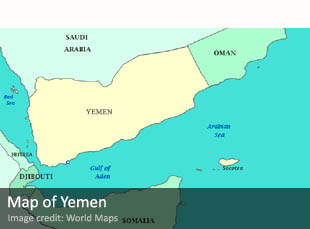
American and British embassies in Yemeni capital Sana’a were evacuated on Tuesday, soon after the United States closed 19 of its diplomatic representations in the Middle East and North Africa due to fears of a pending terrorist attack. But why exactly did the evacuations of diplomatic personnel take place in Sana’a? The Yemeni government announced on Wednesday that it had foiled a large-scale attack by al-Qaeda in the Arabian Peninsula (AQAP), which allegedly aimed to cripple the country’s frail economy. According to Yemeni government spokesperson Rajeh Badi, the attack was planned to take place in the country’s central Hadramout governorate, which includes the port cities of al-Mukkala and Ghail Ba Wazir. The Yemeni government said the AQAP forces planned to blow up several oil pipelines before proceeding to occupy the two port cities, from which the majority of Yemen’s oil exports are shipped. Badi added that AQAP planned to take several foreign oil workers hostage as part of the military operations.
However, as Foreign Policy magazine’s Dana Stuster points out, Mohammed Albasha, spokesman of the Yemeni embassy in Washington, DC, seems to dispute his own government’s claims. Early on Wednesday, Albasha tweeted that, in his view, “AQAP doesn’t have the man power nor the capabilities to capture a city the size of Mukkala in Hadramout”, let alone Ghail Ba Wazir. Read more of this post




 By JOSEPH FITSANAKIS | intelNews.org |








News you may have missed #848
August 9, 2013 by Ian Allen 1 Comment
►►UK officials saw ‘communist spies’ in Japan in 1983. British officials believed in the early 1980s that Japanese institutions had been “slightly” penetrated by communist intelligence services, according to documents declassified last week at the National Archives in London. The documents, from 1983, assert that there were approximately 220 communist intelligence officers working in Japan: 100 for the Soviet Union, 60 for China and 60 for other communist countries.
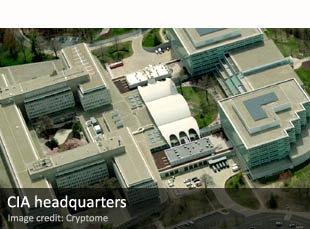
►►‘Dozens of CIA operatives on the ground’ during Benghazi attack. CNN claims that “dozens of people working for the CIA” were on the ground the night of the attack on the US consulate in Benghazi, Libya, which killed four Americans, including Ambassador Christopher Stevens. The news station adds that, according to one source, the CIA is involved in “an unprecedented attempt to keep [its] Benghazi secrets from ever leaking out”.
►►Australians call for national debate on privatization of intelligence. Dr Troy Whitford, Associate Investigator with the Australian Research Council’s Centre of Excellence in Policing and Security, and lecturer at Charles Sturt University, has called for “a national debate on the extent, cost and consequences of Australia’s security and intelligence outsourcing”. The call was apparently prompted by news that 51% of the intelligence gathering in the US is now carried out by non-government contractors.
Filed under Expert news and commentary on intelligence, espionage, spies and spying Tagged with 0 'Dozens of CIA operatives on the ground' during Benghazi attack, 0 Australians call for national debate on privatization of intelligence, 0 UK officials saw 'communist spies' in Japan in 1983, Australia, Benghazi (Libya), CIA, Cold War, declassification, history, intelligence outsourcing, Japan, Libya, News, news you may have missed, Troy Whitford, UK, United States