Who leaked Iranian nuclear document that turned out to be a hoax?

The leaked documentBy JOSEPH FITSANAKIS | intelNews.org |
On November 27, the Associated Press published an alleged Iranian document which it said proved Iran was working on a nuclear bomb. The news agency said the disclosure was the latest in a series of similar leaks to the media by “officials from a country critical of Iran’s atomic program”. However, the authenticity of the document, which contained a diagram calculating the explosive force of a nuclear weapon, is now heavily disputed. An analysis of the leaked document in the latest issue of The Bulletin of the Atomic Scientists concluded that it was either massively erroneous or a hoax designed by amateurs. The Bulletin, a specialist publication founded by physicists involved in the Manhattan Project, said the document was “unlikely to have been made by research scientists working at a national level”. The obvious question is who leaked the disputed document and why? An article in British newspaper The Guardian cites unnamed “Western officials” who claim that the diagram, along with several previous disclosures of a similar nature, was leaked by Israel “in an attempt to raise international pressure on Tehran”. If this is so, the leak appears to have seriously backfired and may have compromised the credibility of an ongoing investigation into the Iranian nuclear program by the International Atomic Energy Agency (IAEA). This is because the leaked document was part of an intelligence file on Iran’s nuclear program, compiled by the IAEA, which formed the factual basis for a new set of penalties and sanctions imposed on Iran by the United States and the European Union in November of 2011. The question that some United Nations officials are now asking is, if the leaked document is indeed a hoax, how could the IAEA guarantee the authenticity of the remaining documents on its file on Iran? Read more of this post

US Senate blocks Pentagon plan to launch new CIA-style agency

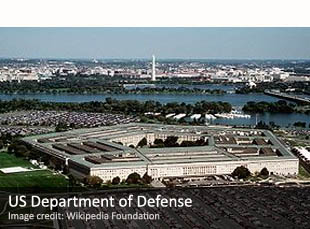
The US Department of DefenseBy JOSEPH FITSANAKIS | intelNews.org |
Last week the United States Department of Defense flooded media outlets with press releases announcing the planned establishment of a new military intelligence organization that would rival the Central Intelligence Agency in both size and scope. Not so fast. The US Senate has just blocked the plan citing gross mismanagement of the Pentagon’s existing intelligence operations. The proposed Defense Clandestine Service centers on plans to build an extensive overseas intelligence network, run by the Pentagon’s Defense Intelligence Agency and based on the CIA model of stations located in large metropolitan centers. The DoD said that the new intelligence organization will help the US armed forces broaden their intelligence collection from the current concentration in Afghanistan and Iraq. But the Senate, which was asked to review and approve the plan’s financial requirements, submitted under the 2013 National Defense Authorization Act, has refused to do so. Moreover, it issued a written rationale, drafted by the Senate Armed Services Committee, in which it explicitly forbids the Pentagon using US taxpayers’ money to expand its overseas intelligence operations. According to The Washington Post, the reason for the plan’s rejection is two-fold. First, the Senate appears unhappy with the financial management of the DoD’s existing intelligence collection efforts. The Senate report cites serious concerns about the excessive financial cost and management failures associated with the Pentagon’s ongoing intelligence operations. It specifically mentions “poor or non-existent career management” for DoD intelligence operatives who are often transferred back to regular military units after undertaking “unproductive” assignments overseas, despite extensive intelligence training. The Senate Armed Services Committee’s report stipulates that, before it asks for more money to build the proposed new agency, the Pentagon must “demonstrate that it can improve the management of clandestine [human intelligence] before undertaking any further expansion”. Read more of this post

News you may have missed #816

Kim Jong-namBy IAN ALLEN | intelNews.org |
►►Danish minister vows more control over spy agency. Following the uproar created by the revelations from former Danish secret service (PET) agent Morten Storm, Denmark’s Minister of Justice, Morten Bødskov, is now calling for parliament to have more control over the domestic intelligence agency. In an interview with Berlingske newspaper, Bødskov said that he is seeking increased powers for parliament’s Kontroludvalg, a committee established in 1964 to oversee PET. The move comes in response to the many questions that have arisen about PET’s actions following Storm’s decision to contribute to a series of articles in Jyllands-Posten newspaper that chronicled his time as a PET double-agent.
►►South Korea jails alleged North Korean assassin. A South Korean court has jailed an unidentified North Korean spy reportedly ordered to attack Kim Jong-nam, the eldest son of late North Korean leader Kim Jong-il. Kim Jong-nam, who is believed to have fallen out of favor with Kim Jong-il in 2001, was thought to have been living in Macau, but media reports indicate he may have moved to Singapore. South Korean media said the alleged assassin had spent a decade in China tracking down North Korean defectors before coming to the South, and that he had admitted trying to organize “a hit-and-run accident” targeting Kim Jong-nam.
►►US Pentagon to double the size of its worldwide spy network. The Defense Intelligence Agency (DIA), the US Pentagon’s military intelligence unit, is aiming to recruit 1,600 intelligence collectors —up from the several hundred overseas agents it has employed in recent years. The DIA’s new recruits would include military attachés and others who do not work undercover. But US officials say that the growth will be driven a new generation of spies who will take their orders from the Department of Defense. The project is reportedly aimed at transforming the DIA into a spy service more closely aligned with the CIA and elite military commando units.

Afghan government blames Pakistan for attempt on spy chief’s life

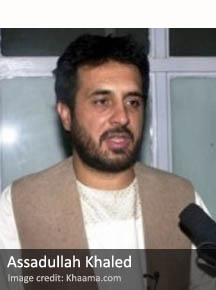
Assadullah KhaledBy JOSEPH FITSANAKIS | intelNews.org |
The Afghan President and senior cabinet officials have described the recent assassination attempt against the country’s spy chief as the work of “a professional intelligence service” and said they would be asking Pakistan “for clarification”. Assadullah Khaled, who heads Afghanistan’s National Directorate for Security (NDS), survived a suicide attack last Thursday in Kabul. According to Afghan officials, Khaled was attacked by a member of the Taliban posing as a “peace emissary”, who blew himself up as he was meeting Khaled to discuss a possible peace deal with the government. Media reports suggest that the bomber had concealed explosives in his undergarments and that he was not searched out of “respect for [Afghan] traditions and hospitality”. Shortly after the attack, the Afghan Taliban claimed responsibility and said they would try to kill Khaled again. But speaking to reporters last week, Afghan President Hamid Karzai said that “more professional hands” were behind the attack on Khaled. The Afghan leader described the suicide attack as a “very sophisticated and complicated act by a professional intelligence service” and said the Afghan security services “know [for] a fact” that the suicide bomber had entered the country from Pakistan. President Karzai stopped short of directly implicating the Inter-Services Intelligence Directorate (ISI) of directly planning the attack; but he said his government would be “seeking a lot of clarifications from Pakistan” about the bombing. Last Sunday Afghan Ministry of Foreign Affairs spokesperson Janan Musazai told reporters that Afghan officials were “100 percent sure” the suicide bomber had come to Afghanistan from the Pakistani city of Quetta. Read more of this post

Israel special forces conducting cross-border operations in Syria

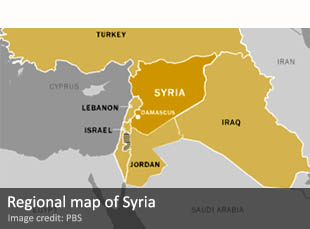
Regional map of SyriaBy JOSEPH FITSANAKIS | intelNews.org |
Teams of Israeli special forces are currently operating inside Syria in an effort to detect and sabotage the Syrian military’s chemical and biological arsenal. Citing an unnamed “Israeli source”, the London-based Sunday Times newspaper said yesterday that the operation is part of a wider “secret war” to track Damascus’ non-conventional weapons stockpiles and “sabotage their development”. The Israeli government refused comment on the paper’s allegation. However, Israel’s covert activities against the Syrian government’s chemical and biological arsenal go back almost 30 years. Reputedly, some of the more recent such activities may have involved the targeting of Russian scientists. Although Russia routinely denies it, it is believed that Syria’s non-conventional arsenal was significantly augmented in the late 1980s and early 1990s with the help of Russian retired general Anatoliy Kuntsevich. Kuntsevich, one of the Soviet Red Army’s top scientists, is said to have helped Damascus build its XV nerve agent stockpiles, which are still believed to be in existence today. Interestingly, Kuntsevich died suddenly in 2003 onboard a flight from the Syrian capital to Moscow. It was widely speculated at the time that the Mossad, Israel’s covert-action agency, may have played a role in the Russian general’s sudden death. In 2010, another retired Russian general, Yuri Ivanov, who had served as Deputy Director of the GRU, Russia’s military intelligence agency, died in unclear circumstances. The body of 52-year-old Ivanov was found in Turkey on August 16, 2010, several days after he had disappeared close to a Russian naval facility in Syria. Russian media did not report Ivanov’s death until several days later, when he was quietly buried in Moscow. According to reports in the Israeli press, the former GRU official was on his way to a meeting with Syrian intelligence officers when he went missing. Read more of this post

News you may have missed #815 (analysis edition)

Polygraph testBy IAN ALLEN | intelNews.org |
►►Should polygraph tests be trusted?  US federal polygraph programs have flourished, targeting a growing number of private contractors with more intensely personal questions than ever before. More than 70,000 people are now screened yearly in the US. Yet thousands of people a year could be identified as lying in polygraph screenings when they are not, according to statistical models by the National Academies, which advises the federal government on scientific matters. Under the current system, many of them would have no way to legally challenge polygraphists’ conclusions, especially in the intelligence world.
►►Why the US does not need another law against intelligence leaks. Leonard Downie Jr., vice president at large of The Washington Post, warns that the 2013 Intelligence Authorization Act “would make it a crime for career intelligence officers to provide almost any type of information to the news media, whether the information is classified or not”. He argues that the proposed legislation would “end contacts that often benefit both the government and the public by allowing the exchange of accurate information about vital national security issues and intelligence activities, including abuses requiring attention”.
►►The preventable decline of British defense intelligence. Defense intelligence refers to something rather different from ‘military intelligence’. It takes place at the topmost levels of defense coordination and decision-making and draws together participation from all of the armed services with civilian subject-matter and technical experts and produce consolidated assessments for senior civil servants, ministers and the service chiefs of staff. Philip Davies, director of the Brunel Centre for Intelligence and Security Studies in the United Kingdom, argues that, in Britain, defense and military intelligence remains “something of a poor cousin in the intelligence community, the eternal Peter robbed to pay the Paul of other, seemingly more urgent, defense expenditure and policy priorities”.

Illegal spy agency operated in West Germany, new book claims

Willy BrandtBy JOSEPH FITSANAKIS | intelNews.org |
Conservative politicians in Cold-War West Germany set up an illegal domestic intelligence agency in order to spy on their political rivals, a forthcoming book claims. In Destroy After Reading: The Secret Intelligence Service of the CDU and CSU, German journalist Stefanie Waske exposes what she says was an elaborate plot to undermine West Germany’s rapprochement with Soviet-dominated Eastern Europe. The book, which is scheduled for publication in February of 2013, claims that the illegal intelligence agency, known as ‘the Little Service’, was set up by politicians from Germany’s conservative Christian Democratic Union (CDU) and its sister organization, the Christian Social Union of Bavaria (CSU). The two parties allegedly founded ‘the Little Service’ in 1969, in response to the election of Willy Brandt as German Chancellor in 1969. Brandt, who was leader of the center-left Social Democratic Party of Germany (SDP), was elected based on a program of normalizing West Germany’s relations with Eastern Europe. Under this policy, which became known as ‘Neue Ostpolitik’ (‘new eastern policy’), Brandt radically transformed West German foreign policy on Eastern Europe. In 1970, just months after his election, he signed an extensive peace agreement with the Soviet Union, known as the Treaty of Moscow, which was followed later that year by the so-called Treaty of Warsaw. Under the latter agreement, West Germany officially recognized the existence and borders of the People’s Republic of Poland. Brandt’s Neue Ostpolitik, which continued until the end of his tenure in the Chancellery in 1974, earned him the Nobel Peace Prize for his efforts to achieve reconciliation between West Germany and the countries of the Soviet bloc, primarily East Germany. But Brandt’s policy of rapprochement alarmed the CDU/CSU coalition, says Waske, which quickly set up ‘the Little Service’ by enlisting former members of Germany’s intelligence community. Read more of this post

Swiss intelligence employee stole ‘millions’ of classified pages

NDB offices in Bern, Switzerland

By JOSEPH FITSANAKIS | intelNews.org |
Swiss authorities have warned Western intelligence agencies that their secrets may have been compromised by a disgruntled intelligence employee who stole “thousands or even millions of pages of classified material”. Citing “European national security sources”, Reuters said the employee at the center of the case worked for the NDB, Switzerland’s Federal Intelligence Service. He had been employed by NDB for eight years as a network technician with “full administrator rights” and had unrestricted access to the NDB’s computers, as well as to those of Switzerland’s Federal Department of Defense, under which the NDB operates. About a year ago, however, the unnamed technician apparently became disgruntled after his views on how to structure the NDB’s databases were allegedly sidelined or ignored. He eventually decided to use several portable hard drives to download countless classified documents from Swiss government servers and managed to carry them out of the office building where he worked, using a backpack. According to Swiss authorities, he intended to sell the classified information to foreign governments or black-market operatives. He was apprehended, however, after he tried to set up a numbered bank account with Swiss-based UBS bank, using what bank security officials described as “suspicious identification documentation”. Read more of this post

Israel asked for Jordan’s approval to bomb Syria, say sources

Regional map of SyriaBy JOSEPH FITSANAKIS | intelNews.org |
The government of Israel has sent Jordan at least two requests in the past two months to bomb targets in Syria, according to intelligence sources. The Atlantic magazine, which published the revelation on Monday, said Tel Aviv has been seeking Amman’s “permission” to move ahead with “a plan to take out many of Syria’s chemical weapons sites”. Citing unnamed “intelligence officials in two countries”, The Atlantic said that the Israeli requests were communicated to the Jordanian government by officials from the Mossad, Israel’s primary covert-action agency. In both instances, the Mossad delegation was allegedly dispatched to Amman on the orders of the Office of Benjamin Netanyahu, Israel’s Prime Minister. However, the Jordanians are so far resisting the Israeli proposals, says The Atlantic, telling their Jewish neighbors that “the time [is] not right” for direct military action. It is worth pointing out that Israel does not technically require Jordan’s permission to bomb Syria. Its air force can do so without assistance from Amman. This was demonstrated on September 6, 2007, when Israel bombed a target at Al-Kibar, deep in the Syro-Arabian Desert, thought to be the site of a nuclear reactor. Even though Tel Aviv has not officially admitted a role in the attack, Israeli officials have repeatedly hinted that Israel was behind it. According to German newsmagazine Der Spiegel, which published a detailed account of the bombing, the attack was codenamed Operation ORCHARD. The difference this time appears to be that many of Syria’s chemical weapons facilities, which Israel allegedly wants to destroy, are located along the Syrian-Jordanian border. Read more of this post

News you may have missed #814

Ilir KumbaroBy IAN ALLEN | intelNews.org |
►►Israel accuses Palestinian of spying for Hezbollah. Israel’s Shin Bet internal security agency says a Palestinian man has been charged with relaying information to Hezbollah in Lebanon about sensitive government sites, including parliament. It identified the suspect as Azzam Mashahara, a resident of east Jerusalem, which Israel captured in 1967. Palestinian residents of east Jerusalem, unlike Palestinians from the West Bank or the Gaza Strip, have Israeli identity cards that allow them to travel freely within Israel. Mashahara was charged with maintaining contacts with a foreign agent and relaying information to the enemy.
►►UK agency tries to crack coded message from WWII-era carrier pigeon. The note, written on official stationary with the heading “Pigeon Service,” was discovered in a red canister attached to the skeletal leg of a pigeon in a chimney in Surrey, England. The message is made up of 27 seemingly random five-letter blocks and though it’s undated, government analysts believe the pigeon met his end while on a secret mission during the Second World War. The note is signed “Sjt W Stot” and was intended for the destination “XO2”. In a statement, Britain’s Government Communications Headquarters (GCHQ), said that during the war secret communications would often utilize specialized codebooks “in which each code group of four or five letters had a meaning relevant to a specific operation, allowing much information to be sent in a short message”. The GCHQ said that those messages may have been put through an additional layer of security by being re-coded with what’s known as a one-time pad.
►►Albania court convicts fugitive ex-spy chief. An Albanian court has convicted Ilir Kumbaro, the country’s fugitive former intelligence chief, of murder for the 1995 death of a suspect who was illegally detained for an alleged plot to murder the President of the Republic of Macedonia. The victim, businessman Remzi Hoxha, an ethnic Albanian from Macedonia, was abducted by the secret police 17 years ago along with two other suspects for allegedly planning to kill then-Macedonian President Kiro Gligorov during a visit to Albania. The court said the three suspects were held illegally and tortured during questioning. Kumbaro traveled to Britain in 1996 under a false identity, claiming to be a refugee from Kosovo. He has been missing for a year, after skipping an extradition hearing in London. Hoxha was never found and is presumed to have died in custody.

Fourth person involved in Russian fraud scheme found dead in UK

Alexander PerepilichnyyBy JOSEPH FITSANAKIS | intelNews.org |
A Russian whistleblower who had been helping authorities in Western Europe investigate a gigantic money-laundering scheme involving Russian government officials, has been found dead in the United Kingdom. Alexander Perepilichnyy, who had been named by Swiss authorities as an indispensible informant in the so-called Hermitage Capital scandal, was found dead outside his home in Weybridge, Surrey, on November 10. The 44-year-old former businessman, who sought refuge in England in 2009, and had been living there ever since, is the fourth person linked to the money-laundering scandal to have died in suspicious circumstances. The company, Hermitage Capital Management, is a UK-based investment fund and asset-management company, which Western prosecutors believe fell victim to a massive $250 million fraud conspiracy perpetrated by Russian Interior Ministry officials who were aided by organized crime gangs. In 2006, the company’s British founders were denied entry to Russia, in what was seen by some as an attempt by the administration of Vladimir Putin to protect its officials involved in the money-laundering scheme. The scandal widened in late 2009, when Hermitage Capital lawyer Sergei Magnitsky, who had been arrested in connection with the case, died while in police custody. According to the coroner’s report, Magnitsky, who was 37 and in good physical health, died suddenly from acute heart failure at a Moscow detention facility. Some observers speculate that the lawyer was killed before he could turn into a whistleblower against some of the perpetrators of the fraud scheme. Read more of this post

Saudi diplomat shot dead in Yemen by gunmen disguised as soldiers

By IAN ALLEN | intelNews.org |
An official at the Saudi Arabian embassy in Yemen has been shot dead along with this Yemeni bodyguard by a group of gunmen disguised as government security forces. According to television station al-Arabiya, which is owned by the Saudi government, the diplomat and his bodyguard were killed on Wednesday when their car was “raked with gunfire” in the heart of Yemeni capital Sana’a. Later in the day, the incident was confirmed by the Kingdom’s Ministry of Foreign Affairs, which identified the assassinated diplomat as Sergeant Khaled Shobeikan al-Anzi. IntelNews understands that al-Anzi worked as an aide to the Military Attaché at the Saudi Arabian embassy in Sana’a. There are rumors, however, that his diplomatic credentials may have been a cover for his intelligence work for Al-Mukhabarat Al-A’amah, Saudi Arabia’s military intelligence agency. Sources in Yemen report that the attack took place in Haddah, one of Sana’a’s more exclusive districts, which houses the majority of foreign embassies and diplomatic compounds in the capital. It is also worth noting that the assailants were reportedly “dressed in the uniforms of [Yemen’s] Central Security Organization”, a 50,000-strong National Guard-type force that operates under the direction of the Ministry of the Interior. Wednesday’s assassination of the Saudi diplomat is the latest incident in a series of attacks against diplomatic targets in Sana’a, which have included employees in the British and American embassies there. In late March of this year, Islamist militants kidnapped Saudi Arabia’s Deputy Consul in Yemen’s southern port city of Aden, who remains in captivity. Read more of this post

Belgian intelligence employees ‘outed themselves’ on LinkedIn

LinkedIn logoBy JOSEPH FITSANAKIS | intelNews.org |
Several alleged employees of Belgian security and intelligence agencies have revealed their identities on social networking sites, it has been reported. Belgian newspaper De Standaard, which made the revelation in a leading article on Tuesday, said that many LinkedIn and Facebook users appear to list their employer as Belgium’s State Security Agency (Sûreté de l’État or SE/SV) or the Coordinating Body for Threat Analysis (OCAM/OCAD). The SE is Belgium’s foremost civilian intelligence agency, operating under the country’s Ministry of Justice. OCAM is one of Belgium’s several anti-terrorist intelligence collection and analysis agencies, which operates under the joint supervision of the Justice and Interior Ministries. De Standaard contacted the two agencies, which refused to comment on whether the social networking profiles are authentic. But the paper spoke with an unnamed Belgian senior intelligence official, who said that this was potentially a very serious issue for Belgian national security. “Russian and Chinese intelligence services employ thousands of people”, said the official, “and have the resources and time to manually search for such profiles and then exploit the information they provide. Our people could, by their very presence on such sites, become the target of hostilities”. De Standaard also spoke to Belgian Senator Dirk Claes, who is a member of the country’s Parliamentary Committee on Intelligence. He told the paper that his colleagues in the Committee would be up in arms if the profiles turned out to be authentic. “These individuals have security clearances and are obligated to stay in the background, as much as possible. I will be raising this issue in the [Intelligence] Committee”, Claes told De Standaard. Read more of this post

Freed Russian scientist convicted for spying maintains innocence

Valentin DanilovBy JOSEPH FITSANAKIS | intelNews.org |
A Russian scientist who was pardoned last week, after spending nearly a decade behind bars for allegedly spying for China, has dismissed the charges against him as “pure fantasy”. Physicist Valentin Danilov was arrested by the FSB, the Russian Federal Security Service, in February of 2001 and charged with conducting espionage in the service of the Chinese space program. At the time of his arrest, Danilov headed the Thermo-Physics Center at Russia’s Krasnoyarsk State Technical University (KSTU), located in Siberia’s third largest city. For several years leading up to his arrest, he conducted research on the impact of solar activity on the condition and performance of space satellites. During his lengthy trial, Danilov admitted selling to the Chinese information on satellite technology belonging to the Russian government. But his defense team argued that the information in question had already been declassified and available in public sources since the early 1990s. Eventually, in November of 2004, a Russian Federal court found Danilov guilty of treason and sentenced him to 14 years in prison. He was supposed to be released in 2017. Earlier this month, however, a court in Krasnoyarsk found that, since Danilov had served most of his prison sentence in good behavior, and since his health was weak, he would be released early. In his first public interview since his release, Danilov, 66, has said he intends to take his case against the Russian government to the European Court of Human Rights. Speaking to reporters as soon as he emerged from prison, the Russian scientist said: “I would truly appreciate it if someone finally told me what state secret I sold”. He went on to comment directly on Russian President Vladimir Putin: “Everybody would be the same as him in his place, because it is the court that makes the czar”, he said, employing a traditional Russian proverb. Read more of this post

Muslim to head India’s domestic spy agency in historic first

Asif IbrahimBy JOSEPH FITSANAKIS | intelNews.org |
For the first time in the history of India, a Muslim officer has been selected to head the country’s domestic intelligence agency. The Intelligence Bureau (IB), one of India’s most powerful intelligence organizations, will be led by Syed Asif Ibrahim, one of relatively few Muslim senior officers serving in the country’s predominantly Hindu security and intelligence apparatus. It will be the first time that the IB, which was formed in 1877 under British colonial rule, and today operates under the Ministry of Home Affairs, will be led by a Muslim. Formerly a senior officer in the Indian Police Service, Ibrahim, 59, has served for years in the IB’s Directorate of Operations, and recently served as the Bureau’s Chief of Station at the Indian High Commission in London, United Kingdom. His supervisory experience includes roles in the IB’s counter-cyberespionage and counterterrorism units. IntelNews hears that Ibrahim is widely seen by Indian intelligence officers as someone with a “crystal-clear understanding” of Islamic-inspired militancy inside the country. Ibrahim’s appointment was announced late last week by the Appointments Committee of the Cabinet, a senior government body lead by the Indian Prime Minister Manmohan Singh. Following the announcement, observers noted that at least four IB officials, who had been tipped for the job of director and were above Ibrahim in terms of seniority, were assigned to positions outside the Bureau, ostensibly to clear the way for Ibrahim’s appointment. Read more of this post