News you may have missed #780

Syrian rebel video of downed dronesBy IAN ALLEN | intelNews.org |
►►Israeli Prime Minister rebukes President’s Iran comments. Aides to Israeli Prime Minister Benjamin Netanyahu launched a stinging rebuke to the country’s president, Shimon Peres, after he said that Israel should not act alone in launching military action against Iran’s nuclear program. In an interview on Israeli television, Peres said: “It is clear to us we cannot do it on our own. We can only delay [Iran’s progress]. Thus it’s clear to us that we need to go together with America”. Officials from Netanyahu’s office were quoted in the Israeli media as saying: “Shimon Peres forgets what the role of the president of Israel is”. The row is a stark example of the sharp differences at the heart of Israel’s political, military and intelligence establishment over the merits and dangers of an early unilateral military strike on Iran.
►►Russian embassy in UK alleges attack by Syrian activists. Russia’s embassy in London accused British police on Friday of taking no action to prevent an attack on its building by a group of activists protesting Moscow’s support for Syrian President Bashar al-Assad. It made the accusation as about 40 protesters clad in balaclavas demonstrated outside the embassy, located in an upscale part of London, against the verdict in a trial of the Russian feminist punk band Pussy Riot in Moscow. An embassy spokesman said a group of protesters chanting anti-Assad slogans attacked the building overnight, throwing stones and smashing windows.
►►Syrian rebels put captured Iranian drones on YouTube. The opposition to Bashar al-Assad says it’s captured spy drones made by Assad’s patron, Iran. And it’s put the evidence on YouTube. In the video, Syrian rebels show off three smallish, unarmed surveillance drones they say they downed. The two larger drones appear to be variants of Iran’s homemade Ababil, or Swallow, surveillance aircraft. All three show signs of damage, with the tiny drone’s nose cone looking to have taken the worst, and alongside the drones are pamphlets displaying the face of the dead Iranian ayatollah Ruhollah Khomeini. It’s yet more evidence that Iran considers Syria’s civil war to be a proxy contest with much at stake for their influence in the region.

Colombian police ‘steal personal data’ of 31 million citizens

Anthony Cotrino SossaBy JOSEPH FITSANAKIS | intelNews.org |
The National Police Force of Colombia have stolen the contents of an enormous electronic database containing the personal information of over 31 million Colombian citizens, according to news reports from Bogotá. News of the alleged theft surfaced following a formal complaint filed by the Colombian government’s National Registry on Tuesday. According to the complaint, authored by the Registry’s Director, Anthony Cotrino Sossa, two police officers visited the Registry’s offices late last week, saying they wished to access data relating to a specific investigation concerning “election irregularities” in Colombia’s western Cauca state. The two police officers were given access to the data after displaying the appropriate warrant. However, according to Sossa’s complaint, instead of simply accessing limited information relating directly to their investigation, the police officers proceeded to physically and illegally remove two hard-drives containing millions of citizens’ private data. The database stored in the hard-drives contains, among other things, general biographical information, fingerprint samples, as well as residential and other contact information on over 31 million Colombians. Sossa claims in his complaint that police officers transported the hard-drives to the headquarters of Colombia’s Cyber-Police Division, which allegedly failed to respond to repeated calls by National Registry for their prompt return. The hard-drives were eventually returned to the National Registry building on the following Monday without any explanation having been given for their removal. This is the latest in a long series of scandals concerning the activities of Colombia’s chronically corrupt and inefficient law enforcement and intelligence services. Read more of this post

Interview with editors of H-INTEL, a new intelligence email list (Part II)

By JOSEPH FITSANAKIS | intelNews.org |
Yesterday we posted an interview with Dr. Mark Stout, of Johns Hopkins University and the International Spy Museum in Washington, DC, who in June of this year announced the creation of H-INTEL, a new scholarly discussion list. The list, which now has over 200 members, and is actively seeking more, is an ambitious project that aims to provide an online venue for the scholarly discussion of intelligence. In doing so, it brings together academics, researchers, journalists, practitioners, and others, with an active interest in intelligence studies and intelligence history, ranging from antiquity to our times. Today we post the second part of our exclusive interview on H-INTEL, this time with List Editor Damien Van Puyvelde, a PhD candidate at Aberystwyth University in the United Kingdom. Damien, who specializes in the intensification of public-private intelligence relations in the ‘global war on terrorism’, is also a member of the Centre for Intelligence and International Security Studies (CIISS) at Aberystwyth. Originally from France, Damien is currently H-INTEL’s primary List Editor. Read more of this post

Interview with editors of H-INTEL, a new intelligence email list (Part I)

H-INTEL list-serv logoBy JOSEPH FITSANAKIS | intelNews.org |
In late June of this year, Dr. Mark Stout, of Johns Hopkins University and the International Spy Museum in Washington, DC, announced the creation of H-INTEL, a new scholarly discussion list. H-INTEL is an ambitious project that aims to provide an online venue for the scholarly discussion of intelligence. In doing so, it brings together academics, researchers, journalists, practitioners, and others with an active interest in intelligence studies and intelligence history, ranging from the ancient times to today. The list, whose message logs are located on Michigan State University’s H-Net server in East Lansing, has already over 200 members from several countries —and it is actively seeking more. In an effort to spread the world about this worthwhile effort, intelNews spoke with two individuals spearheading this project: Advisory Board member and List Editor Mark Stout; and List Editor Damien Van Puyvelde, a PhD candidate and member of the Centre for Intelligence and International Security Studies at Aberystwyth University in the United Kingdom. Below is our interview with Mark. To read Damien’s interview, click here for Part II of this post. Read more of this post

News you may have missed #778 (analysis edition)

Lieutenant-General Zahir ul-IslamBy IAN ALLEN | intelNews.org |
►►Some rules restrain Mossad’s work in Iran. It is widely believed that at least four assassinations of Iranian nuclear scientists in Tehran were carried out in recent years by Mossad operatives. The perpetrators were part of an elite unit within Israeli intelligence, called Kidon, founded in 1972 to avenge the killing of 11 Israeli athletes at the Munich Olympics, by any means necessary. But veteran Israeli intelligence correspondents Dan Raviv and Yossi Melman argue that the Kidon is not technically a ‘lawless’ organization; it has to comply with a set of “unwritten regulations” adopted by Israel’s secret agencies fifty years ago.
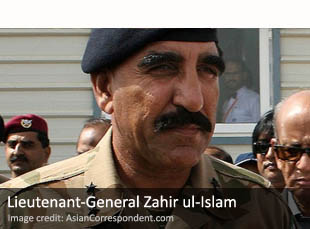
►►Are US and Pakistani spy agencies starting to get along? The relationship between the CIA and Pakistan’s Inter-Services Intelligence (ISI) agency has been at the core of Washington and Islamabad’s alliance for over a decade now. But over the past two years, as suspicions have grown, the two sides had become near adversaries. After months of relations languishing at an all-time low, Pakistan and the US may now be opening up a fresh phase of engagement. Following US Secretary of State Hillary Clinton’s recent apology for the loss of 24 Pakistani soldiers at a border checkpoint last November, NATO supplies are rumbling through again. Washington has also released funds for Pakistani military operations it had previously withheld. And, perhaps most crucially, the two fractious allies’ top spies are said to be talking again. New ISI Director Zahir ul-Islam (pictured) visited Washington for talks earlier this month.
►►Why the US isn’t arming Syria’s opposition –yet. Up until this point, the only thing the US has owned up to is providing humanitarian assistance and communications equipment to Syrian opposition groups. A report earlier this month revealed that US President Barack Obama signed a secret “finding” in July, which allows the CIA to take action in Syria, but does not include lethal support. In other words, the US won’t be sending in Seal Team Six to take down Assad any time soon, but it is training certain groups to handle and gather intelligence. Why is that?

Comment: Why did US Government Take Blackwater to Court?

Blackwater/Academi headquartersBy JOSEPH FITSANAKIS | intelNews.org |
Last week I gave a live television interview to the main news program of RT, about the company formerly known as Blackwater. As intelNews reported on August 8, the private military outfit, which rebranded itself to Academi in late 2011, agreed to pay $7.5 million to settle no fewer than 17 violations of United States federal laws, including several charges of illegal weapons exports. This was hardly the first time that the scandal-prone company made headlines for breaking the law. Last week’s settlement followed a separate $42 million settlement agreed in 2010 with the US Department of State. The latter had charged Blackwater/Academi with violating the US Arms Export Control and International Trafficking in Arms Regulations Acts. Those familiar with the murky world of private military contractors are aware that these companies are often hired by governments precisely because they are willing and able to break the law in pursuit of tactical directives. In fact, the main difference between Blackwater/Academi and other private military contractors is not its disregard for legal boundaries, but the lack of discretion with which it keeps breaking the law. This is precisely the reason why it regularly finds itself charged with a host of different criminal violations. Read more of this post

Situation Report: Intel-on-Demand in a Web 2.0 World (Exclusive)

US President Barack Obama and his BlackBerry phoneBy TIMOTHY W. COLEMAN | intelNews.org |
In the United States, the President’s Daily Brief (PDB), “the highest-level intelligence analysis targeted at the key national security issues and concerns of the President”, is increasingly going digital. For that matter, so is much of the output produced by the US Intelligence Community at large. According to AOL Defense News, “The President and his top officials want and will get a single mobile device allowing them to access highly classified and unclassified data wherever they are”. The mobility feature is driven by a desire not to be tethered to a desk or a Sensitive Compartmented Information Facility (SCIF). In addition to the obvious benefits of mobility, the digitized PDB allows for a more in-depth and interactive reading of intelligence matters. In the example of the PDB, as the President reviews the nation’s most sensitive intelligence information on a specialized tablet, he can jump back and forth, click on links to take a deeper dive, see follow-up briefings, review background materials for greater context, view videos, photographs, maps and other visual aids. In fact, the PDB has gone from a static page to an interactive assessment of top intelligence concerns, landing it squarely in a quasi Web 2.0 world for the Intelligence Community. That is not to say that the President is checking Twitter, Facebook or the Rasmussen Report’s daily Presidential Tracking Poll numbers. Instead, reports indicate the digitized hardware has been scaled way down. For obvious reasons, specific details regarding the hardware’s composition and features remain classified. Read more of this post

News you may have missed #777

KH-9 HexagonBy IAN ALLEN | intelNews.org |
►►Egypt sacks spy chief after border attacks.  Egypt’s President Mohamed Morsi sacked the Director of the General Intelligence Directorate, Murad Muwafi, two generals and the governor of north Sinai region on Wednesday, after gunmen killed 16 border guards there on Sunday before last. Mowafi was the most high-profile official who lost his job, forced into early retirement as Egypt’s intelligence agencies were criticized for missing or ignoring warnings about the attack.
►►Photos reveal CIA deep-sea rescue of a spy satellite. On July 10, 1971, America’s newest photo reconnaissance satellite, the KH-9 Hexagon, dropped a capsule loaded with film toward the Earth. Due to a technical error, the capsule sunk in the Pacific Ocean. Last week, the CIA declassified documents and photographs showing how it went 16,000 feet into the sea to recover the Hexagon capsule.
►►Pre-inquest review into death of ex-KGB officer Litvinenko. A British High Court judge will soon hold a pre-inquest review into the death of Russian spy Alexander Litvinenko, officials have said. Litvinenko, who was working for MI6 following his defection from Russia, is believed to have been poisoned with radioactive polonium-210 in London, in November 2006. British prosecutors accuse former KGB operatives Andrei Lugovoy and Dmitry Kovtun for the murder. However, earlier this year Lugovoy reportedly passed a lie detector test on the subject of Litvinenko’s death, which was administered in Moscow by the British Polygraph Association.

White House silent on rumors of ‘alarming’ info about Iran nukes

Ehud BarakBy JOSEPH FITSANAKIS | intelNews.org |
The White House has refused comment on news from Israel that a recent American intelligence report contains “explosive” new findings on Iran’s nuclear program. Israeli newspaper Ha’aretz said yesterday that, according to Israel’s Minister of Defense, Ehud Barak, a new National Intelligence Estimate (NIE) on Iran is currently “being passed around senior [government] offices” in the United States. Speaking on Thursday on government-owned Israel Radio, Barak said that the new NIE has brought American estimates on Iran’s nuclear program “closer to the Israeli position”. The NIE is a classified report, produced annually, that presents the consensus view of the US Intelligence Community on critical issues affecting American national security. Notably, a series of recent NIE reports have consistently argued that the Iranian government remains essentially indecisive about whether to militarize its nuclear program. IntelNews regulars may recall that, according to The New York Times, Israel’s primary external intelligence agency, the Mossad, is in broad agreement with the premise of recent American NIEs. Like its American equivalent, the CIA, the Israeli agency does not believe that Iran’s nuclear program has been militarized at this point. There is, however, one crucial difference between American and Israeli estimates on the subject: namely Tel Aviv’s view that the Iranian nuclear program should be militarily confronted regardless of Tehran’s future policy goals. According to Barak, the new American intelligence report contains “alarming […] information” that Iran has achieved “surprising, notable progress” on the research and development stage of its nuclear program. Read more of this post

Comment: There Is No Such Thing as ‘Friendly Espionage’

Benjamin Netanyahu and Barack ObamaBy IAN ALLEN | intelNews.org |
Last month we reported on a story published by The Associated Press, according to which the Near East Division of the United States Central Intelligence Agency views Israel as the most serious threat to its secrets. The report cited interviews with several current and former US intelligence officials, who said the CIA views the Israeli spy community as “a genuine counterintelligence threat” to American interests. But Daniel Pipes, founder of the Middle East Forum and well-known American supporter of Israel, has authored a well-researched response to the Associated Press piece, in which he argues that reciprocal spying has been a decades-old element in Israeli-American relations. He recalls the case of Yosef Amit, a Major in Israel’s Military Intelligence Directorate, who in 1986 was arrested for spying on behalf of the CIA. Amit is believed to have been recruited by US intelligence in Bonn, West Germany; it is said that his handler was Tom Waltz, a Jewish CIA officer from the Agency’s station at the US embassy in Tel Aviv. Amit was convicted in 1987 and stayed in prison until 1993, when he was released after serving two-thirds of his sentence. Pipes also quotes Itamar Rabinovich, Israel’s Ambassador to Washington from 1993 until 1996, who has said that, during his tenure as Israel’s envoy in DC, it was common knowledge among embassy staff that “the Americans were […] tapping our phone lines”, including the embassy’s secure line. Consequently, claims Rabinovich, American intelligence potentially had access to “every juicy telegram” communicated to or from the embassy. Read more of this post

News you may have missed #776

Alexei NavalnyBy I. ALLEN and T.W. COLEMAN | intelNews.org |
►►US Army critiques its own intel collection system. An intelligence gathering system, known as the Distributed Common Ground System (DCGS), widely used by the US Army in Afghanistan to detect roadside bombs and predict insurgent activity, has severe limitations and is “not suitable”. This is according to a memo sent on August 1 by the Army’s senior equipment tester, General Genaro J. Dellarocco, to the Army’s chief of staff, General Raymond Odierno. The memo hammers the DCGS system for its “poor reliability” and “significant limitations” during operational testing and evaluation earlier this year.
►►Russian lawyer exposes wiretap find on Tweeter. Russian lawyer and political activist Alexei Navalny, who discovered a wiretapping device at his workplace, allegedly installed by the Russian government, has used YouTube and Tweeter to publicize his discovery. The wiretap was allegedly found attached to a set of wires hidden inside the wall molding of Navalny’s office at the Moscow-based organization Anti-Corruption Fund. It was reportedly discovered with the help of a bug detector. The same wires seem to also be attached to a hidden camera.
►►Volkswagen victim of Chinese industrial espionage? A recent article by Agence France Presse claims that German-based Volkswagen has become a victim of industrial espionage. While operating under a joint partnership agreement with the Chinese automobile company First Automobile Works, to build and manufacture cars for China’s burgeoning domestic market, designs and technical specifications for Volkswagen engines were apparently stolen. An unnamed Volkswagen manager stated that the loss was “quite simply a catastrophe”. It’s worth noting, however, that a similar accusation leveled against China in 2011 by French automaker Renault, turned out to be a criminal hoax.

News you may have missed #775

Ramstein Air Base, GermanyBy IAN ALLEN | intelNews.org |
►►Israel arrests man for allegedly spying for Syria. Israeli prosecutors have charged Iyad Jamil Assad al-Johari, a Druze resident of the occupied Golan Heights, with spying for Syria. The Shin Bet internal security service said in a statement that Johari, who is from the border village of Majdal Shams, was charged with “having contact with a foreign agent” and “passing information to the enemy”. The Shin Bet said Johari was arrested last month “on suspicion of maintaining contact with Syrian intelligence and passed information on Israeli army deployment on the Golan Heights”. The man’s family has denied the accusations.
►►German NATO employee charged with spying. Markus Koehler, a spokesman for German federal prosecutors, said in a statement that the suspect –identified only as Manfred K. in accordance with German privacy rules– was arrested Monday on charges of obtaining state secrets with the intent to provide them to an unidentified third party. The civilian NATO employee, who works at the US air base at Ramstein, is alleged to have obtained the data and then transferred it to his private computer.
►►Aussie spy agency looking for locksmith. In a new notice on its careers webpage, ASIS, Australia’s foreign intelligence agency, is looking for a “corporate locksmith”. “This is a unique role for a highly motivated and dedicated locksmith to provide complex locksmith services and advice across our organisation”, the notice states. “The position involves interstate and overseas travel, often at short notice”. The job notice says the successful applicant would have to manage the purchasing of all locks, safes and other secure containers for the service.

Blackwater/Academi settles weapons-smuggling charges

Blackwater/Academi headquartersBy JOSEPH FITSANAKIS | intelNews.org |
In the eyes of many, the United States-based security firm formerly known as Blackwater is synonymous with ‘scandal’. Founded in 1997 by self-confessed CIA agent Erik Prince, the company was awarded hundreds of millions of dollars in non-competitive contract bids by the Bush administration, to provide wide-ranging security services in Iraq. But the company’s ‘shoot-first-ask-questions-later’ attitude resulted in numerous bloody incidents in the country, including the 2007 Nisur Square massacre, in which at least 14 Iraqi civilians were killed by trigger-happy Blackwater guards. In 2009, a frustrated US Department of State refused to renew the company’s governmental contracts, after which Blackwater terminated its partnership with the US government (or did it?). What is perhaps less known about the company, now renamed to Academi LLC, is that it has for years been the subject of several investigations by US authorities for a host of criminal offences, ranging from selling secret plans to foreign governments to illicit weapons trafficking. According to court documents unsealed yesterday at the United States District Court in New Bern, North Carolina, Academi has agreed to pay $7.5 million to settle some of these charges. Under the agreement, the company has owned up to 17 different criminal violations with which it was charged after a five-year multi-agency federal investigation led by the Department of Justice. The charges include possessing unregistered fully automatic weapons in the US, illegally exporting encrypted satellite-telephone hardware to Sudan, training foreign nationals without a license, giving classified documents to foreign governments, as well as selling weapons to the Kingdom of Jordan without US government authorization and then lying about it to US federal firearms officials. Read more of this post

News you may have missed #774 (lawsuit edition)

NSA headquartersBy IAN ALLEN | intelNews.org |
►►NSA whistleblower sues over property seized in leak raid. Diane Roark, a former staffer for the US House of Representatives Permanent Select Committee on Intelligence, has filed a lawsuit to seek return of computers, electronic devices and papers seized from her home in 2007. Roark, who handled the House’s oversight of the National Security Agency from 1997 to 2002, was suspected by the FBI of being a source for The New York Times‘ disclosure of the NSA’s warrantless wiretapping program STELLAR WIND, which she denies.
►►Lawsuit forces US agency to disclose CIA files. The US Veterans Administration has been ordered to disclose documents relating to the CIA’s Cold War-era experimentation on American soldiers. Beginning in the 1950s, the military and CIA utilized former Nazi scientists to test the effects of 400 types of drugs and chemicals, including mescaline, LSD, amphetamines, mustard gas, and nerve agents, on US soldiers, according to a lawsuit brought by the Vietnam Veterans of America and individual soldiers. Under the lawsuit, a judge in California has ruled the VA must hand over documents pertaining to the use of at least 7,800 service personnel as “human guinea pigs” by the US Army and the CIA.
►►Syrian spy tried to infiltrate German intelligence. A suspected Syrian spy who was arrested in Germany earlier this year and has now been charged with espionage, once tried to infiltrate the country’s intelligence services, according to German officials. The man, identified only as Akram O., was employed by Syria’s embassy in Berlin, and tasked with keeping tabs on Syrian opposition activists living in Germany. His application to work for the German federal government was made “at the behest of his intelligence agency handlers”, according to prosecutors. His application was turned down, however. The Syrian national applied for German citizenship in 2009, which was also denied.