Analysis: Bandar’s return affirms hawkish turn in Saudi foreign policy

Prince Bandar bin SultanBy JOSEPH FITSANAKIS | intelNews.org |
For over two decades, America’s relations with its most important Arab ally were primarily mediated by just one man: Prince Bandar bin Sultan, Saudi Arabia’s Ambassador to the United States from 1983 to 2005. But on June 26, 2005, Bandar, a personal friend of the Bush family, submitted his diplomatic resignation, after being recalled to Riyadh by Saudi Arabia’s King Abdullah. Almost immediately, Bandar, known for years in Washington’s diplomatic circles as a flamboyant socialite, disappeared from public view. It is said that he faced serious health problems, going in and out of hospitals. Others claim that he fell out of favor with Saudi Arabia’s autocratic ruling elite, and in 2009 there were even unconfirmed reports that he was under house arrest after allegedly trying to organize a military coup against King Abdullah. Last week, however, Bandar returned to the limelight in spectacular fashion: in a plainly worded statement, Saudi authorities announced that the Prince had been appointed Director General of the Mukhabarat Al A’amah, the Kingdom’s main intelligence agency.

To those who remember Bandar from his Washington days, which were filled with drinking and partying, it may seem incredible that the “peasant prince”, whose mother was one of Sultan bin Abdulaziz Al Saud’s countless underage concubines, is now heading Saudi intelligence, in what is perhaps the most challenging period in the Kingdom’s history. Read more of this post

News you may have missed #767

Omar SuleimanBy IAN ALLEN | intelNews.org |
►►Aussie spy chief warns of ‘digital footprints’. For the first time in the 60-year history of the Australian Secret Intelligence Service (ASIS), Australia’s main external spy agency, its Director has spoken publicly. Nick Warner used this unprecedented opportunity to reflect on where ASIS has come in the last 60 years, and the challenges it faces into the future. Among them, he said, are “developments in the cyber-realm”, which “are a two-edged sword for an agency like ASIS; they offer new ways of collecting new information, but the digital fingerprints and footprints which we all now leave behind complicate the task of operating covertly”.
►►India arrests alleged Pakistani spy. Indian authorities have announced the arrest of Zubair Khan, 37, of Uttar Pradesh, who was allegedly caught with several Indian Army documents in his possession. He had been reportedly asked to gather information on Air India pilots, military bases in the country, journalists who frequently visit Pakistan, and relatives of officials working in the Indian High Commission in Pakistan. Maps of cantonment boards and details of many battalions have been recovered from him, according to Indian media reports. Investigators are also said to have identified one of Khan’s handlers, a man named “Talib”, who works at Pakistan’s High Commission in New Delhi.
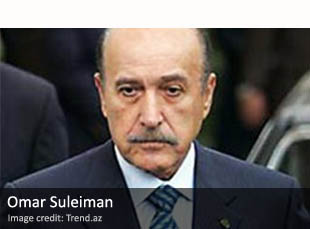
►►Egypt spies try to repair image as ex-Director dies. Egypt’s top spy agency, the General Intelligence Service —known as the “Mukhabarat” in Arabic— is taking a small but unprecedented step out of the shadows, in an apparent attempt to win the public’s support in the new Egypt. In an unusual move, the agency released a 41-minute-long documentary boasting of its achievements, presenting itself as the defender of the nation and vowing to continue to protect the country. The effort comes as the Mukhabarat’s former Director, the notorious Omar Suleiman, has died in the United States.

US spy agencies turn to Israel, Turkey, for help in Syria war

Regional map of SyriaBy JOSEPH FITSANAKIS | intelNews.org |
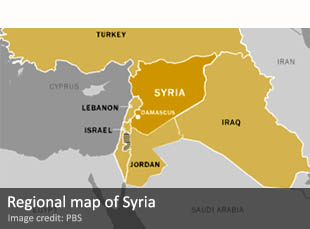
Just days after a senior United States defense official admitted Pentagon intelligence analysts missed early signs of the Arab Spring, a new report claims that Washington is still “struggling to understand” the Syrian situation, sixteen months into the uprising. Citing “interviews with US and foreign intelligence officials”, The Washington Post says that the US Intelligence Community has yet to develop a clear understanding of the intentions of the regime of Syrian President Bashar al-Assad. Nor have American analysts been able to draw a lucid picture of the fragmented opposition forces in the country. The paper says that, even though US spy agencies have intensified their intelligence-gathering efforts targeting all sides of the civil war, they have been unable to establish a physical presence inside Syria. This, according to The Post, is partly due to Washington’s decision, back in February of this year, to shut down the US embassy in Damascus, which has traditionally served as staging ground for Central Intelligence Agency operations inside Syria. This latest article confirms previous reports in The New York Times and elsewhere, of a small CIA team operating along the Syrian-Turkish border, with the task of overseeing a multinational effort to secretly deliver weapons, communications equipment and medical supplies to Syrian opposition forces. But this is about as close as the CIA has managed to get to Syria; for the most part, like its partner agencies in the US Intelligence Community, the Agency is “still largely confined to monitoring intercepted communications and observing the conflict from a distance”, says The Washington Post. As a result, US intelligence agencies are becoming increasingly dependent on their counterparts in Turkey, Jordan, and —most of all— Israel for reliable ground intelligence from inside Syria. Read more of this post

News you may have missed #766 (Arab world edition)

David SheddBy IAN ALLEN | intelNews.org |
►►Yemen busts alleged Iranian spy ring. Yemeni president Abd-Rabbu Mansour Hadi called on Tehran to stay out of Yemen’s internal affairs last week, after security officials in Sana’a, Yemen’s capital, announced they had uncovered an Iranian spy ring there. Yemen’s government-run SABA news agency said the spy cell, which was allegedly led by a former commander of Iran’s Islamic Revolutionary Guard corps, had operated in Yemen as well as in the Horn of Africa,  and that it had kept an operations center in Sana’a. An interior ministry official said all those detained were Yemenis.
►►CIA sued for killing US citizens in Yemen. Survivors of three Americans killed by targeted drone attacks in Yemen last year have sued top-ranking members of the United States government, alleging they illegally killed the three, including a 16 year-old boy, in violation of international human rights law and the US Constitution. The suit (.pdf), the first of its kind, alleges the United States was not engaged in an armed conflict with or within Yemen, prohibiting the use of lethal force unless “at the time it is applied, lethal force is a last resort to protect against a concrete, specific, and imminent threat of death or serious physical injury”. The case directly challenges the government’s decision to kill Americans without judicial scrutiny.
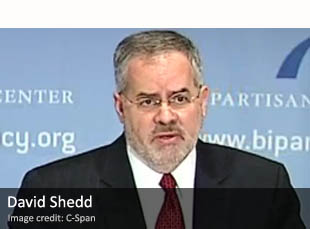
►►US intel official acknowledges missed Arab Spring signs. David Shedd, deputy director of the US Defense Intelligence Agency, the Pentagon’s intelligence arm, said analysts failed to note signs of the unrest across the Middle East and North Africa that exploded into the Arab Spring. Shedd’s comments were posted Thursday by the American Forces Press Service, a Pentagon information wire. They constitute a rare public acknowledgment of the US intelligence failure regarding the turmoil that has redrawn the Middle East’s political landscape, toppling autocratic rulers in Tunisia, Egypt, Yemen and Libya and now engulfing Syria.

Situation Report: Hacker convention brings out top NSA spy

DefConBy TIMOTHY W. COLEMAN | intelNews.org |
In less than a week, the 20th annual DefCon Hackers convention will take place in Las Vegas, Nevada. The yearly gathering brings out the good, the bad and the script kiddies alike. Computer security practitioners, cyber-criminals, grey and white hat hackers, law enforcement, and members of both the US intelligence community as well as probably foreign government representatives will be on hand to listen to presentations, see novel techniques, and view new innovative methods for cyber intrusion. DefCon has become a Mecca of sorts for those interested in groundbreaking developments and nefarious possibilities within the computer security and cyber realm. As organizers of the event explain in their call for presentations, “DefCon is all about thinking up cool and new ways to approach everything from the most complex modern technology to hacking grandma’s toaster […] what attack exploits, defensive techniques, or unique research [have] you have been working on”. The focus is often two-fold “how to break it”, followed by a segment on “how to fix it”. “Spot the Fed” is an ongoing and widely popular contest at the convention. The task of regular attendees is to properly identify plain-clothed members of law enforcement or the intelligence community. As DefCon explains, “if you see some shady MIB (Men in Black) earphone penny loafer sunglass wearing Clint Eastwood to live and die in LA type lurking about, point him out”.

Read more of this post

News you may have missed #765

Hillary ClintonBy TIMOTHY W. COLEMAN | intelNews.org |

►►MI6 chief says Iran will get nukes in 2 years. Sir John Sawers, the head of Britain’s Secret Intelligence Service, has been quoted as publicly forecasting that Iranian nuclear weapons efforts will likely come to fruition by 2014. Sawers is quoted in The Daily Telegraph as saying: “The Iranians are determinedly going down a path to master all aspects of nuclear weapons; all the technologies they need”, adding “it’s equally clear that Israel and the United States would face huge dangers if Iran were to become a nuclear weapon state”. He went on to assert that Iran would have achieved nuclear statehood in 2008 had it not been for clandestine efforts to thwart such ends. He did not elaborate on what he meant by his comments, for which he was criticized in Parliament earlier this week.
►►MI6 chief claims US interrogators were ‘obsessed’. In the same Telegraph interview, Sir John claimed that British interrogators, following the attacks of September 11, 2001, came “close to the line” of illegality. He went on to say that US interrogators straddled the line between legal and illegal, insinuating that US personnel may have crossed the line during interrogations. Sir John is quoted as explaining: “They [US interrogators] got so obsessed with getting a right answer that they drifted into an area that kind of amounted to torture”. He went on to claim that British personnel involved in interrogations never crossed the line, observing: “We’ve never been there, we’ve never been involved in that, and I think our accountability, our disciplines, have helped us keep on the right side of these lines”.
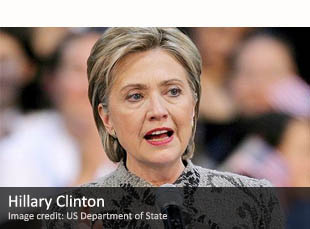
►►Clinton says Israeli spy Pollard unlikely to be freed. US Secretary of State Hillary Clinton has reaffirmed Washington’s position that Jonathan Pollard was unlikely to receive clemency or see freedom anytime soon. During a press conference in Jerusalem on July 16, Secretary Clinton stated unequivocally: “He [Jonathan Pollard] was sentenced to life in prison, he is serving that sentence, and I do not have any expectations that that is going to change”. Pollard, a former US naval intelligence analyst, was suspected of trying to provide classified information to South Africa, Pakistan, and Australia. He was arrested and convicted of espionage for providing classified information to the State of Israel. He is serving a life sentence for his crimes.

News you may have missed #764

Baroness FalknerBy IAN ALLEN | intelNews.org |
►►US government agency spied on whistleblower scientists. The US Food and Drug Administration has been found operating a massive surveillance campaign targeting its own scientists for writing letters to journalists, members of Congress and President Barack Obama. The scientists were expressing their concern over the FDA’s approval of medical imaging devices for colonoscopies and mammograms that could endanger patients with high levels of radiation. The covert spying operation, which is most likely illegal, led the agency to monitor the scientists’ computers at work and at home, copying emails and thumb drives and even monitoring individual messages line by line as they were being composed in real time.
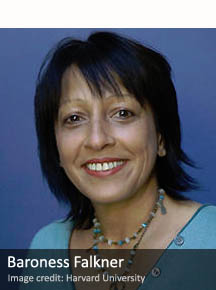
►►UK lawmaker tells MI6 chief to ‘stop bragging’. The head of Britain’s Secret Intelligence Service (MI6), Sir John Sawers, has been accused by Liberal Democrat parliamentarian Baroness Falkner of Margravine of demonstrating a “lack of judgment” for “bragging” about MI6’s role in slowing Iran’s nuclear program. Earlier this month, Sir John said in an interview that covert operations by British spies had prevented Iran from developing nuclear weapons as early as 2008. But Lady Falkner said in a speech at the House of Lords that “Sir John’s comments could almost be construed as bragging. In my view”, she continued, “it would be best for the veneer of silence to descend on the Secret Intelligence Service once again. There is such a thing as too much information”.
►►German domestic intel agency gets new director. The German government has appointed terrorism expert Hans-Georg Maassen to head the country’s domestic intelligence body, known as the “Verfassungschutz. Maassen’s appointment comes after several turbulent weeks for the agency that have resulted in three of its top officials stepping down amid a scandal connected to a series of murders by a Neo-Nazi group calling itself the National Socialist Underground.

The mysterious case of Glenn Souther, US defector to the USSR

Glenn Michael SoutherBy JOSEPH FITSANAKIS | intelNews.org |
This past June marked 23 years from the death of Glenn Michael Souther, a United States Navy photographer who defected to the Soviet Union in 1986. Despite the passage of time, a thick veil of mystery remains over the life and works of Souther, an ideological defector to the USSR, who was one of the very few foreign agents and defectors given officer rank in the KGB, the Soviet Union’s foremost intelligence agency during most the Cold War. In 1975, following his graduation from high school, Souther joined the US Navy, and was stationed in Italy in the early 1980s. It was there where he married an Italian woman, and where –it is believed– he was recruited by the KGB’s Boris Solomatin, a legendary Soviet intelligence officer who is believed to have handled US spy John Anthony Walker. In 1982, Souther left the US Navy and enrolled at Old Dominion University, where he studied Russian literature, while at the same time working as a reservist in the US Navy. During that time, Souther worked for naval intelligence, specializing in processing satellite-reconnaissance photographs; he is also believed to have had access to classified intercepts circulating within the US Navy’s communications network. In May 1986, soon after the Federal Bureau of Investigation started to suspect Souther may be working for a foreign intelligence agency, he suddenly disappeared. Two years later, an article in the morning edition of Soviet newspaper Izvestia, official publishing organ of the Soviet Presidium, announced that Souther had been granted political asylum in the USSR. Later that evening, Souther appeared on Soviet Central Television, criticizing American foreign policy and explaining his decision to defect to the Soviet Union. However, on June 22, 1989, an article in Krasnaya Zvezda, official newspaper of the Soviet Ministry of Defense, announced that Souther had killed himself in the garage of his home. Read more of this post

News you may have missed #763

RedHack posterBy IAN ALLEN | intelNews.org |
►►Taiwan ex-colonel nabbed for spying for China. Cheng Lin-feng, a retired Lieutenant Colonel in the Taiwanese army, and civilian Tsai Teng-han, were taken in by Taiwanese police last week on suspicion of spying for China. Cheng was allegedly recruited by Chinese intelligence when he travelled to the mainland to do business, Taiwan’s Ministry of National Defense said in a statement, adding that he had been investigated ever since a tip-off in 2009. A court spokesman said that details of case will be held until the investigation is completed.
Russian law brands foreign-funded NGOs ‘foreign agents’. Russia’s Lower House of Parliament has approved a bill that brands non-governmental organizations receiving funding from abroad as “foreign agents”, a law that activists fear the Kremlin will use to target critics. The bill is almost certain to be approved by the Upper House before being signed into law by President Vladimir Putin, who last year accused the US State Department of funding protests against him. The bill is seen by many analysts as setting up a legal infrastructure for a crackdown on the opposition. Meanwhile, official statistics show that wiretapping in the Russian Federation has nearly doubled over the past five years. The main driver of the rise, analysts say, involves the myriad of Russia’s rival security services spying on each other.
►►Turkish hackers release names of police informants. Members of Turkey’s Marxist cyberactivist group RedHack have dumped online a 75-megabyte text file with thousands of emails from Turkish police informants. The group said it released the information in retaliation against ultra-nationalist hackers who have been threatening opposition academics and journalists. RedHack, which has been using ‘defacement hacking’ to promote a Marxist political agenda since its founding, in 1997, is included on the Turkish government’s list of terrorist organizations. In March of this year, RedHack stole data from the Turkish police’s network, forcing the police to shut down all its servers.

Mossad gave us no terror warning before blast, says Bulgaria -updated

Burgas, BulgariaBy JOSEPH FITSANAKIS | intelNews.org |
Bulgarian authorities received no warning from Israeli intelligence prior to yesterday’s bombing in eastern Bulgaria, which killed at least seven and injured over 30 Israeli tourists. The bomb blast occurred outside the main airport building in the Black Sea resort town of Burgas. Less than an hour earlier, Air Bulgaria flight 392, which had departed from Ben-Gurion Airport in Tel Aviv, had landed at the Burgas International Airport, carrying nearly two hundred Israeli tourists. The latter were boarding three buses scheduled to transport them to various hotels in Burgas, when one of them was ripped apart by a blast —most likely caused by an explosive device placed in the vehicle’s storage compartment a suicide bomber. Reports from Bulgaria and Israel said last night that at least two of the injured were in critical condition and could die soon. Speaking to local media gathered at the site of the blast, Bulgarian President Rosen Plevneliev said that Israeli intelligence services had provided no warning of a planned attack inside the country. Plevneliev said that members of Bulgaria’s security apparatus met a month ago with officials from the Mossad, Israel’s primary external intelligence agency, but received “no warning of an expected attack”. Earlier this year, it was reported that the Bulgarian intelligence services had uncovered a plot by Lebanese militant group Hezobllah to strike Israel-linked targets in Bulgarian capital Sofia. Last January, Israel had asked Bulgaria to increase security provisions for Israeli tourists, after a suspicious package was found on a tour bus carrying Israeli holidaymakers from Turkey into Bulgaria. Ironically, Dan Shenar, head of security at the Israeli Transportation Ministry, said at the time that security measures were excellent in Bulgarian airports, but “the situation is not the same outside them”. Read more of this post

News you may have missed #762

Danni YatomBy IAN ALLEN | intelNews.org |
►►Italy postpones court decision on wanted CIA operatives. The Washington Post has published a useful update on Sabrina De Sousa, one of nearly two-dozen CIA operatives who were convicted in Italy in 2007 for the kidnapping four years earlier of Egyptian cleric Hassan Mustafa Osama Nasr. The Americans kidnapped Nasr, known as Abu Omar, from the streets of Milan without the consent of Italian authorities. The Italians, who were themselves carefully monitoring Nasr, responded by convicting all members of the CIA team in absentia, and notifying INTERPOL. But last Friday, the Supreme Court of Cassation in Rome postponed its verdict after a two-day hearing aimed at deciding whether to uphold or overturn the Americans’ convictions.
►►Ex-Mossad chief urges Israel to prepare for military action in Syria. In an interview with British news network Sky News, former Mossad Chief Danni Yatom said last week that Israel must be prepared for the possibility of military attacks on Syria, which may deteriorate into war.  He said his warning stems from the fear that Syria’s hundreds of tons of chemical weapons will fall into the hands of terrorists. “We would have to pre-empt in order to prevent it. We need to be prepared to launch even military attacks […] and military attacks mean maybe a deterioration to war”, said the former Mossad Director.
►►British spy agencies failed to predict Arab Spring. The Intelligence and Security Committee of the British Houses of Parliament has said in its annual report that British spy agencies had been surprised by the spread of unrest during the Arab Spring and failed to predict the dramatic uprisings that swept the region. The report also noted that the Arab Spring had exposed Britain’s decision to scale back intelligence assets in much of the Arab world, in favor of monitoring Iran and al-Qaeda. We at intelNews wrote about this in 2011.

Ukraine jails North Koreans in missile espionage case

One of the two North Koreans being led to courtBy JOSEPH FITSANAKIS | intelNews.org |
A court in Ukraine has jailed two North Korean citizens on charges of trying to obtain secret technical information about missile engines. A Ukrainian government official said on Monday that the North Koreans had each been sentenced to eight years in prison, and that “they will serve their sentence in Ukraine”. Speaking to Russian-language Ukrainian daily Segodnya, the official said that Ukrainian authorities had expected that Pyongyang would request extradition of its two citizens, but that the North Korean government’s reaction had been “passive”. According to the paper, the two convicted men, who have not been named, were employed by the North Korean trade mission in Belarusian capital Minsk. It was from there that, several months ago, they arrived by train to Kiev, where they tried —unsuccessfully— to recruit a number of locals as informants. One of the latter tipped off Ukrainian authorities, who placed the two North Koreans under surveillance. Eventually, the two suspects were arrested in a rented garage in the Ukrainian city of Dnipropetrovsk, while photographing technical documents with a pair of handheld miniature digital cameras. The Segodnya report stated that the documents consisted of doctoral dissertations, marked ‘confidential’, which described highly technical methods of designing effective solid- and liquid-fuel supply systems for missile engines. Some of the documents concerned the technical specifications of computer software to assist in the design of missile fuel supply systems, said the paper. The confidential documents had reportedly been taken from the Yuzhnoye Design Bureau, a cornerstone of the Soviet —and now the Ukrainian— space industry, which in the early 1960s developed the R-16 (known in the West as SS-7), the first inter-continental ballistic missile (ICBM) successfully deployed by the Soviet Union. Read more of this post

Research sheds light on famed psychoanalyst’s espionage activities

Max EitingonBy JOSEPH FITSANAKIS | intelNews.org |
An early student of Sigmund Freud, who introduced psychoanalysis in what is today Israel, was likely an agent of Soviet intelligence, according to historical evidence stemming from his life and the lives of his close relatives and friends. Max Eitingon, who was a member of Freud’s inner circle of students, funded and directed the Psychoanalytic Institute and polyclinic in Berlin, Germany, in the 1920s and early 1930s. In 1933, the rise of German national socialism prompted Eitingon, who was Jewish, to emigrate to Palestine, where he continued his psychoanalytic work. The view that Eitingon may have actively collaborated with Soviet intelligence in both Germany and Palestine was famously discussed in a lengthy letter exchange in The New York Review of Books in the summer of 1988. Although the debate continues among intelligence historians, two researchers, Isabella Ginor and Gideon Remez, both of the Hebrew University’s Truman Institute, believe that there is “a preponderance of circumstantial evidence” that Eitingon did collaborate with Soviet intelligence in Germany and Palestine. In a paper published in March of this year, the two researchers argue that Eitingon’s services to the Soviets included dispatching messages and providing safe houses for Moscow’s operatives. But in a fascinating research update, published yesterday in online journal Tablet, Ginor and Remez contend that historical evidence pertaining to the activities of Eitingon’s Russian-born wife, Mirra, and other relatives and friends, adds credence to the view that the famed psychoanalyst was working for Soviet intelligence. The two scholars point out that Mirra Eitingon, née Burovsky, had a son from a previous marriage, named Yuli Borisovich Khariton. Yuli, who remained close to his mother even after she left Russia, grew up to become the principal designer of the Soviet atomic bomb. Additionally, Ginor and Remez call attention to the role of two of Eitingon’s professional acquaintances: Adolf Yoffe, the Soviet Union’s first ambassador to Germany, and his successor, Viktor Kopp, both of whom shared Eitingon’s psychoanalytic interests. Specifically, Kopp was second-in-command at the Soviet Psychoanalytic Association, while Yoffe had been mentored by Alfred Adler, one of the psychoanalytic movement’s co-founders in Austria. In this sense, Ginor and Remez argue that psychoanalysis and intelligence work were “intertwined” in Eitingon’s life and career. Read more of this post

Mossad ‘helped arrest’ alleged Hezbollah operative in Cyprus

Cyprus, Israel, Syria, Lebanon By JOSEPH FITSANAKIS | intelNews.org |
Israeli intelligence was directly involved in the recent arrest of an alleged member of Lebanese militant group Hezbollah, who is said to have been planning a series of attacks against Israeli targets on the Mediterranean island of Cyprus. Cypriot media quoted police spokesman Andreas Angelides, who confirmed that the 24-year-old man was arrested on July 7 during a raid on his hotel in the tourist resort of Limassol. He also said that the man, whose name has not been released, was arrested “on possible charges pertaining to terrorism laws” soon after entering Cyprus using a Swedish passport. According to local media, Cypriot authorities were tipped off as to the man’s alleged Hezbollah connections and plans by an unnamed “foreign intelligence agency”. However, several news reports suggested over the weekend that officers of Israeli intelligence agency Mossad have already been dispatched to Cyprus to aid local counterterrorist officials involved in the investigation. Several sources allege that the Swedish-passport holder has been collaborating with his interrogators, telling them that he traveled to Cyprus with the intent of launching an armed attack at the embassy of Israel in Cypriot capital Nicosia. He allegedly changed his mind after observing the heavy security measures in place at the embassy, and opted instead for a plan to blow up a commercial airplane belonging to El Al Airlines, Israel’s national air carrier. He also allegedly considered attacking a number of buses belonging to Israeli tour companies operating in Israel. Cypriot police said that a thorough search of the man’s hotel room netted information on Israeli bus tour companies on the island, detailed flight schedules of Israeli airline operators, as well as digital photographs of popular destinations among Israeli tourists holidaying in Cyprus. Read more of this post

News you may have missed #761

Robert de La RochefoucauldBy TIMOTHY W. COLEMAN | intelNews.org |

►►US aircraft company owner charged with supplying Venezuelan military. Kirk Drellich, owner and president of SkyHigh Accessories in Florida, has pleaded not guilty to charges that he illegally supplied Venezuelan military contacts with pressure switches and cooling turbines, as well as other airplane parts. Court documents indicate that the aircraft parts were to be used for Venezuelan F-16 jets, attack helicopters and other military crafts. Prosecutors in Florida have filed charges (.pdf), stemming from violations of the Arms Export Control Act, on three other individuals who are supposedly involved in the conspiracy to export arms to Venezuela. Other defendants in the case include Alberto Pichardo and Freddy Arguelles, both former members of Venezuela’s Air Force, as well as Victor Brown, a local businessman.
►►Trial delayed again in Delisle espionage case. As previously reported on this blog, the espionage case against Sub-Lt. Jeffrey Paul Delisle, the Canadian navy intelligence officer accused of spying for Russia, has again been delayed. The attorney for Delisle requested an adjournment based on the governments disclosure of new documents and evidence in the case. The adjournment is expected to last until July 17.
►►Legendary WWII spy de La Rochefoucauld dies. Robert de La Rochefoucauld, a French national who became a legendary British spy, helping direct and organize the Free French forces in England and underground movements in France during World War II, has died of natural causes at the age of 88. De La Rochefoucauld’s exploits as a spy have all the makings of a movie. As a little boy, he met Adolf Hitler, and as a spy he twice escaped execution by the Nazi’s. He was a knight in the French Legion of Honor, received the Medal of Resistance from France, was widely herald for his exceptional service by the British and he is believed to have been the last remaining French member of Winston Churchill’s Special Operations Executive.