Leaked documents show capabilities of new surveillance technologies

Net Optics logo

Net Optics logo

By JOSEPH FITSANAKIS | intelNews.org |
A trove of hundreds of documents, obtained by participants in a secretive surveillance conference, displays in unprecedented detail the extent of monitoring technologies used by governments around the world. The Wall Street Journal, which obtained the leaked documents, says they number in the hundreds; they were reportedly authored by 36 different private companies that specialize in supplying government agencies with the latest surveillance hardware and software. They were among dozens of vendors that participated in an unnamed conference near Washington, DC, in October, which attracted interested buyers from numerous government agencies in America and beyond. The Journal, which has uploaded scanned copies of the leaked documents, says that many include descriptions of computer hacking tools. The latter enable government agencies to break into targeted computers and access data stored in hard drives, as well as log keystrokes by the targeted computers’ users. Other applications target cellular telecommunications, especially the latest models of so-called ‘smartphones’; one vendor in particular, Vupen Security, gave a presentation at the conference, which describes how its products allow for electronic surveillance of cell phones by exploiting security holes unknown to manufacturers. Some of the most popular products at the conference related to what the industry calls “massive intercept” monitoring, namely large-scale software systems designed to siphon vast amounts of telephonic or email communications data, or to capture all Internet exchanges taking place within a country’s computer network. One conference participant, California-based Net Optics Inc., bragged in its presentation about having enabled “a major mobile operator in China” to conduct “real-time monitoring” of all cell phone [and] Internet content on its network. The stated goal of the surveillance was to “analyze criminal activity” and “detect and filter undesirable content”. Read more of this post

News you may have missed #631

Tommy Douglas

Tommy Douglas

►►Some spy files on Canadian prominent politician released. Newly declassified records from the early 1960s show that the Royal Canadian Mounted Police spied on Saskatchewan Premier Tommy Douglas (pictured), suspecting him of communist sympathies. Douglas, a popular leftwing politician, led the first social democratic government in North America.
►►Aussie diplomats urged to welcome defectors in 1980s. The Australian government urged its spies and diplomats to encourage foreign officials to defect to Australia and welcome intelligence they might bring with them, according to internal documents from the 1980s, released this week. The directives noted that applications from defectors were not expected to be numerous “but failure on our part to handle them deftly could result in the loss of intelligence relevant to Australia’s security and other interests”. One observer notes that the 1980s policy towards defectors still applies today in Australia’s diplomatic community.
►►Iran arrests two Kuwaitis on suspicion of espionage. Iran’s semiofficial Fars news agency says Iranian security has detained two Kuwaiti citizens in southwestern Iran for suspected espionage activities. Fars quoted Bahram Ilkhaszadeh, governor of Abadan, a town close to Kuwait, as saying that Iran’s security agents detained the two on possession of “spying equipment”. Kuwait has denied the charges.

Turf war between Mossad and Israel’s Foreign Ministry worsens

Avigdor Lieberman

Avigdor Lieberman

By JOSEPH FITSANAKIS | intelNews.org |
Israel’s foreign affairs minister has ordered his department’s employees to stop cooperating with the Mossad, according to media reports. Minister Avigdor Lieberman, one of Israel’s most hardline nationalist politicians, accuses the country’s covert operations agency of meddling in the tasks of Israel’s diplomatic community, while at the same time refusing to share its intelligence output with foreign affairs officials. According to The Washington Times, which cites the Hebrew-language edition of reputable Israeli newspaper Yediot Achronot, Mr. Lieberman’s decision was prompted by the Israeli Prime Minister’s move to entrust the country’s relations with Turkey to a Mossad official. Media reports state that the spy agency’s David Meidan has been dispatched by Benjamin Netanyahu to Turkey, in order to patch up the Jewish state’s anemic relationship with its once close regional ally. This has enraged the foreign affairs ministry’s leadership, which was already upset over salary discrepancies between diplomats and Mossad spies, as well as the latter’s chronic refusal to share intelligence with foreign policy planners. The friction between the Mossad and Israel’s diplomatic community goes back decades, but Lieberman’s controversial ascendance to Foreign Affairs Minister in 2009 intensified the turf war. At the beginning, Lieberman made calculated friendly gestures toward the Mossad, in one instance going as far as appointing a former Mossad official as Israel’s first-ever ambassador to Turkmenistan. But such moves quickly gave way to direct bureaucratic confrontations, which included direct strikebreaking action by Mossad officers, who assumed the duties of Foreign Affairs officials when the latter went on strike demanding better pay and work conditions. Read more of this post

News you may have missed #630

Riad Al Assad

Riad al-Assad

►►Senior Syrian military defector in Turkey denies training troops. Colonel Riad al-Assad, who acts as head of Syria’s military defectors, has denied a news report that he crossed the border from Turkey to Syria to command troops loyal to the opposition force called the Free Syrian Army. “News reports that appeared on a number of Internet sites that I had crossed into Syria to command troops there are false. I am in Turkey at the moment, in a safe place,” he told the Turkey’s Anadolu Agency on Tuesday.
►►Iran says missile base blast was not caused by Mossad. Iran has insisted that last weekend’s huge blast at the Alghadir missile base at Bid Ganeh, 30 miles to the west of Tehran, was not carried out by Israel or the US, despite widespread reports that it was the work of the Israeli secret service, the Mossad. The explosion killed 17 of the country’s elite revolutionary guards, including Major General Hassan Moqqadam, a senior commander described as the pioneer of the regime’s missile programme.
►►British official says MI6 foiled Libyan assassination plan. British intelligence foiled a plot by Colonel Muammar al-Gaddafi’s forces to assassinate Western diplomats and Libya’s revolutionary leadership, Britain’s Foreign Secretary has disclosed. In a rare speech about the secret services, William Hague said the Libyan intelligence service launched a “sustained effort” to conduct suicide and car bomb attacks against the National Transitional Council, but that “the attacks were prevented”.

Revealed: Afghan government at war with ‘CIA vigilante group’

Afghanistan

Afghanistan

By JOSEPH FITSANAKIS | intelNews.org |
Very little has been written about the Kandahar Strike Force, a controversial CIA-funded vigilante group operating in Afghanistan’s Kandahar, Zabul and Uruzgan provinces. In 2009, The New York Times reported that the late Ahmed Wali Karzai, notorious drug lord and younger brother of Afghan President Hamid Karzai, helped the CIA run the group. But ever since Wali Karzai’s assassination, in July of this year, the CIA-operated group appears to be engaged in a brutal war, not with the Taliban and al-Qaeda, but with provisional Afghan authorities. The Christian Science monitor spoke to the former leader of the Kandahar Strike Force, Atal Afghanzai, who is currently in prison, having been convicted of shooting dead a senior Afghan police commander in broad daylight. The group is made up of elite members of Afghanistan’s regular army, selected by CIA case officers and trained by US Special Forces personnel in Kandahar’s Camp Gecko, a former al-Qaeda base built by Osama bin Laden’s forces in 1996. The group operates outside the institutional parameters of the Afghan government, and answers directly to the CIA, says The Monitor, which claims to have corroborated this information with “US diplomats, other Western officials, and Afghan authorities”. The group’s imprisoned former leader told the newspaper that he and his men were paid directly by the CIA, and that they were transported by United States Blackhawk helicopters to various locations around the country, where they were expected to conduct “raids on Taliban targets at a moment’s notice”. Afghanzai claims that the group’s operations were so effective that they received letters of appreciation by no other than Hamid Karzai. But the idyllic relationship between the Kandahar Strike Force and the Afghan government appears to have ended, as members of the group are now accused of “extrajudicial killings, torture, rape, and larceny”. Read more of this post

News you may have missed #629

William Hague

William Hague

►►CIA urged to be more open about climate change. America’s intelligence establishment has come out with a bold new suggestion: maybe it’s time the CIA stopped treating climate change as a secret. A new report from the Defense Science Board –a US government agency– urges the CIA to step outside its traditional culture of secrecy and begin sharing the intelligence it has been gathering on climate change.
►►Three Czechs to be tried for spying in Zambia. The fate of three Czech nationals, who are awaiting trial in Zambia on suspicion of spying, remains highly uncertain. The three face 25 years in prison for having taken photographs of an old plane displayed outside a military base in Lusaka. The Czech Foreign Ministry has tried in vain to intervene on their behalf and is now sending a special envoy to the country to present the case in person.
►►First-ever speech on MI6 by a UK Foreign Secretary. In the first speech given by a British Foreign Secretary on the activities of MI6, William Hague (pictured) called today for a line to be drawn under the controversy over the involvement of its agents in the abuse of terror suspects, and argued that the spy agency thwarts terrorists and foreign agents hundreds of times a year.

Inquiry examines whether IRA had mole inside Irish police

Provisional IRA muralBy JOSEPH FITSANAKIS | intelNews.org |
An Irish government investigation has unearthed intelligence reports claiming that an informant within the Irish police, the Garda, helped the Provisional Irish Republican Army plan the killings of a judge and two senior British police officers in the 1980s. Sir Maurice Gibson, a Lord Justice of Appeal for the British Crown, was killed along with his wife, by a remote-controlled car bomb, as they drove over the Irish border back into Northern Ireland on 27 April 1987, following a holiday. A little less than two years later, on March 20, 1989, Royal Ulster Constabulary officers Harry Breen and Robert Buchanan, were killed in an IRA road ambush in South Armagh. The two RUC officers, who were killed as they drove back from a meeting with Garda officers in the Republic of Ireland, were targeted despite the fact that they were riding in an unmarked car. This has sparked rumors that the victims’ travel itinerary had been supplied to the IRA by an inside source, possibly an officer in the Garda. In 2000, Jeffrey Donaldson, a British Member of Parliament, told the House of Commons that Garda Detective Sergeant Owen Corrigan was the IRA mole that leaked the itineraries of Judge Gibson and the two RUC officers. The Smithwick Tribunal in Dublin, which was set up in response to Mr. Donaldson’s allegations, is scheduled to conclude at the end of this month, following public testimony by several individuals. One of those is Detective Superintendent Brian Burton, of the Dundalk Garda station, the very same station in which Det. Sgt. Corrigan served at the time of the IRA killings. Read more of this post

News you may have missed #628 (analysis edition)

Michael Scheuer

Michael Scheuer

►►Should intelligence agencies chase tax evaders? Three years ago, Germany’s foreign intelligence service, the BND, paid a whistleblower close to $7 million for DVDs containing information on thousands of secret accounts at a leading Liechtenstein bank. The discs contained data on 4,527 Liechtenstein foundations and financial entities, 1,400 of which were owned by Germans. But should a spy agency like the BND take part in the unglamorous and politically charged business of collecting information on tax cheats?
►►UK ex-spy chief says Google makes spies work harder. The rise of the web and Google means Britain’s spies have to work harder to produce genuinely secret intelligence, according to Sir David Pepper, the former director of GCHQ, Britain’s signals intelligence agency. He said “the Google effect” of so much information being readily available online had “very substantially” raised the “threshold for producing intelligence” for MI5, MI6 and GCHQ.
►►Ex-CIA official says America ‘creates its own enemies’. Americans are in the crosshairs of terrorists worldwide purely due to Washington’s policy in the Muslim world, according to former CIA officer Michael Scheuer, who spoke to Russia Today. Scheuer, author of Through Our Enemies’ Eyes, worked for the CIA for over 20 years and at one time was the chief of the agency’s ‘Bin Laden unit’.

Intel official claims Mossad was behind Iran missile depot blast

Iran blast siteBy JOSEPH FITSANAKIS | intelNews.org |
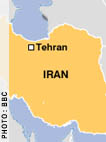
A Western intelligence official has told Time magazine that an Israeli spy agency was behind a weekend blast at an Iranian missile depot, which killed at least 17 people. The government of Iran claims that the powerful explosion, which wrecked a heavily guarded base belonging to Iran’s Revolutionary Guard Corps, was an accident, caused during the transport of munitions. But Time quotes an unnamed “Western intelligence source”, as saying that the blast was a deliberate act of sabotage carried out by agents of the Mossad, Israel’s primary covert operations agency. The source urged Time not to “believe the Iranians that it was an accident”, and added that the operation was part of an ongoing covert action effort to impede Iran’s nuclear program, saying characteristically that “there are more bullets in the magazine”. The base, located approximately 25 miles west of Iranian capital Tehran, is reported to house several of Iran’s Shahab-3 long-range missiles, with an alleged reach of up to 2,000 miles. The blast was reported to have been powerful enough as to have been audible across Tehran itself. The victims of the blast included Major General Hassan Moqqadam, described by Iran’s state media as the “founder of Iran’s missile program” and a foremost pioneer in the country’s missile development after the 1979 Iranian Revolution. The death of Moqqadam, an Islamic Revolutionary Guard Corps commander, was so important that his funeral was attended by none other than Ayatollah Ali Khamenei, Iran’s Supreme Leader. Read more of this post

Ex-CIA officer points to al-Qaeda banners appearing in Libya

Charles S. Faddis

Charles S. Faddis

By JOSEPH FITSANAKIS | intelNews.org |
Amidst the excitement in the West over the toppling of the late Libyan leader Muammar al-Gaddafi, few have been paying attention at the frequent appearances of the al-Qaeda banner in locations around Libya. The characteristic black flag bears the Arabic inscription of the shahada, the Islamic creed, which states that “there is no god but Allah, and Muhammad is his messenger [prophet]”. Within hours following the official pronouncement of the lynching of Colonel Gaddafi, al-Qaeda banners were flying over the de facto headquarters of Libya’s US-backed National Transitional Council (NTC) in Benghazi, as well as in numerous other locations around the North African country. There have even been reports of threats leveled against reporters who were observed trying to photograph or film the unmistakable banners. Former CIA covert operations officer Charles Faddis, who spent several years working in the Middle East, has penned a new article urging Western policy makers to stop viewing the NTC as a force promoting some sort of Western-type democratic administration in Libya. Undoubtedly, he says, some NTC members do “wish for a Libya with a Western style democratic government”. But the NTC is an umbrella group bringing together “individuals from many walks of life in the opposition”, he says, including fighters motivated primarily by tribal and regional loyalties, as well as Islamist activists guided by distinctly conservative interpretations of the Qur’an. One such activist is Mustafa Abdul Jalil, leader of the NTC, who in his historic celebratory speech following the formal end of the civil war, told ecstatic supporters that, from now on, Libya would be “an Islamic state”, and that all legal provisions that conflicted with the Sharia —Qur’anic law— would be invalidated. Since that day, there have been reports of beauty salons closing and of women being forced to wear the hijab, says Faddis. Read more of this post

News you may have missed #627

Omar Suleiman

Omar Suleiman

►►Egyptian ex-spy chief appointed security adviser to Saudi Crown Prince. Saudi Arabia’s Crown Prince Nayef bin Abdul Aziz has appointed Egypt’s former Director of General Intelligence, Omar Suleiman, as his security advisor. From 1986 until his forced resignation in spring this year, Suleiman had been the main conduit between Washington, Tel Aviv and the government of Hosni Mubarak.
►►Russia’s spy chief in rare interview. It is very rare that the men that run Russia’s powerful intelligence services give detailed interviews. But that’s just what Alexander Shlyakhturov, the head of military intelligence service, known as the GRU, did earlier this month with the Russian newspaper Rossiyskaya Gazeta.
►►US intel agencies brace for budget cuts. After seeing spending double over a decade, US intelligence agencies are bracing for about $25 billion in budget cuts over the next 10 years. “We’re going to have less capability in 10 years than we have today”, said Director of National Intelligence James Clapper, who sits atop the 16 departments, agencies and offices that comprise the US intelligence community and spend a combined $80 billion a year.

News you may have missed #626

Katia Zatuliveter

Katia Zatuliveter

►►Analysis: On largely forgotten CIA officer Jim Thompson. The CIA’s longtime man in Southeast Asia, Jim Thompson, fought to stop the agency’s progression from a small spy ring to a large paramilitary agency. He was in many ways unique, but by the 1950s and early 1960s he would become part of a larger, growing, and much less idealistic machine, one that would expose his naiveté –and punish him for it. Interesting historical analysis from Foreign Policy.
►►Court blocks naming NATO official who had affair with alleged Russian spy. We have written before that Katia Zatuliveter, who is accused by British MI5 of being a spy for Russia, has admitted having a four-year affair with Liberal Democrat MP Mike Hancock, as well as with a Dutch diplomat and a NATO official. The latter, a German diplomat, was pictured in a newspaper last week. However, his face was obscured because of the terms of a court order that means he cannot be identified.
►►Promises made about Colombia’s new spy agency. Colombia’s disgraced DAS intelligence agency has finally been dissolved. Now the government’s senior National Security adviser, Sergio Jaramillo, has said that Colombia’s new intelligence service will focus on combating “government infiltration by criminal organizations”. I guess it doesn’t hurt to be ambitious.

Analysis: China an ‘easy scapegoat’, says leading cybersecurity expert

Mikko Hypponen

Mikko Hypponen

By JOSEPH FITSANAKIS | intelNews.org |
It is fashionable nowadays to single out China as the primary source of global cyberespionage. During the past few days alone, the Japanese government said Chinese hackers had attacked computers systems in its Lower Parliament, while Britain’s General Communications Headquarters (GCHQ) pointed to Beijing as the main culprit behind an unprecedented rise in organized cyberattacks. A few days ago, the United States intelligence community publicly named for the first time China and Russia as “the most aggressive collectors” of US economic information and technology online. But is the image of China as the ultimate cyber-villain accurate? Not necessarily, according to leading cybersecurity expert Mikko Hypponen. Speaking earlier this week at the PacSec 2011 conference in Tokyo, Japan, Hypponen, who leads computer security firm F-Secure, disputed the predominant view that a single country could be the source of the majority of organized cyberattacks directed against governmental and corporate targets. It is true, said Hypponen, that cyberespionage attacks “are commonly attributed to the Chinese government”. Moreover, it does appear like “a lot” of these attacks are indeed coming from Chinese sources, he said. But the problem of attribution —accurately and conclusively determining the responsible agency behind a cyberattack— remains unresolved in our time. Even if Chinese servers are conclusively identified as sources of such attacks, it would be dangerous to assume that Chinese government operatives —and not rogue agents, or nationalist hacker gangs— are necessarily behind them. Additionally, it is entirely possible that other countries —perhaps even Western countries— could be behind such attacks, but that they consciously try to mask them in such a way as to make China appear responsible. The reason is that Beijing is “such an easy scapegoat”, said Hypponen. Read more of this post

Vladimir Putin ‘targeted by German spy agency’ during his KGB days

Vladimir Putin

Vladimir Putin

By JOSEPH FITSANAKIS | intelNews.org |
A German researcher claims that Russian Prime Minister Vladimir Putin was targeted by West German intelligence in the 1980s when he was a KGB operative in East Germany. In the Cold War’s closing stages, Putin and his wife, Ludmila Putina, who were then in their thirties, spent five years in Dresden, German Democratic Republic. As one of four KGB officers in Dresden, Putin was tasked with infiltrating the local university and monitoring the on-campus activities of the children of Soviet and East German notables. But according to new research published last week, an undercover agent of the BND, West Germany’s external intelligence agency, was able to infiltrate the Putin household in Dresden, and pass private information about the couple’s personal life to her spymasters in Bonn and in NATO. The agent, codenamed LENCHEN, a native German, worked as a translator at the KGB station in Dresden. She reportedly befriended Ludmila Putina, eventually becoming her “shoulder to cry on”, according to Erich Schmidt-Eenboom, director of the Weilheim-based Institute for Peace Studies, who has published several books on the history of the BND. Schmidt-Eenboom claims that LENCHEN became Ludmila Putina’s closest confidante in Dresden. The latter told her that Vladimir Putin had been involved in numerous infidelities over the years and that he often beat his wife. LENCHEN reported to her handlers that life in the Putin household was highly dysfunctional, despite an outward appearance of happiness and normality. Schmidt-Eenboom claims he confirmed the report with at least two unconnected sources with knowledge of BND operations during the Cold War. If the story is historically accurate, it will signify only the second known penetration of KGB structures in Europe by the BND. The only other such example, says Schmidt-Eenboom, involved an agent named COLONEL VIKTOR, who also worked as an agent for the BND in the 1980s. Read more of this post

News you may have missed #625

Ahmed Al Hawan

Ahmed Al Hawan

►►Egypt’s most famous spy dies at 74. Egypt’s most famed spy on Israel, Ahmed Al Hawan, 74, has died after a long fight with illness, local media reported on Wednesday. Al Hawan worked for the Egyptian intelligence service during the years that followed Egypt’s military defeat by Israel in 1967. He supplied the Israelis with mistaken and misleading information that was crucial in Egypt’s war with Israel in 1973.
►►Analysis: Dark days for Taiwan’s spies. When Taiwan’s government last month announced budget cuts in military intelligence, the Ministry of National Defense (MND) insisted operations against mainland China would not be affected. However, media paint a vastly different picture, suggesting Taiwan’s future leaders will be completely deaf and blind to secretive developments across the Taiwan Strait.
►►US cyberespionage report names adversaries. A US intelligence report released last week concluded China and Russia are “the most aggressive collectors” of US economic information and technology online. But the report also states that America’s “allies and partners“, including the “French and the Israelis” are also stealing the s vital industrial and commercial secrets by infiltrating computer networks.