George Blake, arguably the most prolific Soviet spy of the Cold War, dies at 98
December 28, 2020 3 Comments
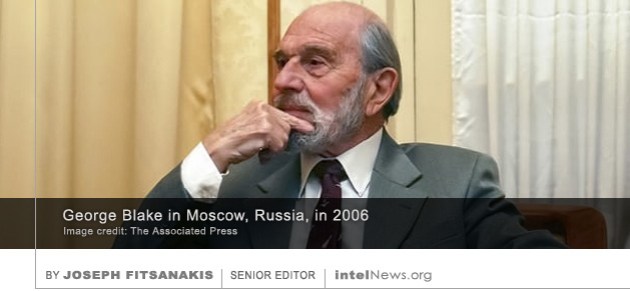 GEORGE BLAKE, A DUTCH-born British intelligence officer, whose espionage for the Soviet Union gained him notoriety in the West and hero status in Moscow, has died aged 98. His death was announced on Saturday by the state-owned Russian news agency RIA Novosti. It was later corroborated by a spokesman for the Russian Foreign Intelligence Service (SVR), who said Blake “had a genuine love for our country”.
Blake was nearly 18 when German troops entered his native Holland, prompting him to join the local anti-Nazi resistance forces. A British subject thanks to his Egyptian Jewish father, who had acquired British citizenship by fighting in British uniform during World War I, Blake eventually made his way to London via neutral Spain and Gibraltar. Within two years, he had been recruited by the Secret Intelligence Service, or MI6, and by war’s end he was working in its Dutch Section.
Named after King George by his fiercely pro-British and royalist father, Blake drew no suspicion by his MI6 colleagues. He was hard-working and came across as a strict Calvinist, with strong religious leanings. But his view of the Soviet Union began to change at Cambridge University, where he had been sent by MI6 to learn Russian language and history. In 1950, while he was serving under official cover at the British embassy in Seoul, Korea, he was captured and detained for three years by North Korean forces. His ideological defection to communism appears to have taken place during his capture, during which he was given access to English-language Marxist literature and had long discussions with Soviet political instructors.
By 1953, when he was released by his captors and returned to a hero’s welcome in London, Blake was a committed communist. Less than a month following his release, he made contact with Nikolai Rodin (codename SERGEI) who was the KGB’s station chief in London. He began to spy for the Soviet Union, and did so for eight years, including during his stint as an MI6 case officer in Berlin. During that time, he is believed to have betrayed information that led to the detection of over 500 Western intelligence officers and assets operating behind the Iron Curtain, with as many as 44 of those losing their lives as a result. His career as a double spy ended in 1960, when he was betrayed by Polish defector Michael Goleniewski. Goleniewski’s debriefing by the United States Central Intelligence Agency helped Britain identify two Soviet moles inside its intelligence establishment, one of whom was Blake.
In 1960, after pleading guilty to espionage, Blake began serving a 42-year prison sentence in Britain’s Wormwood Scrubs maximum security prison complex. But in 1966 he was able to escape with the help of a group of Irish republican prisoners, and made contact with Soviet intelligence. He was eventually smuggled into East Germany and from there to Russia. Once there, he joined the KGB and served as a consultant and instructor until his retirement in the early 1990s. He learned to speak Russian fluently, married a Russian wife (his British wife having divorced him once he was convicted of espionage) and had a son.
Russian President Vladimir Putin issued a statement on Sunday, praising Blake’s espionage “in the cause of peace”, while the SVR described him as a model intelligence officer. A report published by RIA Novosti on Sunday said that the Moscow city council was considering a proposal to rename a street in the Russian capital after Blake.
► Author: Joseph Fitsanakis | Date: 28 December 2020 | Permalink
 COLOMBIA EXPELLED TWO RUSSIAN diplomats earlier this month, without publicly explaining why, according to news reports. Several Colombian news outlets reported on Tuesday that the two Russians were expelled after they were found engaging in espionage. Also on Tuesday, Colombian officials confirmed earlier reports that Moscow had expelled two Colombian diplomats in a tit-for-tat response.
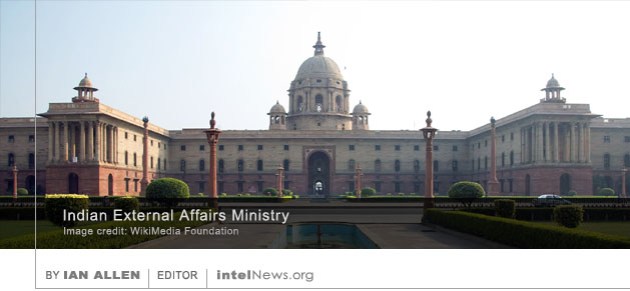 INTELLIGENCE COOPERATION BETWEEN THE United States and India has reached historic levels in the closing months of 2020, and is driven by the two countries’ mutual distrust of China. This development is particularly noteworthy for India, which has traditionally maintained a non-aligned stance in military and intelligence matters for much of its existence. New Delhi’s increasingly close relationship with Washington is
  THE CHANNEL ISLANDS, AN archipelago consisting of dependencies of the British Crown located off the northern coast of France, are being used as an offshore global spy center due to their unregulated telecommunications industry, according to a new study. The archipelago is made up of Jersey and Guernsey, groups of islands that are not technically part of Britain, but are instead considered offshore British territories. They are regularly
 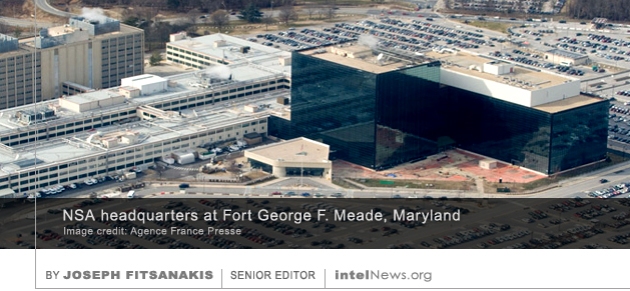 THE WHITE HOUSE IS reportedly trying to implement what could be one of the most important changes in the United States Department of Defense in recent years, by separating the cybersecurity functions from its signals intelligence functions. Until 2009, the US National Security Agency (NSA) was in charge of protecting America’s cyber networks and combating online threats. But in 2009 the administration of US President Barack Obama determined that the online environment represented a new theater of war and established a brand new Cyber Command (CYBERCOM).
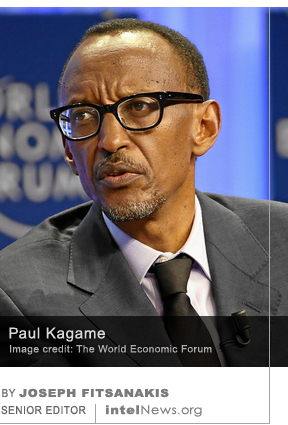 An anti-genocide activist, whose story was made famous in the 2004 Hollywood film Hotel Rwanda, has sued an airline company for complicity in his alleged abduction from Dubai and eventual imprisonment in Rwanda. During the Rwandan genocide of 1994, Paul Rusesabagina was the manager of the Hôtel des Mille Collines in the Rwandan capital Kigali. The hotel catered largely to Westerners, and its grounds were seen as off-limits by the brutal armed gangs that perpetrated the genocide. Therefore, Rusesabagina used his position to shelter over 1200 displaced civilians from the warring militias.
 A large-scale cyberespionage attack targeting United States government computer systems, which some experts
 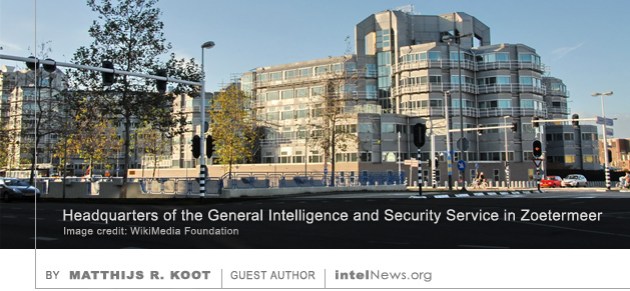 On 10 December 2020, the Dutch Minister of the Interior and Kingdom Relations, Kajsa Ollongren, sent a
 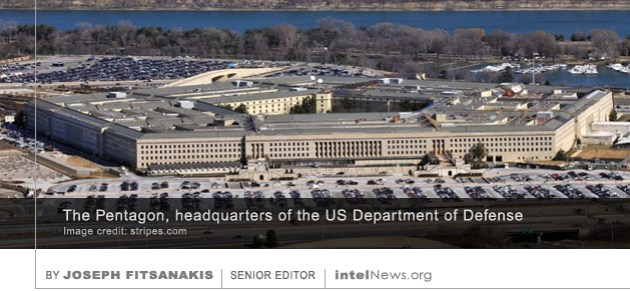 THE UNITED STATES DEPARTMENT of Defense has reportedly notified the Central Intelligence Agency that it plans to terminate most of the military support it provides for the spy agency’s counterterrorism operations. Some of these changes may occur as early as January, according to
 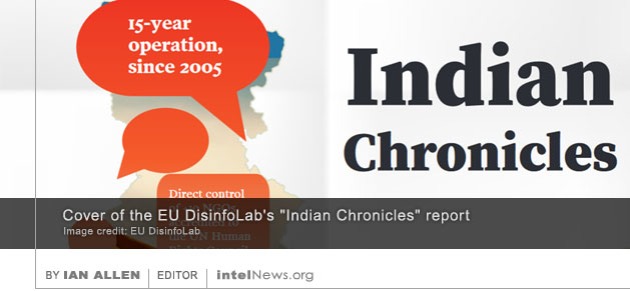 A TEAM OF RESEARCHERS in Belgium has uncovered one of the world’s largest known online disinformation networks, which has existed for 15 years and is believed to incorporate at least 750 fake media outlets in over 100 countries. The network, described by researchers as “one of the most persistent and complex operations” in the area of disinformation, is believed to exist in order to support the national interests of India.
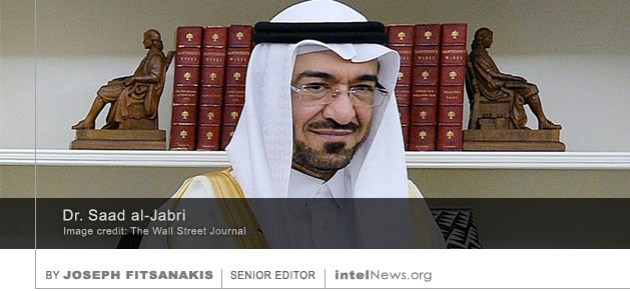 A LAWSUIT FILED IN a United States court by a Saudi former senior intelligence official, accuses Saudi Arabia’s crown prince Mohammed bin Salman of planning an illegal assassination on Canadian soil. But in a new court filing, the crown prince denies the accusation and claims that it is an attempt to distract attention from the alleged crimes carried out by the plaintiff.
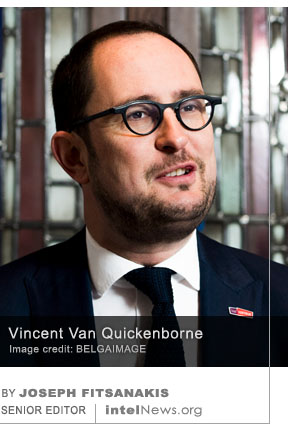 BELGIUM’S LARGEST MOSQUE has been infiltrated by Moroccan intelligence, according to the Belgian minister of justice, who allegedly consulted the country’s spy services in making that determination. The announcement has further-strained relations between the Belgian government and the country’s Muslims, which account for about 5% of the Belgian population.
 A NEW REPORT BY the United States National Academies of Sciences, Engineering, and Medicine, has found that the so-called ‘Havana Syndrome’, which afflicted American and Canadian diplomats in Cuba and China in 2016 and 2017, was likely caused by directed microwave radiation. The study, which was commissioned by the US Department of State, is the latest in a
 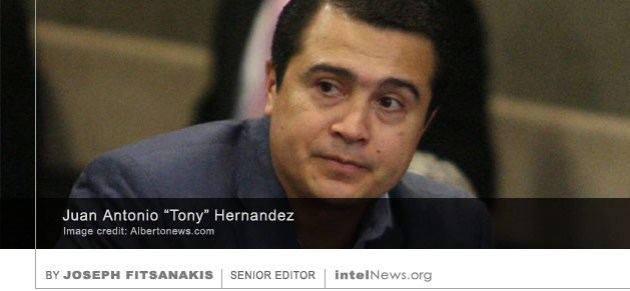 A PROPOSED MEMORANDUM OF understanding could enable the sharing of extremely sensitive intelligence between the United States and Honduras, as part of an effort by Washington to stop the impoverished Central American country from becoming a drug-trafficking stronghold. However, some in the US intelligence community are concerned that the sensitive intelligence given to the Honduran government may be passed on to the drug cartels by paid informants.






 intelNews.org
Year in review: The biggest spy-related stories of 2020, part I
December 29, 2020 by intelNews 1 Comment
08. Spanish high court broadens illegal wiretap probe to include senior politicians. In September, Spain’s highest criminal court broadened the scope of the Gürtel case, which refers to one of the most extensive corruption scandals in Spanish political history. It centers on an extensive network of tax evasion, bribery and money laundering, which brought together leading business executives, criminal kingpins, and senior politicians from Spain’s conservative Partido Popular (PP). In 2018, the scandal effectively brought an end to the government of conservative Prime Minister Mariano Rajoy, and has virtually annihilated the PP’s once robust electoral popularity. But this corruption investigation is now resulting in several related probes, among which is Operation KITCHEN, an espionage effort connected to the Gürtel case, which targeted Luis Bárcenas, a PP senator and treasurer. It turns out that, once senior government executives realized Bárcenas was about to turn government witness, they set up an espionage operation aimed at preventing him from doing so. Now a new series of prosecutions is taking place in connection to Operation KITCHEN, involving leading PP figures.
09. Massive hacker attack triggers emergency US National Security Council meeting. The computer systems of the United States government are targeted by hackers every minute of every day. These attacks do not usually prompt emergency meetings of the National Security Council —the country’s most senior decision-making body, which is chaired by no other than the president. But the massive data breach that was uncovered earlier this month did just that, with some experts describing it as potentially being among “the most impactful espionage campaigns on record”. Although only discovered two weeks ago, the cyberespionage campaign is believed to date to last spring, possibly as early as March. Sources called it a highly sophisticated operation that originated from a “top-tier” adversary —a term that refers to a handful of state actors that have access to the most elite cyber operatives and advanced technologies in existence. It will take weeks to uncover the extent of the damage caused by this breach, and many months —possibly even longer— to recover from it. Security expert Bruce Schneier said that, in order to fend off against “persistent access, the only way to ensure that your network isn’t compromised is to burn it to the ground and rebuild it, similar to reinstalling your computer’s operating system to recover from a bad hack”.
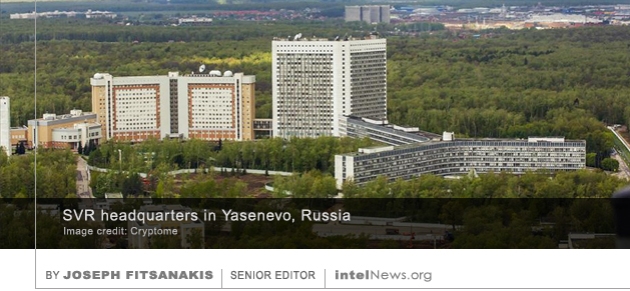
10. In extremely rare move, Russia’s spy agency disclosed identities of undercover officers. The Russian Foreign Intelligence Service (SVR), which inherited the external intelligence functions of the Soviet-era KGB, does not usually disclose the identities of its undercover operatives. But in January of this year, in an extremely rare move, its director, Sergei Naryshkin, did just that during a commemoration event marking the centenary of the KGB and the SVR. The identities of seven non-official-cover officers, referred to in Russian as ‘pазведчики-нелегалы’, or ‘illegals’ —most of whom are now retired or dead— were disclosed along with brief biographical notes. The term illegals refers to undercover intelligence officers who are secretly posted abroad without diplomatic cover. Accordingly, they have no official connection to a Russian diplomatic facility, while some even pose as citizens of third countries. The accompanying biographies released by the SVR disclose no specifics about the countries in which these illegals operated, the type of work they carried out, and the specific dates in which they were active. Most of them operated between the late 1960s and the early 1990s.
This is part one in a three-part series; Part two will be available on December 30 and part three on December 31.
► Author: J. Fitsanakis and I. Allen | Date: 29 December 2020 | Permalink
Filed under Expert news and commentary on intelligence, espionage, spies and spying Tagged with year in review