Germany arrests Tunisian man for producing biological weapon in his apartment
June 18, 2018 Leave a comment
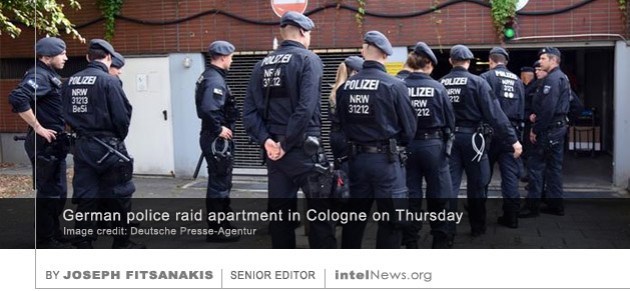 German authorities have charged a Tunisian citizen with building a biological weapon, after finding significant quantities of the highly toxic substance ricin in his apartment. The 29-year-old man is referred to in public reports only as “Sief Allah H.”, in compliance with German law that forbids the naming of suspects until they are found guilty in court. German officials said last Thursday that the man remains in custody and has been charged with violating Germany’s War Weapons Control Act (known as Kriegswaffenkontrollgesetz) and “preparing a serious act of violence against the state”.
According to reports, German intelligence services received a tip-off last month that the man had made online purchases of a coffee grinder and 1,000 castor seeds. Processing castor seeds creates a ricin byproduct, which can then be weaponized in the form of a powder, a fine mist, or solid pellets of various sizes. The end product is more powerful than many other toxic substances, such as cyanide. Upon entering the human body, ricin can cause multiple organ failure in less than two days. It has no known antidote.
After receiving the tip-off, German authorities began monitoring the suspect’s movements in the western German city of Cologne, near the Belgian and Dutch borders. By June, German police discovered that he had produced enough ricin to dispense as many as 1,000 lethal doses.
German media reported that “Sief Allah H.” is a sympathizer of the Islamic State. However, investigators have found no direct link between him and any militant organizations in Germany or abroad. Additionally, no evidence has yet been presented that he had planned an actual attack —in Germany or elsewhere— at a specific time. However, officials from Germany’s Federal Office for the Protection of the Constitution said it was “very likely” that the arrest of “Sief Allah H.” had averted a terrorist attack. Late last week, German newsmagazine Der Spiegel said that the suspect had made ricin by following instructions posted online by the Islamic State.
Throughout the weekend, several other apartments in Cologne were searched by German authorities. Search parties consisted of members of the local police, intelligence officers and scientists from the Robert Koch Institute, the German government agency tasked with monitoring hazards to public health.
► Author: Joseph Fitsanakis | Date: 18 June 2018 | Research Credit: S.F. | Permalink
 Belgium will investigate whether Spanish intelligence spied on Carles Puigdemont, the separatist Catalan leader who escaped to Brussels after launching an unsuccessful independence bid last year. Puigdemont, 56, served as president of the Spanish region of Catalonia from January 2016 until October 2017. He was forcibly removed from office by the Spanish government, after he led the government of Catalonia in a unilateral declaration of independence from Spain. As soon as the Catalan Parliament declared that the region was independent, Madrid dissolved it, imposed direct rule on the country’s easternmost province, and declared fresh elections.
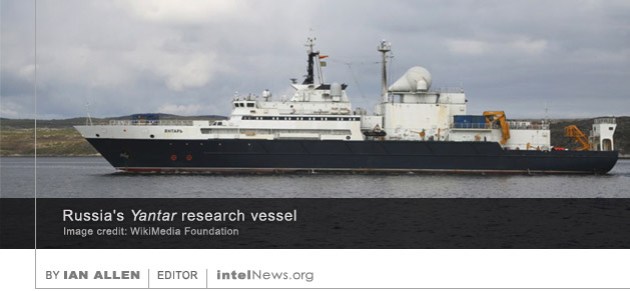 The United States has for the first time imposed economic sanctions on a number of Russian companies, which it says helped the Kremlin spy on targets in North America and Western Europe. On Monday, the US Department of the Treasury said it would apply severe economic restrictions on a number of Russian firms that work closely with the Kremlin. One of the companies was
 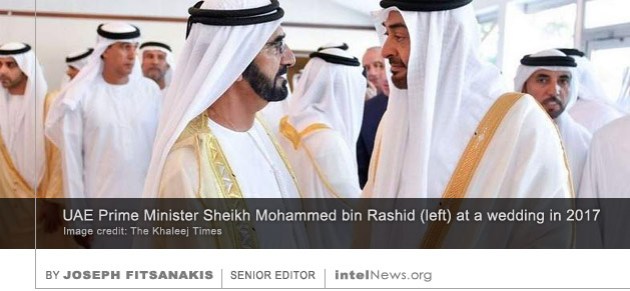 A lengthy exposé by a leading American newsmagazine has claimed that Israel and the United Arab Emirates, two countries that officially have no relations, have been secretly collaborating for more than two decades. Their secret cooperation has been extremely tight and has included clandestine weapons sales and intelligence-sharing, according to the exposé, which was published on the website of The New Yorker on Monday and will feature in the magazine’s print edition on June 18. The lengthy piece, which deals with the changing geopolitics of the Middle East, is written by Adam Entous, national security correspondent for The Washington Post, who has previously reported for more than two decades for Reuters and The Wall Street Journal.
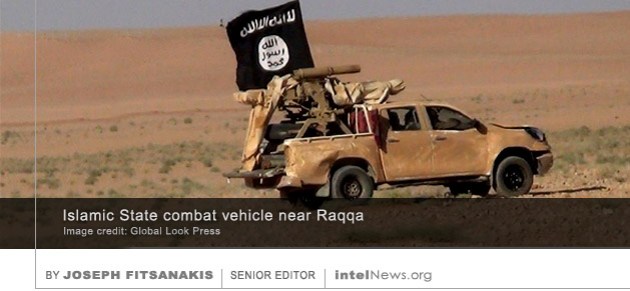 In a recent series of interviews to promote his new book, Anatomy of Terror, former FBI special agent and current counterterrorism expert Ali Soufan insists that the Islamic State remains potent and dangerous.
  way out. The group’s meteoric rise marked a watershed moment in the modern history of militant Sunni Islam. Even if it is militarily annihilated —a prospect that is far from certain— its physical absence will in no way erase its impact and influence among its millions of supporters and sympathizers. In fact, experts warn that the group is —like al-Qaeda before it— proving to be resilient and able to withstand intense military pressure from its enemies. Currently, all signs show that the Islamic State is actively reorganizing under the command of its leader, Abu Bakr al-Baghdadi. The prolonged absence of the Iraqi-born al-Baghdadi has prompted wild speculation about this supposed demise or severe incapacitation. There are even some who
 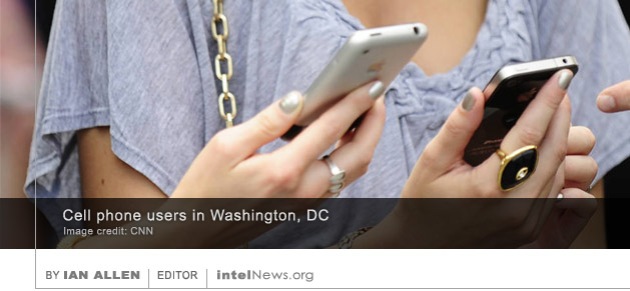 The majority of government-sponsored hacking now targets cell phones, not personal computers, according to researchers who say that political dissidents are especially targeted by totalitarian regimes around the world. Until 2015, most government-sponsored hacking operations were directed against the personal computers of targeted individuals. However, experts
 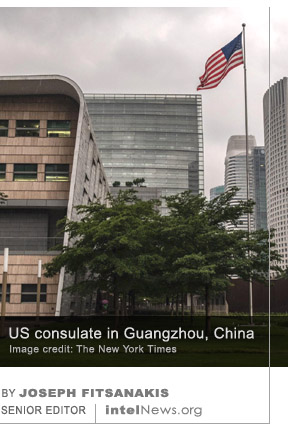 The United States has evacuated at least two more diplomatic personnel from its consulate in the Chinese city of Guangzhou, after they experienced “unusual acute auditory or sensory phenomena” and “unusual sounds or piercing noises”. The latest evacuations come two weeks after the US Department of State
  The online social media company Facebook shares data about its users with a Chinese telecommunications company that has been flagged in United States government reports as a threat to security. The New York Times
 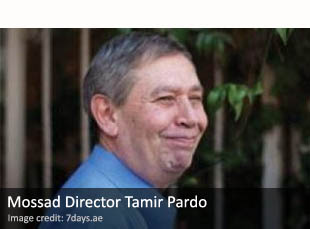 Israeli officials have denied reports that the head of the country’s internal security service was asked by the prime minister to spy on the director of the Mossad intelligence agency and the head of the military. The denials were prompted by allegations that will be made in full on Thursday, when the latest installment of the investigative news program Uvda (Fact) will be aired on Israel’s Channel 12 television channel. According to the program, the Israeli Prime Minister Benjamin Netanyahu requested that the personal phones of senior Israeli security officials, including those of the heads of the Mossad and the military, be wiretapped for security reasons.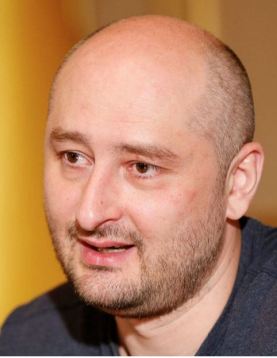
 China’s influence in New Zealand is so extensive that it threatens the traditionally close intelligence contacts between New Zealand and its Western allies, according to a report written by the Canadian spy agency. Since World War II, New Zealand has been a member of what is sometimes referred to as the UK-USA Security Agreement. Known also as the UKUSA Agreement or the Five Eyes alliance, the pact, which was strengthened in 1955, provides a multilateral framework for intelligence cooperation between the United Kingdom, the United States, Canada, Australia, and New Zealand. But a new report produced by Canadian intelligence warns that Chinese political and economic influence in New Zealand is making it difficult for the Pacific Ocean island country to continue to operate within the framework of the agreement.
 Pakistan has officially barred a former director of its powerful intelligence agency from leaving the country, after he co-authored a controversial book with his Indian counterpart. Asad Durrani is a retired Pakistani Army general who served as director-general of Pakistan’s Directorate for Military Intelligence between 1988 and 1989. From 1990 to 1992, he served as director of the Inter-Services Intelligence Directorate, arguably Pakistan’s most powerful government institution. Durrani, 77, has been severely criticized in some Pakistani circles for co-authoring a book entitled The Spy Chronicles: RAW, ISI and the Illusion of Peace, with his Indian counterpart, A.S. Daulat. Daulat, 78, headed India’s Research and Analysis Wing from 1999 to 2000.
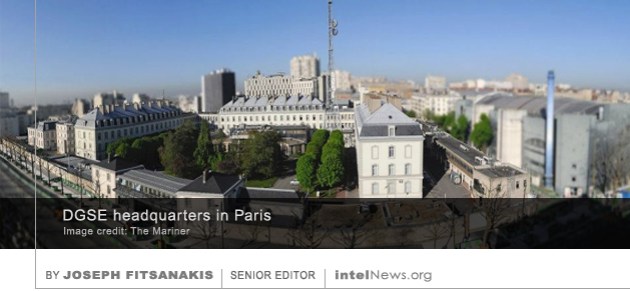 France has confirmed the arrest of two French intelligence officers who are accused of spying for the Chinese government. It appears that the two officers were captured and charged in December. However, their arrests were not publicized at the time, because French counterintelligence officials wanted to avoid alerting more members of a possible spy ring, which some say may include up to five French citizens. It was only last Friday, a day after French media published leaked reports of the arrests, that the French government spoke publicly about the case.







 intelNews.org
Israel charges former cabinet minister with spying for Iran
June 19, 2018 by Joseph Fitsanakis Leave a comment
In 1992, when he was 35, Segev was elected as one of the Knesset’s youngest members, representing the conservative Tzomet party. Initially an opposition Knesset member, Segev eventually left Tzomet and joined a governing coalition with the Labor Party, in which he served as Minister of Energy and Infrastructure. After exiting politics, Segev, who is a medical doctor by training, became a businessman and traveled frequently abroad. But in 2004 he was arrested on a flight from Holland, while reportedly trying to smuggle several thousand ecstasy pills into Israel. He was jailed for five years but was released from prison in 2007, after a commendation for good conduct. Shortly after his release, Segev moved to the Nigerian city of Abuja, where he practiced medicine. It was there, the Shin Bet claims, that he was recruited by Iranian intelligence.
In a statement released on Monday, the Shin Bet said that Segev had admitted being in regular contact with Iranian intelligence agents in Nigeria and other countries around the world. He is reported to have said that he was given a fake passport by his handlers, which he used to visit Iran on two separate occasions in order to hold secret meetings with Iranian intelligence officers. He also traveled to several other countries in order to meet with his Iranian handlers and hand them information about Israel’s energy sector and the location of energy-related security sites in the country. The Shin Bet statement added that Segev introduced his Iranian handlers —who posed as foreign businessmen— to Israeli security officials on several occasions.
It is believed that Segev appeared before a court in Jerusalem on Friday. He was charged with “assisting an enemy in wartime” and with “carrying out espionage against the State of Israel”. The judge also charged him with numerous instances of transmitting classified information to a foreign power.
► Author: Joseph Fitsanakis | Date: 19 June 2018 | Permalink
Filed under Expert news and commentary on intelligence, espionage, spies and spying Tagged with espionage, Gonen Segev, Iran, Israel, News