Analysis: Will the mass expulsion of diplomats affect Russia’s spy capabilities?
March 27, 2018 5 Comments
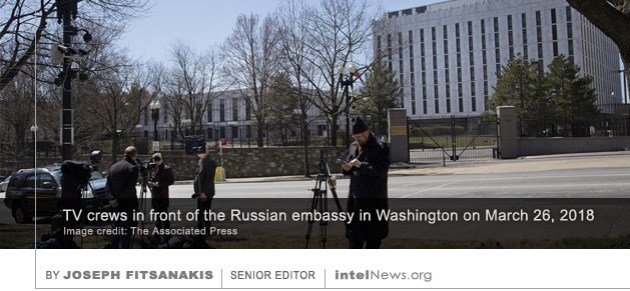 Relations between Russia and much of the West reached a new low on Monday, with the expulsion of over 100 Russian diplomats from two dozen countries around the world. The unprecedented expulsions were publicized on Monday with a series of coordinated announcements issued from nearly every European capital, as well as from Washington, Ottawa and Canberra. By the early hours of Tuesday, the number of Russian diplomatic expulsions had reached 118 —not counting the 23 Russian so-called “undeclared intelligence officers” that were expelled from Britain last week. Further expulsions of Russian diplomats are expected in the coming days.
It is indeed difficult to overstate the significance of this development in the diplomatic and intelligence spheres. Monday’s announcements signified the largest collective expulsion of Russian intelligence personnel (intelligence officers working under diplomatic cover) in history, and is remarkable even by Cold War standards. In the United States, the administration of President Donald Trump expelled no fewer than 60 Russian diplomats and shut down the Russian consulate in Seattle. Such a move would have been viewed as aggressive even for Mr. Trump’s  predecessor, Barack Obama, and his Secretary of State Hillary Clinton, who is known for her hardline anti-Russian stance. In Europe, the move to expel dozens of Russian envoys from 23 different countries —most of them European Union members— was a rare act of unity that surprised European observers as much as it did the Russians.
RUSSIA’S ESPIONAGE CAPABILITY
However, in considering the unprecedented number of diplomatic expulsions from an intelligence point of view, the question that arises is, how will these developments affect Russia’s espionage capabilities abroad? If the Kremlin did indeed authorize the attempted assassination of the Russian defector Sergei Skripal, it must be assumed that it expected some kind of reaction from London, possibly in the form of limited diplomatic expulsions. The resulting worldwide wave of expulsions must have caught Russian intelligence planners by surprise. There is little question, therefore, that these are difficult hours for the GRU, Russia’s military-run Main Intelligence Directorate, and the SVR, Russia’s Foreign Intelligence Service. These agencies will be losing as much as two thirds of their official-cover officers in Europe and North America. The last time this happened on such a massive scale was during World War II, as Soviet embassies across Europe were unceremoniously shut down by the advancing Nazi forces. Read more of this post
 Sergei Skripal, the Russian double agent who was poisoned with a military-grade nerve agent in England earlier this month, wrote to the Kremlin asking to return to Russia, according to one of his old school friends. Skripal, 66, and his daughter Yulia, 33, remain in critical condition in hospital, three weeks after being
  For the past year, the Netherlands has had a new law governing its two secret services, the AIVD and the MIVD. The new Intelligence and Security Services Act (Wet op de inlichtingen- en veiligheidsdiensten or Wiv) was and still is heavily criticized, especially because it allows untargeted access to cable-bound telephone and internet traffic. Under the previous law, which dates from 2002, the intelligence services were only allowed to conduct bulk interception of wireless transmissions, like satellite and radio communications —besides of course the traditional targeted telephone and internet taps aimed at individual targets.
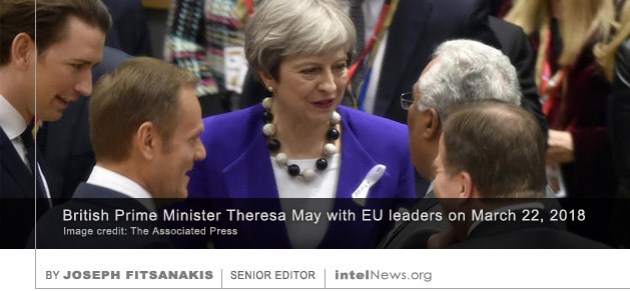 The European Union has recalled its ambassador to Moscow in an apparent response to the poisoning of Sergei Skripal, a Russian double agent, who was attacked with a nerve agent in England earlier this month. Skripal, 66, and his daughter Yulia, 33, remain in critical condition in hospital, nearly three weeks after being poisoned with a nerve agent that British scientists say belongs to Russia’s Cold-War-era chemical stockpiles. Moscow has angrily rejected claims that Skripal, who spied for Britain in the early 2000s, was on a Kremlin-approved hit-list of defectors. But British Prime Minister Theresa May traveled to Brussels on Thursday to brief European Union heads of state about the attack on Skripal.
 With
With 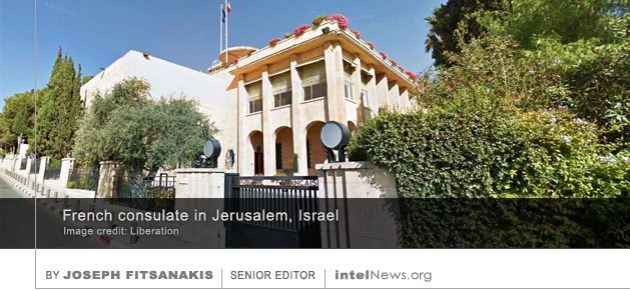 An employee of France’s consulate in Jerusalem is under arrest for allegedly smuggling weapons from the Gaza Strip to the West Bank, according to French media reports, which have been confirmed by Israel. The consular employee has been identified by the Shin Bet, Israel’s domestic security agency, as Romain Franck, 23. He reportedly worked as a driver at the consulate, a job he managed to secure through a prestigious “international volunteer” program sponsored by the French government. The elite program allows recent French college graduates to gain work experience in various countries around the world. Although he had a relatively junior post at the French consulate, Franck carried a diplomatic passport, which allowed him to move through international borders without being searched, due to his diplomatic immunity privileges.
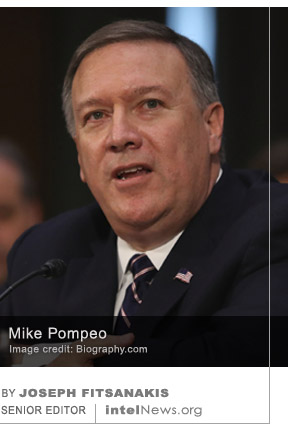 The Central Intelligence Agency has reportedly established back channels for negotiation between the United States and North Korea, which the Department of State is now using to communicate with Pyongyang. Rex Tillerson, who was summarily fired as US Secretary of State by President Donald Trump last week, was famously in favor of diplomatic negotiations between the US and North Korea. The White House had resisted and even publicly criticized Tillerson’s views. Ironically, Tillerson was fired just as his pro-diplomacy views on North Korea are being adopted by the White House.
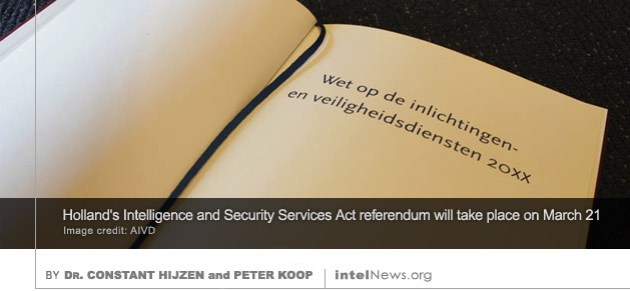 On March 21, the Dutch public cast their vote about the new Intelligence and Security Services Act, in Dutch
 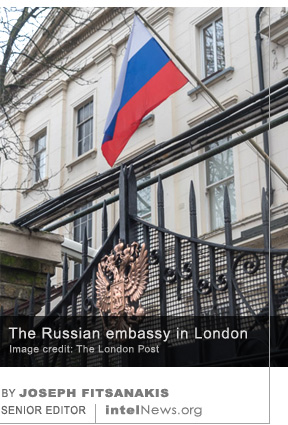 As expected, Moscow snubbed the British government’s demand for information into how a Russian-produced military-grade nerve agent ended up being used in the streets of Salisbury, England. As British Prime Minister Theresa May addressed the House of Commons on Wednesday afternoon, Sergei Skripal continued to fight for his life in a hospital in southern England. His daughter, Yulia, was also comatose, having been poisoned with the same Cold-War-era nerve agent as her father. This blog has
  the latest expulsions are dwarfed by the dramatic expulsion in 1971 of no fewer than 105 Soviet diplomats from Britain, following yet another defection of a Soviet intelligence officer, who remained anonymous.
 The nerve agent that poisoned a Russian double spy in England last week may have been smeared on his car’s door handle, according to sources. Sergei Skripal, 66, and his daughter Yulia, 33, are in critical condition after being
  The British prime minister said on Monday that it was “highly likely” the nerve agent used to attack a Russian defector in England last week was developed by Russia. But sources in London told the BBC that the British government would not invoke Article 5 of the North Atlantic Treaty Organization (NATO), which states that an attack on one member of the alliance is an attack on all. Theresa May was referring to an
 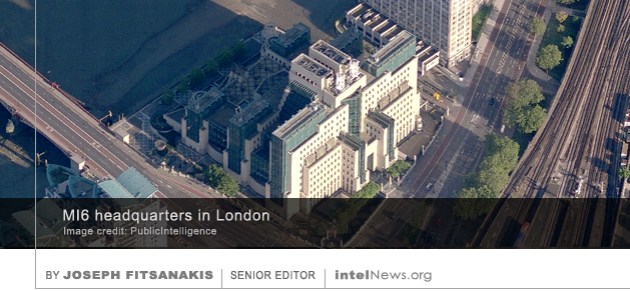 The British secret services have begun tightening the physical security of dozens of Russian defectors living in Britain, a week after the attempted murder of former KGB Colonel Sergei Skripal in southern England. The 66-year-old double spy and his daughter, Yulia, were found in a catatonic state in the town of Salisbury on March 4. It was later determined that they had been attacked with a nerve agent. Russian officials have vehemently denied that the Kremlin had any involvement with the brazen attempt to kill Skripal. But,
 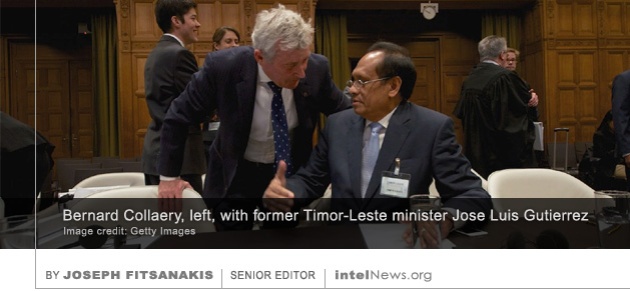 Australia continues to deny freedom of movement to a former intelligence officer who revealed that Canberra bugged government offices in the small island nation of Timor-Leste, in an effort to secure a lucrative oil deal. The former intelligence officer, known only as “Witness K.”, is believed to be a former director of technical operations in the Australian Secret Intelligence Service (ASIS), Australia’s foreign-intelligence agency. In 2013, he publicly objected to an intelligence-collection operation that targeted the impoverished Pacific island nation of Timor-Leste, known also as East Timor.
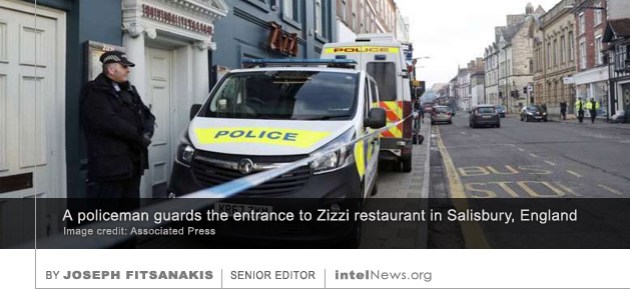 Most state-sponsored assassinations tend to be covert operations, which means that the sponsoring party cannot be conclusively identified, even if it is suspected. Because of their covert nature, assassinations tend to be extremely complex intelligence-led operations, which are designed to provide plausible deniability to their sponsors. Consequently, the planning and implementation of these operations usually involves a large number of people, each with a narrow set of unique skills. But —and herein lies an interesting contradiction— their execution is invariably simple, both in style and method. The
  Skripal, who continued to provide his services to British intelligence as a consultant while living in the idyllic surroundings of Wiltshire. Like the late Russian defector Alexander Litvinenko, who died in London of radioactive poisoning in 2006, Skripal entrusted his personal safety to the British state. But in a country that today hosts nearly half a million Russians of all backgrounds and political persuasions, such a decision is exceedingly risky.
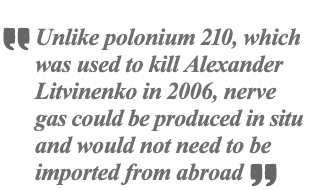 from abroad. It is, in other words, a simple weapon that can be dispensed using a simple method, with little risk to the assailant(s). It fits the profile of a state-sponsored covert killing: carefully planned and designed, yet simply executed, thus ensuring a high probability of success.






 intelNews.org
Britain shared “unprecedented” intelligence details to secure expulsions of Russians
March 29, 2018 by Joseph Fitsanakis 4 Comments
The United States, Canada and Australia joined most European countries in expelling Russian spies, after Britain accused Moscow of using a Soviet-era nerve agent to attack the Skripals. But according to a senior British government official, the coordinated expulsions were not coincidental. The official, who refused to be named, told The Financial Times that the British government took the unprecedented decision to share “unprecedented degrees of intelligence” with dozens of countries in order to convince them to take action against the Kremlin. Shared information included complete intelligence assessments of Russian activities. Complete intelligence assessments are rarely —if ever— shared by nations. The latter typically share headline assessments —short snippets of longer analyses produced by their intelligence agencies— with allied nations. But in this case, British officials were authorized to share complete intelligence reports along with underlying data, which included a “detailed scientific analysis of the nerve agent used in the attack”, said The Financial Times.
Sharing complete intelligence reports runs the risk of revealing how much a nation knows about the secret activities of its adversaries, and may end up harming its intelligence-collection efforts. But the paper said that the complete intelligence shared with dozens of countries around the world convinced them that “there was no plausible alternative other than […] the Russian state” was behind the attack on the Skripals. Moreover, said the paper, London shared intelligence with foreign governments that pointed to the existence of an “explicit” state-backed assassination program run by the Kremlin. The program allegedly includes targets in numerous countries worldwide, said The Financial Times. The Russian government has vehemently rejected London’s assertions and has suggested that the attack on the Skripals was part of a British intelligence operation aimed at turning Russia into an international pariah.
► Author: Joseph Fitsanakis | Date: 29 March 2018 | Permalink
Filed under Expert news and commentary on intelligence, espionage, spies and spying Tagged with diplomatic expulsions, intelligence cooperation, intelligence sharing, News, Russia, Sergei Skripal, UK