Opinion: Trump’s silence over Tehran attacks exposes US policy conundrums
June 8, 2017 2 Comments
 The security map of the Middle East changed within a few hours on Wednesday, when the Islamic State managed to strike Iran for the first time. Six assailants —five men and a woman— stormed the Islamic Consultative Assembly, which serves as the parliament of Iran, and the mausoleum of the founder of the Islamic Republic, Ayatollah Khomeini. By the time they killed themselves, or were killed by security forces, the six had murdered 12 people and injured over 60. The Islamic State, which carried out the attack, had warned for several months that it would launch a direct assault at the heart of
  the world’s largest Shiite state. It tried to do so before, several times, and failed. But Wednesday’s attack was the first time it managed to do so successfully.
It is certainly ironic that Iran, one of the world’s most prolific sponsors of terrorism, boasts of being one of the most terrorism-free countries in the Middle East. Indeed, Wednesday’s bloody strike was the largest terrorist attack in Tehran’s history after the early years of the 1979 Islamic Revolution. It is a remarkable record that many of Iran’s neighbors, such as Iraq or Syria, can only dream of. Moreover, Iran’s claim that its regional rival Saudi Arabia is responsible for Wednesday’s attack is both outlandish and absurd. It is true that militant Wahhabism, Saudi Arabia’s state religion, is at the root of the Islamic State’s doctrine. But the fanatics of the Islamic State direct as much ire against Saudi Arabia as they do against Iran. They accuse the former of being apostates —Muslim traitors who side with infidels— and the latter of being heretics that must be annihilated. Read more of this post
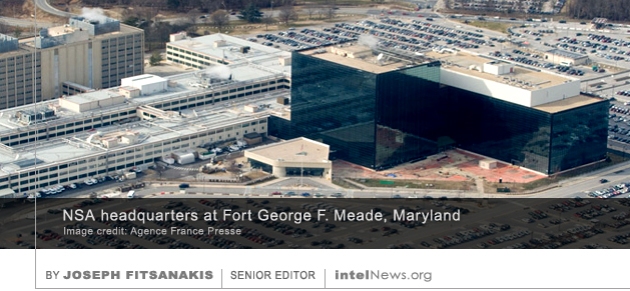 At first sight, the case of Reality Leigh Winner, a United States federal contractor who has been
  between leakers based on their motives. It does, however, distinguish between simple leakers and whistleblowers. If a US government employee uncovers evidence of abuse of power, or becomes aware of a specific and critical threat to the security of Americans, he or she is required to notify his or her superiors. If the latter refuse to take action, then the employee is justified under the law in taking all necessary actions to warn the public of impending peril. That is precisely the function of the 1989 Whistleblower Protection Act, which affords protection to insiders who expose abuses of authority, or a concrete and critical threat to public safety.
 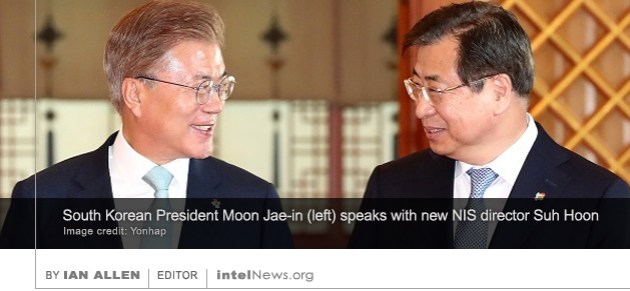 The new president of South Korea has officially banned the country’s spy agency from engaging in domestic intelligence gathering, in a move that some say signals an era of sweeping security reforms in the country. South Korea’s intelligence agency, the National Intelligence Service (NIS) fell into disrepute in recent years, after many of its officers were found to have secretly sided with conservative political candidates for public office. In 2015, the NIS’ former director, Won Sei-hoon, was
  Russian espionage in the United States has become increasingly sophisticated and brazen, and American counterintelligence professionals are finding it difficult to contain it “after years’ worth of inattention” according to sources.
  Ukrainian security service personnel raided the offices of a Russia-based internet search engine firm in two cities on Tuesday, as part of a treason investigation. The probe is reportedly related to the ongoing dispute between Kiev and Moscow, which intensified after 2014, when Russia unilaterally annexed the Russian district of Crimea. The Ukrainian government also accuses the Kremlin of clandestinely supporting pro-Russian insurgents in southeastern Ukraine, something that Moscow denies.
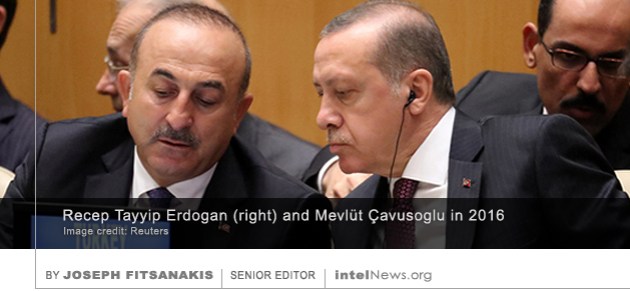 In a further sign of worsening relations between Turkey and the West, Turkey’s foreign minister has accused Western countries of secretly employing journalists to spread “terrorist” propaganda against his country. His claims come just days after European leaders strongly criticized Ankara for imprisoning foreign journalists without trial. During a meeting of North Atlantic Treaty Organization (NATO) leaders in Brussels last week, the German Chancellor Angela Merkel protested the arrest of Deniz Yücel, a reporter for German newspaper Die Welt, who was arrested in Turkey in February. Yücel, who is a German citizen, has remained imprisoned without trial for more than three months. Germany’s protests were
 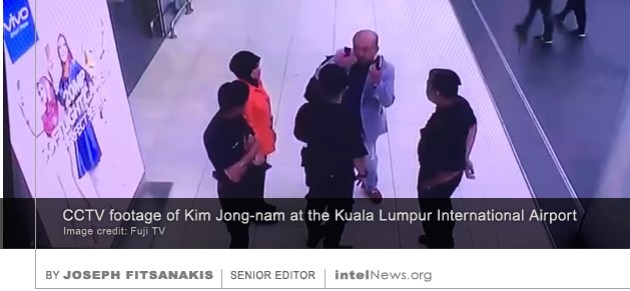 The exiled half-brother of North Korea’s leader, who was assassinated in Malaysia in February, is thought to have met with a man believed to be an American intelligence officer shortly before he was killed, according to reports. Kim Jong-nam the grandson of North Korea’s founder Kim Il-Sung,
 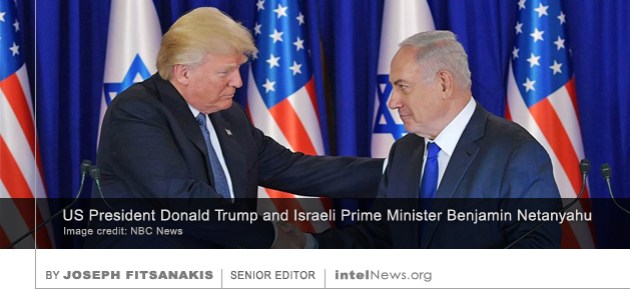 Authorities in Israel have revised their intelligence-sharing protocols with the American government after it became known that United States President Donald Trump inadvertently exposed Israeli secrets to Russia. The alleged exposure of Israeli secrets came earlier this month, during a meeting between Mr. Trump and a delegation of Russian government officials, which included Foreign Minister Sergey Lavrov and Sergey Kislyak, Moscow’s Ambassador to Washington.
 Teams of United States Special Forces are carrying out “nearly 100 missions at any given time” in the continent of Africa, according to American military documents released to the media. Operating under the US Special Operations Command (USSOCOM), US Special Forces are trained to carry out missions using unconventional tactics. Much of their work is classified. However, a Freedom of Information Act request by the New York-based Vice News has
 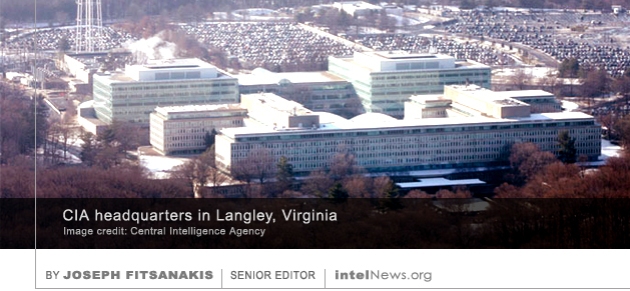 A few years ago, China busted an extensive network of secret operatives run by the United States Central Intelligence Agency. The CIA has yet to recover from the massive blow to its operations, say sources. The CIA has devoted substantial resources to gathering intelligence in China in recent years, and has painstakingly built a network of spies. The latter are Chinese nationals recruited by CIA officers to spy on Beijing on behalf of the United States. But,
 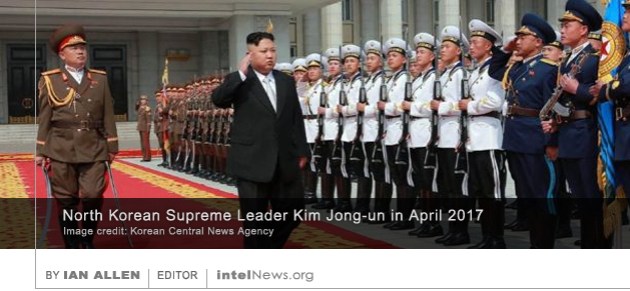 The United States Central Intelligence Agency has announced the establishment of a new center focusing on North Korea, shortly after Pyongyang accused Washington of plotting to assassinate its supreme leader. Last week, the regime’s Vice Minister of Foreign Affairs, Han Song Ryol, said the CIA tried to kill North Korean Supreme Leader Kim Jong-un. He was speaking during a meeting with foreign diplomats in the North Korean capital, where he
 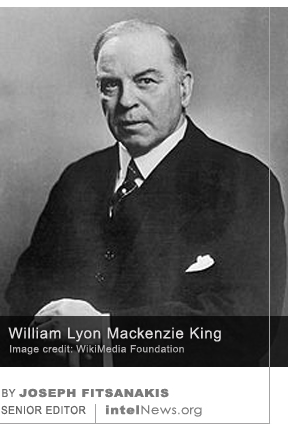 Canadian officials speculated that Soviet spies stole a missing volume from the private diary collection of William Lyon Mackenzie King, Canada’s longest-serving prime minister, who led the country in the run-up to the Cold War. A liberal anticommunist, Mackenzie King was Canada’s prime minister from 1925 to 1948, with a break from 1930 to 1935. He is known for having led the establishment of Canada’s welfare state along Western European standards.
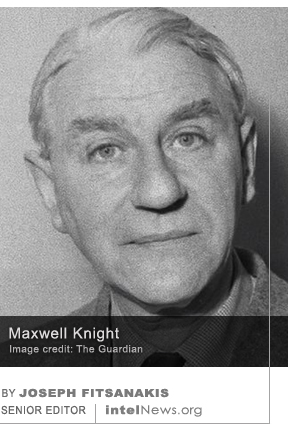 A new biography of famed British Security Service spymaster Maxwell Knight reveals that a number of prominent British communists were secret government agents in the 1930s. After serving in the British Royal Navy during World War I, Knight was recruited by the Security Service, Britain’s domestic intelligence agency, which is commonly known as MI5. He eventually rose to lead the agency’s Section B5(b), which was responsible for using agents to infiltrate political groups deemed radical by the authorities. During the interwar years, under Knight’s leadership, Section B5(b) focused largely on British
 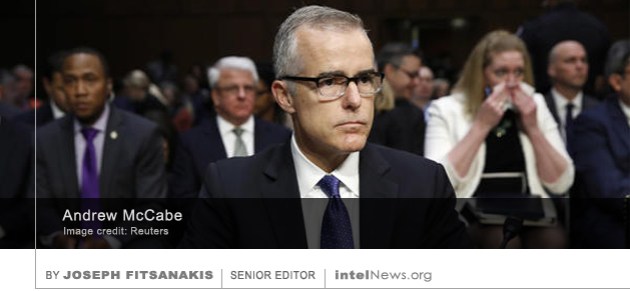 The interim director of the Federal Bureau of Investigation has told an intelligence panel in the United States Senate that he will not hesitate to report any attempts by the White House to interfere with an official investigation into Russia’s role in the 2016 presidential election. Andrew McCabe assumed the leadership of the FBI on Tuesday, after US President Donald Trump abruptly fired the Bureau’s director, James Comey. A trained lawyer who joined the FBI in 1996, McCabe amassed significant experience in countering organized crime and terrorism before being appointed Deputy Director of the Bureau in 2016.






 intelNews.org
New clues emerge about targeted efforts by Russia to hack US elections
June 9, 2017 by Joseph Fitsanakis 1 Comment
The NSA document details attempts by hackers to compromise the online accounts of over 100 election officials, as well as employees of private contractors involved in administering the election process. The attempts reportedly took place during the period leading up to November 8, 2016. To do that, hackers resorted to a technique commonly known as ‘spear-fishing’. They sent carefully crafted emails, claiming to be from Google, to specifically targeted individuals. The goal was to trick the email recipients into downloading and opening Microsoft Word attachments, which were infected with malware. The infected software would then allow the hackers to remotely access the compromised computers. The NSA document states that at least one targeted person had his or her computer compromised though the ‘spear-fishing’ technique. Importantly, the leaked document appears unequivocal in its assessment that the hackers behind the ‘spear-fishing’ attacks worked for the General Staff Main Intelligence Directorate (GRU) of the Russian armed forces. The document also states that the main goal of the attacks was to compromise the software used to manage voter registration lists, and that the attackers were operating under a “cyber espionage mandate specifically directed at US and foreign elections”.
American intelligence officials have previously said that Russian spies launched in a complex and prolonged campaign to undermine public faith in the US electoral process. It is also known that the Russian campaign targeted election officials in the months leading up to the November 2016 elections. But the NSA report is the first publicly available description of some of the specific techniques employed by the alleged Russian hackers as part of their campaign. The leaked document does not provide technical details about the ‘spear-phishing’ campaign. Nor does it discuss whether the attacks were successful, whether vote tallies were actually compromised, or whether the election process itself was sabotaged by the hackers. The Intercept said it contacted the NSA and the Office of the Director of National Intelligence, who refused to publicly comment on the content of the NSA report.
► Author: Joseph Fitsanakis | Date: 09 June 2017 | Permalink
Filed under Expert news and commentary on intelligence, espionage, spies and spying Tagged with 2016 US presidential election, computer hacking, News, NSA, Russia, United States