Swiss officials defend alleged spying on German tax-fraud investigators
May 4, 2017 1 Comment
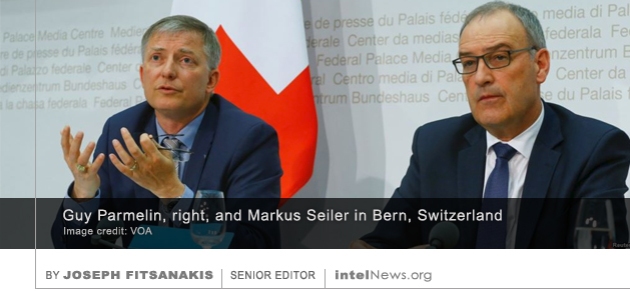 Senior Swiss government officials, including the defense minister and the director of the country’s intelligence agency, have defended Switzerland’s right to spy on European tax-fraud investigators who meddle in Swiss affairs. Earlier this week, German authorities announced the arrest of a Swiss national who was allegedly spying on the activities of German tax-fraud investigators in Frankfurt. According to German officials and media reports, the man, identified only as Daniel M., is an employee of the Swiss Federal Intelligence Service. The agency, known by its German-language initials, NDB, is Switzerland’s main intelligence organization.
As intelNews reported on Monday, Daniel M. was said to be monitoring the activities of German tax-fraud investigators who have been trying for years to stop German citizens from having secret bank accounts abroad. In the past decade, German authorities have paid nearly $100 million to employees of Swiss banks in return for information about the identities of German bank account holders in the small alpine country. The Swiss government has strongly criticized Berlin for encouraging Swiss banking sector employees to steal internal corporate information, a practice that goes against Switzerland’s stringent privacy laws. On Tuesday, Germany’s Foreign Minister, Sigmar Gabriel, summoned Switzerland’s ambassador to Germany, Christine Schraner Burgener, to the Foreign Ministry, in order discuss Daniel M.’s arrest. A press statement that the Foreign Ministry sent on Tuesday to the German media said that the meeting had been called “in the interest of German-Swiss friendship”.
But the Swiss do not appear to be interested in discussing. On Tuesday, Markus Seiler, Director of the NDB, defended his agency’s right to spy on anyone who “uses illegal methods in Switzerland to steal state or business secrets”. Seiler, who was speaking in Bern, classified all such practices as espionage targeting the the Swiss economy. Asked by reporters whether Daniel M. was an NDB employee, Seiler said he could not comment. But he defended the NDB’s right to “fight the theft of business secrets” and “uphold Swiss laws”. He also refused to specify whether the NDB is active in Germany, stating instead that the agency is “active at home and abroad”. Switzerland’s Minister of Defense, Guy Parmelin, who supervises the NDB’s activities, was equally general when asked to discuss the arrest of Daniel M. He said simply that he and other Swiss government officials had to “protect [the NDB’s] methods and sources”.
► Author: Joseph Fitsanakis | Date: 04 April 2017 | Permalink
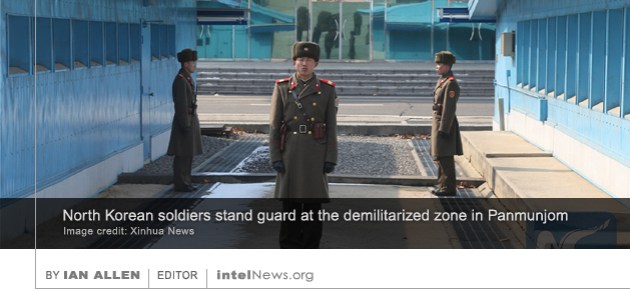 The director of the United States Central Intelligence Agency made an unannounced visit to South Korea over the weekend, to discuss the rising tensions in the Korean Peninsula with his South Korean counterpart and other senior officials. A spokesperson from the US embassy in Seoul made an official
  Authorities in Germany have announced the arrest of a Swiss national who was allegedly spying on the activities of German tax-fraud investigators in Frankfurt. According to prosecutors in the German state of Hesse, of which Frankfurt is the largest city, the Swiss man was arrested on Friday and is currently in custody. He has been identified only as Daniel M., and is believed to be in his mid-50s. According to news reports, German counterintelligence officers had been monitoring the suspect for over a year. They were issued a warrant for his arrest in December of last year, but waited until he was on German soil to arrest him. He was arrested at Frankfurt Airport.
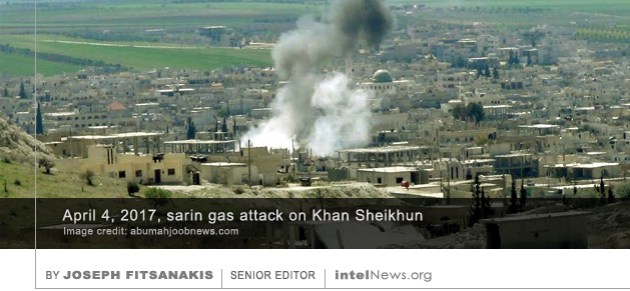 A comprehensive report released yesterday by the French Intelligence Community concludes with certainty that the government of Syrian President Bashar al-Assad was behind the April 4 sarin gas attack in northwestern Syria. The report, a “national evaluation” based on France’s own intelligence sources and scientific analysis of samples collected from the site of the attack, indicates that the poison gas used in the attack came from stockpiles that belong to the Syrian government.
 The same group cyber-spies that attacked the campaign of French presidential candidate Emmanuel Macron is now attacking German institutions that are connected to the country’s ruling coalition parties, according to a report by a leading cyber-security firm. The Tokyo-based security software company Trend Micro published a 41-page report on Tuesday, in which it tracks and traces the attacks against French and German political targets over the past two years. The report, entitled
 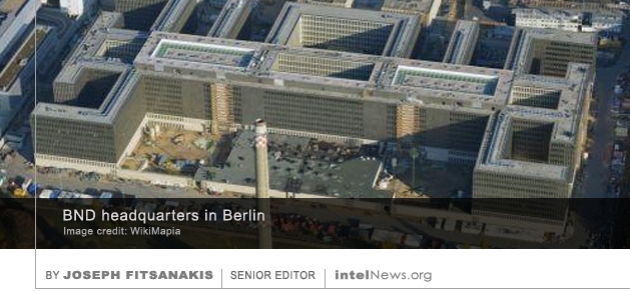 Iranian intelligence operatives are the second most active in Germany after Russian spies, with much of their activity focusing on Israeli targets in the country, according to the German Interior Ministry. The information is contained in a report that was issued in response to a request by a member of Germany’s Bundestag last week. It states that Iranian spies have engaged in nearly two dozen known intelligence operations on German soil since 2007, and have even targeted individuals for assassination.
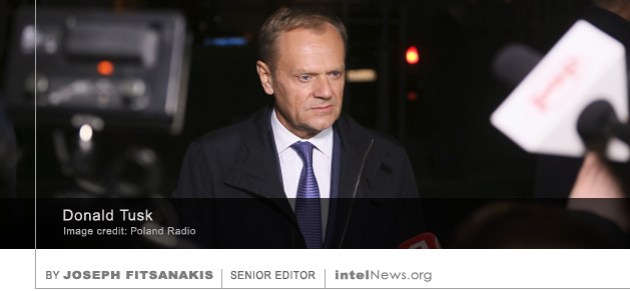 Senior European Union official Donald Tusk was grilled for several hours on Wednesday, in the context of a Polish government probe into an intelligence agreement between Warsaw and Moscow. But Tusk, who is the current president of the European Council, and served as Poland’s prime minister from 2007 to 2014, dismissed the probe as politicized and said it was deliberately designed to harm his political career. The investigation was launched by the government of Poland earlier this year. Its stated goal is to investigate an agreement that was struck in late 2013 between Poland’s Military Counterintelligence Service (MCS) and the Federal Security Service (FSB) of the Russian Federation. The agreement allegedly took place in secret, but was never implemented. The government of Poland canceled it in 2014, after accusing Moscow of illegally annexing the Ukrainian region of Crimea.
 The director of Nigeria’s powerful intelligence agency has been suspended on orders of the president, after a massive stash of cash totaling $43 million was found in an apartment in Lagos. The money was discovered by investigators working for the Nigerian Economic and Financial Crimes Commission (EFCC). Based in Abuja, the EFCC is a high-profile body that was created in 2003, in response to accusations by the international community that Nigeria is used as a major base for global money-laundering schemes.
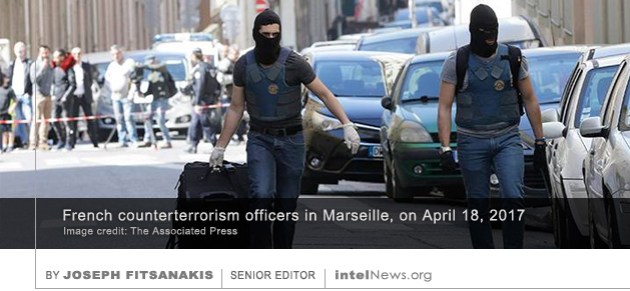 A tip from British intelligence helped French counterterrorist officials arrest two men who are thought to have been in the final stages of planning a large-scale terrorist attack, according to French media. Government sources in Paris say officers from the country’s domestic intelligence agency, DGSE,
 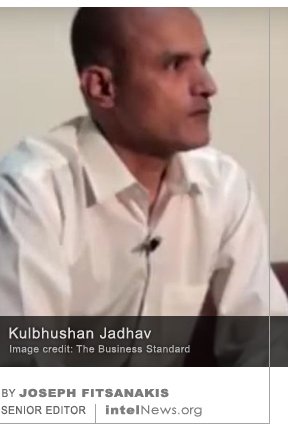 Analysts warn that South Asia may witness its worst crisis since the 2008 Mumbai attacks if Pakistan carries out its threat to execute an Indian former naval officer whom it accuses of espionage. Authorities in Islamabad say Kulbhushan Jadhav (pictured) worked for the Indian Navy until 2003, when he was recruited by India’s Research and Analysis Wing (RAW), a government intelligence agency that conducts operations abroad. The Pakistanis claim that Jadhav was arrested in southwest Pakistan in 2016, where he was engaged in funding and training secessionist militants from Pakistan’s Baluch minority. The Baluch are an Iranic people, most of whom live in a region known as Baluchistan, which is split between Iran and Pakistan. There are populous Baluch communities in the southern city of Karachi, one of Pakistan’s most populous ports. Some members of the Baluch community have secessionist aspirations and are accused of terrorism by Iranian and Pakistani authorities.
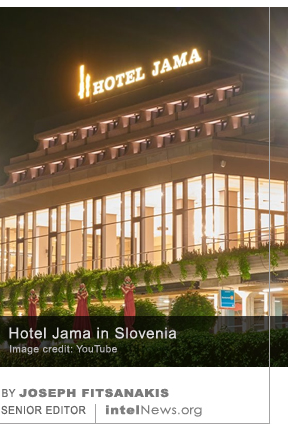 Four hidden communications-surveillance compartments which are believed to date back to the Cold War, have been found in one of the most prestigious hotels of the former Yugoslavia. The discovery was made during an extensive renovation project that was recently completed in the Hotel Jama. The hotel is located in the southeastern Slovenian city of Postojnska, near the Italian border. For over a century, Postojnska has been famous for its network of limestone caves, which are among the largest in the world. Eager to cater to Italian, Austrian and other Western tourists, the government of Yugoslavia began construction on Hotel Jama in 1969. The hotel opened its doors in 1971, amidst much publicity and fanfare. It eventually became known as one of the most luxurious hotels in the communist world.
 Emirati intelligence has to be seen in two disparate tiers: actual home-grown intelligence efforts, which usually revolve within the small policing and military forces of the United Arab Emirates (UAE); and more elaborate, highly secretive, outsourced activities that use the UAE as a facilitating conduit or go-between with a clear advantage to Emirati interests.
 ultra-modern intelligence capabilities, and cooperates with international organizations, other countries, and policing agencies. In addition, the UAE leadership has taken initiatives recently to create a domestic level of intelligence scholarship and professionalization, namely in the form of the
 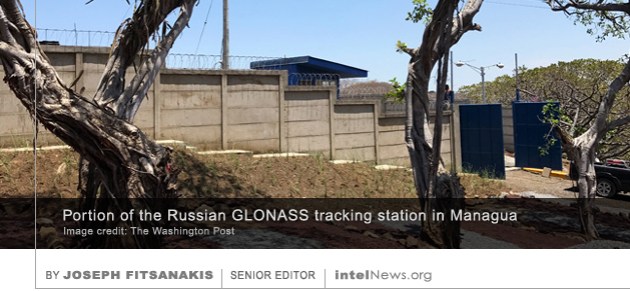 A Russian facility built on a hillside facing the United States embassy in the Nicaraguan capital Managua is seen by some experts as symptomatic of Russia’s renewed presence in the Americas. The official Russian explanation for the heavily protected facility, which is surrounded by high walls, is that it is meant to operate as a tracking station for GLONASS, Russia’s version of the global positioning system (GPS). The Russians do not use GPS, because it is owned by the US government and operated by the US Air Force. But some believe that only part of the compound is dedicated to GLONASS activities, and that a major portion is a Russian listening base that sweeps US communications from throughout the region.
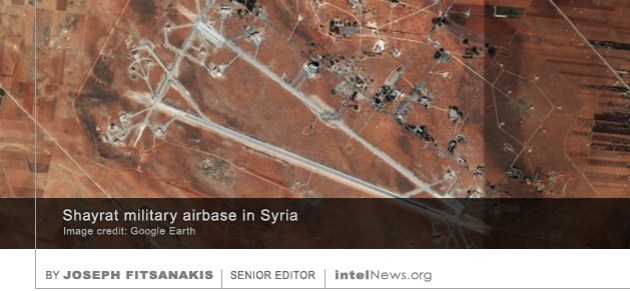 The nearly 60 Tomahawk missiles that the United States fired at Syria in the early hours of Friday local time were not the first. Nor were they the first that struck a Syrian government installation. In September of 2016, for example, a United States airstrike hit a
  given that Washington’s attack took place during the official visit to the United States by Xi Jinping, premier of China, another strong Syrian ally. Finally, it is worth considering possible Iranian responses to the US attack, especially if Iranian citizens end up on the casualty list.






 intelNews.org
Israeli spy agencies’ budget has doubled in ten years
May 8, 2017 by Joseph Fitsanakis 2 Comments
Last week saw a rare instance of the release of a government report on the finances of these two agencies, which tend to shy away from discussing details about their financial scope. The information was included in a larger report about the Israeli government budget for 2018. The Finance Ministry report said that the 2018 budget for the Shin Bet and the Mossad will reach 8.6 billion shekels in the coming year. That amounts to approximately $2.5 billion. The ministry report noted that the budget for the two spy agencies has increased by just under 10 percent since last year. The same budget for 2017 was 7.8 billion shekels. That represented an increase of 300 million shekels from the 2016 budget.
Observers noted, however, that, although seemingly incremental, Israel’s spy budget for the Shin Bet and the Mossad appears to have doubled in just a decade. In 2006, under the leadership of Israeli Prime Minister Ehud Olmert, the combined Shin Bet/Mossad annual budget was below 4.5 billion shekels. By 2009, when Olmert was succeeded by Benjamin Netanyahu, the budget for the Shin Bet and the Mossad had reached 5.3 billion shekels. But Netanyahu, who promotes his image as a big believer in the capabilities of the Israeli intelligence community, presided over large budgetary increases for the Shin Bet and the Mossad alike. During his presidency, the Israeli intelligence community has seen near-unprecedented rates of growth in both its size and wealth.
► Author: Joseph Fitsanakis | Date: 08 May 2017 | Permalink
Filed under Expert news and commentary on intelligence, espionage, spies and spying Tagged with intelligence budget, intelligence funding, Israel, Israeli Ministry of Finance, Mossad, Shin Bet