What the Seychelles Trump-Russia story reveals about Emirati intelligence
April 11, 2017 1 Comment
 Emirati intelligence has to be seen in two disparate tiers: actual home-grown intelligence efforts, which usually revolve within the small policing and military forces of the United Arab Emirates (UAE); and more elaborate, highly secretive, outsourced activities that use the UAE as a facilitating conduit or go-between with a clear advantage to Emirati interests.
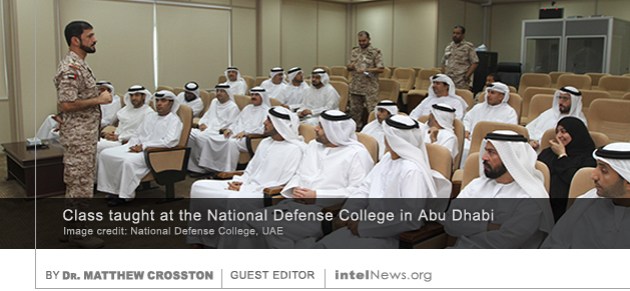
The first tier is relatively modest and somewhat easy to describe: each emirate within the country has its own police force that takes responsibility to gather and act upon any intelligence, usually encompassing security, crime, and drug-trafficking. Additionally, the police forces of the two main cosmopolitan areas, Dubai and Abu Dhabi, each have their own departments to investigate, arrest, and prosecute transgressors. The capitol police in Abu Dhabi prides itself on  ultra-modern intelligence capabilities, and cooperates with international organizations, other countries, and policing agencies. In addition, the UAE leadership has taken initiatives recently to create a domestic level of intelligence scholarship and professionalization, namely in the form of the National Defense College in Abu Dhabi. But those long-term aims are still just that: long-term and far from being fully developed and realized.
That leaves the aforementioned Tier Two, which involves plots worthy of Hollywood. The first aspect of Tier Two Emirati intelligence involves the outsourcing of performance to private companies. This is best exemplified by the agreement announced at the end of February with the Harris Corporation, following a $189 million two-year contract that was granted to provide a battle management system to the UAE Armed Forces. The BMS system de facto means Harris will be responsible in the UAE for initial operational capabilities, as the country tries to develop advanced contemporary battlefield management solutions. These types of agreements are very much a foundation for the actual realization and enactment of Emirati intelligence capabilities, in that they rely on the expertise and technological materiel of professional corporations (almost never Emirati themselves). It is indeed a basic ‘dollar for defense’ purchasing scheme. This strategy provides the nuts and bolts of Tier One Emirati intelligence, while simultaneously creating an intelligence dependency that works at cross-purposes with the institutional mission of the aforementioned National Defense College.
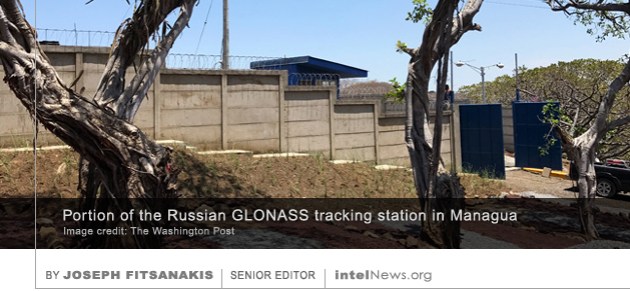 A Russian facility built on a hillside facing the United States embassy in the Nicaraguan capital Managua is seen by some experts as symptomatic of Russia’s renewed presence in the Americas. The official Russian explanation for the heavily protected facility, which is surrounded by high walls, is that it is meant to operate as a tracking station for GLONASS, Russia’s version of the global positioning system (GPS). The Russians do not use GPS, because it is owned by the US government and operated by the US Air Force. But some believe that only part of the compound is dedicated to GLONASS activities, and that a major portion is a Russian listening base that sweeps US communications from throughout the region.
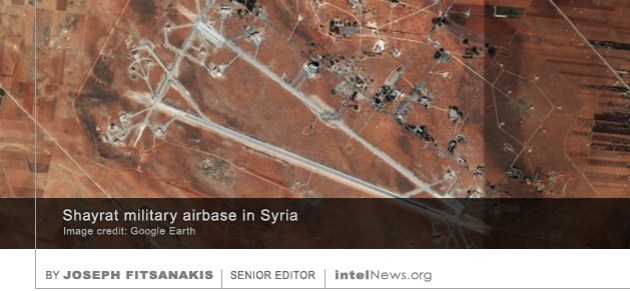 The nearly 60 Tomahawk missiles that the United States fired at Syria in the early hours of Friday local time were not the first. Nor were they the first that struck a Syrian government installation. In September of 2016, for example, a United States airstrike hit a
  given that Washington’s attack took place during the official visit to the United States by Xi Jinping, premier of China, another strong Syrian ally. Finally, it is worth considering possible Iranian responses to the US attack, especially if Iranian citizens end up on the casualty list.
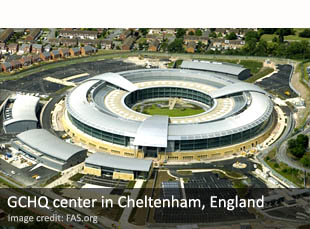 A new report authored by a consortium of government and private organizations in Britain has revealed the existence of a computer hacking operation, allegedly based in China, that is said to be “one of the largest ever” such campaigns globally. The operation is believed to have compromised sensitive information from an inestimable number of private companies in Southeast Asia, Europe and the United States. The
 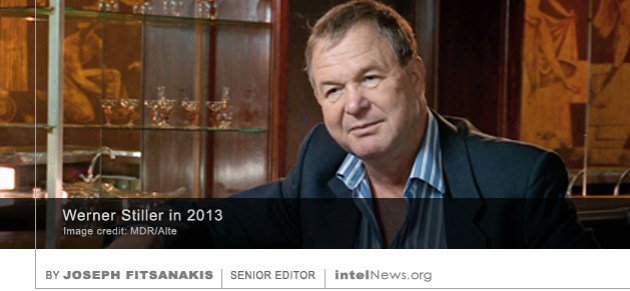 Werner Stiller, also known as Klaus-Peter Fischer, whose spectacular defection to the West in 1979 inflicted one of the Cold War’s most serious blows to the intelligence agency of East Germany, has died in Hungary. Stiller, 69, is believed to have died on December 20 of last year, but his death was not
  Relentless bureaucratic skirmishes between the White House and the United States Intelligence Community are occurring daily, with administration officials attempting to “seize the reins” of agencies, according to sources. The Associated Press
 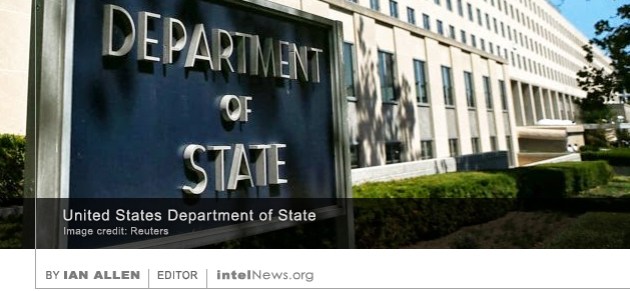 An employee of the United States Department of State has been charged with lying to authorities about her contacts with Chinese intelligence operatives, who gave her money and gifts in return for information. Candace Claiborne, 60, joined the Department of State in 1999 as an office management specialist. She lives in Washington, DC, but has served overseas in American diplomatic facilities in Baghdad, Iraq, Khartoum, Sudan, and China, where she was stationed in Beijing and Shanghai. According to information provided by the Federal Bureau of Investigation, Claiborne had a top security clearance, which required her to report contacts with foreign nationals.
 Earlier this week, it was
 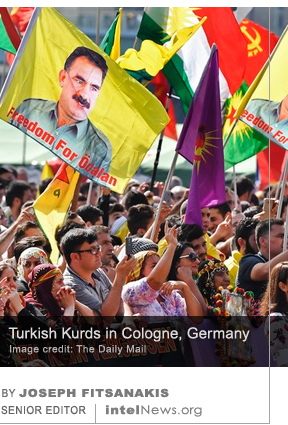 German intelligence and security agencies have publicly rejected a direct request made by Turkey’s intelligence chief to gather information on Turks who are living in Germany and are critical of the Turkish government. The request reportedly relates to attempts by the Turkish government to round up its critics, following a failed military coup in July of last year. The government of Turkish President Recep Tayyip Erdoğan accuses members of the so-called Gülen movement of orchestrating the coup, which included an armed attack on the country’s parliament and the murder of over 200 people across Turkey. The Gülen movement consists of supporters of Muslim cleric Fethullah Gülen, who runs a global network of schools, charities and businesses from his home in the United States. The government of Turkey has designated Gülen’s group a terrorist organization and claims that its members have stealthily infiltrated state institutions since the 1980s.
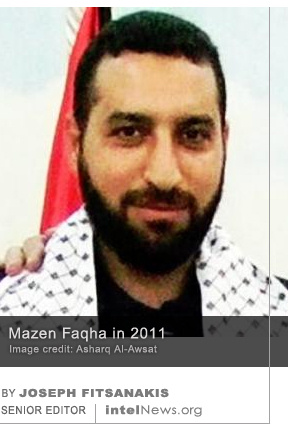 The sophistication behind the killing of a senior Hamas official, who was assassinated in his home in the Gaza Strip on Friday evening, points almost certainly to Israel, according to observers. Mazen Faqha, 38, helped plan several lethal operations by the Palestinian militant group, including a 2002 suicide bombing that killed nine and wounded over 50. Following an extensive manhunt, Israeli authorities arrested Faqha in the West Bank and in 2003 convicted him to nine life sentences. But in 2011, Faqha was among 1,027 Palestinian and Arab-Israeli prisoners that Israel released in exchange for Gilad Shalit, a soldier in the Israel Defense Forces, who was held prisoner by Hamas. Since that time, Faqha had lived in the Gaza Strip, the Hamas-controlled Palestinian enclave that has been under strict Israeli blockade since 2006.
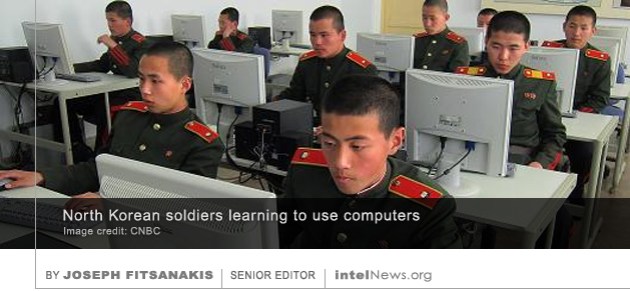 Comments made by a senior American intelligence official on Tuesday appeared to suggest that the North Korean government was behind an attempt to steal nearly $1 billion from a Bangladeshi bank last year. The heist took place in February of 2016, when a computer malware was used to issue several requests to transfer funds from Bangladesh Bank —the state-owned central bank of Bangladesh— using the SWIFT network. The hackers were able to transfer five separate sums of $101 million each to a linked Bangladesh Bank account at New York’s Federal Reserve Bank. However, when further requests were issued, Federal Reserve Bank employees contacted Bangladesh Bank and blocked further transactions. Eventually, most of the transferred funds, which neared $1 billion, were recovered; but the hackers managed to get away with approximately $81 million worth of funds.
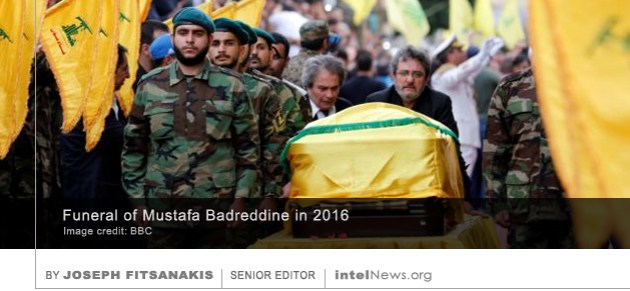 An Israeli military official has repeated claims in the Arab media that the Lebanese Shiite group Hezbollah killed its own military commander in Syria, following a dispute with Iran. Mustafa Amine Badreddine, 55, an expert in explosives and former bomb-maker, was a senior military commander in the military wing of Hezbollah. He rose through the ranks of the organization to become a trusted adviser to Hezbollah’s Secretary General, Hassan Nasrallah. In 2011, the Special Tribunal for Lebanon, set up by the United Nations, charged Badreddine with organizing the assassination of Lebanese Prime Minister Rafik Hariri. Hariri was killed with over 20 other people in a massive bomb blast in Beirut, in February of 2005.
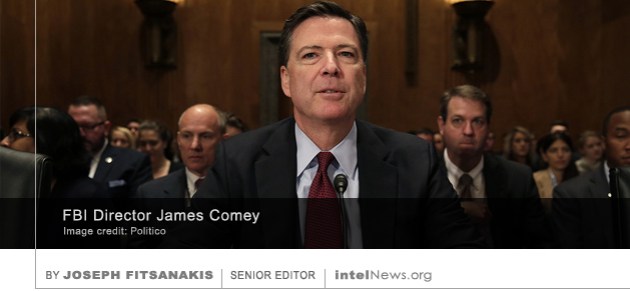 Monday’s official announcement that an investigation is underway into alleged Russian involvement in the 2016 United States presidential election was an important moment in American political history. It exposed the chaotic state of American politics and added yet another layer of complexity in an already intricate affair, from which the country’s institutions will find it difficult to recover for years to come. This is regardless of the outcome of the investigation, which is being conducted by the Federal Bureau of Investigation. Even if it fails to produce a ‘smoking gun’, the very fact that the country’s chief counterintelligence agency is examining the possibility that a US president was elected with help from Russia, is an astonishing development without parallel in modern American history.
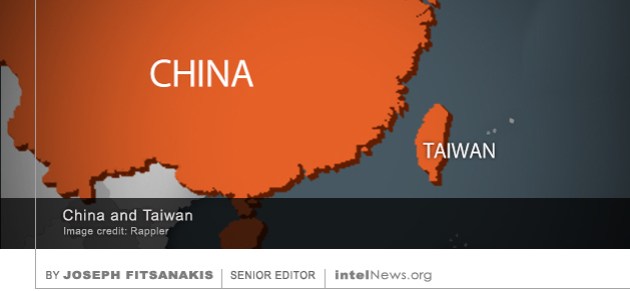 A Taiwanese government official has alleged that China maintains an army of more than 5,000 spies in Taiwan, many of whom have infiltrated the highest levels of government and industry. The allegation came after two sensational arrests were made in Taiwan last week, of people accused of spying for Beijing. Taiwanese counterintelligence officers reportedly arrested a bodyguard of Annette Lu, Taiwan’s former vice president. The bodyguard, who has been identified in Taiwanese media as Wang Hong-ju, has been charged with receiving payments from his Chinese intelligence handler in return for providing information about Mrs. Lu. This incident followed another arrest, made earlier in the week, this time of a Chinese man who is believed to have initially come to Taiwan as a student. Zhou Hong-xu is






 intelNews.org
Pristine Cold War-era wiretapping rooms uncovered in Slovenian hotel
April 13, 2017 by Joseph Fitsanakis 3 Comments
As the hotel’s reputation soared, the government of Yugoslavia began hosting foreign dignitaries there. Though socialist, the government of Yugoslavia never became an integral member of the communist bloc, preferring a policy of nonalignment. Because of that, it was courted by both East and West, with many Western leaders and other officials visiting the country regularly. On many occasions, they would use Hotel Jama as a retreat. Numerous world leaders stayed there with their entourage, escorted by Yugoslavia’s longtime communist leader Josip Broz, known commonly as Tito.
Today the hotel is situated on the territory of Slovenia, a small mountainous state of two million people, which declared its independence from Yugoslavia in 1991. The regional instability caused by the Yugoslav Wars of the 1990s nearly demolished Slovenia’s tourism industry, and Hotel Jama was forced to declare bankruptcy. In 2010, under new ownership, the hotel underwent major renovations. These were completed in 2016, when the hotel opened its doors to the public once again. It was during these renovations that construction crews discovered the surveillance rooms. The four compartmented rooms were found behind a large door made of steel at the back of the hotel, and are adjacent to a network of limestone caves, for which the area is famous.
News reports said the four rooms feature 1970s-era wiretapping equipment, most of which appears to be in pristine condition. There is a thick layer of dust over all the surfaces, which indicates that the rooms have not been used in several decades. The construction crews also found sets of cables that run from the surveillance compartments to several guest rooms in the hotel’s original wing that dates to the early 1970s.
Experts suggest that the rooms were built in the early stages of the hotel’s construction in the late 1960s. The equipment was probably operated by the State Security Service (SDB), Yugoslavia’s internal security police. It is believed that the surveillance facilities were used to facilitate the systematic wiretapping of foreign dignitaries and delegations that frequented the hotel during the Cold War. Hotel Jama’s administration said on Wednesday that there are plans to turn the surveillance rooms into part of an exhibit on the Cold War history of the establishment.
► Author: Joseph Fitsanakis | Date: 13 April 2017 | Permalink
Filed under Expert news and commentary on intelligence, espionage, spies and spying Tagged with communications interception, former Yugoslavia, Hotel Jama, News, Postojnska (Slovenia), Slovenia, wiretapping