North Koreans are studying nuclear physics in Japan, say human rights activists
December 23, 2016 Leave a comment
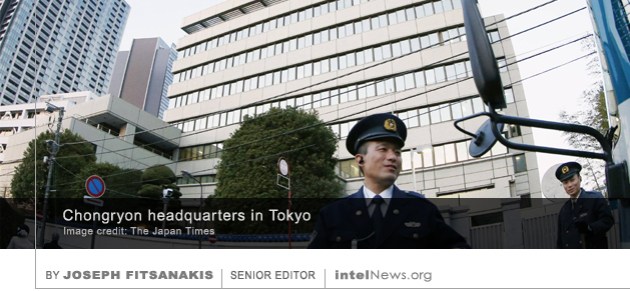 Students who have pledged allegiance to North Korea are being taught advanced courses in nuclear physics and control engineering in Japan, which violates United Nations sanctions, according to human rights campaigners. The students take classes at Korea University, a higher-education institution located in in Kodaira, a western suburb of the Japanese capital Tokyo. The University is funded directly by the government of North Korea through Chongryon, a pro-Pyongyang organization otherwise known as the General Association of Korean Residents in Japan. The group represents tens of thousands of ethnic Koreans living in Japan, who are ideologically affiliated with Pyongyang.
But an organization called Human Rights in Asia has accused the Korea University of offering advanced technical courses on subjects related to nuclear engineering. According to the organization, the courses directly violate UN sanctions aimed at preventing North Korea from further-developing its nuclear weapons program. Human Rights in Asia is a partner with Human Rights Watch, Amnesty International, Freedom House, and others, in a worldwide campaign calling itself the International Coalition to Stop Crimes Against Humanity in North Korea. The Japanese director of Human Rights in Asia, Ken Kato, claims that the Korea University curriculum directly violates the UN sanctions imposed on Pyongyang. His organization recently submitted a petition about the topic to the UN Security Council Committee pursuant to resolution 1718. The Committee was set up in 2006 to monitor sanctions placed on North Korea, after the country announced that it possessed nuclear weapons. The petition claims that the Korea University’s curriculum violates several paragraphs of the UN sanctions resolution, which forbid the provision of specialized teaching and training on subjects relating to nuclear science. The petition also accuses the Korea University of operating as “a center for North Korea’s espionage activities in Japan”.
In February of this year, authorities in South Korea arrested an associate professor of Korea University in Japan on espionage charges. Pak Chae Hun, 49, a citizen of Japan, allegedly operated as an intelligence handler for North Korean sleeper agents operating in South Korea, Japan and China. South Korean counterintelligence officials said they intercepted encrypted email messages sent to Pak from Japan. The messages allegedly contained instructions from Office 225 of the North Korean Workers’ Party Korea, which is tasked with overseeing the activities of sleeper agents operating in South Korea. Pak is also accused of having provided North Korean agents with telephone devices and ATM cards, which they used to withdraw cash from banks in South Asia.
► Author: Joseph Fitsanakis | Date: 23 December 2016 | Permalink
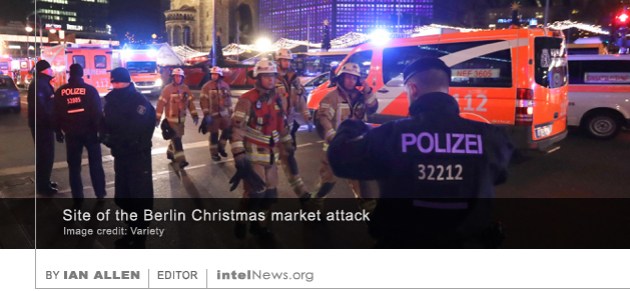 The central suspect in the Berlin Christmas market attack had been on the radar of German security agencies since January of this year, because he had links with radical Islamists and sought to buy guns for a terrorist attack. Anis Amiri, 23, left his native Tunisia in 2011, soon after the outbreak of the so-called Arab Spring there. He lived in Italy for three years before arriving in Germany in July 2015. In April of this year, he applied for an asylum in Germany. According to German authorities, Amiri was arrested multiple times in Tunisia for drug-related offenses. He is also believed to have used at least six different aliases since moving to Europe, and to have claimed to be a citizen of Lebanon and Egypt at different times.
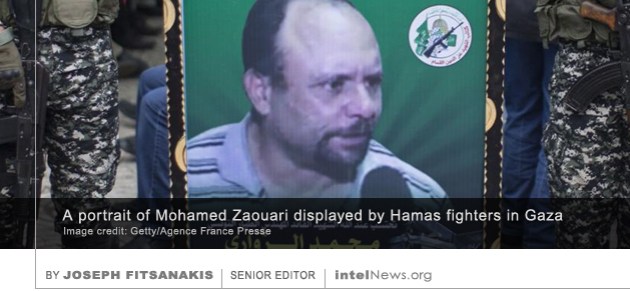 Despite persistent silence from Tel Aviv, commentators there seem increasingly convinced that Israeli spies were behind last week’s killing of an aviation engineer who worked for the Palestinian militant group Hamas. The man, Mohamed Zaouari, 49, was a Tunisian national who had spent over a decade creating an innovative aerial drone program for the Palestinian group that controls the Gaza Strip. He was
  A senior aviation engineer who headed the unmanned aerial vehicle program of the Palestinian militant group Hamas, has been shot dead outside his home in Tunisia by a group of assailants using gun silencers. Mohamed Zaouari, 49, was a Tunisian national who had spent over a decade creating an innovative aerial drone program for Hamas, the Palestinian group that today controls the Gaza Strip. He had lived outside of Tunisia for much of his life, most recently in Syria, where he is believed to have worked as an engineer in a private firm, while also consulting with the Palestinian group. He had returned to Tunisia in 2011, following the upheaval in the country that sparked the so-called Arab Spring.
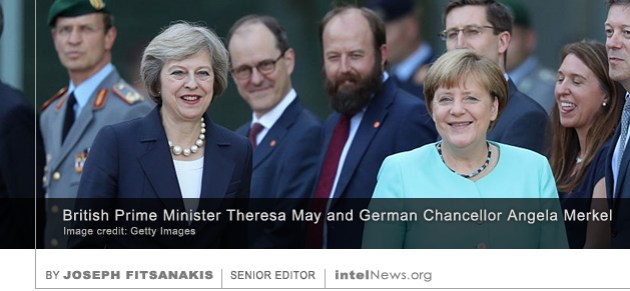 A reported discord between British and German intelligence services, which began in 2014, allegedly persists and now constitutes the “biggest rift between [the] secret services” of the two countries “since World War II”. According to British newspaper The Daily Mail, the Germans accuse Britain of working with the United States to spy on Berlin, while the British government says German intelligence agencies cannot be trusted to safeguard classified information. In an
 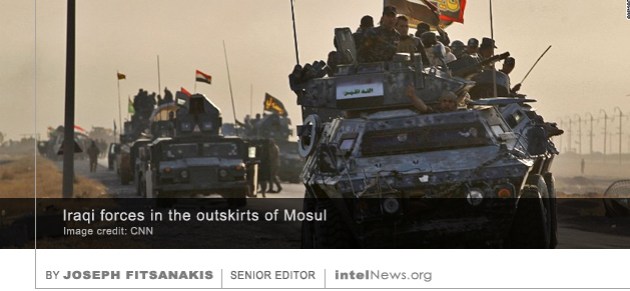 Western military and intelligence agencies are deploying extra analysts to comb through unprecedented amounts of digital data collected from Iraqi regions that have recently been recaptured from the Islamic State. The information is contained in thousands of laptops, hard drives, flash drives and cell phones left behind by retreating Islamic State forces in and around the northern Iraqi city of Mosul.
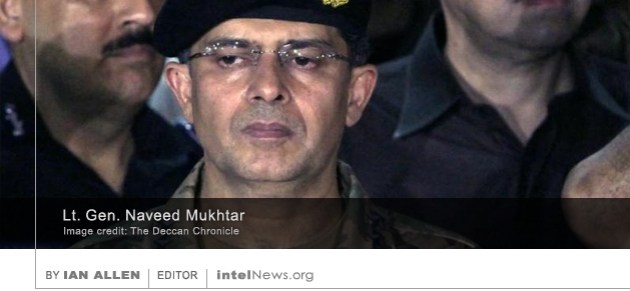 A new director, with considerable experience in counterterrorism, has been appointed to lead Pakistan’s Inter-Services Intelligence (ISI), believed by some to be one of the most powerful spy agencies in the world. Pakistan’s Ministry of Defense announced on Sunday that Lt. Gen. Naveed Mukhtar will be replacing Lt. Gen. Rizwan Akhtar, who has led the ISI since November of 2014. The
  No person familiar with the theory and practice of intelligence will be shocked by allegations that Russia interfered in the recent American presidential election. On the contrary, the claim will strike experienced observers as a textbook case of covert operation —an intelligence activity designed to influence foreign political, military or economic developments. Far from being physically violent, most covert operations involve actions like secretly funding political parties, planting misinformation or propaganda in foreign media outlets and —in more extreme cases— bribing or extorting key political actors. During the Cold War, hardly a national election took place without attracting the
 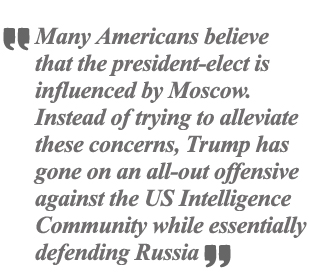 in last month’s US election. Indeed, the opposite would be strange.
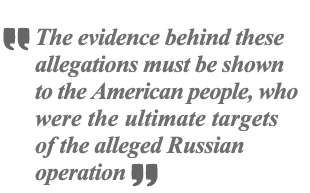 candidates. This was about the reputation of the American electoral process. In fact, the primary goal of Russia’s involvement in the US election —which, again, must be presumed— was not to empower a particular candidate, but to weaken the reputation of American political institutions as a whole. Those who claim that the Kremlin tried to promote Trump because the Republican candidate appears to be more favorably disposed toward Russia are wrong. They misunderstand the complex nature of Russian-American relations and underestimate Russian strategy. Moscow understands that its bilateral relationship with Washington rests on a set of longstanding geopolitical variables and does not depend on ephemeral personal relations between individual leaders. Furthermore, the Kremlin views Trump as an inherently unpredictable actor that is not to be trusted. The Russian plan, therefore, was not to help elect Trump. Rather, it was to sow mistrust between American –and by extension Western– civil society and its political institutions. Given the challenges currently being faced by European and American democracy, that is not a far-fetched goal.
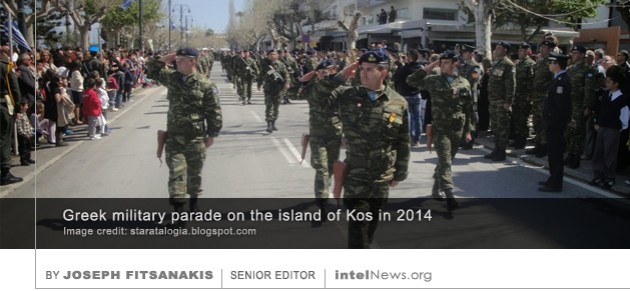 A German retiree living in Greece, who admitted in court that he was part of a network of German and other Western European residents of Greece recruited as spies by Turkish intelligence, has been jailed for 14 years. The 65-year-old man, who has not been named, was arrested two years ago in the southeastern Aegean island of Kos. He was born in Cold-War-era East Germany and worked as a locksmith before serving for 15 years in the East German National People’s Army. From 2009 to 2012, he lived in Turkey before moving permanently to Greece.
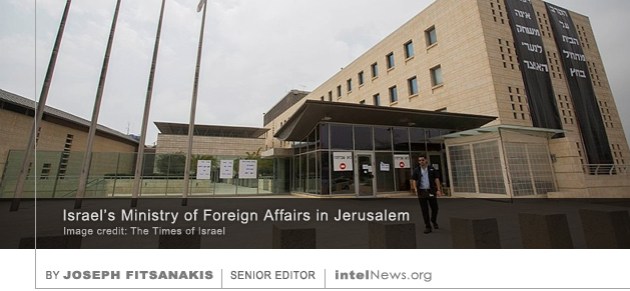 Documents accessed by a French newspaper show that American and British intelligence agencies worked together to spy on diplomats, academic researchers and defense contractors in Israel and the Palestinian territories. Last year, the German newsmagazine Der Spiegel and the American newspaper The Wall Street Journal
 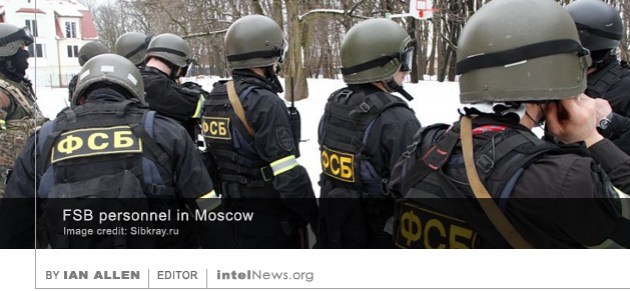 Russian authorities say they prevented a large-scale cyber attack by “a foreign intelligence service”, which had been designed to destabilize the country’s financial system and subvert its economy. In an official
 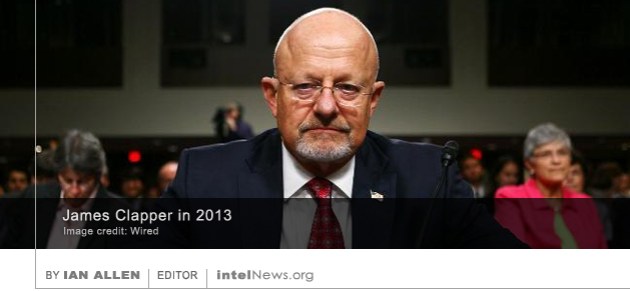 The United States’ senior intelligence officer has told Congress that new legislation requiring spy agencies to act against alleged Russian covert operations constitutes “micromanagement” of the American Intelligence Community. The Intelligence Authorization bill, which includes a number of intelligence-related requirements and provisions, is debated and enacted each year by Congress. This year’s legislation has already been approved by the intelligence committees of the Senate and House of Representatives. Last week it was enacted by the House, while the Senate is preparing to debate it this week.
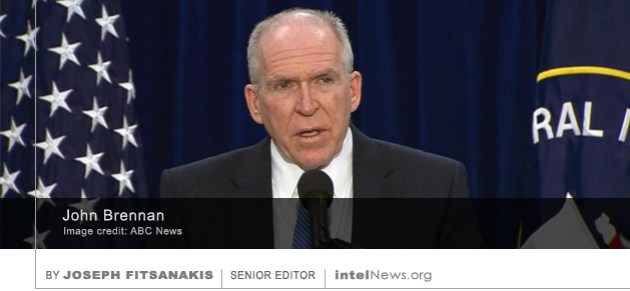 The outgoing director of the United States Central Intelligence Agency has warned in an interview that it would be “disastrous” for Washington to abandon a nuclear treaty with Iran, which was agreed in 2015. John Brennan is a career intelligence officer and fluent Arabic speaker, who has served in the CIA for 25 years. He was appointed director of the agency in March of 2013 by President Barack Obama and is scheduled to leave the position in January of 2017, after nearly four years at the helm of the CIA.
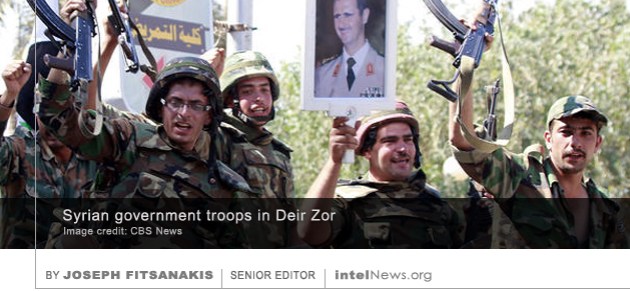 Ever since 2011, when the Syrian Civil War erupted, Turkey has refrained from directly intervening in the conflict, other than to provide material support to opponents of Syrian President Bashar al-Assad. The hope in Ankara was that Islamist and pro-Assad forces would exhaust each other. There is no evidence that Turkey was at any point seriously alarmed about the rise of Sunni militancy in Syria. Instead, the Turkish government of President Recep Tayyip Erdoğan made no secret of its primary concern, which was the rise of Kurdish nationalism in northern Syria.






 intelNews.org
Analysis: Boko Haram insurgency far from over, despite Nigerian claims
December 27, 2016 by Joseph Fitsanakis 2 Comments
Boko Haram emerged as a public-pressure group in predominantly Muslim northeastern Nigeria in 2003, stating multiple grievances against the corruption and nepotism of Nigeria’s ruling elite. In 2009, the group launched an armed insurgency against the government, with the stated aim of establishing an Islamic state ruled by sharia (Quranic law) in Nigeria’s northeast. In 2015, Boko Haram’s leader, Abubakar Shekau, pledged the group’s allegiance to the Islamic State of Iraq and Syria and announced the establishment of “Islamic State West Africa Province”. Since then, the group has continued to fight the Nigerian military in a seven-year war that has killed more than 15,000 people and displaced two million more. The United Nations estimates that at least 14 million people in the Lake Chad region have been affected by the war and in immediate need of significant humanitarian assistance.
By early 2014, Boko Haram had managed to drive out all Nigerian government presence from the country’s northeastern Borno state and control an area of approximately 12,000 sq. mi. At that time, however, the Nigerian military, in association with Chadian and Nigerien forces, launched Operation LAFIYA DOLE, with the aim of recapturing Boko Haram’s territory. The operation involves thousands of Nigerian, Chadian and Nigerien ground forces, as well as airplanes and even construction crews, who built dirt roads leading deep into the Sambisa Forest in search of Boko Haram’s camps. As government forces have been advancing on all sides, Boko Haram fighters have retreated deeper into the 500-sq. mi. forest. On Saturday, the Nigerian president announced that government troops sacked Boko Haram’s “Camp Zero” and that the insurgents were desperately fleeing into the surrounding areas. There was no word about the fate of Shekau, the group’s leader. Read more of this post
Filed under Expert news and commentary on intelligence, espionage, spies and spying Tagged with Africa, Analysis, Boko Haram, Joseph Fitsanakis, Nigeria, Operation LAFIYA DOLE