Leaked EU intelligence report says Islamists were not behind Turkey coup
January 18, 2017 Leave a comment
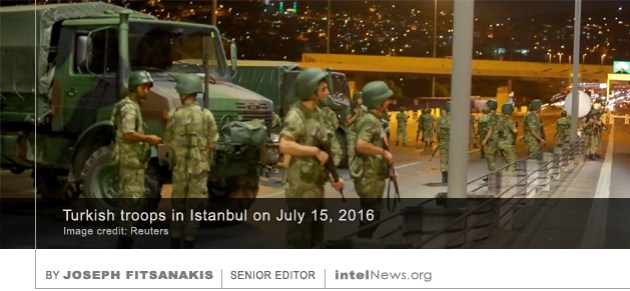 A leaked report by a European Union intelligence body states that Islamist forces were not behind last July’s failed coup in Turkey, and that the ruling party used the coup to neutralize its few remaining political rivals. The government of Turkish President Recep Tayyip Erdoğan accuses members of the so-called Gülen movement of orchestrating the coup, which included an armed attack on the country’s parliament and the murder of over 200 people across Turkey. The Gülen movement consists of supporters of Muslim cleric Fethullah Gülen, who runs a global network of schools, charities and businesses from his home in the United States. The government of Turkey has designated Gülen’s group a terrorist organization and claims that its members have stealthily infiltrated state institutions since the 1980s.
But a report compiled by the EU Intelligence and Situation Centre, known as IntCen, states that Gülenists had nothing to do with the coup, and that the current crackdown against them by the government was planned years in advance. Founded in 2012, IntCen is the intelligence-sharing body of the EU. Its reports are the results of collaborative efforts of intelligence officers from all EU states. They are distributed on a confidential basis to senior EU officials and to the ambassadors of EU states in Brussels, Belgium. The report on the coup in Turkey is entitled “Turkey: The Impact of the Gülenist Movement”. It was issued on August 24 and is marked “confidential”. But it was accessed by British newspaper The Times, which published extracts on Tuesday.
According to the leaked document, it is “unlikely” that the Gülen movement had the “capabilities and capacities” to launch a coup against Erdoğan. It is even more unlikely, it suggests, “that Gülen himself played a role” in the operation. A far more plausible explanation is that the coup was launched by a relatively small group of Kemalists (secular Turks who oppose President Erdoğan’s religiously-based politics), some Gülenists, and various opportunists within the ranks of the military. Once the coup began to unfold, a few low-level military officers with Gülenist sympathies may have “felt under pressure” to participate in order to ensure its success. That was mostly because they knew that, if the coup failed, the Erdoğan government would go after them and accuse them of staging it, states the report.
Indeed, once the coup failed, the Erdoğan administration launched a coordinated campaign designed to dismantle the Gülen movement, which was its “one and only real rival” in Turkey. Since the end of the failed coup, the Turkish state has initiated a nationwide political crackdown against alleged supporters of the coup. An estimated 100,000 people have been fired from their jobs, while hundreds of thousands have been demoted, censured or warned. Another 35,000 are believed to be in prison, charged with supporting the failed coup or with being members of the Gülen network. But the IntCen report suggests that the crackdown against Erdoğan’s opponents had been conceived and designed years in advance. Last July’s coup acted as a catalyst and was “exploited” by the government to neutralize all its political opponents, says IntCen. The lists used to arrest individuals across the country had been complied by the Turkish intelligence services many years ahead of the failed coup, according to the IntCen report.
► Author: Joseph Fitsanakis | Date: 18 January 2017 | Permalink
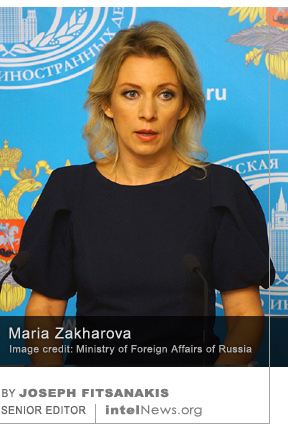 A senior Russian official has accused the United States Federal Bureau of Investigation of trying to blackmail a Russian diplomat who was attempting to purchase anti-cancer drugs in an American pharmacy. The allegation was made Sunday on live Russian television by Maria Zakharova, spokeswoman for Russia’s Ministry of Foreign Affairs. She was being interviewed on Sunday Night with Vladimir Solovey, a popular politics roundtable show on Russia’s state-owned Rossiya 1 television channel. Zakharova told Solovey that, a few years ago, the Russian government authorized one of its diplomats in the United States to purchase several thousand dollars’ worth of anti-cancer drugs. The drugs were to be used by Yevgeny Primakov, Russia’s prime minister in the late 1990s, who was battling liver cancer.
 The intelligence agency of New Zealand has issued a report warning that the country is being targeted by foreign spies who operate using fake covers. Many of them aim to infiltrate some of the highest levels of the government, according to the agency. The warning appeared in the annual report of the New Zealand Security Intelligence Service (NZSIS), the country’s main national intelligence organization, which is responsible for intelligence, counterintelligence and counter- terrorism. The NZSIS’
 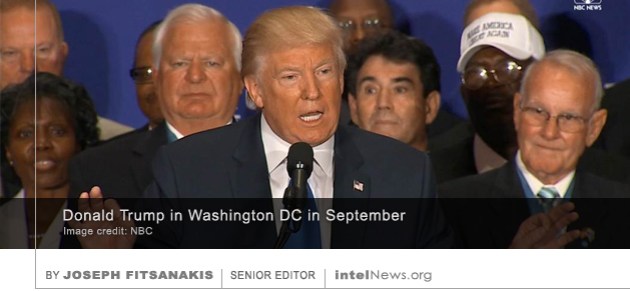 American intelligence officials allegedly warned their Israeli counterparts not to share intelligence with Washington once Donald Trump becomes president of the United States. The reason was that, according to the US officials, there was no guarantee that the intelligence would not be leaked to Russia. There was also the danger, they claimed, that the compromised intelligence would end up in the hands of Russia’s ally Iran, a regional adversary of Israel. The claim was
 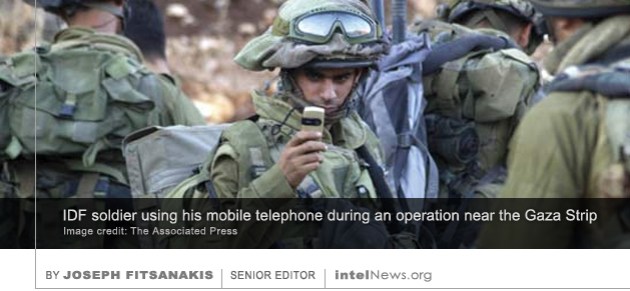 The Israel Defense Forces told a press conference on Wednesday that hackers belonging to the Palestinian militant group Hamas lured Israeli soldiers by posing as young women online. Wednesday’s press conference was led by an IDF spokesman who requested to remain anonymous, as is often the case with the Israeli military. He told reporters that the hackers used carefully crafted online profiles of real Israeli women, whose personal details and photographs were expropriated from their publicly available social media profiles. The hackers then made contact with members of the IDF and struck conversations with them that in many cases became intimate over time. At various times in the process, the hackers would send the Israeli soldiers photographs of the women, which were copied from the women’s online public profiles.
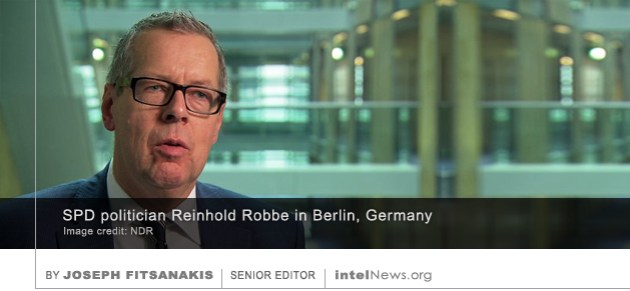 Authorities in Germany have pressed espionage charges against a Pakistani man who allegedly spied for Iran and even compiled lists of potential targets for assassination. The man, who has been identified in media reports only as “Syed Mustafa H.”, is a 31-year-old worker at the German Aerospace Center in the northern German city of Bremen. He is also reportedly a graduate of the Materials Science and Production Engineering department of the Universität Bremen. According to court documents, he is believed to have been spying for Iranian intelligence since the summer of 2015. It appears that the Federal Office for the Protection of the Constitution (BfV), Germany’s domestic intelligence agency, had been aware of the man’s espionage activities for at least a year prior to his arrest.
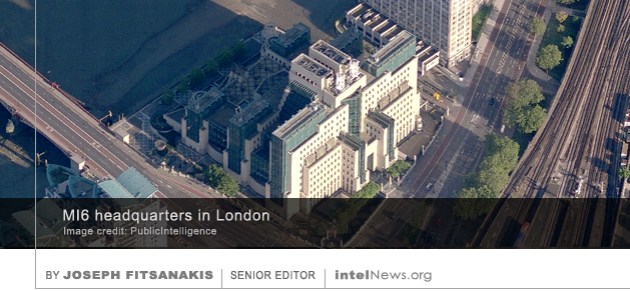 British intelligence agencies gave their United States counterparts an early warning about Russian attempts to influence the outcome of the American presidential election, according to The New York Times. The American newspaper
 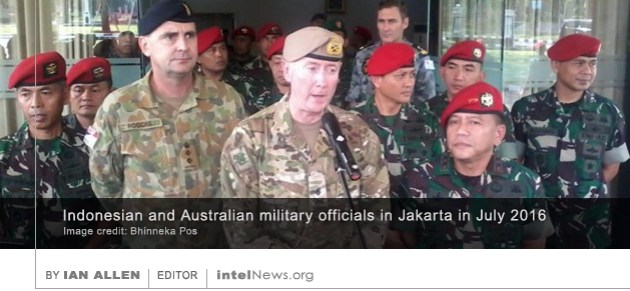 The Indonesian military has halted all forms of cooperation with the armed forces of Australia, with some media reports suggesting that the decision was prompted by fears of espionage. Indonesia and Australia have held joined military training sessions for many decades. In recent weeks, members of the Kopassus, the elite special forces of the Indonesian military, were training on a base in Perth, Australia, with their counterparts in the Australian Special Air Service. On Wednesday, however, the Indonesian government
 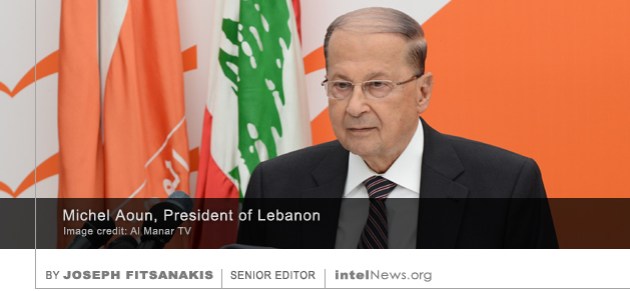 The president of Lebanon said on Wednesday that Israeli intelligence was behind the killing of a Lebanese businessman who was shot dead by a team of assailants last weekend in southwestern Africa. Amine Bakri, 54, who was from southern Lebanon, had lived and worked in Angola since his mid-20s. He was a well-known businessman in the Angola capital Luanda, where he owned a number of factories that make furniture and various medical equipment. On Sunday, Bakri was driving on an unpaved road in the Angolan capital, when his vehicle was ambushed by a group of three armed assailants. According to media reports, one of the men shot the windshield of Bakri’s car and then proceeded to shoot him in the head at close range. The men fled the scene and Bakri was transported to a local hospital, where he soon died from his wounds.
 A man at the center of the first case of Chinese nuclear espionage in United States history will be pleading guilty on Friday, according to court documents. This could mean that the alleged spy has decided to give the Federal Bureau of Investigation (FBI) details of Chinese nuclear espionage in the US. The accused man is Szuhsiung ‘Allen’ Ho, a Taiwanese-born engineer and naturalized American citizen. Ho was arrested by the FBI in April on charges of sharing American nuclear secrets with the government of China.
 Since 2008, when we launched intelNews, it has been our end-of-the-year tradition to take a look back and highlight what we think were the most important intelligence-related stories of the past 12 months. In anticipation of what 2017 may bring in this highly volatile field, we present you with our selection of the top spy stories of 2016. They are listed below in reverse order of significance. This is part two in a two-part series; you can access part one
  There had been rumors for some time about a possible expulsion of Russian diplomats from the United States, in response to alleged Russian interference in the 2016 US Presidential election. The White House confirmed the rumors on Thursday morning, by
  Since 2008, when we launched intelNews, it has been our end-of-the-year tradition to take a look back and highlight what we think were the most important intelligence-related stories of the past 12 months. In anticipation of what 2017 may bring in this highly volatile field, we present you with our selection of the top spy stories of 2016. They are listed below in reverse order of significance. This is part one in a two-part series; part two is
  United States President Barack Obama has signed a new law that designates $160 million to set up a government center for “countering foreign propaganda and disinformation”. The law authorizes the US departments of State and Defense to work with other federal agencies in establishing the new body. Its precise tasks are not yet known, nor is the role in it —if any— of intelligence agencies, though the Director of National Intelligence is mentioned in the






 intelNews.org
Pakistani doctor who helped CIA find bin Laden will stay in jail, says Islamabad
January 19, 2017 by Joseph Fitsanakis 1 Comment
A Pakistani doctor who helped the United States find al-Qaeda founder Osama bin Laden in 2011 will remain in prison, despite calls by Washington to have him released, according to a government official in Islamabad. Dr Shakil Afridi was arrested in 2011, soon after bin Laden was killed during a Central Intelligence Agency operation in a residential compound in the city of Abbottabad, located 70 miles north of the Pakistani capital. In the weeks following the CIA raid, it emerged that a team of local doctors and nurses had helped the American agency in its efforts to confirm bin Laden’s presence in the compound. The team of nearly 20 healthcare workers participated in a fake vaccination scheme carried out in Abbottabad, whose true purpose was to collect DNA samples from residents of the compound where the CIA believed bin Laden was hiding.
In February 2012, the then CIA Director, Leon Panetta, publicly admitted that the vaccination scheme had been funded by the CIA. By that time, Pakistani authorities had fired 17 healthcare workers who had participated in the CIA scheme and arrested its head, Dr. Afridi. Prior to his arrest, Dr. Afridi was employed as a surgeon by the government of the Khyber Agency, a Federally Administrated Tribal Area along Pakistan’s border with Afghanistan. Bizarrely, Dr. Afridi was arrested for having alleged links with an Islamist group that operates in the region, known as Lashkar-e-Islam. In 2012, he was given a 33-year sentence for having links with terrorist groups. When his conviction was quashed in 2013, the doctor was ordered to remain in prison, and faced new charges, this time for alleged medical malpractice, which, according to the prosecution, resulted in the death of one of his patients.
Many American officials believe that the real reason for Dr. Afridi’s arrest is his collaboration with the CIA. In May of last year, Donald Trump said that, if elected US president, he would make Pakistan free Dr. Afridi, saying characteristically that he could achieve that “within two minutes”. But his comments prompted a strong response from Islamabad. On Tuesday, Pakistan’s Minister for Law and Justice, Zahid Hamid, reiterated that Dr. Afridi would not be freed just because Washington wishes it. Speaking in response to a question from a member of the Pakistani Parliament’s upper house, Hamid said that Dr. Afridi “worked against [Pakistani] law and our national interest” and would face a trial, as planned, despite Trump’s pre-election pledge. There was no comment yesterday from the US president-elect’s team.
► Author: Joseph Fitsanakis | Date: 19 January 2017 | Permalink
Filed under Expert news and commentary on intelligence, espionage, spies and spying Tagged with Abbottabad (Pakistan), CIA, News, Pakistan, Shakil Afridi, United States