Son of senior CIA official dies ‘fighting for Russia’ in Ukraine

CIA Directorate of Digital InnovationA 21-YEAR-OLD American citizen, whose mother is a senior Central Intelligence Agency (CIA) official, died while fighting with the Russian military in Ukraine in 2024, according to a news report. Late last week, the CIA confirmed the accuracy of the story while requesting that the media afford the bereaved family “privacy at this difficult time”.

On April 25, the independent Russian media website Important Stories (known as iStories) claimed that Michael Gloss, 21, the son of CIA Deputy Director for Digital Innovation Gallina Gloss, had “died within the borders of Ukraine” while fighting for the Armed Forces of the Russian Federation. Although his death had occurred in April 2024, the information about his American citizenship and his connection to the CIA had been kept from the media until the iStories report disclosed it to the public.

Later on the same day, a spokesperson for the CIA told NBC News that the spy agency was aware of the incident, which had been treated “as a private family matter for the Gloss family, not a national security issue”. The CIA spokesperson added that Michael Gloss had “struggled with mental health issues” and relayed the Gloss family’s wish for “privacy at this difficult time”.

According to iStories, Michael Gloss voiced strong support for Ukraine early in the Russo-Ukrainian war. He eventually traveled to Europe on his own, joining the Rainbow Family, a modern-day hippie movement with roots in late-1960s counterculture. Gloss eventually traveled across Turkey, where he reportedly began posting increasingly pro-Russian messages and strong criticism of the United States on his social media accounts.

In the summer of 2023, Gloss began posting stories and images from Russia. In one instance, he stated in a social media post that he had decided to “defeat mortality and the military-industrial complex”. Shortly afterwards he enlisted in the Russian army and began posting photos and videos from his military training alongside other international volunteers. He also began participating on Russian social media platforms, such as VKontakte, where he expressed strong support for the Russian war effort and blasted what he referred to as “Western propaganda” about Ukraine and its government.

According to iStories, Michael Gloss “died within the borders of Ukraine”, though it is not known whether he participated in any fighting. An obituary published by his family in the United States makes no mention of his enlistment in the Russian military, stating only that he was “tragically killed in Eastern Europe on April 4, 2024”, while “forging his own hero’s journey”.

Author: Joseph Fitsanakis | Date: 28 April 2025 | Permalink

Leaked documents reveal plans for extensive Russian influence campaign in Israel

2023 Israeli judicial reform protestsLEAKED INFORMATION PUBLISHED BY leading German media outlets has revealed Russia’s plans for an influence campaign targeting Israel. The information was leaked earlier this month by the German newspaper Süddeutsche Zeitung and German television stations Norddeutscher Rundfunk (NDR) and Westdeutscher Rundfunk (WDR), as well as by Israeli news outlets. It allegedly came from Social Design Agency (SDA), a Moscow-based firm hired by the Kremlin, which operates in Israel and several countries in the West.

Founded in 2017, the SDA is reportedly one of a host of firms and organizations that are collaborating with Russian intelligence in its efforts to influence public opinion worldwide. Earlier this year, the United States imposed sanctions on SDA, “for providing services to the government of Russia in connection with a foreign malign influence campaign”. The SDA’s founder is Ilya Gambashidze, who is said to be in direct contact with Russian President Vladimir Putin and other Kremlin officials.

Israel has been a central target of SDA’s Russian influence campaign. The country’s internal situation, with mass demonstrations against the legal reform is “perfect for launching a campaign to influence public opinion”, an SDA document from 2023 reads. The document accurately describes the political and social situation in Israel and names a number of influential Russian expatriates whose activities should be monitored.

According to the leaked documents, the purpose of the planned campaign was to raise support for Russia in its war against Ukraine, and strengthen the proportion of Israelis who espouse anti-Ukrainian sentiments. Another central goal was to ensure that no party in the Knesset —the IsraeliQ Quote parliament— would support a possible transfer of military aid to Ukraine.

From the documents, it appears that the conclusions formulated by the SDA were infused into around 50 cartoons distributed every month on social networks, around 20 fictitious articles appearing on websites pretending to be legitimate, and many reactions on various social networks. Among other things, the company distributed through paid ads on Facebook cartoons showing Ukrainian President Volodymyr Zelensky burning the Israeli flag, as well as cartoons accusing Israeli leftists of supporting Hamas.

One of the main revelations of the recent leaks is that the Arab community in Israel constitutes a target of the Russian influence campaign. For example, a fake Arabic-language article that was circulated online claimed that Israel did not have in its possession enough precision weapons, because it had given them to Ukraine. The article went on to claim that the lack of such weapons would lead to failures on the battlefield. “The good news should be heard by all believers living under occupation”, the article states. “The policy of the occupation government will soon lead to its defeat. We will wait for a spark to ignite our war of liberation, in which the entire Muslim world will support us”. The purpose of the article appears to be to prompt the Israeli-Arab population to turn against the Israeli government based on Israel’s alleged weakness, and to support Israel’s enemies. Read more of this post

Russia uses merchant navy fleet for intelligence operations in North Sea, study reveals

undersea telecommunications cable

HUNDREDS OF RUSSIAN MERCHANT ships have been utilized by the Kremlin for over a decade to carry out intelligence operations in the North Sea, a major new investigation has revealed. Belgian newspaper De Tijd and the investigative journalism website Follow the Money (FTM) carried out the joint investigation, using data provided by Global Fishing Watch, a Google-based international nonprofit organization that gathers information on commercial fishing activities worldwide.

Encompassing 220,000 square miles, the North Sea lies between France, Belgium, the Netherlands, the United Kingdom, Norway, Denmark, and Germany. It hosts many of the world’s major shipping lanes, an extensive network of energy pipelines, as well as key undersea communication cables. The development of large-scale offshore energy production has further-augmented the significance of the North Sea for the security of Europe in recent years. The strategic value of the North Sea has become even clearer since the onset of the Russo-Ukrainian war in 2014.

According to the De Tijd/FTM study, the Russian government has been highly active in the North Sea through a variety of stealthy means –primarily by deploying civilian vessels to collect intelligence and possibly even carry out sabotage operations. The study focused on 1,012 Russian-flagged non-military vessels that have been active in the North Sea since 2014. These consist of oil tankers, scientific research vessels, fishing boats, cargo ships, and even privately owned yachts.

The study identified 60,000 loitering events involving these Russian vessels. In the shipping domain, the term ‘loitering event’ refers to vessels that deviate from their normal route, reduce speed for no obvious reason, drift aimlessly, or circle around a location that may initially appear arbitrary. Loitering and other such peculiar behavior by merchant ships makes no economic sense, as it requires more fuel and results in added compensation for crews. Notably, close to 1,000 loitering events by nearly 170 different Russian ships were found to have taken place within less than a mile from an underground cable or energy pipeline. Read more of this post

Poland and Germany charge Russian operatives with assassination, sabotage plots

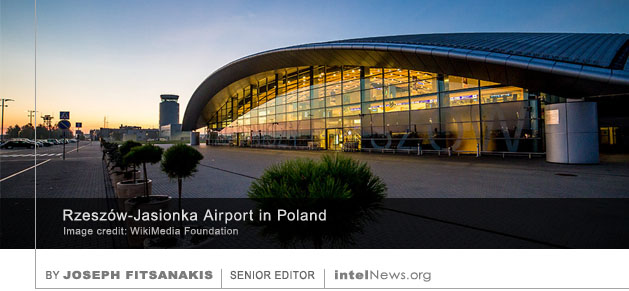
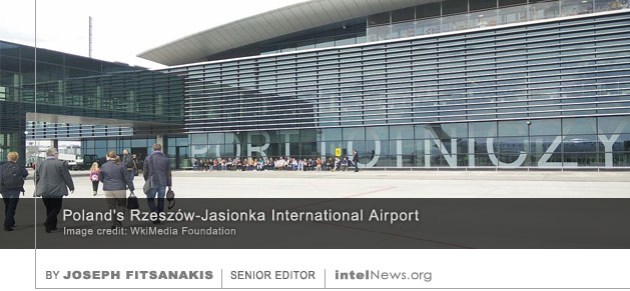
Rzeszów-Jasionka AirportAUTHORITIES IN GERMANY and Poland have charged three individuals with working on behalf of Russian military intelligence in planning acts of sabotage and assassination on European soil. One of the plots allegedly involved an effort to assassinate Ukrainian President Volodymyr Zelenskyy. Another aimed to sabotage commercial airport facilities that are being managed by the United States military.
Polish and Ukrainian authorities announced last week the arrest of Paweł K., a Polish citizen, who is believed to have been engaged in collecting information about the security of the Rzeszów-Jasionka Airport. Located in southeastern Poland, Rzeszów-Jasionka is a relatively small provincial airport. Its proximity to the Ukrainian border has made it central to efforts by Kyiv’s allies to supply it with war materiel following the expansion of Russia’s occupation of Ukraine in February 2022. Military supplies are transported to Rzeszów-Jasionka from across the world and then transferred across the Ukrainian border with trucks. Additionally, many high-level meetings between Ukrainian and Western officials take place at the airport. The United States military is currently providing security at the Rzeszów-Jasionka Airport.

Polish authorities said last week that Paweł K. was part of a Russian intelligence collection operation that was “intended to assist in the planning of a potential assassination of a foreign state leader”, namely President Zelenskyy. The Security Service of Ukraine (SBU) said it informed its Polish counterpart agency about the assassination plot, which had been foiled “as a result of the close co-operation” between Ukrainian and Polish intelligence. Paweł K. is not a diplomat and thus has no immunity from prosecution in Poland. If convicted, therefore, he could face up to eight years in prison.

In a seemingly unconnected development, police in the southeastern German state of Bavaria arrested two dual German-Russian nationals, who have been charged with planning to sabotage military and industrial facilities on German soil. The plot appears to be part of broader Russian efforts to disrupt the production and delivery of military aid to Ukraine. At least one of the locations that the suspects are accused of targeting is a local military base under the command of the United States. The two suspects have been identified as Dieter S., 39, and Alexander J., 37. Both were arrested in the small city of Bayreuth.

Germany’s Federal Foreign Office, led by Minister Annalena Baerbock, summoned Sergei Nechayev, Russian Ambassador to Berlin, shortly after the arrest of Dieter S. and Alexander J. Some media reports noted the “unusually hasty” way Nechayev was summoned, which may indicate that German authorities have acquired “unequivocal proof of the link between the plot and the Kremlin”. An announcement made by the Russian embassy in Berlin confirmed that Nechayev had been summoned in connection to the arrests, but added that the ambassador had been presented with “no proof” that the two suspects were connected with Russian intelligence or that they had planned acts of sabotage.

Author: Joseph Fitsanakis | Date: 22 April 2024 | Permalink

Ukraine’s spy services are using assassinations as weapons or war, report claims

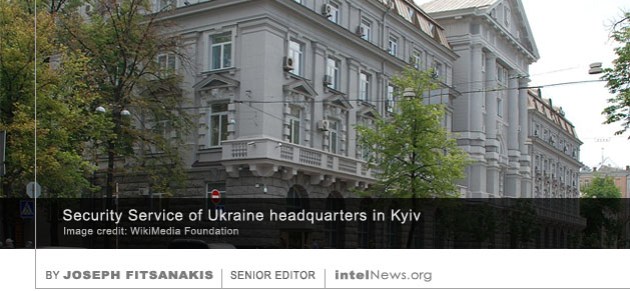
Security Service of Ukraine SBUTHE GROWING LIST OF assassinations of prominent Russians and Ukrainian separatists shows that the Ukrainian intelligence services are using “liquidations” as a weapon of war, according to The Washington Post. Citing “current and former Ukrainian and United States officials”, the paper said on Monday that funding and training by the Central Intelligence Agency (CIA) explains much of the success of Ukraine’s covert operations against Russia. However, the CIA is not involved in Ukraine’s state-sponsored assassination efforts at the operational level, and some US officials are uneasy about these activities.

A CIA Spy Directorate in Ukraine

In 2014, when Russia invaded Crimea, Ukrainian intelligence services were in an almost paralytic state. Like most of Ukraine’s state sector, the intelligence agencies were endemically bloated and closely resembled Soviet-style bureaucracies in sluggishness and corruption. More importantly, they were “riddled with Russian spies, sympathizers and turncoats”, according to observers. Few were surprised when, almost as soon as Russia annexed Crimea, the local head of the domestic security agency, the Ukrainian Security Service (SBU) defected to Russia.
According to The Washington Post, immediately after the Russian invasion of Crimea, the CIA sought to prevent further Russian encroachment in Ukraine. That is why in 2015 it built the SBU’s Fifth Directorate. That entirely new directorate was —and today remains— insulated from the rest of the SBU. The CIA also reportedly built a new division, complete with a brand-new headquarters building, inside Ukraine’s Main Directorate of Intelligence (GUR), which operates as the intelligence wing of the Ministry of Defense.

Active-Measures Training

Seeing the GUR as a more agile and flexible agency than the SBU, the CIA began to train GUR paramilitary “spetsnaz” divisions in “active measures” —a term that describes methods of political warfare, ranging from propaganda, sabotage operations, and even assassinations. However, The Washington Post claims that the CIA training focused on “secure communications and tradecraft” with an eye to enabling GUR teams to operate covertly behind enemy lines using clandestine maneuvers. Targeted assassinations were not included in the training. Read more of this post

German spy services had foreknowledge of Wagner mutiny, report claims

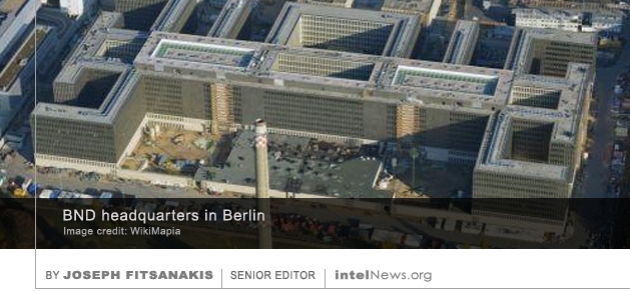
BND GermanyCONTRARY TO EARLIER CLAIMS that the German intelligence agencies failed to anticipate last month’s showdown between PMC Wagner and the Kremlin, German intelligence did in fact have foreknowledge of the mercenary group’s uprising, a new investigative report has concluded. The report further claims that German intelligence had unique and real-time insights into the negotiations between Wagner PMC leader Yevgeny Prigozhin and Belarussian President Aleksandr Lukashenko, who intervened in the dispute.
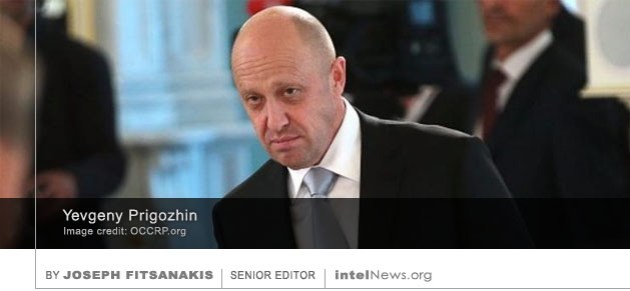
In the days following the June 23 mutiny by soldiers of the Russian private military firm Wagner Group, German intelligence agencies were publicly criticized for allegedly failing to warn Berlin about the unprecedented incident. Specifically, it was claimed that Germany’s primary foreign intelligence agency, the Federal Intelligence Service (BND), did not issue an actual warning about the mutiny until Saturday —a full 12 hours after the first clashes had erupted between Wagner mercenaries and forces loyal to the Russian Ministry of Defense.

Much of the criticism came from the ranks of the center-left German Social Democratic Party (SPD), which is the primary political party behind the government of German Chancellor Olaf Scholz. However, criticism also came from the Green Party, which supports Scholz’s administration, and the liberal center-right Free Democratic Party (FDP), which also supports Scholz’s government. The criticism intensified after June 28, when, during a live television interview, Chancellor Scholz appeared to confirm speculation that the BND had left his administration in the dark about the Wagner mutiny until it was too late.

Late last week, however, a joint investigation by two of Germany’s most respected public television broadcasters, the Hamburg-based NDR and the Cologne-based WDR, concluded that the BND had been far more informed about the Wagner mutiny than its critics have claimed. The investigation concluded that, not only did the BND have foreknowledge of the mutiny nearly a week before it materialized, but that it was able to listen-in to the frantic telephone conversations between Prigozhin and Belarussian President Lukashenko, as the latter tried to dissuade the Wagner leader from storming the Russian capital with his heavily armed band of mercenaries.

According to the NDR-WDR report, the BND had been able to hack into Wagner’s internal communications system up for over a year. However, its operation was betrayed by “Carsten L.”, a German intelligence officer who was arrested late last year for spying for Russia. However, the German spy service was able to continue to monitor the internal affairs of Wagner through other sources and had access to channels of information within Wagner in the months leading up to the mutiny. Thus, according to the report, the BND had “vague indications of an imminent uprising by Wagner” about a week prior to June 23.

However, the agency was unsuccessful in verifying these indications through other sources, including its foreign counterpart agencies. For this reason, it chose not to notify the German Chancellery in concrete terms.

Nevertheless, the BND did issue a warning on Friday evening, a few hours before the Wagner mutiny began. The warning was issued a full day prior to the takeover of Wagner’s armed takeover of the Russian armed forces’ operational headquarters in Rostov, which occurred on Saturday. The two state broadcasters reportedly reached out to the BND for confirmation of the report’s findings. However, a BND spokesperson declined to comment on the matter, saying simply that the BND “generally does not comment publicly on matters relating to intelligence findings or operations”.

Author: Joseph Fitsanakis | Date: 11 July 2023 | Permalink

Analysis: Prigozhin’s goal was to survive, not to remove Putin from power

Yevgeny PrigozhinIN THE EARLY HOURS of June 23, PMC Wagner leader Yevgeny Prigozhin declared the launch of an armed campaign against the Ministry of Defense of the Russian Federation. Within hours, several thousand soldiers belonging to Wagner, one of the world’s largest private military companies, had abandoned their positions in eastern Ukraine and were en route to Moscow. Their mission, according to Prigozhin, was to arrest Minister of Defense Sergei Shoigu and Chief of the General Staff Valery Gerasimov, and try them for mismanagement and corruption.
In the ensuing hours, National Guard units along the M-4, a 1,100-mile-long expressway that connects the northeastern shores of the Black Sea to Moscow, began blocking or destroying critical junctures across that vast road network, in an attempt to obstruct the Wagner convoy. In a televised nationwide address, a visibly shaken Vladimir Putin accused Prigozhin of leading an armed insurrection, and warned those who followed him that they would be treated as traitors. Meanwhile, tickets on flights from Moscow to several visa-free international destinations were sold out within hours, as Muscovites braced for the outbreak of civil war.

Yet, within fewer than 24 hours, Prigozhin, who had repeatedly vowed to reach Moscow or die trying, was on his way to Belarus. He had seemingly accepted a deal to abandon his loyal troops in exchange for amnesty and a life in exile. Prigozhin’s sudden about-face surprised many observers, who had expected to see firefights between Spetsnaz units and Wagner forces in Moscow’s southern districts by Sunday afternoon. Even some of Prigozhin’s own troops took to social media to openly accuse their former leader of betrayal, and vow revenge.

PRIGOZHIN: A RATIONAL AND CALCULATED ACTOR

How are we to explain this unexpected turn of events? The difficulty of such a task is amplified by the lack of reliable reporting from Russia, along with the inherent chaos of war and the rapidly changing nature of events. It must be stressed, however, that Prigozhin is neither impulsive nor irrational. His maneuvers over the past week were calculated and almost certainly pre-planned and choreographed —most likely long in advance. His ultimate decision to seek political asylum in Belarus —one of the few countries in the world that is unlikely to turn him over to the United States— makes sense under one premise: that the motive behind his “justice march” to Moscow was not to challenge Putin, but to save his life.

To begin with, the bitter feud between Prigozhin and the Russian Ministry of Defense is not new. It has been raging for years. It both precedes and exceeds Russia’s ongoing military campaign in Ukraine. The Wagner leader has repeatedly expressed his dismay at being viewed as an outsider by the Ministry of Defense, which it views as an elitist and incompetent bureaucracy. His experience in Ukraine, where Wagner’s forces faced stiff resistance from the local population and the Ukrainian military alike, added fuel to his rage against a host of Russian defense officials. Prigozhin has been voicing his denunciations of the way these officials have managed the war since March of 2022, just two weeks into the invasion of Ukraine.

PRIGOZHIN’S DISILLUSIONMENT

The disastrous Russian military campaign in Ukraine only served to sharpen Prigozhin’s criticism of his country’s defense establishment. One can observe this in the evolution of his critiques over time. In recent months, the Wagner leader has not only criticized the Ministry of Defense, accusing his leadership of corruption, but he has increasingly directed his ire against broad segments of Russian society. In his video tirades, he often decries what he describes as “the Russian elite” and the “oligarchy”, whom it accuses of living in luxury, while Russia’s working class fights and dies in Ukraine, Syria, Libya, and elsewhere. Read more of this post

Ukrainian drone strikes may have targeted Moscow homes of Russian spies

Rublyovka, MoscowA SERIES OF COORDINATED drone strikes that struck Moscow last week were not random, but may in fact have targeted the homes of senior Russian intelligence officials, according to a new report by an American television network, which cited knowledgeable sources and data by an open-source research firm.
In the early morning hours of May 30, a fleet of at least six unmanned aerial vehicles (UAVs) struck what appeared to be residential apartment blocks in Moscow’s southeastern suburbs. The targets were all located in Moscow’s Rublyovka area, which contains some of the wealthiest neighborhoods in the Russian capital. Many expressed surprise at the airborne assault, as it was the first known attack against residential targets in Moscow since the latest phase of the Russian invasion of Ukraine, which began in February 2022.

Upon initial inspection, the targets of the early-morning attack appeared to have been chosen at random. Yesterday, however, the American television network NBC claimed that the targets of the attack had been carefully selected as “a part of Ukraine’s strategy of psychological warfare against Russia”. Citing “multiple sources familiar with the strikes”, including a senior United States official and a congressional staffer, NBC said that the targets of the attacks were all residences of Russian government personnel.

The television network also cited data by Strider Technologies, an open-source strategic intelligence company located in the American state of Utah, according to which at least one of the buildings that were struck by the UAVs housed a Russian state-controlled military contractor. According to Strider Technologies, the contractor provides services to a military unit that is known to be a front for Russia’s Foreign Intelligence Service (SVR). NBC further claimed that other targets in the alleged Ukrainian operation targeted the residences of senior Russian intelligence personnel.

Author: Joseph Fitsanakis | Date: 08 June 2023 | Permalink

Ukraine is running networks of saboteurs inside Russia, report claims

Security Service of Ukraine SBUTHE UKRAINIAN INTELLIGENCE SERVICES are training and arming cells of saboteurs inside Russia, who are responsible for several acts of sabotage on Russian soil, including a recent attack on the Kremlin, according to CNN. In an exclusive report published on Monday, the American television channel cited “multiple people familiar with US intelligence on” the activities of Ukrainian “agents and sympathizers” inside Russia.

According to the report, pro-Ukrainian saboteurs may be responsible for a growing number of incidents involving mysterious explosions, fires and malfunctions of Russian critical infrastructure. In recent months, such incidents have caused serious damage on Russian military warehouses, energy pipelines, fuel depots and refineries, railway networks, and military enlistment offices. Last month saw a widely reported attack by a fleet of unmanned aerial vehicles (UAVs) on the Kremlin, which serves as the official residence of the Russian president in Moscow.

The CNN report claims that the UAV attack on the Kremlin, and possibly other similar incidents that have taken place inside Russia in recent months, represent the “culmination of months of effort” by the Ukrainian government. The latter has now allegedly assembled and is operating semi-autonomous sabotage cells inside Russia. These cells are said to consist of Ukrainian nationals operating in an undercover capacity, as well as of Russian nationals who sympathize with Ukraine. They also include Russians who are militantly opposed to the administration of President Vladimir Putin.

These cells have been “well-trained” in sabotage and have been provided with lethal hardware —including UAVs or UAV components— by the Ukrainian government, CNN said. These provisions reach the saboteurs through “well-practiced smuggling routes” that the Ukrainians have established across the Ukrainian-Russian border. The latter is “vast and very difficult to control”, and has been so for decades, according to the report. In most cases, the weaponry used in acts of sabotage is assembled and operated from within Russia, rather than from command centers in Ukraine, the CNN report claims.

The broad strategic parameters of the saboteurs Russia have reportedly been established by the highest echelons of the Ukrainian government, under the direct supervision of President Volodymyr Zelensky. However, the Security Service of Ukraine (SBU) officers who handle, train and arm the saboteurs have deliberately given them significant autonomy in terms of targeting and tactics. CNN said it contacted the Ukrainian government for comment on this report. The SBU did not confirm or deny that it was involved in handling cells of saboteurs inside Russia. However, a SBU spokesperson told CNN that “the mysterious explosions and drone strikes inside Russia would continue”.

Author: Joseph Fitsanakis | Date: 06 June 2023 | Permalink

Analysis: Did Ukraine try to assassinate Vladimir Putin?

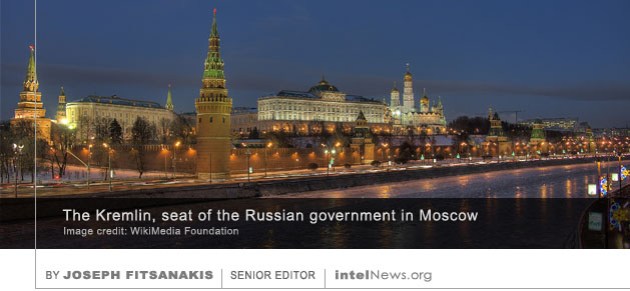
KremlinOFFICIALS IN UKRAINE HAVE vehemently denied allegations by the Kremlin that the Ukrainian government tried to assassinate Russian President Vladimir Putin using two unmanned aerial vehicles (UAVs). A statement by the Russian government said that the Kremlin, which serves as the official residence of the Russian president in Moscow, came under attack by two unmanned aerial vehicles (UAVs) in the early hours of Wednesday. According to the statement, the UAVs were shot down 16 minutes apart. The first UAV allegedly exploded mid-air at 2:27 a.m. local time over the old Senate building, which is located on the eastern side of the Kremlin. At 2:43 a.m. a second UAV exploded over the Kremlin, sending debris flying across the courtyard of the heavily fortified complex.

There were no injuries or material damages, according to the Russian Federal Protective Service, which is responsible for the protection of high-ranking state officials and government facilities, including the Kremlin complex. Within hours, Russia openly placed blame on the government of Ukraine for the alleged attack and claimed that it had been intended to kill President Putin. A subsequent statement praised the Russian armed forces for thwarting the alleged attack on Putin’s life with “timely actions”. Meanwhile, government officials in the United States said that the White House “had no foreknowledge of an impending drone attack on the Kremlin” and urged that Moscow’s allegations be treated with skepticism.

UKRAINE IS CAPABLE OF STRIKING INSIDE RUSSIA

The Ukrainian military and paramilitary forces are both interested in, and capable of, carrying out strikes inside Russia. In 2023 alone, there have been dozens of apparent acts of sabotage in European Russia, which have damaged bridges, disrupted railway transportation systems, and rendered weapons depots unusable. This week alone, a fuel depot in Russia’s Krasnodar Krai was extensively damaged by a fire, which local authorities claimed was caused by a kamikaze UAV attack. About 1,500 miles north in Bryansk Oblast, near Russia’s border with Belarus, two trains were derailed by blasts that, according to news reports “appeared to be separate but identical incidents”. Ukraine denies involvement in these incidents, but military observers remain suspicious.
Meanwhile, investigative work by news outlets such as The New York Times suggests that Ukrainian paramilitary units may have been behind acts of sabotage in Western Europe, and even assassinations of pro-Putin figures inside Russia. Some of these attacks —if that is indeed what they were— may have been carried out by teams of cover human operatives. Others may have been carried out by mechanical means, including UAVs. Certainly, the Ukrainian military has never been shy about its effort to develop a strong long-range strike capability using UAVs. There is also some evidence that it may have carried out at least one UAV-enabled attack near Moscow in recent months. It therefore stands to reason that Ukraine is both willing and able to launch strikes inside Russia. Read more of this post

New report assesses record of Russian unconventional operations in Ukraine war

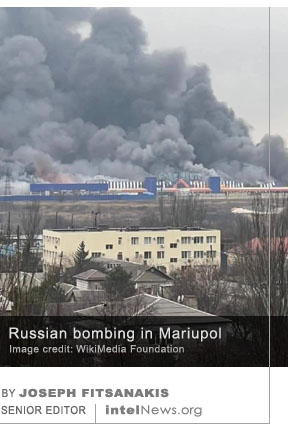
Ukraine MariupolA NEW REPORT PUBLISHED by a London-based security think-tank concludes that Russia has employed unconventional operations effectively to subdue the population in occupied areas of Ukraine. These successes contrast sharply with the inferior performance of Russia’s conventional military forces, as revealed last week in a series of leaked documents belonging to the United States Department of Defense.
The 39-page report was published on March 29 by the Royal United Services Institute (RUSI). It is titled “Preliminary Lessons from Russia’s Unconventional Operations During the Russo-Ukrainian War, Feb 2022-Feb 2023”. It suggests that the early assessments of the Russian intelligence community failed to anticipate by a wide margin the strength of the Ukrainian opposition to the Russian invasion, as well as the West’s resolve to assist Kyiv. Moreover, early assessments by Russian intelligence agencies severely over-estimated the capabilities of the Russian military, with near-catastrophic results.

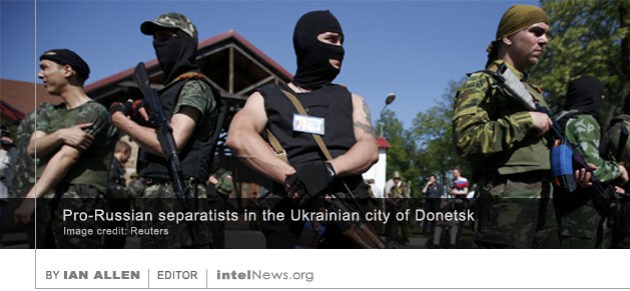
However, the report claims that, in contrast to its early assessments, the record of unconventional operations by Russia’s intelligence community in Ukraine has been largely successful, and has allowed Moscow to effectively subdue occupied populations in eastern Ukraine. It suggests that Russian intelligence agencies began planning for the military invasion at least eight months in advance. They prepared the ground by assembling a large network of agents on the ground in Ukraine, which included at least 800 Ukrainian government officials. Some of these officials offered to spy for Russia voluntarily, while others were coerced through various means.

The agent network inside Ukraine gave Russian intelligence agencies access to government databases, as well as to communications intercepts. These were used to construct detailed assessments of targeted individuals in occupied areas of Ukraine, and enabled Russian intelligence agencies to operate surgically in neutralizing leading pro-Kyiv officials in those areas. That method has been largely effective in the past year, and has allowed Moscow to exercise strict control in areas under occupation through “a steady stream of human intelligence” from its agent networks, the report claims.

In an unrelated development, a trove of leaked documents circulated on several social media platforms late last week. The documents appear to contain intelligence briefs compiled by the Joint Staff of the United States Department of Defense. The briefs contain intelligence information from a host of American intelligence agencies, including the Central Intelligence Agency and the National Security Agency. According to reports, the documents show the extent to which American intelligence has penetrated the Russian government. They also show Washington’s ability to assess with accuracy Moscow’s military and intelligence planning. The New York Times, which reported on the leak last week, said the documents show that “nearly every Russian security service [has been] penetrated by the United States in some way”.

Author: Joseph Fitsanakis | Date: 10 April 2023 | Permalink

Alleged Russian spy and sabotage cell busted in Poland [updated]

Rzeszów–Jasionka International Airport PolandSIX NINE MEMBERS OF AN alleged Russian saboteur cell have been arrested in Poland, according to media reports and official acknowledgements by Polish authorities. Early reports on Wednesday afternoon local time centered on the arrests of six nine individuals, who were detained on suspicion of conducting espionage and planning sabotage attacks against various elements of transportation infrastructure.

Radio station RMF24 FM reported that the six nine individuals were detained following a number of early-morning raids conducted by the Polish Internal Security Agency (ABW), which is the country’s primary counterintelligence and counterterrorism organization. At least some of the six nine individuals are reportedly Belarusian nationals who were active in Poland’s southeastern Podkarpackie Voivodeship, a largely rural province that borders Ukraine’s Lviv Oblast. Later on Wednesday, the RMF24 FM report was confirmed by Polish government officials, who spoke to the BBC.

Notably, the Podkarpackie Voivodeship is home to the Rzeszów–Jasionka International Airport, located near the village of Jasionka, which is approximately 60 miles, or 100 kilometers, from the Ukrainian border. Since the February 2022 Russian invasion of Ukraine, this provincial airport has been transformed into a major logistical gateway for the transportation of Western military and humanitarian aid to Ukraine. Dozens of Western aircraft land there every day, carrying supplies that are then loaded onto trucks or trains en route to Ukraine.

According to RMF24 FM, the six nine foreign nationals installed hidden miniature cameras at railway junctions and other strategic transportation hubs throughout the Podkarpackie Voivodeship. The cameras were allegedly used to collect information on the movement of trains and trucks that were being used to transport supplies from the Rzeszów–Jasionka International Airport to Ukraine. The radio station said that Polish authorities were scheduled to provide further information about the alleged spy cell at a press conference on Thursday.

[Updated to reflect arrest of nine individuals, as opposed to six, as initially reported]

Author: Joseph Fitsanakis | Date: 16 March 2023 | Permalink

[Updated] Self-styled creator of pro-Russian ‘Z’ symbol reportedly assassinated

UkraineA LEADING RUSSIAN NATIONALIST, who styled himself as the originator of ‘Z’, the symbol of the Russian campaign in Ukraine, has reportedly died after being shot in the head in an apparent assassination. Igor Mangushev, 36, is a prominent figure in Russia’s nationalist circles. A vocal supporter of Russian premier Vladimir Putin, Mangushev’s hardline and unapologetically nationalist social media presence has helped popularize the Kremlin’s policies among younger Russians.
By the late 2010s, Mangushev had spent nearly a decade in Russian ultra-nationalist street gangs. Eventually a pro-Kremlin paramilitary group he founded and led, known as Svetlaya Rus (Light Rus), was conscripted by the Russian military to assist in grey zone operations in the separatist regions of eastern Ukraine. It was in Ukraine that Mangushev’s group merged with other armed ultra-nationalist clusters to form the so-called Yenot (Raccoon) private military company, or Yenot PMC. Soon after the outbreak of the war in Ukraine, Mangushev began to describe himself (without evidence) as the creator of the ‘Z’ symbol that the Kremlin uses as a sign of support for the Russian military campaign.

In the ensuing years, Yenot PMC paramilitaries saw action in several battles in Ukraine and in Syria. In the meantime, Mangushev worked alongside close Putin ally Yevgeny Prigozhin, the alleged owner of the Wagner Group, one of the world’s largest private military companies. There was much fanfare in Russian nationalist social media circles last year, when Mangushev (using the moniker “Bereg”) announced he had joined the Russian Armed Forces at the rank of captain. It is believed, however, that Mangushev’s Russian military title was nominal, and that continued to operate as leader of the Yenot PMC. Read more of this post

CIA helped Ukraine foil two Russian plots on Zelenskyy’s life, new book claims

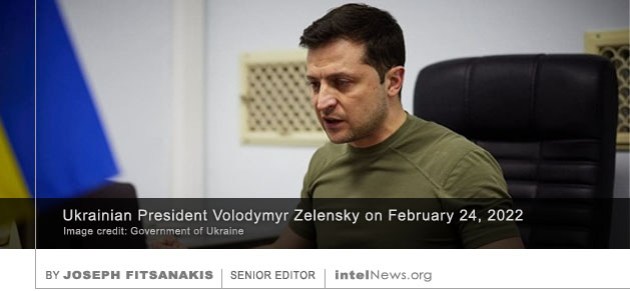
Volodymyr ZelenskyINFORMATION PROVIDED BY THE United States Central Intelligence Agency helped Kyiv foil two Russian plots against the life of Ukraine’s President, Volodymyr Zelenskyy, in the crucial early stages of the Russo-Ukrainian war, according to a new book. The claim is made in The Fight of His Life – Inside Joe Biden’s White House (Scribner) by Chris Whipple, the longtime investigative writer behind several books on American intelligence —most recently The Spymasters How the CIA Directors Shape History and the Future (2021, also by Scribner). Whipple’s latest book is scheduled for release today.
Throughout late 2021 and early 2022, the government of President Zelenskyy repeatedly dismissed American warnings, which came as early as November 2021, that Moscow was preparing to launch an unprovoked military invasion of Ukraine. Zelenskyy himself urged Washington to temper its public warnings about a possible war, because they were creating an atmosphere of panic in Ukrainian business circles. In his public statements, the Ukrainian leader insisted that Kyiv had a long history of facing —and staying calm in the face of— Russian threats against his country.

All that changed in January of 2022, just weeks before Russia launched its invasion of Ukraine. According to Whipple, Zelenskyy received a secret visit by CIA director William Burns. The two men met in Zelenskyy’s office in Kyiv, where Burns told the Ukrainian leader that he had been authorized by United States President Joe Biden to share with him “precise details of […] Russian pots”. According to Whipple, these plots were not only against Ukraine, but were aimed at Zelenskyy himself. This information, Whipple claims, “immediately got Zelenskyy’s attention; he was taken aback, sobered by this news”. Whipple suggests that the information Burns shared with Zelenskyy was specific enough to surprise and alarm the Ukrainian president. According to Whipple, the CIA’s information about the Kremlin’s assassination plots was “so detailed, that it would help Zelenskyy’s security forces thwart two separate […] attempts on his life” by Russian Special Forces.

The author further claims that the CIA also shared with Ukraine a precise “blueprint of [Russian President Vladimir] Putin’s invasion plan”. The intelligence given to Ukraine by the CIA included the Kremlin’s plans to attack the Antonov International Airport (also known as Hostomel Airport) northwest of Kyiv. The intelligence contributed substantially to Ukraine’s victory in the Battle of Antonov Airport, which took place on February 24 and 25. Ukrainian forces were successful in repelling a Russian air assault on the airport, thus keeping the airstrip under Ukrainian control during the crucial opening stages of the war. That success is often credited with preventing Russian forces from using the Antonov Airport as a strategically important staging location from which to entering and sack Kyiv in February of 2022.

Author: Joseph Fitsanakis | Date: 17 January 2023 | Permalink

Israel beefs up protection of its senior spies, as proxy war with Iran intensifies

Iran UAV droneISRAELI AUTHORITIES HAVE STEPPED up measures to protect its senior intelligence and security figures, over concerns they may be targeted by agents of the Iranian state, according to news reports. The news comes amidst widespread concerns that the ongoing shadow conflict between Israel and Iran is escalating in the shadow of the Russo-Ukrainian war.


On Thursday, Israel’s state-owned broadcaster and news agency, Kan, reported that  the government of Israel had implemented additional security measures to protect current and former members of its security and intelligence agencies. The report added that the measures are focused largely on current and former members of Israel’s foreign intelligence agency, the Mossad, as well as those associated with Israel’s intelligence and security apparatus that are living abroad.

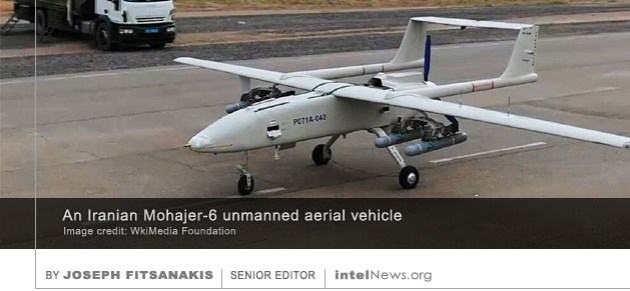
The report comes amidst concerns among security observers that a clandestine war between Israel and Iran is growing in intensity. To a notable extent, this growth is being fueled by the ongoing Russo-Ukrainian conflict. Iran’s supply of cheap and reliable attack drones appears to be enabling Moscow to subvert and outright destroy Ukraine’s national infrastructure. In what seems like a direct response to Iran’s actions, Israel war materiel is now flowing into Ukraine, reportedly through a NATO country.

There are indications that this proxy conflict between Israel and Iran is spreading in Europe and the Middle East. Seeing the success of the use of Iranian drones, some European countries with limited airstrike capabilities, like Serbia and Armenia, are reportedly considering purchasing drone attack systems from Tehran. Meanwhile, Israeli weapons exports to Arab states have skyrocketed since the normalization of Israel’s relations with a number Arab countries in recent years. According to a recent report, last year marked a historic record for the volume of Israeli military and security exports, which increased by 30 percent from 2020. Much of that increase is due to Israeli weapons exports to Arab states, such as Morocco, Bahrain and the United Arab Emirates.

Author: Joseph Fitsanakis | Date: 28 November 2022 | Permalink