News you may have missed #511

Hundreds of European mercenaries ‘fighting for Gaddafi’

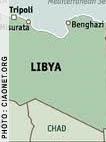
Libya

Libya

By JOSEPH FITSANAKIS | intelNews.org |
Hundreds of European mercenaries, including large numbers of European Union citizens, have voluntarily enrolled in the armed forces of the Libyan government, and are fighting under the command of Colonel Muammar al-Gaddafi. According to criminologist Michel Koutouzis, the Greek CEO of a French-registered consulting firm with connections to Libya, up to 500 European soldiers-of-fortune have been hired by the Libyan government to provide “special services”, particularly in heavy weaponry and attack helicopters. Koutouzis says that most of the European mercenaries, who sell their services for thousands of dollars a day, come from Eastern Europe, especially Poland, Belarus, Ukraine and Serbia, but there are also French, British and Greek nationals currently in Libya. He also claims that Gaddafi is supported by serving military personnel from Russia, Syria and Algeria. It is believed that the Gaddafi camp is also employing thousands of non-specialist mercenaries from various African nations, including Somalia, Mali, Niger, Chad, and the Central African Republic. Unconfirmed reports have surfaced in the American press that the Gaddafi forces are employing female snipers from Colombia. Read more of this post
News you may have missed #503

  • Dutch forces’ covert operations in Africa revealed. Dutch forces have for several years been training government soldiers in Mali, Senegal and Chad, without the Dutch parliament being informed, according to Dutch newspaper AD, which cites documents from the US Congress and the Pentagon.
  • Israel destroys spying devices found in Gaza. Hamas sources have told Egyptian newspaper al-Ahram that they discovered several “audio-visual spying devices” in the sand hills south of Gaza City. But, as soon as they started removing the devices, they “received a phone call from Israeli intelligence elements” telling them that the site would be bombed “within three minutes” —which is precisely what happened, according to al-Ahram. Regular readers of this blog will know this incident was not a first.
  • Leaked documents reveal Guantanamo secrets. A batch of leaked US government intelligence documents, not meant to surface for 20 years, shows that intelligence collection at Guantánamo often was much less effective than the George Bush administration has acknowledged. According to the documents, the US military used interrogation and detention practices that they largely made up as they went along.

CIA active on the ground in Libya ‘for several weeks’

Libyan rebels

Libyan rebels

By JOSEPH FITSANAKIS | intelNews.org |
Few intelligence observers have been surprised by revelations in The New York Times that several cells of Central Intelligence Agency officers have been active on the ground in Libya for the best part of March. The US newspaper published the disclosure after the Reuters news agency first broke the story early on Wednesday. According to Reuters, US President Barack Obama authorized a secret Presidential finding three weeks ago, in which he instructed the CIA to deploy teams of operatives in the North African country. In reality, as Reuters commented later on, US intelligence officers were active on the ground in Libya before President Obama’s authorization for covert action. But his authorization gave the green light for the intensification of CIA activities throughout Libya’s northern regions. The CIA operatives are not working alone; they are part of what The Times called “a shadow force of Westerners”, which include “dozens of British special forces” and officers of the Secret Intelligence Service, otherwise known as MI6 —the UK’s foremost external intelligence agency. Citing “American officials”, The Times speculates that Western intelligence agents are actively collecting tactical intelligence on the Libyan armed forces, thus helping guide aerial strikes by NATO jets. Read more of this post

News you may have missed #483

  • Ex-CIA chief criticizes ‘too much cybersecurity secrecy’. In an article published in the new issue of the US Air Force’s Strategic Studies Quarterly, former CIA and NSA Director, General Michael “I-want-to-shut-down-the-Internet” Hayden, argues that the US government classifies too much information on cybersecurity vulnerabilities.
  • Renault arrests security chief over spy hoax. Dominique Gevrey, a ex-military intelligence agent, who is French car maker Renault’s chief of security, has been arrested in Paris, just before boarding a flight to Guinea in West Africa. He is accused of concocting the spying allegations which shook the French car giant –-and the entire motoring world-– last January. Meanwhile, Renault has apologized to the three senior executives who were fired after being accused of selling secrets about the company’s electric car strategy to “foreign interests”.
  • Analysis: Gadhafi’s spies keep watch in Libyan rebel capital. “Pro-Gaddafi spies are blamed for assassinations, grenade attacks, and sending rebels threatening text messages. Rebels believe that Gaddafi’s forces are all around them. They lurk outside the Benghazi courthouse that serves as the Capitol for the liberated east, sometimes armed with cameras. They sit in vans outside hotels that house journalists and aid workers, and silently watch who comes and goes”.

News you may have missed #479 (Iran edition)

  • Iran arrests alleged CIA agent. Iran’s intelligence minister, Heidar Moslehi, has told the country’s state TV that authorities arrested an Iranian that he says was working for the CIA, and allegedly set up a network of aides to gather information during anti-government protests last week.
  • Yemen charges family with spying for Iran. Yemeni prosecutors allege that Muhammad al-Hatmi was a paid Iranian agent from 1998 to 2010, and passed money to rebels so they could expand their activities into Saudi Arabia. Al-Hatmi’s wife and son have been charged with aiding him by conveying money and communications.
  • Leaked intelligence report claims Iran intensifies uranium hunt. The Associated Press has published the findings of a leaked intelligence report, from an undisclosed IAEA member-country, which claims that Iranian Foreign Minister Ali Akbar Salehi met secretly last month with senior Zimbabwean mining officials “to resume negotiations […] for the benefit of Iran’s uranium procurement plan”.

News you may have missed #475 (Arab revolution edition)

  • Obama ‘disappointed’ with US intelligence on Tunisia. US President Barack Obama sent word to National Intelligence Director James Clapper that he was “disappointed with the intelligence community” over its failure to predict that the outbreak of demonstrations would lead to the ouster of President Zine el-Abidine Ben Ali in Tunis.
  • An Intelligence Failure in Egypt? The US intelligence community is like the offensive line of the government. They protect the quarterback all day long, and no one notices until they give up a sack. Which raises the question: was US President Barack Obama blindsided by the uprisings in Tunisia and Egypt?
  • Did US intelligence fail in North Africa? “One former official said US president Barack Obama recently urged the CIA to put as much effort into analysis of the situation in North Africa as into covert operations, including those targeting al-Qaida”.

Tunisian security officials arrested, killed, amid counter-coup fears

Ali Seriati

Ali Seriati

By JOSEPH FITSANAKIS | intelNews.org |
Several key figures in Tunisia’s crumbling security apparatus have being either apprehended or killed, amid fears that they were planning a countercoup against the country’s new unity government. Most notable among the arrestees is General Ali Seriati, longtime director of deposed Tunisian dictator Zine al-Abidine Ben Ali’s Presidential Security Force. Seriati was arrested on Sunday, reportedly “by citizens as he tried to cross into Libya”. Reports from Tunis suggest that Ben Ali’s Interior Minister, Rafik Belham Kacem, who commanded the country’s’ domestic intelligence apparatus, has also been detained. Meanwhile, the BBC reports that Imed Trabelsi, a politically powerful nephew of the former dictator’s wife, was lynched to death late on Saturday. Seriati and Kacem’s arrests are seen as attempts by the new government to prevent a widely feared coup plot, organized by the remnants of Ben Ali’s security apparatus, aimed at returning him to power. Initial stages of the coup materialized on Saturday, when several gunmen riding in unmarked cars launched a wave of armed attacks against opposition targets in capital Tunis and elsewhere. Political observers in the country appeared to immediately connect the attacks with General Seriati’s Presidential Security Force, said to include some of the former president’s staunchest supporters. Read more of this post

US denies Ivory Coast coup claim

Emile Guirieoulou

Emile Guirieoulou

By IAN ALLEN | intelNews.org |
The United States has emphatically rejected assertions by officials in the Ivory Coast that it is plotting to overthrow the government of the West African country. For weeks now, Washington has been echoing calls by the United Nations, the African Union and the European Union for Ivorian President Laurent Gbagbo to stand down, after losing in the November 28 national elections. But Gbagbo’s government, which controls most of the military, rejects the alleged election victory of his political rival Alassane Ouattara, and refuses to hand over power. On December 29, the Ivory Coast’s Minister of the Interior, Emile Guirieoulou, told a press conference that the United States had dispatched at least ten German “mercenaries” to its embassy in Abidjan, as part of a multinational Western plot to overthrow Laurent Gbagbo. He told journalists that the German mercenaries were onboard a US-operated flight from Algiers to Bouake, Ivory Coast’s second-largest city. Read more of this post

Even more underreported WikiLeaks revelations

WikiLeaks

WikiLeaks

By JOSEPH FITSANAKIS | intelNews.org |
It appears increasingly likely that Sweden will extradite Julian Assange to the United States, where the WikiLeaks founder will face espionage charges. But the WikiLeaks revelations keep coming, although not all of them receive the worldwide media attention that they deserve. Take for instance the disclosure that at least three senior Australian Labour Party (ALP) politicians have operated as “protected sources” (diplomatic parlance for secret informants), providing regular updates on internal ALP politics to US embassy operatives in Canberra. According to internal US diplomatic cables released on Thursday, ALP politicians Bob McMullan, Michael Danby and Mark Arbib, who currently serves as the Australian federal government’s Minister for Sport, regularly held secret meetings with US embassy officials after 2004.  All three deny accusations that they acted as spies for the US. Another underreported WikiLeaks revelation concerns a 2008 proposal by the Saudi government to create an US- and NATO-backed Arab military force to invade Lebanon, seeking to obliterate Shiite paramilitary group Hezbollah, which controls large sections of the country. Read more of this post

News you may have missed #442

  • Israeli lobby intensifies Pollard release effort. As convicted spy Jonathan Pollard approaches 25 years behind bars, Israelis and others are renewing efforts to secure freedom for the former US Navy intelligence analyst, who is serving a life sentence in the United States for relaying military documents to Israel.
  • No compromise in WikiLeaks expose, concludes Pentagon. Much ado about nothing. The US Pentagon has concluded that no US intelligence sources or practices were compromised by the posting of secret Afghan war logs by the WikiLeaks website. Meanwhile, WikiLeaks is preparing to publish more revelations.
  • Niger ex-spy chief arrested. Seini Chekaraou, head of counterintelligence at the uranium-rich nation of Niger, has been arrested along with four senior members of the West African country’s ruling junta, allegedly on suspicion that they were “attempt[ing] to destabilize the [military] regime” that took power in the country last February.

News you may have missed #413

  • Complex politics behind Ugandan spy chief’s removal. The recent sacking of Dr Amos Mukumbi from heading Uganda‘s Internal Security Organisation (ISO) was the handiwork of politics, intrigue and suspicion within the country’s intelligence community and between politicians. It was also related to ongoing turf wars between the ISO and its sister agency, the External Security Organisation.
  • Experts still evaluating WikiLeaks impact. Some analysts believe that the US intelligence establishment will call for an increased clampdown on secrecy in the wake of the WikiLeaks Afghan War Diary files release. But the data dump has also spurred those arguing that the US government needs to reduce the amount of information it classifies as secret, much of which may be unnecessary.
  • Radio program investigates the Mossad. BBC Radio has aired a relatively well-produced primer on Israeli intelligence agency Mossad. The BBC’s Security Correspondent Gordon Corera interviews former Mossad Director Efraim Halevy and former Mossad operative Rafi Eitan, among others.

Bookmark and Share

News you may have missed #353

  • Name of British Mossad agent handed to Interpol. Dubai police have identified another suspect in the January murder of Hamas operative Mahmoud al-Mabhouh, by Israeli intelligence agency Mossad. He is reportedly a 62-year-old British citizen, who is believed to be currently hiding in western Africa.
  • Russia jails man for spying for the US. Gennady Sipachyov, a Russian whose age and profession have been kept secret by Moscow, has been sentenced to a four-year sentence for allegedly emailing secret military maps identifying classified Russian military infrastructure to the US Pentagon in 2008. Earlier this month, a Russian court rejected an appeal by another alleged US spy, Igor Sutyagin.
  • Bulgarian government wants to copy CIA. Bulgaria’s Defense Minister, Anyu Angelov, has proposed the merging of intelligence services to create a mega-structure of the CIA type. Meanwhile, a panel investigating Bulgaria’s communist-era police files has exposed two of the country’s former counterintelligence heads as former communist state security agents.

Bookmark and Share

US asked for Egypt’s spy help on Algerian nuclear reactor

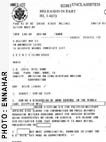
Document cover page

Cover page

By IAN ALLEN | intelNews.org |
A US consular document, acquired by a leading Algerian newspaper, reveals that Washington asked Egypt’s help in collecting intelligence on the Algerian nuclear energy program. The document, which dates from May 1991, was drafted by officials in the US embassy in Cairo, Egypt; it is not known how it came to the possession of Algerian daily Ennahar, which published it on Tuesday. It contains a summary of a May 1991 meeting in Cairo between Richard Clarke, who was then the US Department of State’s deputy secretary for political and military affairs, and a senior Egyptian official whose name is in redacted in the document, but appears to have been Amr Moussa, Egypt’s minister of foreign affairs at the time. The document, which is classified ‘top secret’, reports that the US delegation asked the Egyptians to help them gather information on Algeria’s Es Salam nuclear reactor, located in the city of Ain Oussera, in the province of Djelfa, in north-central Algeria. Read more of this post

US report sheds light on mysterious Chinese front company

Lev Leviev

Lev Leviev

By JOSEPH FITSANAKIS | intelNews.org |
A new report by a US Congressional commission sheds light on a mysterious Chinese corporate group, which intelligence observers have long-suspected to be a front company for Chinese spy agencies. Named after the street address of its headquarters, the Hong Kong-registered 88 Queensway Group is noted for its dynamic investments around the world, particularly in Africa, where the Chinese government has been extremely active in recent years. But new information (.pdf) compiled by the US-China Economic and Security Review Commission of the US Congress, alleges that the 88 Queensway Group “falsely represents itself as a private business when it actually is [an arm of the] Chinese intelligence community [and] public security apparatus”. Read more of this post