News you may have missed #756 (analysis edition)

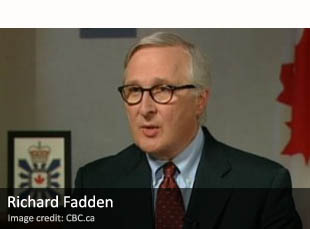
Richard FaddenBy IAN ALLEN | intelNews.org |
►►Intel analysts taking over leading role in spy game. In a recent speech obtained by the Canadian press under Canada’s access-to-information laws, Richard Fadden, Director of the Canadian Security Intelligence Service, said that the role of the undercover operative is starting to take a back seat to the job of the behind-the-scenes intelligence analyst. Speaking at a conference of the Canadian Association of Professional Intelligence Analysts in November 2011, Fadden said that, “suddenly the ability to make sense of information is as valued a skill as collecting it”.
►►US intel doesn’t see Syrian regime cracking. Despite major defections and an increasingly tough and brutal resistance, intelligence officials in the United States say that Syria’s government is unlikely to fall anytime soon. A report from Reuters quotes members of the intelligence community who say that Bashar al-Assad’s inner circle is showing no signs of cracking, and without a wide international consensus to intervene militarily —a consensus that does not exist— the ongoing conflict has no end in sight. Officials also describe the war as a “see-saw” battle with rebel forces gaining strength and improving tactics, only to see the military escalate the size and intensity of it own response, with neither side maintaining a decisive edge.
►►Arrests of Iranians in Kenya spark fears of plot. The recent arrest of two Iranians in Kenya on suspicion of plotting bomb attacks has heightened fears that Tehran is widening its covert war against Israel and the United States, as Washington expands its secret intelligence operations across Africa. Kenya security authorities, aided by US and British agents, arrested the two Iranians June 20 in Nairobi, the West African country’s capital. The men reportedly led authorities to a cache of 33 pounds of military-grade explosive, believed to be RDX.

Comment: Who authored computer virus that ‘dwarfs Stuxnet’?

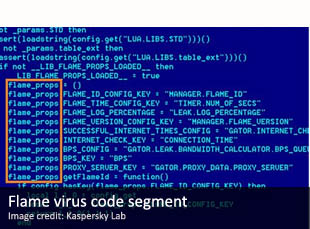
Flame virus code segmentBy JOSEPH FITSANAKIS | intelNews.org |
When the Stuxnet computer virus was detected, in 2010, it was recognized as the most sophisticated malware ever created. It had been specifically designed to sabotage Siemens industrial software systems, which were used in Iran’s nuclear energy program. Not surprisingly, most Stuxnet-infected computers were in Iran. Now a new, massive and extremely sophisticated piece of malware has been detected in computers belonging to the Iranian National Oil Company and Iran’s Ministry of Petroleum. It is called Flame and, according to antivirus company Kaspersky Lab, which first spotted the virus last week, it is “one of the most complex threats ever discovered”. Simply consider that Stuxnet, which caused unprecedented waves of panic among Iranian cybersecurity experts, was 500 kilobytes in size. Flame is over 20 megabytes in size, consisting of 650,000 lines of code; it is so complex that it is expected to take programming analysts around a decade to fully comprehend. The two are different, of course. Stuxnet was an infrastructure-sabotaging malware, which destroyed hundreds —maybe even thousands—of Iranian nuclear centrifuges. Flame, on the other hand, appears to be an espionage tool: it aims to surreptitiously collect information from infected systems. What connects them is their intended target: Iran. We now have Stuxnet, the most complex sabotaging malware ever discovered, which must have taken dozens of programmers several months to create, and Flame, the world’s most powerful cyberespionage tool ever detected by computer security experts. And both have been primarily directed at Iranian government computers. Read more of this post

News you may have missed #740

Timo KivimäkiBy IAN ALLEN | intelNews.org |
►►Denmark professor accused of spying challenges court secrecy. Timo Kivimäki, a Finnish humanities professor at the University of Copenhagen, is accused of spying for the Russians and is being tried at the city court in the Danish city of Glostrup behind closed doors, meaning no information about the trial, including the precise charges, can be disseminated. But following demands from both Kivimäki’s lawyer and the Danish media, he has been granted permission to appeal against the decision to hold the trial in secret.
►►Analysis: CIA’s links with Hollywood are longstanding. Some US officials are suggesting that the producers of a new motion picture, which deals with the raid that killed al-Qaeda founder Osama bin Laden, received “extremely close, unprecedented and potentially dangerous collaboration” from the Obama administration, and particularly the US Intelligence Community. In light of this, a well-researched article in The Los Angeles Times reminds readers that the close connection between the movie industry and the US military and intelligence community goes back decades. The US military has been using movies to drive up recruitment since the 1920s; and the CIA these days even posts potential movie story lines on its website.
►►CIA funds helped launch literary journal. The Paris Review has been hailed by Time magazine as the “biggest ‘little magazine’ in history”. At the celebration of its 200th issue this spring, current editors and board members ran down the roster of literary heavyweights it helped launch since its first issue in 1953. Philip Roth, V. S. Naipaul, T.C. Boyle, Edward P. Jones and Rick Moody published their first stories in The Review; Jack Kerouac, Jim Carroll, Jonathan Franzen and Jeffrey Eugenides all had important early stories in its pages. But as American novelist Peter Matthiessen has told interviewers –most recently at Penn State– the journal also began as part of his CIA cover.

News you may have missed #739

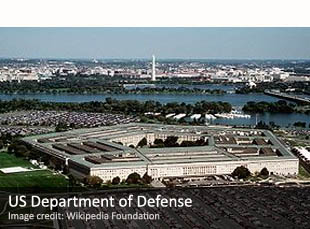
The US Department of DefenseBy IAN ALLEN | intelNews.org |
►►US Supreme Court to consider case on secret wiretapping. The Supreme Court has agreed to consider blocking a constitutional challenge to the government’s secret wiretapping of international phone calls and emails. At issue is whether Americans who have regular dealings with overseas clients and co-workers can sue to challenge the sweep of this surveillance if they have a “reasonable fear” their calls will be monitored. The case, to be heard in the fall, will put a spotlight on a secret surveillance program that won congressional approval in the last year of President George W. Bush’s presidency.
►►Analysis: Why is CIA applauding DoD’s intel grab? Last month, Director of National Intelligence James Clapper and Secretary of Defense Leon Panetta announced the creation of a new US espionage agency: the Defense Clandestine Service, or DCS. The new agency is expected to expand the Pentagon’s espionage personnel by several hundred over the next few years, while reportedly leaving budgets largely unchanged. The news nonetheless surprised some observers in Washington because the move appeared, at least initially, to be a direct challenge to the Central Intelligence Agency, whose National Clandestine Service leads the country’s spy work overseas. Then came a second surprise: former CIA officers and other intelligence experts started applauding. The question is why.
►►FBI forms secretive online surveillance unit. On May 22, CNet’s Declan McCullagh revealed that the FBI had quietly formed a new Domestic Communications Assistance Center (DCAC), tasked with developing new electronic surveillance technologies, including intercepting Internet, wireless, and VoIP communications. According to McCullagh, DCAC’s goal is “to invent technology that will […] more readily eavesdrop on Internet and wireless communications”. Read more of this post

Comment: US cybersecurity posture is not purely defensive

NSA headquartersBy JOSEPH FITSANAKIS | intelNews.org |
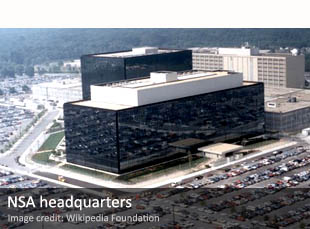
In recent years, news coverage of cyberespionage and cybersecurity has increased several times over; both subjects have escaped the narrow confines of technical literature and have entered the broad expanses of popular news media. This blog is no exception; since 2008, we have covered both cybersecurity and cyberespionage at length. In looking back at our coverage, it takes but a cursory glance to conclude that most of our reports feature the names of two countries: China and –to a far lesser extent– Russia. Moreover, the vast majority of our cybersecurity and cyberespionage coverage portrays the United States as a defensive actor, trying desperately to protect the integrity of its networks from foreign hackers. But is this accurate? How realistic is it to assume that the US, the world’s leading military power, abstains from offensive cyberespionage as a matter of strategy? The most likely answer is: not very. The problem is that much of the reporting on cybersecurity is based on national allegiances. Many American media pundits thus tend to forget that Washington, too, conducts cyberespionage. Read more of this post

News you may have missed #731 (Henry Crumpton edition)

Henry 'Hank' CrumptonBy IAN ALLEN | intelNews.org |
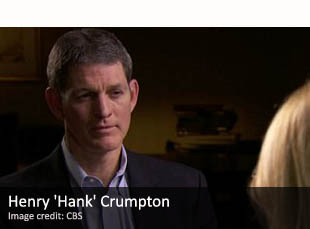
►►Ex-CIA officer says more spies in US than ever before. Henry “Hank” Crumpton, who served as Deputy Director of the CIA’s Counter-Terrorism Center, and led the US intelligence response to 9/11, spoke to CBS’ 60 Minutes about his life as a spy. He told the program that “I would hazard to guess there are more foreign intelligence officers inside the US working against US interests now than even at the height of the Cold War”. IntelNews regulars may recall the last time Crumpton spoke on 60 Minutes.
►►Introduction to Crumpton’s The Art of Intelligence. The introduction to Hank Crumpton’s The Art of Intelligence, which came out earlier this week, has been republished by MSNBC, by arrangement with the Penguin Press, a member of Penguin Group. There are at least 20 pages of the book available on the MSNBC website.
►►Can the FBI understand intelligence? Editorial by Hank Crumpton for Politico, in which he says that “the FBI is still measuring success based on arrests and criminal convictions –not on the value of intelligence collected and disseminated to its customers”. He makes a ten-point argument to claim that the FBI, unlike the CIA, does “not understand intelligence”.

News you may have missed #728 (foiled AQAP bomb plot edition)

YemenBy IAN ALLEN | intelNews.org |
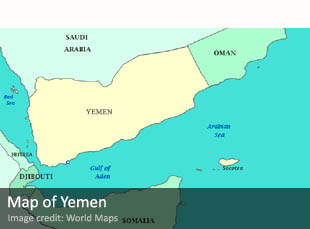
►►UK had central role in foiled bomb operation. The Reuters news agency has quoted unnamed “counterterrorism sources” as saying that the undercover informant in the plot linked to Al Qaeda in the Arabian Peninsula (AQAP) was a British citizen, possibly of Saudi origin. The informant was allegedly working in cooperation with Britain’s two principal spy agencies, MI5 and MI6. The information appears to have leaked even though “British authorities put heavy pressure on theUS government not to discloseBritain’s role in the investigation”, said Reuters.
►►MI5 fears al-Qaeda to expose double agent’s identity. MI5 fears that militant Islamists will attempt to exact revenge on the British spy who penetrated al-Qaeda in theArabian Peninsula, by publishing his photograph on the internet –a move designed to incite extremists to hunt him down. The agent, a British passport holder of Saudi heritage, volunteered to take part in a suicide mission but instead escaped with an underwear bomb designed to blow up aUS airliner. Sources have described the British spy as “gold dust”, adding that he was one of just a handful of agents in the last ten years to have successfully penetrated one of the groups aligned to al-Qaeda’s concept of global Jihad.
►►Analysis: Foiled al-Qaeda plot reveals new world of US spying. There are lots of takes on the meaning of the foiled AQAP plot. This CNN analysis claims that the successful operation shows that “efforts to bolster human intelligence capability and work much more closely with foreign intelligence counterparts are paying off” in several ways. It also suggests that the operation “operation was the “poster child” for the influence of a greatly enhanced analytic community”.

Comment: Britain denies murdered businessman was MI6 spy

Neil HeywoodBy JOSEPH FITSANAKIS | intelNews.org |
Britain has officially denied allegations that a British businessman, who was found dead in China last November, was an intelligence operative. Neil Heywood, a financial consultant and fluent Chinese speaker, who had lived in China for over a decade, was found dead on November 14, 2011, in his room at the Nanshan Lijing Holiday Hotel in Chongqing. Widespread speculation that Heywood may have been a spy for MI6, Britain’s external intelligence service, eventually prompted the House of Commons Foreign Affairs Committee to ask Britain’s Foreign Secretary to clarify whether Haywood was a spy. The Committee wanted to know whether the late businessman had ever supplied intelligence “on a formal or informal basis” to Britain’s embassy in Beijing or its consulate in the city of Chongqing. Responding yesterday to the Committee’s query, British Foreign Secretary William Hague noted that “it is long established government policy neither to confirm nor deny speculation of this sort”. However, he added, the interest in this case made it “exceptionally appropriate” for him to “confirm that Mr Heywood was not an employee of the British government in any capacity”. In response to the second part of the Committee’s question, on whether the British expat shared information with British diplomatic officials, Mr Hague said that Heywood “was only an occasional contact of the embassy, attending some meetings in connection with his business”. He added that Heywood “was not known” to the British consulate-general in Chongqing. In its report on the story, British quality broadsheet The Guardian noted that Mr Hague’s response “did not fully answer the committee’s question”. Read more of this post

Analysis: Nepotism, ethnic favoritism impede Afghan spy agency

NDS spokesman Lutfullah MashalBy JOSEPH FITSANAKIS | intelNews.org |
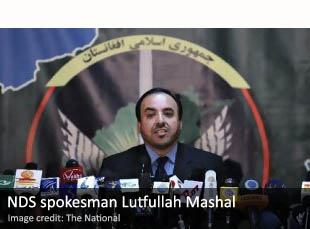
Hundreds of Taliban insurgents were involved in the unprecedented attacks that shook the Afghan capital Kabul and several other key locations around the country last week. And yet not a single Afghan or foreign intelligence operative appeared to have the slightest idea the attacks were coming. No wonder that Afghan President Hamid Karzai was one of many government officials who openly admitted that the “infiltration in Kabul and other provinces [was] an intelligence failure for us”. But why is Afghan intelligence so notoriously unreliable? The answer to this question is complicated, but according to an excellent analysis piece published this week in The Christian Science Monitor, much of it centers on two chronic issues that permeate Afghan society: nepotism and ethnic favoritism. When one speaks of Afghan intelligence, one mainly refers to the National Directorate for Security (NDS), an institution established by the United States, and funded almost entirely by Washington. The roots of the NDS are in the Northern Alliance, the indigenous Afghan opposition to the Taliban, which fought alongside the United States during the 2001 invasion of the Central Asian country. Like most other institutions in Afghanistan, the Northern Alliance is composed largely by members of a single tribe, namely Tajiks, many of whom are from Afghanistan’s Panjshir province. As a result, when Washington set up the NDS, it selected its leadership from among the Panjshir Tajiks. They, in turn, relied on their local networks to staff the newly formed organization. As a result, today around 70 percent of the NDS’ staff “hail from Panjshir or have ties with the Northern Alliance”, says The Monitor. This helps establish rapport and ethnic unity among the institution’s 30,000-strong employee community; but it has virtually eliminated the NDS’ ability to collect intelligence from among rival ethnic groups and factions, including the Haqqani Network and the nearly all-Pashtun Taliban. Read more of this post

News you may have missed #716 (analysis edition)

Mordechai VanunuBy IAN ALLEN | intelNews.org |
►►Kabul attacks show intel failures in Afghanistan. Dozens, possibly hundreds of people would have been involved in training, equipping and then infiltrating into the heart of Kabul the large number of insurgents who were prepared to fight to a certain death in the Afghan capital last Sunday. Yet neither Afghan nor foreign intelligence operatives appeared to have any idea that an unprecedented wave of attacks was about to engulf both Kabul and several other key locations around the country. So it seems that Afghan President Hamid Karzai may have a point when he says that the “infiltration in Kabul and other provinces is an intelligence failure for us and especially for NATO and should be seriously investigated”.
►►Report claims China spies on US space technology. China is stealing US military and civilian space technology in an effort to disrupt US access to intelligence, navigation and communications satellites, according to a report authored by the State and Defense Departments. The report (.pdf) argues China should be excluded from recommendations made to the US government to ease restrictions on exports of communications and remote-sensing satellites and equipment. Chinese officials have denied the report’s allegations, calling it a “Cold War ghost”.
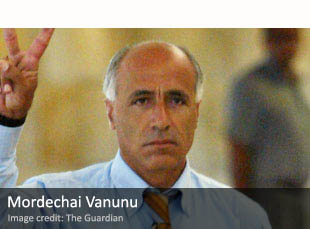
►►The long and sordid history of sex and espionage. Using seduction to extract valuable information is as old as the Old Testament —literally— Whether from conviction or for profit, women —and men— have traded sex for secrets for centuries. The Cold War provided plenty of opportunities for so-called “honey-pot” scandals. Perhaps the most dramatic case of seduction in recent times involved Israeli nuclear technician Mordechai Vanunu. In 1986 he visited London and provided The Sunday Times with dozens of photographs of Israel’s alleged nuclear weapons program. But Mossad was on his trail and a female agent —Cheryl Ben Tov— befriended him (reportedly bumping into him at a cigarette kiosk in London’s Leicester Square). She lured him to Rome for a weekend, where he was drugged and spirited to Israel.

Analysis: Biometric passports, iris scanners, worry undercover spooks

Biometric passportBy JOSEPH FITSANAKIS | intelNews.org |
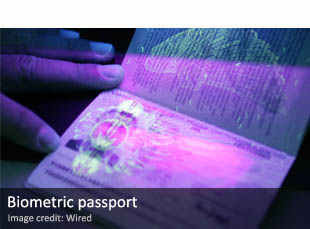
False passports are to intelligence operatives what petrol is to automobiles. In the absence of forged travel documentation, intelligence officers working undercover are unable to operate internationally without revealing their identity. This is why, traditionally, intelligence operatives are known to “use and discard false passports like hand wipes”, in the words of one knowledgeable source. But according to a fascinating article by veteran intelligence correspondent Jeff Stein, authored for Wired magazine’s Danger Room blog, “the day of the trench-coated spy easily slipping in and out of countries on false papers multiple times [may be] coming to an end”. The reason is “the electronic curtain [that] is descending all over the world”, most notably the increasing deployment of iris recognition devices and biometric passports at airports and hotels around the world, says Stein. Over the coming decade, iris scanners, which employ mathematical pattern-recognition techniques to identify individuals by their irides, will become increasingly common at international airports. The same applies to biometric passports, namely travel documents with embedded microchips that store a massive amount of personal information. These technologies are ostensibly being introduced in international transport hubs in order to combat transnational terrorism and organized crime. But they are also expected to heavily interfere with the work of undercover intelligence operatives, says Stein, especially as they are being introduced in popular spy routes, in countries such as India, Jordan, United Arab Emirates, as well as in several European Union entry points. He quotes an unnamed “career spook” currently working for the Central Intelligence Agency as a consultant, who explains that an undercover officer’s biometric identity will be forever linked to the passport that he or she first uses to enter these countries. If the officer were to try to enter these countries again, using a different alias, alarm bells will ring: “you can’t show up again under a different name with the same data”, says the CIA consultant. Read more of this post

News you may have missed #713 (analysis edition)

RAW headquarters, New Delhi, IndiaBy IAN ALLEN | intelNews.org |
►►Israel wary of changes in the Arab world. For decades, Israel had been hoping for change in the Arab world. Yet now that the region is in upheaval, its not just Israeli citizens who are concerned. The government has shown a preference for walling itself in rather than exploring new opportunities. The Jewish state has tried to integrate itself into the Middle East for decades. Now it is trying to cut the cord between itself and the surrounding region, blocking out the changes in its neighborhood.
►►Melting Arctic may redraw global geopolitical map. If, as many scientists predict, currently inaccessible sea lanes across the top of the world become navigable in the coming decades, they could redraw global trading routes —and perhaps geopolitics— forever. This summer will see more human activity in the Arctic than ever before, with oil giant Shell engaged in major exploration and an expected further rise in fishing, tourism and regional shipping. But that, experts warn, brings with it a rising risk of environmental disaster not to mention criminal activity from illegal fishing to smuggling and terrorism.
►►Why Indian intelligence doesn’t work too well in Pakistan. Sources in the RAW, India’s external agency, say India lacks both political will and the capability to carry out a hit inside Pakistan. “We do not have the mandate to do what Mossad does. Our charter does not include the job of getting [or assassinating] people from other countries. If such political will is there, the agency would be able to do it”, says a senior RAW official. Another former officer, who has spent a considerable time studying these outfits, attributes it to the fundamental difference between India and Pakistan in dealing with espionage. “It takes a great deal of money and time to cultivate sources in foreign soil. We don’t have either in plenty, unlike countries in the West. Pakistan’s ISI is better off in this as the state sponsors terrorism”, he says.

Interview with ex-Mossad director Meir Dagan

Meir DaganBy JOSEPH FITSANAKIS | intelNews.org |
The former director of Israel’s most revered intelligence agency has given an extensive interview on why he believes a military strike against the Iranian nuclear program “should be the last option” for Israel. In November 2010, Meir Dagan stepped down from his post as the head of the Mossad after having led the agency for over eight years —the longest tenure of any Mossad director. During his leadership, the Israeli intelligence agency augmented its notoriety by assassinating Imad Mughniyah, security chief of the Lebanese militant group Hezbollah, and allegedly killing Islamic Hamas weapons procurer Mahmoud al-Mabhouh. The Mossad is also said to have played a role in Operation ORCHARD, the 2007 Israeli air attack on what is thought to have been a secret nuclear reactor in Al-Kibar, Syria. However, when it comes to the Iranian nuclear program, the 67-year-old retired spy is adamant that the military option would be a strategic error of gigantic proportions. Last year, Dagan admonished calls by hawkish Israeli politicians to bomb Iran as “the stupidest idea” he had ever heard. In an interview with Reuters news agency published on Thursday, April 5, Dagan said the word “stupid” was “a harsh expression” and “not something [he is] very proud of”. But he insisted that the military option should be last on the table, and said that it would be a mistake for Israel to lead international action against the Iranian nuclear program. Instead, the “Iranian problem” should be “left in the hands of the international community”, said Dagan. The Mossad veteran went on to identify three main problems with the military option. To begin with, he said, military action, no matter how damaging in the physical sense, “cannot disarm the core factor of the Iranian program: knowledge” about how to build a nuclear device. Second, Dagan argued that, even if a military strike managed to eliminate a considerable portion of the Iranian nuclear program’s infrastructure —which is not at all assured— it would likely cause a significant backlash. That backlash would culminate in “a regional war” that would involve simultaneous actions by non-state forces allied with Iran, including Hamas, Islamic Jihad, and Hezbollah. Read more of this post

News you may have missed #705

Neil HeywoodBy IAN ALLEN | intelNews.org |
►►UK man found dead in China had links to intel company. It has emerged that Neil Heywood, a British citizen and China expert, who was recently found dead in a hotel room in China, was an adviser to Hakluyt, a corporate intelligence firm founded by former MI6 officers. Hakluyt has confirmed that Heywood prepared periodic reports for it, but said he had not been working for the company at the time of his death.
►►Analysis: Iraq war ghosts haunting CIA in tackling Iran. At America’s top spy agency, the ghosts of Iraq are never far away. One CIA analyst who had helped develop some of the intelligence about Saddam Hussein’s supposed weapons of mass destruction had a breakdown, months after the Iraq war began; he had participated in the post-invasion hunt there that found the weapons did not exist. When he eventually was given a new assignment assessing Iran’s nuclear program, he confided a fear to colleagues: that the intelligence community might get it wrong again.
►►Interview with African-American CIA official. Starting in the early 1980s, as a standout undergraduate student at Colgate University, Harvard-trained lawyer and master of several languages, Justin Jackson is now the most senior African-American at the CIA. From 1983 to 2010, he served under five presidents and 10 CIA directors. “My job was to collect foreign intelligence from those human sources who were reporting on the plans and intentions of our adversaries. I also conducted covert action as directed by the administration and I ran counterintelligence operations to detect efforts that foreign countries were making against us”, he says.

Analysis: US spy agencies stil in the dark about Syria

Regional map of SyriaBy JOSEPH FITSANAKIS| intelNews.org |
It has been almost a year since the ongoing anti-government uprising erupted in Syria. But intelligence agencies in the United States are still struggling to make sense of most aspects of the spiraling conflict. In February, the US Department of State closed down its embassy in the Syrian capital Damascus and recalled all of its diplomatic personnel, including US Ambassador to Syria, Robert Ford, to Washington. Since then, the Central Intelligence Agency, which conducted its operations in Syria largely out of the US embassy there, has been forced to rely on scattered fragments of its agent network in Damascus, as well as on the work of a handful of allied intelligence services, including those of Jordan, Turkey, Israel, and Saudi Arabia. Naturally, the closure of the US embassy in Syria has boosted the role of the signals intelligence collection and satellite reconnaissance. But, none of these intelligence collection channels have been able to compensate for the lack of adequate human intelligence collection from inside Syria. As a result, according to The Washington Post, which cites “senior US officials”, US intelligence-gathering on the situation in Syria is currently “fragmentary [and] out of focus”. Specifically, the US intelligence community remains unclear about the tactical and strategic intentions of the regime of Syrian President Bashar al-Assad, and has limited information about the makeup and strength of the opposition forces in the country. Perhaps more importantly, American intelligence analysts have little evidence on which to base any sort of firm conclusions about the extent of involvement of militant Islamists in the funding and operations of the Syrian opposition. Read more of this post