Analysis: US spy agencies stil in the dark about Syria
March 8, 2012 2 Comments
 By JOSEPH FITSANAKIS| intelNews.org |
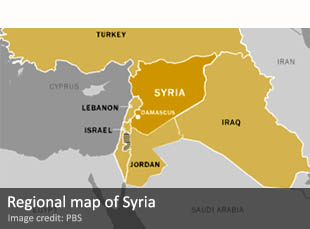
It has been almost a year since the ongoing anti-government uprising erupted in Syria. But intelligence agencies in the United States are still struggling to make sense of most aspects of the spiraling conflict. In February, the US Department of State closed down its embassy in the Syrian capital Damascus and recalled all of its diplomatic personnel, including US Ambassador to Syria, Robert Ford, to Washington. Since then, the Central Intelligence Agency, which conducted its operations in Syria largely out of the US embassy there, has been forced to rely on scattered fragments of its agent network in Damascus, as well as on the work of a handful of allied intelligence services, including those of Jordan, Turkey, Israel, and Saudi Arabia. Naturally, the closure of the US embassy in Syria has boosted the role of the signals intelligence collection and satellite reconnaissance. But, none of these intelligence collection channels have been able to compensate for the lack of adequate human intelligence collection from inside Syria. As a result, according to The Washington Post, which cites “senior US officials”, US intelligence-gathering on the situation in Syria is currently “fragmentary [and] out of focus”. Specifically, the US intelligence community remains unclear about the tactical and strategic intentions of the regime of Syrian President Bashar al-Assad, and has limited information about the makeup and strength of the opposition forces in the country. Perhaps more importantly, American intelligence analysts have little evidence on which to base any sort of firm conclusions about the extent of involvement of militant Islamists in the funding and operations of the Syrian opposition. Read more of this post
 By IAN ALLEN | intelNews.org |











 intelNews.org
News you may have missed #705
April 2, 2012 by Ian Allen Leave a comment
►►UK man found dead in China had links to intel company. It has emerged that Neil Heywood, a British citizen and China expert, who was recently found dead in a hotel room in China, was an adviser to Hakluyt, a corporate intelligence firm founded by former MI6 officers. Hakluyt has confirmed that Heywood prepared periodic reports for it, but said he had not been working for the company at the time of his death.
►►Analysis: Iraq war ghosts haunting CIA in tackling Iran. At America’s top spy agency, the ghosts of Iraq are never far away. One CIA analyst who had helped develop some of the intelligence about Saddam Hussein’s supposed weapons of mass destruction had a breakdown, months after the Iraq war began; he had participated in the post-invasion hunt there that found the weapons did not exist. When he eventually was given a new assignment assessing Iran’s nuclear program, he confided a fear to colleagues: that the intelligence community might get it wrong again.
►►Interview with African-American CIA official. Starting in the early 1980s, as a standout undergraduate student at Colgate University, Harvard-trained lawyer and master of several languages, Justin Jackson is now the most senior African-American at the CIA. From 1983 to 2010, he served under five presidents and 10 CIA directors. “My job was to collect foreign intelligence from those human sources who were reporting on the plans and intentions of our adversaries. I also conducted covert action as directed by the administration and I ran counterintelligence operations to detect efforts that foreign countries were making against us”, he says.
Filed under Expert news and commentary on intelligence, espionage, spies and spying Tagged with 0 Interview with African-American CIA official, 0 Iraq war ghosts haunting CIA in tackling Iran, 0 UK man found dead in China had links to intel company, Analysis, China, CIA, Hakluyt, Iran, Iranian nuclear program, Iraq, Iraq War, Justin Jackson, MI6, Neil Heywood, News, news you may have missed, suspicious deaths, UK, United States