Analysis: How serious a blow did the CIA suffer in Lebanon?

Lebanon

Lebanon

By JOSEPH FITSANAKIS | intelNews.org |
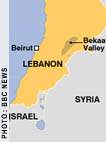
Late last month, the Central Intelligence Agency admitted that a number of its agents in Lebanon had been captured by Hezbollah, the Shiite militant group that controls large parts of the country. The group announced the arrests in the summer, but in was only on November 21 that the Associated Press confirmed the accuracy of Hezbollah’s claims from a US intelligence source. Neither Hezbollah nor the CIA have offered details of the arrests, but it is generally assumed that the captured agents were not officers of the CIA, but rather Lebanese or Iranian citizens who had been recruited as assets by CIA case officers. Regardless, the incident has undoubtedly directly impacted the Agency’s operations in Lebanon, and maybe Iran. The question is, how much? Former CIA operations officer Robert Baer, who spent several years in Lebanon in the 1980s, has penned an analysis article in Time magazine, in which he says that his sources tell him the arrests of the CIA agents represent “a serious compromise”, and that the Agency is “still trying to get to the bottom of [it]”. Baer also provides some new information about the method used by Hezbollah counterintelligence to capture the CIA agents. Last week, ABC News reported that the arrests were caused by careless spy tradecraft on behalf of the CIA. Specifically, according to ABC, “Hezbollah operatives figured out that CIA informants, who had infiltrated the Iranian proxy group, were meeting with their agency handlers at a Beirut Pizza Hut. How could Hezbollah deduce that location? The CIA used the codeword ‘PIZZA’ when discussing where to meet with the agents”. But Baer says that the arrests were not necessarily caused by CIA errors; rather it may have been advanced counterintelligence analysis by Hezbollah that compromised the agents. He claims that Hezbollah is using telephone link analysis, a type of signals intelligence testing that utilizes advanced software “capable of combing through trillions of gigabytes of phone-call data”. The aim of telephone link analysis is to search for unusual communications patterns —such as too many brief calls, or heavy reliance on prepaid cell phones that seem to become disused after only a few calls. Read more of this post

News you may have missed #638 (analysis edition)

Dominique Strauss-Kahn

Strauss-Kahn

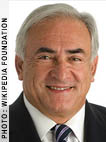
►►What really happened to Strauss-Kahn? Earlier this year, Dominique Strauss-Kahn lost his political career and his job as head of the International Monetary Fund after he was indicted in New York on sexual assault charges, which were later dropped. But investigative journalist Edward J. Epstein alleges that the French politician may have been the target of a deliberate attempt to destroy him as a political force. His allegations relate to a missing BlackBerry phone which is said to have been hacked by Strauss-Kahn’s political rivals.
►►Spy game revs up with Arab Spring. A broad –perhaps too broad– primer on espionage and intelligence operations in the Middle East, with quotes by several academics and former intelligence operatives. Parts of it are probably too basic for intelNews regulars, but worth a look nonetheless.
►►Why is UK police not investigating Climategate? The UK police force tasked with investigating the hacking of emails and documents from the Climatic Research Unit at the University of East Anglia (the debunked “Climategate“), seems to have quietly de-prioritized its investigation. According to documents released under the UK Freedom of Information Act, the amount spent on attempts to identify the hacker in the last year was just £5,649.09 (less than $8,000), suggesting police work on the investigation has ground to a halt.

Analysis: Cloud computing causes ‘cosmic shift’ in US spy community

Cloud computing

Cloud computing

By JOSEPH FITSANAKIS | intelNews.org |
While many are focusing on recent reports of arrests of CIA operatives in Lebanon and Iran, American intelligence planners have other things on their minds: the latest buzzword is ‘cloud’; specifically, ‘cloud computing’. The term means storing information and software on a network, which can then be shared on demand by users of interconnected electronic devices. The US intelligence community’s interest in this form of data organizing has been known for quite some time. But according to specialist publication Federal Computer Week, cloud computing is rapidly becoming a reality, as one after the other, US intelligence agencies are “moving their classified, sensitive information off their own servers and into the cloud”. Such a change “might have sounded crazy five years ago”, says FCW, and the fact that it is happening marks nothing less than a “cosmic shift” for American intelligence. The migration unto the cloud was spearheaded two years ago by the National Security Agency; the NSA was later joined by the Defense Intelligence Agency, the National Geospatial-Intelligence Agency, and the super-secretive National Reconnaissance Office. Soon the CIA wanted in: in 2009, Jill Tummler Singer, the CIA’s deputy Chief Intelligence Officer, told ComputerWorld that the CIA was becoming one of the US government’s strongest advocates for cloud computing, even though “the term really didn’t hit our vocabulary until a year ago”. Not everyone is super-excited about the cloud. Last year, Brian Snow, the NSA’s former Technical Director, said at a conference that he didn’t trust cloud services, mostly because of the existence of countless unpatched software vulnerabilities. But the move is heavily supported by two of America’s most senior intelligence officials: Keith Alexander, commander of US Cyber Command and director of NSA —America’s largest intelligence agency— and Director of National Intelligence James Clapper. Read more of this post

Did US agencies fail to heed warnings of 2008 Mumbai attacks?

David Coleman Headley

David Headley

By JOSEPH FITSANAKIS | intelNews.org |
We have written before that the CIA alerted Indian authorities prior to the 2008 Mumbai attacks, which killed 166 people, including six American citizens. The incident, which was perpetrated by Pakistani-based militant group Lashkar-e-Taiba, is routinely described as the most sophisticated and spectacular terrorist strike since 9/11.  But there are numerous questions about the complex relationship between the United States, Lashkar-e-Taiba, and Pakistan’s Inter-Services Intelligence (ISI) directorate, which is widely believed to be protecting the terrorist group. Many of these questions center on David Coleman Headley, an American citizen, born in Washington, DC, who is currently in US custody, having confessed to helping plan the Mumbai attacks. According to Headley’s own court testimony, he worked for the ISI; moreover, despite early denials, the US government eventually admitted that Headley was a paid informant for the US Drug Enforcement Administration. There is, however, intense speculation in India and Pakistan that Headley, who is of Pakistani background, is in fact a CIA agent-gone-rogue, who used his CIA connections to pursue his militant plans undisturbed (something with the CIA flatly denies). Such rumors are reinforced by the US authorities’ puzzling refusal to allow Indian government investigators of the Mumbai attacks access to Headley. The curious relationship between US intelligence agencies and David Headley has been probed by several media outlets, including The New York Times, which in March of 2010 pointed out that Headley “moved effortlessly between the United States, Pakistan and India for nearly seven years, training at a militant camp in Pakistan on five occasions”. Now a new documentary by investigative group ProPublica, which aired on Tuesday as part of PBS’ Frontline television series, has unearthed new information that shows US government agencies failed to heed “repeated warnings over seven years”, which might have helped prevent the Mumbai attacks. Read more of this post

Ex-CIA officer points to al-Qaeda banners appearing in Libya

Charles S. Faddis

Charles S. Faddis

By JOSEPH FITSANAKIS | intelNews.org |
Amidst the excitement in the West over the toppling of the late Libyan leader Muammar al-Gaddafi, few have been paying attention at the frequent appearances of the al-Qaeda banner in locations around Libya. The characteristic black flag bears the Arabic inscription of the shahada, the Islamic creed, which states that “there is no god but Allah, and Muhammad is his messenger [prophet]”. Within hours following the official pronouncement of the lynching of Colonel Gaddafi, al-Qaeda banners were flying over the de facto headquarters of Libya’s US-backed National Transitional Council (NTC) in Benghazi, as well as in numerous other locations around the North African country. There have even been reports of threats leveled against reporters who were observed trying to photograph or film the unmistakable banners. Former CIA covert operations officer Charles Faddis, who spent several years working in the Middle East, has penned a new article urging Western policy makers to stop viewing the NTC as a force promoting some sort of Western-type democratic administration in Libya. Undoubtedly, he says, some NTC members do “wish for a Libya with a Western style democratic government”. But the NTC is an umbrella group bringing together “individuals from many walks of life in the opposition”, he says, including fighters motivated primarily by tribal and regional loyalties, as well as Islamist activists guided by distinctly conservative interpretations of the Qur’an. One such activist is Mustafa Abdul Jalil, leader of the NTC, who in his historic celebratory speech following the formal end of the civil war, told ecstatic supporters that, from now on, Libya would be “an Islamic state”, and that all legal provisions that conflicted with the Sharia —Qur’anic law— would be invalidated. Since that day, there have been reports of beauty salons closing and of women being forced to wear the hijab, says Faddis. Read more of this post

News you may have missed #626

Katia Zatuliveter

Katia Zatuliveter

►►Analysis: On largely forgotten CIA officer Jim Thompson. The CIA’s longtime man in Southeast Asia, Jim Thompson, fought to stop the agency’s progression from a small spy ring to a large paramilitary agency. He was in many ways unique, but by the 1950s and early 1960s he would become part of a larger, growing, and much less idealistic machine, one that would expose his naiveté –and punish him for it. Interesting historical analysis from Foreign Policy.
►►Court blocks naming NATO official who had affair with alleged Russian spy. We have written before that Katia Zatuliveter, who is accused by British MI5 of being a spy for Russia, has admitted having a four-year affair with Liberal Democrat MP Mike Hancock, as well as with a Dutch diplomat and a NATO official. The latter, a German diplomat, was pictured in a newspaper last week. However, his face was obscured because of the terms of a court order that means he cannot be identified.
►►Promises made about Colombia’s new spy agency. Colombia’s disgraced DAS intelligence agency has finally been dissolved. Now the government’s senior National Security adviser, Sergio Jaramillo, has said that Colombia’s new intelligence service will focus on combating “government infiltration by criminal organizations”. I guess it doesn’t hurt to be ambitious.

Analysis: China an ‘easy scapegoat’, says leading cybersecurity expert

Mikko Hypponen

Mikko Hypponen

By JOSEPH FITSANAKIS | intelNews.org |
It is fashionable nowadays to single out China as the primary source of global cyberespionage. During the past few days alone, the Japanese government said Chinese hackers had attacked computers systems in its Lower Parliament, while Britain’s General Communications Headquarters (GCHQ) pointed to Beijing as the main culprit behind an unprecedented rise in organized cyberattacks. A few days ago, the United States intelligence community publicly named for the first time China and Russia as “the most aggressive collectors” of US economic information and technology online. But is the image of China as the ultimate cyber-villain accurate? Not necessarily, according to leading cybersecurity expert Mikko Hypponen. Speaking earlier this week at the PacSec 2011 conference in Tokyo, Japan, Hypponen, who leads computer security firm F-Secure, disputed the predominant view that a single country could be the source of the majority of organized cyberattacks directed against governmental and corporate targets. It is true, said Hypponen, that cyberespionage attacks “are commonly attributed to the Chinese government”. Moreover, it does appear like “a lot” of these attacks are indeed coming from Chinese sources, he said. But the problem of attribution —accurately and conclusively determining the responsible agency behind a cyberattack— remains unresolved in our time. Even if Chinese servers are conclusively identified as sources of such attacks, it would be dangerous to assume that Chinese government operatives —and not rogue agents, or nationalist hacker gangs— are necessarily behind them. Additionally, it is entirely possible that other countries —perhaps even Western countries— could be behind such attacks, but that they consciously try to mask them in such a way as to make China appear responsible. The reason is that Beijing is “such an easy scapegoat”, said Hypponen. Read more of this post

News you may have missed #625

Ahmed Al Hawan

Ahmed Al Hawan

►►Egypt’s most famous spy dies at 74. Egypt’s most famed spy on Israel, Ahmed Al Hawan, 74, has died after a long fight with illness, local media reported on Wednesday. Al Hawan worked for the Egyptian intelligence service during the years that followed Egypt’s military defeat by Israel in 1967. He supplied the Israelis with mistaken and misleading information that was crucial in Egypt’s war with Israel in 1973.
►►Analysis: Dark days for Taiwan’s spies. When Taiwan’s government last month announced budget cuts in military intelligence, the Ministry of National Defense (MND) insisted operations against mainland China would not be affected. However, media paint a vastly different picture, suggesting Taiwan’s future leaders will be completely deaf and blind to secretive developments across the Taiwan Strait.
►►US cyberespionage report names adversaries. A US intelligence report released last week concluded China and Russia are “the most aggressive collectors” of US economic information and technology online. But the report also states that America’s “allies and partners“, including the “French and the Israelis” are also stealing the s vital industrial and commercial secrets by infiltrating computer networks.

Analysis: CIA Open Source Center monitors Facebook, Twitter, blogs

CIA HQ

CIA HQ

By JOSEPH FITSANAKIS | intelNews.org |
The Associated Press has been given unprecedented access to the United States Central Intelligence Agency’s Open Source Center, which is tasked with, among other things, monitoring social networking media. The Center, which was set up in response to the events of 9/11, employs several hundred multilingual analysts. Some are dispatched to US diplomatic missions abroad, but most work out of “an anonymous industrial park” in the US state of Virginia, which the Associated Press agreed not to disclose. The analysts, who are jokingly known in CIA OSINT (open-source intelligence) parlance as “ninja librarians”, engage in constant mining of publicly available information. The latter ranges from articles found in scholarly journals, to civilian television and radio station programs, as well as information available on the Internet. According to the Associated Press report, the Center began paying particular attention to social networking websites in 2009, when Facebook and Twitter emerged as primary organizing instruments in Iran’s so-called “Green Revolution”. The term describes the actions that Iranians opposed to President Mahmoud Ahmadinejad took to protest the disputed election results that kept him in power. Since that time, the CIA’s Open Source Center has acquired the ability to monitor up to five million tweets a day, and produces daily snapshots of global opinion assembled from tweets, Facebook updates and blog posts. Its executive briefings reportedly find their way to President Barack Obama’s Daily Brief on a regular basis. The Associated Press was given access to the Center’s main facility, and interviewed several of its senior staff members, including its Director, Doug Naquin. He told the news agency that the CIA Open Source Center had “predicted that social media in places like Egypt could be a game-changer and a threat to the regime”, but had been unable to foresee the precise development of Internet-based social activism in the Arab world. Read more of this post

News you may have missed #617

Ilan Grapel

Ilan Grapel

►►Analysis: Is the CIA Still an Intelligence Agency? Early September 2011, a former intelligence official commented to The Washington Post that, “The CIA has become one hell of a killing machine”. He then attempted to retract, but his words were on record. But is that really what it should be: a hell of a killing machine?
►►US National Security Agency helps Wall Street battle hackers. The National Security Agency, a secretive arm of the US military, has begun providing Wall Street banks with intelligence on foreign hackers, a sign of growing US fears of financial sabotage. While government and private sector security sources are reluctant to discuss specific lines of investigations, they paint worst-case scenarios of hackers ensconcing themselves inside a bank’s network to disable trading systems for stocks, bonds and currencies, trigger flash crashes, initiate large transfers of funds or turn off all ATM machines.
►►Israel okays deal with Egypt to free alleged spy. Israel’s security cabinet unanimously approved an agreement Tuesday for the release of Israeli-American law student Ilan Grapel (pictured), who has been in jail in Egypt since June 12 on spying allegations that were later reduced to incitement. In exchange, Israel will release 22 Egyptian prisoners, most of them Bedouin from the Sinai jailed for smuggling drugs or weapons.

Analysis: United States and Germany spy on each other

BND seal

BND seal

By JOSEPH FITSANAKIS | intelNews.org |
Newly released documents reveal that the Central Intelligence Agency has maintained an active program of espionage against Germany in the post-Cold War era, and experts say that Germany reciprocates the ‘favor’. According to an article in the latest issue of German newsmagazine Focus, the US intelligence community, led by the CIA, has been keeping tabs on Germany’s intelligence agencies since the 1950s, and continues to do so today. The magazine’s editors say they are in possession of internal government documents, which describe constant CIA monitoring on the Bundesnachrichtendienst (BND), Germany’s main external intelligence agency. The CIA’s spying extends to Germany’s counterintelligence agency, known as the Federal Office for Protection of the Constitution (Bundesamt für Verfassungsschutz). CIA operations against the Office have reportedly included the interception of telephone calls, some of which involved high-level conversations between German and British or French intelligence officials. Focus claims that CIA spying against the BND actually intensified following German reunification in 1990, as the American agency kept tabs on German intelligence officers with former Nazi or communist past. According to one report, the CIA was able to verify that at least two BND officers with service in the Nazi SS had joined a NATO sabotage unit. The magazine spoke to an unnamed former BND counterintelligence officer, who said he was not in the least surprised by the revelations. Commenting yesterday on the Focus report, Washington-based reporter Jeff Stein argued that a little friendly spying is to be expected among allied intelligence services. The veteran intelligence correspondent spoke to an unnamed former CIA officer, who told him that the espionage between Washington and Berlin has not been “a one-way street” —the BND also spies on the CIA and other American intelligence agencies. Read more of this post

News you may have missed #612 (analysis edition)

Cevat Ones

Cevat Ones

►►What is a senior CIA clandestine officer doing at NYPD? Three months ago, one of the CIA’s most experienced clandestine operatives started work inside the New York Police Department. His title is special assistant to the deputy commissioner of intelligence. On that much, everyone agrees. Exactly what he’s doing there, however, is much less clear.
►►Iranian plot shows even super spies have bad days. The alleged Iranian plot to assassinate the Saudi ambassador to the United States may have revealed the biggest secret of all –intelligence agencies mess up and do not always live up to the James Bond ideal.
►►Former spy makes plea for peace in Turkey. Cevat Ones, former deputy chief of MİT, Turkey’s leading spy agency, speaks candidly to Canada’s Globe & Mail newspaper about the state of Turkey’s internal security and foreign policy.

News you may have missed #608 (analysis edition)

Anwar al-Aulaki

Anwar al-Aulaqi

►►Spying on the United Nations. “Here is one of the well-known but seldom spoken truths about the United Nations: The international organization, which was founded in the name of peace and security, is also a hotbed of spying and clandestine operations, where someone might very well be listening to your conversations and monitoring your emails —-or perhaps reading your speeches in advance […]. The CIA is prohibited from domestic intelligence-gathering but, since the United Nations is considered foreign soil, it is authorized to run covert actions there”.
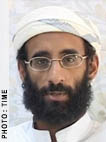
►►Secret panel can put Americans on ‘kill list’. American militants like Anwar al-Aulaqi, who was killed by a CIA drone strike in Yemen late last month, are placed on a kill or capture list by a secretive panel of senior US government officials, which then informs the President of its decisions, according to officials. There is no public record of the operations or decisions of the panel, which is a subset of the White House’s National Security Council.
►►Blowback from CIA’s bin Laden vaccination ruse gets worse. If it wasn’t clear before, it is now: the fake vaccination program that the CIA set up before the Osama bin Laden raid really went awry. Not only did this plan not work –no bin Laden family DNA was obtained– but it also hobbled polio immunization drives and forced Save the Children to evacuate staffers from Pakistan out of fear of a backlash.

News you may have missed #603

Syed Ghulam Nabi Fai

Syed Fai

►►Turkey has names of Israeli soldiers who attacked Gaza Flotilla. According to Turkish media, government officials succeeded in amassing the list of 174 names of officers and soldiers involved in the 2010 MV Mavi Marmara attack, by planting intelligence agents inside Israel. Turkish government officials have denied the reports.
►►Ex-MI5 chief to hear deportation case of alleged spy. A British judge has ruled that Sir Stephen Lander, former director of MI5, Britain’s domestic intelligence service, can help to decide whether Katia Zatuliveter should be deported from the UK for allegedly spying for Russia. Zatuliveter, a Russian citizen who worked as an assistant to former British Member of Parliament Mike Hancock, may be deported on the basis of espionage evidence gathered by MI5.
►►Analysis: Pakistan’s spy plot to influence Washington. Syed Ghulam Nabi Fai came to the US on Saudi money with hopes of helping people in the disputed Indian territory of Kashmir. But he found himself spending millions on behalf of Pakistan’s notorious Inter-Services Intelligence and, now, under arrest. An excellent article by The Atlantic‘s Kim Barker, Habiba Nosheen, and Raheel Khursheed.

Analysis: Ex-CIA WMD director warns of ‘morphed’ Islamist groups

Charles S. Faddis

Charles S. Faddis

By JOSEPH FITSANAKIS | intelNews.org |
In recent months, the heads of the United States Pentagon and the Central Intelligence Agency have opined that the United States may be close to “strategically defeating al-Qaeda”. These were the words used by former CIA Director and current Defense Secretary, Leon Panetta in July, to describe the current state of Washington’s ‘war on terrorism’. Shortly afterwards, General David Petraeus, who replaced Panetta at the helm of the CIA, echoed his predecessor, arguing that the situation following the death of Osama bin Laden “hold[s] the prospect of a strategic defeat […], a strategic dismantling, of al-Qaeda”. But do such optimistic projections correspond to reality on the ground? In a new column for Homeland Security Today, former CIA operations officer Charles S. Faddis, who retired from the Agency in 2008 as the chief of its weapons of mass destruction counterterrorism unit, agrees that al-Qaeda has been “severely battered” in the ten years since 9/11. But he warns that, while America insists of engaging in “large-scale conventional military operations” in Afghanistan, and essentially “a strategic bombing campaign” in Pakistan, a new generation of terrorist groups appears to have “shifted, morphed and evolved”. In light of this reality, the recent comments by Panetta and Petreaus may suggest “the possibility of a loss of focus” in American counterterrorist operations, says Faddis. The former CIA covert operations officer, who has written several books since his retirement, goes on to discuss the rapid rise of several ethnic or regional militant Islamist groups, including Nigeria’s Boko Haram. The organization made macabre headlines earlier this month, when it launched a massive suicide attack against a United Nations office complex in the Nigerian city of Abuja, killing and injuring over 100 people. He also mentions the Islamic State of Iraq, a notorious outfit whose most recent strikes display an operational sophistication that often surpasses that of Boko Haram’s. Read more of this post