News you may have missed #0261

  • Analysis: CIA has long struggled with ensuring safe interrogations. The debate within the CIA about how to handle agents in war zones surfaced in Iraq in 2003. There was a dispute about how to balance the safety of CIA personnel with the needs of intelligence gathering. The controversy went on for more than a year, but in the end, by 2005, CIA officers had generally stopped meeting agents in the “red zones” of Iraq, that is, outside secured areas.
  • Germany to probe CIA murder and rendition plots on its soil. German legislators will probably launch an investigation into claims that the US Central Intelligence Agency (CIA) plotted to murder an alleged al-Qaeda fundraiser in Hamburg, and that it placed agents in Germany to sweep up terrorist suspects without informing German authorities.

Bookmark and Share

Analysis: Should US spy agencies learn from France?

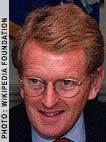
Jean-Louis Bruguiere

J.L. Bruguiere

By JOSEPH FITSANAKIS | intelNews.org |
What precisely is wrong with the US intelligence system? I have read several good analyses lately, all sparked by the disastrous Christmas holiday week, which included the Christmas Day bomber fiasco and the killing of seven CIA personnel in Afghanistan. One is written by ex-CIA operations officer Charles Faddis, who argues that the Agency’s central deficiency is that it places emphasis on process, rather than on mission accomplishment. Another, broader, analysis is authored by Ron Capps, the US Pentagon’s former director of human intelligence/counterintelligence operations in Afghanistan, who suggests that the way to break down bureaucratic walls between US intelligence agencies is to publish more unclassified reports. The most interesting commentary, however, is written by Paris-based Jean-Louis Bruguière, a French former Magistrate who led counterterrorism investigations from 1981 to 2007. Read more of this post

News you may have missed #0251 (analysis edition)

Bookmark and Share

News you may have missed #0249

  • Analysis: Making Sense of the New CIA Battlefield in Afghanistan. “The military backgrounds of the fallen CIA operatives cast a light on the way the world of intelligence is increasingly muscling up and becoming militarized […]. This is no longer intelligence as anyone imagines it, nor is it military as military was once defined […]. And worse yet, from all available evidence, despite claims […] it seems remarkably ineffective”.
  • CIA planned to ‘rendition’ suspects in Germany in 2001. The CIA had 25 agents in Germany after the September 11 attacks and planned to illegally rendition al-Qaeda suspects without informing the German government. In the end, the plan was scrapped because of objections by the Agency’s German section.
  • French president appoints woman in charge of spy school. Nicolas Sarkozy is to create a ‘school for spies’, whose principal job will be to discourage French intelligence chiefs from spying on, and fighting against, one another. There are rumors that the school’s first director will be woman academic with no previous experience of espionage.

Bookmark and Share

News you may have missed #0248

  • Cuba insists jailed US contractor is secret service agent. Cuban officials say that a US citizen working for Maryland-based international aid group Development Alternatives Inc., who was arrested in Havana last month, was actually recruiting local Cubans to spy on the government.
  • Analysis: Spying in Eastern Europe heats up again. The Cold War may be 20 years dead and buried, but it seems that the old East-West spying game is not only alive and kicking, but gaining vigor in places like Warsaw, Prague and Tallinn.
  • Obama designates new list of secrecy gatekeepers. The US president has designated over two dozen officials as “original classification authorities” (OCAs), who have the power to classify government information as Top Secret or Secret, and (in most cases) to delegate such authority to their subordinates. Importantly, the directive says that OCAs will lose their job if they fail to “receive training in proper classification […] at least once a calendar year”.

Bookmark and Share

Analysis: Germany’s spies struggle to adapt to post-Cold War changes

BND logo

BND logo

By IAN ALLEN | intelNews.org |
Nearly everyone in Germany recognizes that the global intelligence landscape has changed, almost beyond recognition, in the years since the end of the Cold War. Current challenges are far more underground in nature, far more flexible, far more unpredictable. The question is, has Germany’s primary intelligence agency, the BND, changed along with the times? The answer is not so simple. The BND continues to struggle immensely with bureaucratic inefficiency and substandard human and financial resources, explains Deutsche Welle‘s Peter Philipp. Even when it does produce useful intelligence, its advice is not always taken into consideration by German government officials, who tend to have their own opinions on political developments. “Most politicians do have their own view of the world order”, says former BND chief Hans-Georg Wieck, “so [we] must address the[m] in a way that makes them more likely to act on [our] information”. Philipp’s interesting editorial can be accessed here.

Bookmark and Share

News you may have missed #0246 (CIA bombing edition)

  • Analysis: Strike on CIA base tests US assessment of al-Qaeda. The militant group appears to have achieved a new level of sophistication and may not be as weakened as US officials had thought.
  • Photo of CIA suicide bomber published. Qatar-based Arabic news network Al Jazeera has published a photograph of Jordanian doctor Humam Khalil Abu-Mulal al-Balawi, 36, who last month killed at least 7 CIA agents in Khost, Afghanistan.
  • Al-Qaida CIA bomber was furious over Gaza war. Suicide bomber Humam Khalil Abu-Mulal al-Balawi was furious over Israel’s Gaza offensive, the London-based Arabic daily Al-Quds Al-Arabi reported on Thursday, citing the man’s sister.
  • Analysis: The view from Jordan on CIA’s deaths in Khost. For Jordan, far more embarrassing than its role in the Khost suicide bombing, is its connection with the CIA, which while relatively well-known before, has now been put out in the public sphere for all to see –especially the Arab street.
  • London Arabic newspaper visits home of CIA bomber. The Jordanian authorities have imposed a security cordon around al-Balawi’s family home, which is located in the residential al-Nuzha district, close to the Jabal al-Hussein Palestinian refugee camp in the Jordanian capital of Amman. But a London-based Arabic-language newspaper correspondent managed to visit the location and speak with the bomber’s family members and neighbors.

Bookmark and Share

News you may have missed #0240

  • Major purge in Gambian security services continues. Ngorr Secka, the former deputy director general of Gambia’s National Intelligence Agency, has reportedly been arrested. The arrest marks the latest development in a major purge that began last July, after the chief of the country’s armed forces, Lt. Colonel Sainey Bayo, fled to the United States reportedly while being “investigated for supplying sensitive state secrets to an unnamed Western country”.
  • Jerusalem memorial may honor British Auschwitz spy. The Yad Vashem Holocaust Memorial in Jerusalem may honor Denis Avey, 91, who as a British prisoner of war in Monowitz (a.k.a. Monowice or Auschwitz III) prisoner camp, convinced Ernst Lobethall, a Jew held at nearby Auschwitz concentration camp, to give him his ID badge and concentration camp uniform. He then walked back to Auschwitz on two occasions, gathering valuable evidence about the Nazis’ Final Solution.

Bookmark and Share

News you may have missed #0239

  • Iran denies secret deal to import Kazakh uranium. Iran and Kazakhstan have denied a report that they were close to clinching a deal to transfer to Iran 1,350 tons of Kazakh purified uranium ore. The IAEA has declined comment.
  • US travel security lapses to mark end of the line for DHS? The US Department of Homeland Security “is adrift and treated as an orphan by the rest of the [US intelligence] community but is so badly staffed by low quality people that no other agency will ever take them seriously”, according to an anonymous former senior US intelligence official.

Bookmark and Share

News you may have missed #0238

  • The real story behind Nigerian bomber security lapses. “The real story line internally is not information sharing or connecting dots”, a former intelligence official said. “It was separating noise from chaff. It’s not that information wasn’t passed around; it’s that so much information is being passed” (Research credit to Politico‘s Laura Rozen).
  • Obama orders creation of declassification center. US President Barack Obama created by executive order Tuesday a National Declassification Center to oversee efforts to make once-secret government documents public. Among other things, the executive order eliminates the ability of intelligence officials to veto declassification decisions.

Bookmark and Share

News you may have missed #0231

  • Chinese honey trap methods net another victim. This time it was M.M. Sharma, an Indian diplomat posted with India’s mission in China, who reportedly had an affair with “a Chinese female spy”. She managed to gain access to his personal computer and “peruse [classified] documents without any restraint”. London’s ex-deputy mayor, Ian Clement, must feel better knowing he is not alone.
  • NSA’s $1.9 billion cyber spy center a power grab. Extensive –if a little ‘light’– analysis of the US National Security Agency’s planned new data storage center in Utah, by Chuck Gates of Deseret News.
  • Connecticut police spying on Democratic Party activists? Kenneth Krayeske, a political activist and free-lance journalist is suing the Connecticut State Police, claiming that officers engaged in “political spying [by using] cloaked Connecticut State Police addresses [to] subscribe to e-mail bulletin boards and lists […] that contain political information relating to the Green Party, the Democratic Party” and independent political activists.

Bookmark and Share

A veteran British envoy on diplomacy, sex and espionage

Christopher Meyer

Christopher Meyer

By IAN ALLEN | intelNews.org |
British newspaper The Daily Mail has published a well-written and entertaining essay by a longtime UK government envoy, explaining the close links between diplomacy, sex and espionage. Sir Christopher Meyer, a career diplomat with the UK’s Foreign and Commonwealth Office, served in several countries during his career, including the Soviet Union and Spain, as well as in Germany and the United States, where he was ambassador from 1997 to 2003. He argues in his article that “sex and diplomacy have long been bedfellows”, and recounts some of his personal experiences in the former USSR, where he began his 35-year diplomatic career in 1968, as “an innocent, unmarried 24-year- old”. He arrived in Moscow along with Sir Duncan Wilson, Britain’s ambassador to the Soviet Union from 1968 to 1971. Sir Christopher is bold enough to recount that Sir Duncan’s predecessor, Sir Geoffrey Harrison (ambassador from 1965 to 1968), “had to leave [Moscow] in a hurry, having fallen for the charms of his Russian maid –trained and targeted, of course, by the KGB”. Read more of this post

News you may have missed #0204

  • Release of secret US reports to be postponed (again). Millions of secret US government documents are scheduled to be declassified at the end of the year, unless President Barack Obama extends the deadline, like his predecessors have done. The White House is reportedly preparing an executive order that will postpone the declassification, in order to assuage various US intelligence agencies “unwilling to part with their secrets”. Change, Mr. Obama?
  • Analysis: Why India needs an intelligence revamp. We have written before about the urgent need to restructure Indian intelligence agencies.

Bookmark and Share

Analysis: Is an obscure US military unit replacing the CIA?

Joint Special Operations Command logo

JSOC logo

By IAN ALLEN | intelNews.org |
An obscure US military unit established in 1980 is gaining prominence in America’s “war on terrorism” and may be slowly replacing the CIA’s functions, according to a well-researched piece in The Atlantic magazine. The US Pentagon’s Joint Special Operations Command (JSOC) was created soon after the fiasco of the attempted rescue of the hostages held at the US embassy in Tehran. Since 9/11, the unit has emerged from its relative obscurity to join the forefront of America’s so-called “global war on terrorism”. Gathering evidence from a variety of sources investigating the use of paramilitary operations in America’s post-9/11 wars, Max Fisher argues that, even under the Obama Administration, JSOC may in fact be “taking on greater responsibility, especially in areas traditionally covered by the CIA”. Read more of this post

Analysis: The role of spies in Latin America

Latin America

Latin America

By IAN ALLEN | intelNews.org |
These days it’s a full-time job keeping up with intelligence news coming out of Latin America. In recent weeks alone, there were major spy scandals involving the busting of an alleged Colombian espionage ring in Venezuela, the acknowledgment by Bogotá that it spied on Ecuador, and the ongoing high-level intelligence scandal that some say may cause recalls of diplomats between Chile and Peru. So what is going on in Latin America? How widespread is espionage in the continent and is it on the rise? The BBC’s Juan Paullier has consulted several regional and international experts for his well-written analysis on the subject. Read more of this post