Australian civil servant accused of spying denied access to evidence
September 11, 2013
 By IAN ALLEN | intelNews.org |
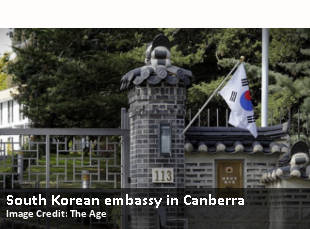
Australia’s Federal Court has rejected a bid by a senior civil servant to view the evidence the government is using to accuse him of espionage. Until September of 2011, Dr. Yeon Kim was a career civil servant with the Australian Bureau of Agricultural and Resource Economics and Sciences (ABARES). His specialization in international trade policy required a security clearance, which Kim had possessed since 2001. But in 2011, he was sacked and had his security clearance revoked for allegedly holding clandestine meetings with officers of South Korea’s National Intelligence Service (NIS). The Australian government accuses Kim of meeting repeatedly with Hoo-Young Park, an employee of the South Korean embassy in Canberra, who had been declared to the Australian government as an NIS liaison officer. According to court documents, three other NIS officers serving under diplomatic cover in Australia, Bum-Yeon Lee, Sa-Yong Hong, and a third man named Kim, were involved in collecting intelligence on Australian trade secrets. The Australian Security Intelligence Organisation (ASIO), which detained Kim, said that he willingly participated in the “foreign interference” operation by the NIS. For several months now, Kim has been contesting the Australian government’s legal case against him in the Federal Court. His legal team recently requested that the Court annul two certificates issued by the Australian attorney general, designed to bar the defense from accessing evidence against Kim. The certificates were originally submitted by government prosecutors during an earlier Administrative Appeals Tribunal hearing. But the Court declined the request, saying the defense waited too long to challenge the certificates. In issuing the ruling, Justice Lindsay Foster said Kim’s legal team should have requested that the certificates be declined during the original hearing. The judge censured Kim’s defense lawyers for “stand[ing] by and watch[ing] while the certificates were [originally] deployed”, adding that it would undermine the integrity of the legal process to allow the certificates to be challenged at this late stage. Read more of this post









 intelNews.org
KGB ‘ran two Australian politicians as agents’ in 1970s: document
October 15, 2013 by Joseph Fitsanakis
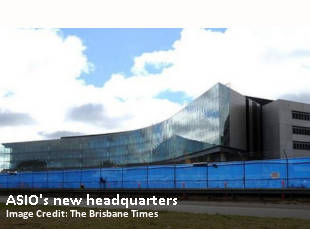
Soviet intelligence recruited and ran at least two Australian elected politicians as agents for the USSR in the 1970s, according to a confidential account authored by an Australian counterintelligence officer. The report’s author is allegedly an unnamed former employee of the Australian Security Intelligence Organisation (ASIO), which is tasked with counterespionage. Australia’s Fairfax Media, which claimed yesterday to have accessed the report, described it as “an unusually candid document”. It allegedly describes Soviet intelligence activities on Australian soil during the last two decades of the Cold War and names known Soviet intelligence officers operating in Australia at the time. Among those named is Vladimir Yevgenyevich Tulayev, described in the confidential report as “a hard-eyed, well-dressed thug” who was “aggressively involved in intelligence operations in Australia”. The document also names Geronty Lazovik, considered by AFIO as a “definite agent runner”. Australian counterintelligence described Lazovik as a far more refined operative than Tulayev and kept tabs on him as he developed and cultivated “a wide range of contacts” across Australia’s Federal Parliament. The report suggest that Australian Labor Party politicians, aides and lobbyists were among Lazovik’s “contacts” in Australia, though it does not explicitly name them as agents of the Soviet KGB. Arguably the most important allegation made in the report is that another KGB operative in Australia, Vladimir Aleksandrovich Aleksyev, was able to recruit and run “two Australian politicians as agents” in the late 1960s and early 1970s. The document states that Aleksyev was able to handle the two alleged recruits “using tradecraft of a fairly high order”, suggesting that he was perhaps one of the KGB’s most successful known case officers in Australia. The confidential report alleges that the ASIO leadership approached the Australian government with information about the operations of the KGB officers. Read more of this post
Filed under Expert news and commentary on intelligence, espionage, spies and spying Tagged with ASIO, Australia, Australian Security Intelligence Organisation, Cold War, espionage, Geronty Lazovik, Gough Whitlam, history, KGB, News, USSR, Vladimir Aleksandrovich Aleksyev, Vladimir Aleksyev, Vladimir Tulayev, Vladimir Yevgenyevich Tulayev