News you may have missed #612 (analysis edition)

Cevat Ones

Cevat Ones

►►What is a senior CIA clandestine officer doing at NYPD? Three months ago, one of the CIA’s most experienced clandestine operatives started work inside the New York Police Department. His title is special assistant to the deputy commissioner of intelligence. On that much, everyone agrees. Exactly what he’s doing there, however, is much less clear.
►►Iranian plot shows even super spies have bad days. The alleged Iranian plot to assassinate the Saudi ambassador to the United States may have revealed the biggest secret of all –intelligence agencies mess up and do not always live up to the James Bond ideal.
►►Former spy makes plea for peace in Turkey. Cevat Ones, former deputy chief of MİT, Turkey’s leading spy agency, speaks candidly to Canada’s Globe & Mail newspaper about the state of Turkey’s internal security and foreign policy.

Ex-CIA officer says US may be ‘dangerously wrong’ on alleged Iran plot

Robert Baer

Robert Baer

By JOSEPH FITSANAKIS | intelNews.org |
Robert Baer, who spent over two decades working for the CIA in the Middle East, has warned that the FBI may be “dangerously wrong” in its assessment that Iran is behind an alleged plot to assassinate the Saudi ambassador to the United States. The Obama administration said yesterday that two Iranian agents had been arrested for planning to kill Saudi diplomat Adel al-Jubeir in Washington, DC, with help by members of a Mexican drug cartel. The FBI said that the two Iranians, Manssor Arbabsiar and Gholam Shakuri, were operating on behalf of Iran’s Quds Force, a unit inside the Islamic Revolutionary Guard Corps’ (IRGC) specifically tasked with exporting the Iranian Revolution abroad. The arrests prompted a strong reaction from the United States, which said it will impose new punitive measures against the regime in Tehran —a move that is certain to further-ignite tensions between the two countries. But speaking on Australian national radio, Baer said that the alleged assassination plan does not appear to be connected with the IRGC or any other part of Iran’s state apparatus. The operation, as outlined by the FBI, does not fit the “modus operandi” of the Iranian security services, said Baer. The latter are “much better than this […]. They wouldn’t be sending money through an American bank; they wouldn’t be going to the cartels in Mexico to do this. It’s just not the way they work. I’ve followed them for 30 years and they’re much more careful. They always use a proxy between them and the operation, and in this case they didn’t”. Baer also spoke to the BBC World Service and to The Washington Post, where he is quoted as saying that there is “sloppiness about the case that defies belief”. The former CIA case officer urged the Obama administration to step back, re-examine its case, and avoid “retaliatory attacks [such as bombing] a Quds Force base in Tehran […], which would lead to a huge escalation”. Instead, he urged Washington to open “direct diplomatic channel with the Iranian regime or risk igniting an uncontrollable war”. Read more of this post
News you may have missed #608 (analysis edition)

Anwar al-Aulaki

Anwar al-Aulaqi

►►Spying on the United Nations. “Here is one of the well-known but seldom spoken truths about the United Nations: The international organization, which was founded in the name of peace and security, is also a hotbed of spying and clandestine operations, where someone might very well be listening to your conversations and monitoring your emails —-or perhaps reading your speeches in advance […]. The CIA is prohibited from domestic intelligence-gathering but, since the United Nations is considered foreign soil, it is authorized to run covert actions there”.
►►Secret panel can put Americans on ‘kill list’. American militants like Anwar al-Aulaqi, who was killed by a CIA drone strike in Yemen late last month, are placed on a kill or capture list by a secretive panel of senior US government officials, which then informs the President of its decisions, according to officials. There is no public record of the operations or decisions of the panel, which is a subset of the White House’s National Security Council.
►►Blowback from CIA’s bin Laden vaccination ruse gets worse. If it wasn’t clear before, it is now: the fake vaccination program that the CIA set up before the Osama bin Laden raid really went awry. Not only did this plan not work –no bin Laden family DNA was obtained– but it also hobbled polio immunization drives and forced Save the Children to evacuate staffers from Pakistan out of fear of a backlash.

South Korea charges North Korean agent caught carrying ‘poison-tipped needle’

Park Sang-hak

Park Sang-hak

By JOSEPH FITSANAKIS | intelNews.org |
The South Korean government has formally pressed charges against a North Korean defector, whom it accuses of trying to kill an outspoken anti-Pyongyang activist living in the South, with the use of a poison-tipped needle. As intelNews reported last month, a man identified only as ‘Ahn’ was arrested at a subway station in southern Seoul, as he tried to assassinate Park Sang-Hak. The alleged target of the assassination is a high-profile North Korean defector known for spearheading an imaginative —and often controversial— propaganda campaign directed against the government of North Korea. In one recent case, Park, along with his wife and children, employed dozens of inflatable helium balloons to smuggle thousands of leaflets, dollar bills, solar-powered radios, and DVDs into North Korea. According to the Korean Central Prosecutor’s Office in Seoul, Park’s activities prompted Pyongyang to employ ‘Ahn’, a North Korean former Special Forces commando, to try to kill the anti-communist propagandist. According to South Korean officials, ‘Ahn’, has operated as a North Korean sleeper agent ever since his relocation to Seoul, in the late 1990s. In the summer of 2011, ‘Ahn’ contacted Park and eventually managed to arrange a meeting with him at a suburban subway station in the South Korean capital for September 3. However, several days prior to the arranged rendezvous, Park received notice from South Korea’s National Intelligence Service (NIS) that ‘Ahn’ was out to either kidnap or kill him. The alleged North Korean agent was arrested at the subway station at the time of his meeting with Park. South Korean government prosecutors claim that NIS agents found a poison-tipped needle in ‘Ahn’s’ possession, which they plan to use as evidence at his upcoming closed-door trial. Read more of this post

News you may have missed #605

Hamid Karzai

Hamid Karzai

►►French intelligence ‘spied on Socialist politician’. Hand-picked” French intelligence agents allegedly spied on the private life of François Hollande, the Socialist whom polls predict is best-placed to beat Nicolas Sarkozy in next year’s presidential elections. They are also said to have spied on Hollande’s partner, Valérie Trierweiler –-potentially France’s future first lady.
►►US to release Cuban spy under supervision. Rene Gonzalez, the first of five Cubans imprisoned in the United States as spies since 1998 will regain his freedom Friday but won’t be able to go home for three more years because of a court order requiring he remain under US supervision.
►►Afghan intelligence says it stopped plot to kill Karzai. A plot to kill Afghan President Hamid Karzai has been foiled by Afghan intelligence agents in Kabul who arrested six men with links to al-Qaeda and the Haqqani network. The discovery of the plot comes just two days before the 10th anniversary of the invasion of Afghanistan in retaliation for the September 11 attacks in the US and, had it been successful, would have plunged the country further into chaos.

News you may have missed #601 (CIA edition)

Tony Mendez

Tony Mendez in 1990

►►CIA invests in information technology. In-Q-Tel, the CIA’s technology investment group, is backing NetBase, which develops semantic search technology, as well as Connectify, which develops VPN software. In-Q-Tel’s role is to back commercial technologies that have the potential to aid intelligence and national security operations if developed further.
►►Interview with CIA disguise experts. The Washington Times has an interesting, lengthy interview with Tony and Joanna Mendez, both retired CIA disguise specialists. The two worked in the CIA’s Office of Technical Services, helping develop and deploy espionage gadgets –including a low-light camera that was used during the first moon landing and miniature lithium batteries that were the predecessors of the batteries used in modern portable electronics.
►►US government fights to keep Osama bin Laden death photos secret. Photographs and videos of al-Qaeda founder Osama bin Laden after he was killed in May in a US military/Central Intelligence Agency raid in Pakistan should not be released publicly. The reason, according ot the Obama administration, is because they would reveal military and intelligence secrets and could lead to violence against US personnel. This was argued by the administration’s lawyers in federal court in Washington on Monday.

News you may have missed #599

Erwin Rommel

Erwin Rommel

►►SAS planned to kill Nazi Field Marshal Rommel. The veil of secrecy surrounding Britain’s SAS special forces unit has been partially lifted to allow the publication of a new book detailing daring attacks behind Nazi lines in the Second World War. The book features an order for an ambitious but unsuccessful mission to kill or kidnap Nazi Field Marshal Erwin Rommel just after D-Day in 1944.
►►CIA says global-warming intelligence is ‘classified’. Two years ago, the US Central Intelligence Agency announced it was creating a center to analyze the geopolitical ramifications of “phenomena such as desertification, rising sea levels, population shifts and heightened competition for natural resources”. But whatever work the Center on Climate Change and National Security has done remains secret.
►►Japan sends new spy satellite into orbit. Japan at present has a total of three information-gathering satellites in orbit. All three are optical, which means they are able to capture images in broad daylight and in clear weather. The new spy satellite is said to replace one which is almost at the end of its useful life. The country is also planning to launch in two years time, radar satellites which can capture objects at night and in cloudy weather.

Seoul arrests N. Korean defector for ‘planning assassination’

Park Sang-hak

Park Sang-hak

By JOSEPH FITSANAKIS | intelNews.org |
South Korean authorities have announced the arrest of a North Korean defector, who is accused of planning to assassinate another defector involved in intensive propaganda operations against the North. A man identified only as “Ahn” was reportedly detained earlier this month after arranging a meeting with Park Sang-hak. Park is a high-profile North Korean defector, known for spearheading an imaginative —and often controversial— propaganda campaign directed against the government of North Korea. In one recent example, Park, his wife and children, used dozens of inflatable helium balloons to smuggle thousands of leaflets, dollar bills, solar-powered radios, and DVDs into North Korea. The nature of Park’s operations, which tend to be designed to attract worldwide media attention, is often the cause of diplomatic rifts between Pyongyang and Seoul, which does not formally endorse Park’s actions. The Associated Press spoke to two South Korean officials, who refused to be named; although they confirmed news of Ahn’s arrest, they refused to discuss a report by South Korea’s Yonhap News Agency, and now the BBC, according to which Ahn “had a poison-tipped needle on him” when he was detained by South Korean counterintelligence officers. This is the second time in recent months that South Korea has arrested North Korean defectors on suspicion of planning assassination operations. In April of 2010, Seoul announced that two North Koreans, who had defected to the South a few months earlier, had admitted to being intelligence officers on a Pyongyang-sponsored mission to assassinate a North Korean former senior official. The official, Hwang Jang-yop, is a former secretary of the Korean Workers’ Party and the ideological architect of juche, the philosophy of self-reliance, which is North Korea’s officially sanctioned state dogma. Read more of this post

News you may have missed #591

David Irvine

David Irvine

►►UK Prime Minister criticizes Russia over murdered spy. British Prime Minister David Cameron criticized Russia on Monday over its refusal to hand over Andrei Lugovoy, a former KGB agent suspected in the 2006 poisoning death of former Russian spy Alexander Litvinenko in London. He also rejected a call from Russia for the restoration of links between the two countries’ intelligence agencies. But the two sides did “set aside their political differences […] to sign multi-million dollar business deals”. Oh, well.
►►Aussie spy agency investigating more terror threats than ever. The Australian Security Intelligence Organization has trebled in size over the past decade and now has unprecedented powers. In a rare interview, ASIO Director General David Irvine says he is worried about the potential of an attack similar to the recent shootings and bombings in Norway.
►►‘Cuban Five’ spy member seeks return home after prison. Rene Gonzalez, a former Cuban intelligence officer convicted of spying in the US, wants a federal judge to permit his return to Cuba after his release from prison next month. But US government prosecutors say Gonzalez never showed remorse for his crimes and that there’s no justification for him to go to Cuba.

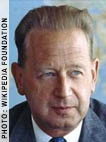
Was plane carrying UN Secretary General shot down in 1961?

Dag Hammarskjöld

Hammarskjöld

By JOSEPH FITSANAKIS | intelNews.org |
On September 17, 1961, a Douglas DC-6 transport aircraft carrying United Nations Secretary General Dag Hammarskjöld crashed in the British-administered territory of Northern Rhodesia (now Zambia). The crash killed everyone onboard, except one passenger, who died hours later. Three successive investigations into the crash, conducted by the Rhodesian Board of Investigation, the Rhodesian Commission of Inquiry, and the United Nations Commission of Investigation, viewed “pilot error” as the most likely cause of the tragedy. Göran Björkdahl, a Swedish aid worker with Sweden’s International Development Cooperation Agency, who is stationed in Burkina Faso, has spent three years researching Hammarskjöld’s death. He has produced a report with his findings, in which he cites interviews with several witnesses of the crash, who are still living. He says that, according to the evidence he has amassed, he has “no doubt” Dag Hammarskjöld’s plane was “shot down by an unidentified second plane”. In an article published in British quality broadsheet The Guardian, Björkdahl also claims that the only survivor of the downed DC-6, American sergeant Harold Julian, who was a member of the UN Secretary General’s security detail, was abandoned to die of his injuries at a makeshift hospital in Ndola, Northern Rhodesia. Björkdahl’s claim is based on his interview with colonial medical practitioner Mark Lowenthal, who tried to treat Julian in the hours following the airplane’s crash. Moreover, Björkdahl alleges that British colonial authorities in Northern Rhodesia were eager to cover up the details of the incident, and went out of their way to intimidate local villagers who witnessed the crash, and to downplay witness testimony suggesting that the Douglas DC-6 may have been shot down. Read more of this post

Saudis paid Pakistan to shelter bin Laden, claims security expert

R.J. Hillhouse

R.J. Hillhouse

By JOSEPH FITSANAKIS | intelNews.org |
An American academic and security expert with deep links in the intelligence community claims that, at the time of his killing by US Special Forces, Osama bin Laden was living under house arrest, following a secret arrangement between Pakistan and Saudi Arabia. Former professor and Fulbright Fellow R.J. Hillhouse has cited “sources in the intelligence community” in alleging that the CIA discovered bin Laden’s whereabouts through a Pakistani intelligence officer. The officer, who was privy to the alleged deal between the Saudis and the Pakistanis, appeared as ‘a walk-in’, a term meaning someone who voluntarily contacts an intelligence outpost, usually by simply walking into an embassy or consulate and asking to speak to the intelligence officer on duty. According to Hillhouse, the ‘walk-in’ provided CIA officers with detailed information as to the al-Qaeda leader’s whereabouts, in exchange for US citizenship for him and his family and the $25 million reward offered by the US Department of State for bin Laden’s head. According to Hillhouse’s story, which was picked up yesterday by The Daily Telegraph and The Sydney Morning Herald, the Pakistani informant also told the Americans that elements in the government of Saudi Arabia had entered into a complex monetary agreement with senior members of Pakistan’s main spy agency, the Inter-Services Intelligence directorate (ISI). Under the arrangement, the ISI was paid to keep bin Laden under house arrest in Abbottabad —a military community in Pakistan, selected precisely in order to keep bin Laden under constant and close supervision. Read more of this post

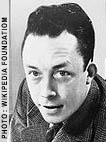
Soviet KGB may have killed Albert Camus, claims paper

Albert Camus

Albert Camus

By JOSEPH FITSANAKIS | intelNews.org |
Albert Camus, one of France’s most revered intellectuals, who died in a mysterious accident in 1960, may have been killed by Soviet intelligence, according to an article in one of Italy’s most reputable newspapers. Camus, a philosopher, novelist and journalist, who won the 1957 Nobel Prize for Literature, died on January 4, 1960, during a road trip from Provence to Paris. Camus had initially planned to accompany his wife and children on a train ride to Paris, but changed his mind at the last minute, after his trusted friend and publisher, Michel Gallimard, offered him a ride in his car to the French capital. That evening, as Gallimard and Camus were driving through the small town of Villeblevin, Gallimard’s Facel Vega FV3B rammed into a tree at high speed. Camus was killed instantly, while Gallimard died in hospital several days later. But an article published last week in one of Italy’s oldest newspapers, Corriere della Sera, claims that the two men may have been killed after Soviet intelligence agents sabotaged Gallimard’s car. The allegation is based on Italian literary scholar Giovanni Catelli, who reportedly unearthed a written testimony by Czechoslovakian author and translator Jan Zábrana. The testimony is included in the Czech-language edition of Zábrana’s personal diary, in which he claims that “a man who knew lots of things and had very informed sources” had told him that Camus’ assassination was “ordered personally” by Dmitri Shepilov, who was the Soviet Union’s Minister of Foreign Affairs from 1956 to 1957. Read more of this post

‘We killed Iranian scientist’ claims Israel intel source

Daryoush Rezaei

Daryoush Rezaei

By JOSEPH FITSANAKIS | intelNews.org |
A source in Israeli intelligence has told a quality German newsmagazine that Israel was behind the recent killing of an Iranian physicist in Tehran. The 35-year-old physicist, Darioush Rezaei, was shot twice in the throat on July 23, by two men on a motorcycle, as he and his wife were picking up their four-year-old daughter from kindergarten. Iranian authorities dismissed early reports that Rezaei was a nuclear academic, saying that there had been “some confusion” about the dead man’s identity, and that Rezaei was simply studying for a masters’ degree in electronics. It later became clear, however, that Rezaei’s electronics expertise was in the use of high-voltage switching systems for triggering nuclear warheads explosions. Rezaei was the fourth Iranian physicist or nuclear expert to be assassinated since 2007, after Ardeshire Hassanpour,  Masoud Ali Mohammadi and Majid Shahriari. Another nuclear scientist, Fereydoon Abbasi, who was injured in a separate bomb attack on the same day Dr Shahriari was killed, now heads Iran’s Atomic Energy Organization. There is little doubt in intelligence circles that the attacks on the Iranian researchers are part of a wider Western and Israeli covert action program that includes —apart from assassinations— sabotage and cyberwarfare. Now an article in German quality newsmagazine Der Spiegel quotes an unnamed “Israeli intelligence source” as saying that Rezaei’s July 23 assassination “was the first serious action taken by the new Mossad chief Tamir Pardo”. Read more of this post

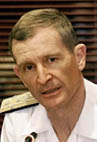
Former US spy chief questions ‘war on terrorism’ logic, tactics

Dennis Blair

Dennis Blair

By JOSEPH FITSANAKIS | intelNews.org |
America’s former top intelligence official has publicly questioned the logic and methods informing Washington’s “war on terrorism”, and called for the CIA unmanned drone assassination program in Afghanistan and Pakistan to be grounded. Dennis C. Blair, who was Director of National Intelligence (DNI) until May of 2010, was speaking last week at the Aspen Security Forum in Colorado.  In an hour-long forum conversation with television journalist Leslie Stahl, Blair —a retired Admiral— explained that, in his view, America’s “war on terrorism” is misconceived, strategically counterproductive and ludicrously expensive. Speaking on the CIA’s unmanned drone war in Afghanistan and Pakistan, Admiral Blair agreed that the drone attacks have killed some “mid-level” Taliban or al-Qaeda operatives, but said that the strikes have had a negligible overall impact on American security. As a terrorist outfit, al-Qaeda has shown that it is able to easily “sustain its level of resistance to an air-only campaign”, said Blair. Additionally, the former DNI said that unilateral air strikes are legally questionable and have proven strategically damaging, by “alienating the countries concerned” and dominating Washington’s relations with key nations such as Pakistan, Yemen and Somalia (click here to read intelNews’ criticism of American raids in Somalia). In doing so, the drone attacks tend to “threaten the prospects of long-term reform” in those countries, said the retired Admiral. Earlier in the conversation, Blair had questioned the economic basis of America’s “war on terrorism”, telling his audience that the US intelligence and security establishment currently spends around $20 million a year for each member of al-Qaeda scattered around the world. Read more of this post

News you may have missed #554

Bat Khurts

Bat Khurts

►►UK and US tried to delay Pakistan nuclear weapons program. We have written before about attempts by the CIA to delay or stop Pakistan’s nuclear program. Now newly declassified documents show that the United States and Great Britain undertook a coordinated secret diplomatic campaign between 1978 and 1981 to prevent Pakistan’s attempted covert purchasing of “gray area” technology for its nuclear weapons program.
►►FBI monitoring new phone technologies. According to an internal FBI document, obtained by the Federation of American Scientists through a FOIA request, the FBI continuously monitors the surveillance challenges posed by new mobile phone technologies. The document highlights the Bureau’s concerns that that 4G will require agencies to “deal with significantly higher data rates than in current wireless network intercepts”.
►►Mongolian ex-spy chief to be extradited to Germany. Britain has decided to extradite Bat Khurts, former director of the General Intelligence Agency of Mongolia, to Germany. Read more of this post