Ex-Mossad official denies Zygier compromised intelligence operation

Ben ZygierBy JOSEPH FITSANAKIS | intelNews.org |
A former Mossad official has dismissed as “nonsense” suggestions that an Australian-born Israeli spy, who killed himself in 2010, had been jailed for inadvertently compromising an Israeli secret mission. Ben Zygier was an officer in Israel’s covert-action agency Mossad for several years before he was placed in solitary confinement following his arrest in Israel, in February of 2010. Known to the outside world only as ‘Prisoner X’, he allegedly killed himself in his cell a few months later. In March, German newsmagazine Der Spiegel alleged that Zygier was arrested by Israeli intelligence after contacting a Lebanese Hezbollah operative without Tel Aviv’s authorization. The Australian-born spy was allegedly trying to recruit the operative on his own initiative and without permission from his superiors. In order to prove his Mossad credentials, Zygier is said to have given the man several names of Israel’s double agents operating inside Hezbollah. But the Lebanese recruit surrendered Zygier’s information to Hezbollah, which promptly arrested many of Israel’s informants inside the organization. Those arrested included Ziad al-Homsi, who at the time was believed to be one of the Mossad’s most lucrative assets inside the Lebanese militant group. On Tuesday, the Australian Broadcasting Corporation said that, at the time of his arrest in Lebanon, al-Homsi was preparing to assist the Mossad in recovering the bodies of three Israeli soldiers that had been killed in Syria during the 1982 Lebanon War. Read more of this post

News you may have missed #834

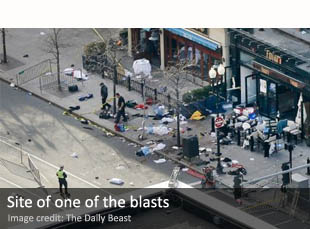
Site of one of the Boston Marathon blastsBy IAN ALLEN | intelNews.org |
►►Why FBI and CIA didn’t connect the dots on Boston bombers.  The FBI and the CIA are being criticized for not keeping better track of Tamerlan Tsarnaev in the months before the Boston Marathon bombings. How could they have ignored such a dangerous person? How do we reform the intelligence community to ensure this kind of failure doesn’t happen again? Legendary security expert Bruce Schneier says the idea of connecting the dots is a bad metaphor, and focusing on it makes us more likely to implement useless reforms.
►►Korean spy’s deportation reveals web of intrigue. Relations between Australia and South Korea have been strained after the East Asian economic powerhouse was caught soliciting sensitive information from public servants, and the deportation of a South Korean spy for espionage in 2009 was disclosed. New details of South Korean espionage in Australia were revealed in an unfair dismissal case before the Fair Work Commission brought by a former intelligence officer with the Australian Federal Police, Bo-Rim “Bryan” Kim.
►►Secret US court approved all domestic spying requests in 2012. The United States Foreign Intelligence Surveillance Court (also known as FISA court) quietly rubber-stamped nearly 2,000 government requests to search or electronically monitor people in the United States last year, according to a Justice Department report. The agency, which oversees requests for surveillance warrants against suspected foreign intelligence agents on US soil, released the report to Senate majority leader Harry Reid (D-Nevada), showing that by approving the 1,856 inquiries “for foreign intelligence purposes”, it had granted every single government request in 2012.

Revealed: South Korean intel officers caught spying on Australia

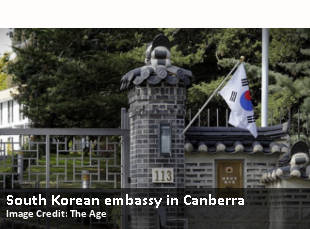
Embassy of South Korea in AustraliaBy JOSEPH FITSANAKIS | intelNews.org |
A court in Australia has released information about “inappropriate activities” allegedly conducted by South Korean intelligence officers targeting trade negotiations between Seoul and Canberra. The 2011 case involved operatives of South Korea’s National Intelligence Service (NIS), who purportedly tried “to obtain sensitive information” from Australian civil servants. The documents, released Tuesday by Australia’s Federal Court, reveal that an Australian government official, Dr. Yeon Kim, was sacked and had his security clearance revoked, for allegedly holding clandestine meetings with South Korean NIS officers. The Australian government accused Kim, who worked for the Bureau of Agricultural and Resource Economics and Sciences, of meeting repeatedly with Hoo-Young Park, an employee of the South Korean embassy in Canberra, who had been declared to the Australian government as an NIS liaison officer. According to the court documents, three other NIS officers serving under diplomatic cover in Australia, Bum-Yeon Lee, Sa-Yong Hong, and a man named Kim, were involved in collecting intelligence on Australian trade secrets. According to the Australian Security Intelligence Organisation (ASIO), which detained Kim, he willingly participated in the “foreign interference” operation by the NIS. It is worth noting, however, that there were no expulsions of South Korean intelligence officers or diplomats following Kim’s detention. On the contrary, ASIO appears to have gone to great lengths to prevent disclosure of the spy affair and even protect the identities of the NIS officers involved. In a move interpreted by some as an attempt by Canberra to safeguard its good relations with Seoul, the Australian government warned in a memo that any disclosure of the South Korean intelligence operation would have “a detrimental impact” on bilateral relations between the two nations. Read more of this post

Israel’s Prisoner X ‘gave Mossad secrets to Hezbollah’: German report

Ben ZygierBy JOSEPH FITSANAKIS | intelNews.org |
An Australian-born Israeli spy, who killed himself while being held in an Israeli prison in 2010, had been arrested for sharing Israeli secrets with the Lebanese militant group Hezbollah, according to a German report.  Ben Zygier was an officer in Israel’s covert-action agency Mossad for several years before he was placed in solitary confinement following his arrest in Israel, in February 2010. Known to the outside world only as ‘Prisoner X’, he allegedly killed himself in his cell a few months later. In February of this year, when an Australian television program identified ‘Prisoner X’ as Zygier, the Australian government admitted it had been aware of its citizen’s incarceration and death, but chose not to extend to him diplomatic support. One of the burning questions in the Zygier case relates to the precise reasons for his detention. On Sunday, German newsmagazine Der Spiegel said that the Australian-born Zygier was arrested by Israeli intelligence after contacting —on his own initiative and without permission— an individual with links to militant Shiite group Hezbollah. According to the Spiegel report, Zygier had been demoted from an operations officer to a desk clerk, having failed to produce actionable results after several years of fieldwork in Europe. Seeing his demotion as a major obstacle to his career, the Australian-born spy allegedly embarked on a ‘rogue’ mission, in an attempt to impress his Mossad superiors. In 2008, when the Israeli government allowed Zygier to return to Australia to pursue graduate studies, he secretly traveled to Europe and established contact with a man from a Balkan country known to have close links with Hezbollah, considered by Tel Aviv as one of Israel’s mortal enemies. Read more of this post

News you may have missed #825

Ben ZygierBy IAN ALLEN | intelNews.org |
►►Australian Mossad officer was facing 20 years in prison. Mossad operative Ben Zygier was facing 20 years in prison on “serious espionage” charges when he hanged himself in an Israeli prison, suggests a report published Wednesday by Australia’s Department of Foreign Affairs and Trade. The report is the first confirmation of the nature of Zygier’s indictment. Under Israeli criminal law, the only security-related crimes that carry a 20-year prison sentence fall under the heading of “serious espionage”.
►►MS-13 smuggles missile launchers and teams up with Zetas. Mara Salvatrucha, or MS-13, became El Salvador’s deadliest gang through force of numbers and the power of the handgun. Now if they weren’t deadly enough, the gang is transitioning into adopting heavier weapons while teaming up with Mexico’s Zetas. But according to a recent report, the gang is moving “away from a dependence on handguns via the acquisition of automatic rifles such as AK-47s, along with grenades, rocket propelled grenade launchers, and Light Anti-Tank Weapons”, or LAWs.
►►Secretive US anti-smuggling program marks one-year anniversary. A nascent and somewhat secretive US government anti-smuggling program is marking its first anniversary this week. It is called E2C2, shorthand for Export Enforcement Coordination Center, and 18 law enforcement and intelligence agencies use it to find links between their targets and other investigations. The E2C2 was created by presidential order in 2010, but the collaboration has evolved slowly. According to a Government Accountability Office report, the E2C2 opened nine months late, in part because of “some difficultly” between agencies over how the center would operate.

Former Mossad officer describes Zygier affair as ‘scandalous’

Ben ZygierBy JOSEPH FITSANAKIS | intelNews.org |
A former member of Israeli spy agency Mossad, who claims to have worked in the same covert-operations unit as Ben Zygier, has described the latter’s incarceration and subsequent death as “scandalous”. The Australian-born Zygier was a Mossad officer several years before he was placed in solitary confinement following his arrest in Israel, in February 2010. Known to the outside world only as ‘Prisoner X’, he allegedly killed himself in his cell a few months later. Earlier this month, when an Australian television program identified ‘Prisoner X’ as Zygier, the Australian government admitted it had been aware of its citizen’s incarceration and death, but chose not to extend to him diplomatic support. So far, the Mossad, Israel’s foremost covert-action agency, has remained silent on the matter. But a former Mossad operative, who uses the name Michael Ross, has weighed in with his opinion. Ross was born in Canada and converted to Judaism before joining the Mossad for 13 years, seven of which he claims to have spent in the same covert-operations unit as Zygier. Although he never met his Australian-born colleague, Ross wrote in The Daily Beast in the weekend that he and Zygier “were in the field at the same time, albeit in different units”. In his article, the former Mossad spy dismisses allegations that Zygier may have betrayed his employer, saying that he has seen no evidence that the Australian-born Jew was not dedicated to the mission of the Mossad. He argues that the circumstances surrounding Zygier’s incarceration in solitary confinement were “scandalous”, because the jailed spy presented “no danger to the public”. Instead, says the former spy, Zygier could have been dismissed from the spy service and placed under house arrest for as long as it would have been necessary for the accusations against him to be “dealt with internally”. Read more of this post

Did Aussies ‘burn’ Israel’s Prisoner X and was he also a British citizen?

Ben ZygierBy JOSEPH FITSANAKIS | intelNews.org |
As intriguing questions continue to mount about the case of Israel’s so-called ‘Prisoner X’, the flow of verifiable information from official channels in Australia and Israel has slowed to a trickle. However, two important analyses appeared over the weekend, which could potentially place the incarceration and subsequent death of Ben Zygier under new light. One claims that the Australian-born Israeli was a low-level Mossad operative who did not commit any serious crime —let along high treason. The other suggests that Zygier might have held British citizenship, in addition to being a dual Australian and Israeli citizen, and that the British government might have been privy to the information regarding his arrest and subsequent incarceration in Israel’s Ayalon prison. In an article for Ynet, the online outlet for Israel’s high-selling newspaper Yediot Ahronot, veteran security correspondent Ron Ben-Yishai posits that Zygier was simply a “support operative” for the Mossad, adding that he “did not commit treason”. Instead, says Ben-Yishai, Zygier was probably arrested by the Israelis because they suspected he might have given, or might consider giving, information about forged Australian passports to Canberra. The Mossad decided to detain him after he told them he had been contacted by Australian journalist Jason Koutskoukis in late 2009 and asked whether he was a Mossad operative. Koutsoukis was tipped-off by Australian counterintelligence, which suspected Zygier of supplying the Mossad with Australian passports in his possession. It was the stigma of being considered a traitor by his own people that drove Zygier —a passionate Zionist— to suicide, claims Ben-Yishai. Read more of this post

Interview: Israel’s ‘Prisoner X’ linked to 2010 al-Mabhouh killing

Ben ZygierThis morning I spoke to SBS Radio Australia’s Greg Dyett about the mysterious case of Ben Zygier, an Australian-born naturalized citizen of Israel, who is said to have killed himself in 2010 while being held at a maximum-security prison near Tel Aviv. As intelNews reported on Wednesday, Zygier, who is believed to have been recruited by Israel’s covert-action agency Mossad, had been imprisoned incommunicado for several months and was known only as ‘Prisoner X’, even to his prison guards. Is there any connection between Zygier’s incarceration and the January 2010 assassination of Palestinian arms merchant Mahmoud al-Mabhouh, in Dubai? And what could Zygier have done to prompt Israel to incarcerate him? You can listen to me discuss this mysterious case in an eight-minute interview here, or read the transcript, below.

Q: You say that, after conferring with your contacts in Israel, Europe and the United States, you believe that Ben Zygier had some sort of involvement in the assassination of Mahmoud al-Mabhouh in Dubai in January 2010.

A: Mahmoud al-Mabhouh was a weapons procurer for the Palestinian militant group Hamas. At this point, there is little doubt that the Mossad was behind this operation. Several members of the team that killed al-Mabhouh were using third-country passports —Irish, British, Australian, and others— to travel to and from Dubai. In the aftermath of the assassination, there were questions about how the Mossad operatives managed to get those passports; and, if you’ll remember, that led to the expulsion of several Israeli diplomats from around the world, including Australia. Read more of this post

Israel’s ‘Prisoner X’ supplied Australian passports to the Mossad

Ben ZygierBy JOSEPH FITSANAKIS | intelNews.org |
Concerns about the routine use of Australian passports by Israeli spies led to the exposure of Israel’s mystery ‘Prisoner X’, who killed himself in 2010 while in prison, it has been claimed. On Tuesday, ABC Australia reporter Trevor Bromann identified the mystery prisoner as Ben Zygier, an Australian father of two, who had been recruited by the Mossad, Israel’s covert-action agency, after moving to Israel in 2000. Zygier, whose identity had been withheld even from his prison guards, was arrested in early 2010 and was held for several months in Ayalon, Israel’s most secure prison, located southeast of Tel Aviv. Ayalon’s Unit 15, where Zygier was held, consists of a single cell constructed in 1995 to house Yigal Amir, the assassin of Israel’s Prime Minister Yitzhak Rabin. Remarkably, shortly after ABC Australia revealed Zygier’s identity, Israeli news outlets received telephone calls from the Office of Israel’s Prime Minister, requesting urgent meetings “in the interest of Israel’s national security”. Israeli media reported that senior news editors across Israel were told by the government “to exercise restraint” and refrain from exposing information that could have “very dramatic repercussions” for Israel’s security. Read more of this post

Israel’s ‘Prisoner X’ identified as Australian Mossad agent

Ben ZygierBy JOSEPH FITSANAKIS | intelNews.org |
In late 2010, an unnamed man known in Israel as ‘Prisoner X’ allegedly hanged himself while being held at a maximum-security prison near Tel Aviv. He committed suicide despite being under constant surveillance inside a facility originally built for the man who assassinated Israeli Prime Minister Yitzhak Rabin in 1995. So secret was the identity of the mysterious prisoner that, it was claimed, not even his guards knew his identity. Some in Israel speculated at the time that it might have been an abducted Iranian general. On Tuesday, however, an investigative Australian television program identified the dead man as an Australian citizen who had allegedly been recruited by the Mossad, Israel’s covert-action agency. ABC’s Foreign Correspondent program identified ‘Prisoner X’ as Ben Zygier, an Australian father of two, who moved to Israel in 2000 at the age of 24. The program said Zygier, who in Israel went by the name Ben Alon, was arrested by Israeli authorities in 2010 for unknown reasons. There is intense speculation, however, that Zygier’s secretive incarceration might be connected with an extremely serious security case, possibly involving high treason against the state of Israel. Despite the allegation by ABC of Zygier’s Mossad connection, Israeli news outlets are subjected to an active court order authorizing Israel’s Shin Bet internal security service to prohibit any media discussion on the subject. Israeli newspaper Ha’aretz reported on Tuesday that, hours after ABC’s revelation of Zygier’s identity, Israeli news outlets received telephone calls from the Office of the Israeli Prime Minister. Read more of this post

News you may have missed #819 (UKUSA edition)

Charles E. AllenBy IAN ALLEN | intelNews.org |
►►Aussie spies’ exemption from Freedom of Information laws to end? Currently, all Australian intelligence agencies are exempt from the operation of federal Freedom of Information (FOI) legislation that allows the public and journalists to seek access to government records. But now Australian Information Commissioner John McMillan has called for the intelligence agencies to no longer be exempted from FOI laws. Professor McMillan and FOI Commissioner James Popple have made the recommendation in a 97-page submission to the review of FOI laws by former Defence Department secretary and diplomat Allan Hawke.
►►US spy agencies move towards single super-cloud. The US intelligence community is developing a single cloud computing network to allow all its analysts to access and rapidly sift through massive volumes of data. Now in its eighth month, the goal of the effort is to connect the Central Intelligence Agency’s existing cloud to a new cloud run by the National Security Agency. This NSA-run network consists of five other intelligence agencies and the FBI. Both of these clouds can interoperate, but the CIA has its own unique needs because it must work with human intelligence, which necessitates keeping its cloud slightly separate, according to Charles Allen, formerly Undersecretary of Homeland Security for intelligence and analysis.
►►Canadian Army struggles with intelligence-gathering. The Canadian Army is trying to hold on to its intelligence-gathering capability and its ability to disrupt spying in the face of budget strain, according to documents from the Canadian Department of National Defence. The Canadian Press, which obtained the documents, says the Army is “anxious to protect HUMINT network and to better resource its counterintelligence abilities”, but is worried that its shrinking budget in the post-Afghanistan War era will cause “degradation” in those disciplines.

News you may have missed #799

Russell TiceBy IAN ALLEN | intelNews.org |
►►Is NSA using UK spy base to guide predator drones? Surrounded by farmland and sheep, hundreds of National Security Agency staff go to work every day at RAF Menwith Hill, where they eavesdrop on communications intercepted by satellite dishes contained in about 30 huge golf ball-like domes. Menwith Hill has been used by the NSA since the 1960s; but lately there is growing disquiet in Britain over whether intelligence gathered at the base is being used to help with the CIA’s controversial clandestine drone strikes. And the British government is keeping mum.
►►Aussie envoy seduced by spy feared her phone was bugged. Former senior Austrade commissioner to Hanoi Elizabeth Masamune, who recently admitted before an Australian court that she had sexual relations with a Vietnamese intelligence officer, told police she feared her Hanoi offices were bugged. In her statement during the trial of eight former Reserve Bank company executives on bribery charges, she said that after receiving a call from a journalist she recalled “being concerned of the level of information which she had. I was also more concerned about whether my phone was being monitored”, she said.
►►NSA whistleblower describes beating polygraph test. Russell Tice, the National Security Agency whistleblower who helped blow the lid open on warrantless wiretapping conducted by the federal government on US citizens post-9/11, says that he took between 12 and 15 polygraph tests during his nearly 20-year-long government career. The tests mellowed over time, Tice says, and they may have also gotten easier to beat. Tice, who is no longer at the NSA, says he, along with those still in contact with at the agency, marvel at how easy it is to beat the lie detector.

Court papers reveal Australian official’s affair with Vietnamese spy

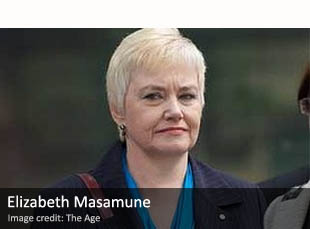
Elizabeth MasamuneBy IAN ALLEN | intelNews.org |
A statement filed with a federal court in Australia reveals that a Vietnamese intelligence officer, who is accused of having received millions of dollars in bribes to secure an international business contract, had an affair with an Australian government official involved in the deal. Australian federal authorities allege that the officer, Anh Ngoc Luong, a Colonel with Vietnam’s General Department of Military Intelligence, received AU$20 million (US$20.8 million) from Securency, a subsidiary of the government-owned Reserve Bank of Australia. According to Australian government prosecutors, who are suing eight Reserve Bank executives for bribing Anh, the Vietnamese intelligence officer was secretly paid to help secure a contract for the provision of banknote technology services between Securency and the State Bank of Vietnam. But it now appears that, while helping secure the lucrative deal, Anh had at least “two isolated sexual encounters” with Elizabeth Masamune, who at the time was a senior official with the Australian Trade Commission. Known informally as Austrade, the Commission operates under the country’s Department of Foreign Affairs and Trade and has offices in most Australian embassies and consulates around the world. It is tasked with representing Australia’s business interests abroad and helping Australian companies secure international business contracts. In a statement filed in court on Monday, Masamune said Anh had asked her out to dinner in the spring of 2002, while she was stationed in Vietnam. At the end of the dinner, the Vietnamese intelligence officer suggested that Masamune “go upstairs with him to a room in the hotel”. According to her statement, the Australian trade official agreed to do so “on the spur of the moment”. She added that her decision was motivated by her attraction to Anh and problems she was having in her marriage at the time. Read more of this post

News you may have missed #791

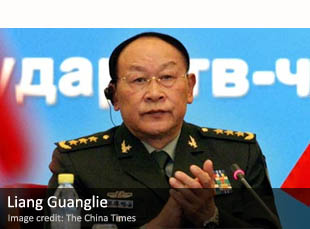
Liang GuanglieBy IAN ALLEN | intelNews.org |
►►India sees espionage behind Chinese cash payments to Indian pilots. According to Indian government sources, Chinese Defense Minister General Liang Guanglie gave two envelopes to the two Indian pilots, both wing commanders, who had flown him in a special Indian Air Force aircraft to New Delhi from Mumbai. After seeing off Liang, the pilots opened the sealed envelopes and found cash gifts inside. They immediately reported this to their superiors, who, in turn, informed the Indian Defense Ministry. India is now planning to lodge a protest with China over the incident.
►►NSA says foreign cyberattacks increasingly reckless. Debora Plunkett, of the secretive National Security Agency, whose responsibilities include protecting US government computer networks, has said that other nations are increasingly employing cyberattacks without “any sense of restraint”, citing “reckless” behaviors that neither the United States nor the Soviet Union would have dared at the height of Cold War tensions. She also predicted that Congress would pass long-stalled cybersecurity legislation within the next year. One wonders whether the Stuxnet incident is included in such “reckless” cyberattacks?
►►Taliban ‘using Facebook to lure Australian soldiers’. According to a review of social media by the Australian federal government, Australian soldiers are being warned by their commanders that enemies are creating fake Facebook profiles to spy on them. The report says that Taliban insurgents in Afghanistan are posing as “attractive women” on Facebook to befriend coalition soldiers and gather intelligence about operations. It adds that family and friends of soldiers are inadvertently jeopardizing missions by sharing confidential information online. This is not the first such warning in recent years.

News you may have missed #783

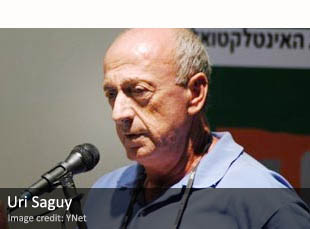
Uri SaguyBy IAN ALLEN | intelNews.org |
►►Israeli ex-intel chief says warns of ‘hysteria’ over Iran. Major General Uri Saguy (a.k.a. Uri Sagi), who was head of the IDF’s Operations Directorate during the 1982 Lebanon war, and Military Intelligence chief from 1991 to 1995, has warned of an “orchestrated and purposely timed hysteria that puts the country into a state of anxiety, artificial or not”, regarding the Iranian nuclear issue. Saguy, who resigned from the IDF in 1995 due to a conflict between him and the Chief of General Staff, added that “it would be a mistake if Israel uses force, certainly now, in order to thwart the Iranian nuclear potential”. The essence of Saguy’s message, notes Ha’aretz‘s Amir Oren, is that Israel’s citizens cannot trust Defense Minister Ehud Barak or Prime Minister Benjamin Netanyahu.
►►Australian spy chief warns of economic espionage. The director-general of the Australian Security Intelligence Organisation, David Irvine, has warned that the online revolution has left Australian companies increasingly vulnerable to cyber attacks and commercial espionage. Speaking to a business audience in Canberra, Irvine said that most online attacks in the business world go undetected, despite growing awareness of the threat. Asked how much commercial cyber crime went undetected, he said: “I would be very surprised if we who are active in this area are picking up the greater proportion of it, in fact, quite the reverse”.
►►Top US military official objects to attack on Iran. As Israeli officials are telling local reporters that they’re really, really ready to attack Iran’s nuclear facilities, and they mean it this time, the top US military officer is saying what a terrible idea that would be. “I may not know about all of [Israel’s] capabilities”, said General Martin Dempsey, the chairman of the Joint Chiefs of Staff. “But I think that it’s a fair characterization to say that they could delay but not destroy Iran’s nuclear capabilities”. Left unsaid: in a few years, the US and Israel would be back to the same standoff with Iran —except this time it might do so amidst a proxy terrorist war to avenge the Iranians.