Spies are known to use journalistic cover, claims Australian intelligence agency
August 15, 2019 2 Comments
 Foreign spies are known to pose as journalists, which is why journalists should not be exempted from national security investigations, according to testimony by a senior Australian counterintelligence official. The testimony was given on Wednesday at a public hearing held in the Australian parliament to address a series of raids of journalists’ homes and offices by Australian Federal Police in June. The raids were carried out to assist in the investigation of a leak of classified documents in April of last year. According to the leaked documents, Australian government officials have been considering the possibility of authorizing the Australian Signals Directorate (ASD) to collect information on Australians for the first time in the country’s history. The ASD is Australia’s signals intelligence agency, and is equivalent to the Government Communications Headquarters in Britain and the National Security Agency in the United States. It is currently not allowed to collect information on Australian citizens.
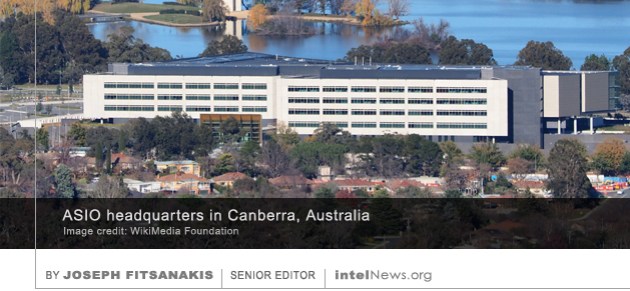
At the parliamentary inquiry that started on Monday, members of the media have argued that journalists should have the right to scrutinize the government’s actions and that journalism in the public interest is not harmful to the national security of Australia. But this argument was refuted yesterday by Heather Cook, deputy director-general of the Australian Security Intelligence Organisation (ASIO), Australia’s primary counterintelligence agency. Cook warned that if Australia exempted journalists from national security investigations, hostile foreign powers would exploit journalism to spy on the country. She added that the journalistic profession was being “used nefariously” by foreign intelligence agencies to spy on Australia. “In Australia today, journalism is being used as a cover by foreign intelligence actors”, said Cook, and went on to note that “there is a long history of this worldwide”. She said that journalism offers a convenient cover for spies because it provides “access to senior people and sensitive information” held by those in power.
Journalistic covers are therefore used by “foreign intelligence actors” who seek to “exploit vulnerabilities” and harm the security of Australia, said Cook. She went on to claim that members of foreign intelligence agencies regularly attempt to recruit Australian journalists for purposes of espionage. “In light of this”, said Cook, “ASIO has concern about the concept of exemptions for particular classes of people in the community, such as journalists. Broad exemptions for the media and journalists would invite exploitation by foreign intelligence actors and may increase the intelligence threat faced by Australian journalists”, she concluded. Also on Wednesday, the Australian Federal Police said that it would not rule out further raids on journalists’ offices and homes.
► Author: Joseph Fitsanakis | Date: 15 August 2019 | Permalink
 Foreign intelligence collection and espionage threats against Australia are greater today than at any time during the Cold War, according to a senior Australian intelligence official. The claim was made on Wednesday by Peter Vickery, deputy director general of the Australian Security Intelligence Organisation (ASIO), the country’s primary counterintelligence agency. He was speaking before a parliamentary committee that is considering aspects of a proposed bill, which aims to combat foreign influence on Australian political and economic life. If enacted, the bill would require anyone who is professionally advocating or campaigning in favor of “foreign entities” to register with the government. Several opposition parties and groups, including the Catholic Church, have










 intelNews.org
Threat from espionage is bigger than terrorism, says Australia’s spy chief
September 5, 2019 by Joseph Fitsanakis 1 Comment
The ASIO director said in his speech that terrorism poses “a terrible risk” and should be seen as “a very serious matter”. On the other hand, “terrorism has never been an existential threat to established states”, said Lewis. Additionally the risk from the current wave of Salafi-Jihadist terrorism has “plateaued” and should not be expected to increase drastically, he noted. On the other hand, the threat of foreign espionage “is ultimately an existential threat to the state, or it can be an existential threat to the state”, added Lewis. The ASIO director described espionage and foreign-influence activities as “typically quiet, insidious and with a long tail”. Thus, “unlike the immediacy of terrorism incidents”, the harmful effects of espionage may not appear for many years or even decades after the initial activity has been carried out, he said.
Additionally, said Lewis, Australia’s “middle power status” and close alliances with Western countries make it a major target for state-sponsored human and cyber espionage attacks. Adversary nations see Australia as “a rich target”, he said, and launched espionage operations against it daily. As a result, foreign intelligence operations against Australia are “on a growth path” and are taking place on an “unprecedented” scale and scope, according to Lewis. Such operations include “covert attempts to influence and shape the views of the [Australian] public, media, government and diaspora communities, both within Australia and overseas”, said Lewis, adding that they take place “every day”.
The espionage threat to Australia does not come from “one particular nation”, said the AFIO director, although some nations tend to display more “intent, sophistication and commitment” than others. Australia is obligated to resist against these threats by continuing to develop its counter-espionage capabilities and finding innovative and effective ways to detect and defend against foreign interference, Lewis said at the conclusion of his talk.
► Author: Joseph Fitsanakis | Date: 05 September 2019 | Permalink
Filed under Expert news and commentary on intelligence, espionage, spies and spying Tagged with ASIO, Australian Security Intelligence Organisation, counterintelligence, cyberespionage, Duncan Lewis, espionage, News