Hundreds of foreign spies in Brussels, European diplomatic agency warns

European Commission buildingThe European Union’s diplomatic agency has warned officials who are active in Belgium to watch out for “hundreds of spies” from various foreign countries, according to a German news report. The report appeared last weekend in Germany’s Welt am Sonntag newspaper, which cited a report from the European External Action Service (EEAS). Based in Brussels, the EEAS operates as the European Union’s diplomatic agency and is headed by Federica Mogherini, an Italian former government minister who has been serving as the European Union’s High Representative for Foreign Affairs and Security Policy since 2014.

According to Die Welt, the EEAS estimates that “approximately 250 Chinese and 200 Russian spies” are operating in Brussels. Most of these intelligence officers are allegedly embedded in their countries’ embassies, trade missions, cultural centers and other outreach facilities in the Belgian capital. There are also many intelligence operatives from Western agencies, including those of the United States, as well as from Iran, Turkey and Morocco, among other foreign nations. The report in Die Welt adds that the EEAS advised European Union diplomats to avoid certain establishments in the European Quarter of Brussels, which are believed to be heavily frequented by international spies. Among them are “a popular steakhouse and café” that are “within walking distance of the Berlaymont building” —the headquarters of the European Commission. The same building houses the offices of the EEAS.

Such warnings are not new. In June of last year, Peter Gridling, head of Austria’s main counterintelligence agency, said during a rare public appearance that Vienna —the spy capital of the world— no longer topped the list of preferred destinations for the world’s spies. He said that the Austrian capital had been overtaken by Brussels as the spy capital of Europe and added that, according to his agency’s calculations, there was a greater density of spies in Brussels than in any other European capital. When asked to specify the number of foreign intelligence operatives that are active in Vienna, Gridling said it was “in the neighborhood of hundreds of people, but certainly fewer than 1,000”. In 2012, Alain Winants, former Director of Belgium’s State Security Service (SV/SE), claimed that Brussels was home to more spies than any other city in the world.

Author: Ian Allen | Date: 12 February 2019 | Permalink

Israel says it foiled Iranian-sponsored bomb attack in France

MossadIsrael helped foil an alleged Iranian-sponsored bomb attack in Paris, which involved arrests of several Iranian agents and at least one diplomat in France, Belgium and Germany, according to media reports. As intelNews reported earlier this month, the arrests began on June 30, when members of Belgium’s Special Forces Group arrested a married Belgian couple of Iranian descent in Brussels. The couple were found to be carrying explosives and a detonator. On the following day, July 1, German police arrested an Iranian diplomat stationed in Iran’s embassy in Vienna, Austria. On the same day, a fourth person, who has not been named, was arrested by authorities in France, reportedly in connection with the three other arrests.

All four individuals appear to have been charged with a foiled plot to bomb the annual conference of the National Council of Resistance of Iran (NCRI) that took place on June 30 in Paris. The NCRI is led by Mujahedin-e Khalq (MEK), a militant group with roots in radical Islam and Marxism. The MEK was designated as a terrorist group by the European Union and the United States until 2009 and 2012 respectively. But it has since been reinstated in both Brussels and Washington, reportedly because it provides the West with a vehicle to subvert the Iranian government.

On Thursday, authorities in Israel announced the lifting of a blanket censorship decree that prevented local media from discussing the country’s role in helping the Europeans foil the alleged bomb attack in Paris. According to Israel’s Channel 2, a private television station based in Jerusalem, the Iranian attack was prevented after the Israeli agency Mossad detected the whereabouts of several suspects involved in it. The Mossad then supplied Germany, Belgium and France with intelligence that led to the arrests of some of those suspects. However, Channel 2 said that the Israeli government did not give a reason for the initial censorship imposed on the country’s media, nor did it explain why it had decided to lift it. On July 4, Israeli Prime Minister Benjamin Netanyahu appeared to hint that Israel had a role in the foiling of the alleged bomb attack in Paris. Speaking during a commemoration ceremony in Acre, Israel, Netanyahu said it was “no coincidence” that the attack in Paris had been stopped. But the Israeli leader did not expressly indicate that the Mossad had a role in the operation.

Following news of the arrests in Europe, the Iranian government said that it had no connection to the alleged plot in Paris and called the incident a “false flag” operation staged by Tehran’s enemies at home and abroad.

Author: Joseph Fitsanakis | Date: 20 July 2018 | Permalink

Iran sleeper cell agents, including diplomat, arrested in three European countries

National Council of Resistance of IranAn Iranian diplomat and members of what authorities described as an “Iranian sleeper cell” were arrested this week in Belgium, Germany and France, as they were allegedly planning to a bomb a high-level meeting in Paris. The arrests came after a complex investigation by several European intelligence agencies and were announced by Belgium’s Minister of the Interior, Jan Jambon.
The operation against the alleged sleeper cell began on Saturday, June 30, when members of Belgium’s Special Forces Group stopped a Mercedes car in Brussels. The car was carrying a married Belgian couple of Iranian descent, named in media reports as Amir S., 38, and Nasimeh N., 33. According to the Belgian Ministry of the Interior, Nasimeh N. was found to be carrying 500 grams of triacetone triperoxide (TATP) explosive and a detonator inside a toiletries bag. On the following day, Sunday, July 1, German police arrested Assadollah A., an Iranian diplomat stationed in Iran’s embassy in Vienna, Austria. According to reports, the diplomat was driving a rental car in the southeastern German state of Bavaria, heading to Austria. On the same day, a fourth person, who has not been named, was arrested by authorities in France, reportedly in connection with the other three arrests.

The four detainees were in contact with each other and were allegedly working for the Iranian government. All four have been charged with an alleged foiled plot to bomb the annual conference of the National Council of Resistance of Iran (NCRI) that took place last Saturday, June 30, in a Paris suburb. The National Council of Resistance of Iran is a France-based umbrella group of Iranian dissidents, led by Mujahedin-e Khalq (MEK), a militant group that has roots in radical Islam and Marxism. Between 1970 and 1976, the group assassinated six American officials in Iran and in 1970 tried to kill the United States ambassador to the country. It initially supported the Islamic Revolution of 1979, but later withdrew its support, accusing the government of Ayatollah Khomeini of “fascism”. It continued its operations from exile, mainly from Iraq, where its armed members were trained by the Palestine Liberation Organization and other Arab leftist groups.

Until 2009, the European Union and the United States officially considered the MEK a terrorist organization. But the group’s sworn hatred of the government in Iran brought it close to Washington after the 2003 US invasion of Iraq. By 2006, the US military was openly collaborating with MEK forces in Iraq, and in 2012 the group was dropped from the US Department of State’s list of foreign terrorist organizations. Today the group enjoys open protection from the EU and the US. According to Belgian authorities, the four members of the Iranian sleeper cell were planning to bomb the MEK-sponsored NCRI meeting in Paris under instructions by the Iranian government. Conference participants included over 30 senior US officials, including US President Donald Trump’s personal lawyer, Rudy Giuliani, who addressed the meeting. Stephen Harper, Canada’s former prime minister, also spoke at the conference.

Speaking in Brussels this week, Belgium’s Interior Minister Jambon praised the country’s intelligence, security and law enforcement agencies for foiling the alleged bomb plot in Paris. But Mohammad Javad Zarif, Iran’s Minister of Foreign Affairs, dismissed claims of an Iranian sleeper cell as “fake news” and described reports of a foiled bomb attack as “a sinister false flag plot”.

Author: Joseph Fitsanakis | Date: 06 July 2018 | Permalink

More spies now in Brussels than Vienna, Austrian intelligence chief says

Peter GridlingThe head of Austria’s counterintelligence agency has said that Brussels has now replaced Vienna as Europe’s spy capital. For nearly a decade, this blog has published expert commentary that points to the Austrian capital being the world’s busiest spy den. In 2009, German broadsheet Die Welt explained that Vienna had “the highest density of [foreign intelligence] agents in the world”. The reasons for this are partly historic: during the Cold War, the center of Vienna was located less than an hour’s drive from the Iron Curtain, making it a central location for East-West spy intrigue. Additionally, Austria boasted then, and boasts today, an efficient transportation network that connects it to both Western and Eastern Europe.

Furthermore, Vienna hosts the headquarters of several important international agencies, including the Organization of Petroleum Exporting Countries (OPEC), the International Atomic Energy Agency (IAEA), and the Organization for Security and Co-Operation in Europe (OSCE). This gives dozens of countries the opportunity to station in Vienna large numbers of diplomats, in addition to those who staff their embassies there. Consequently, it is estimated that the Austrian capital today hosts nearly 20,000 foreign diplomats, which is a substantial number for such a small country with a permanent population of less than 9 million. Experts believe that around half of these foreign diplomats are in fact connected to a foreign intelligence agency.

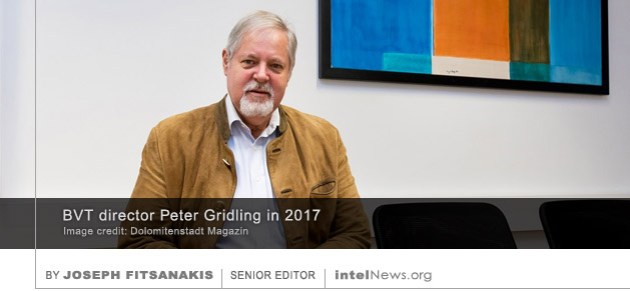
But in a rare public appearance on Thursday, Peter Gridling, head of Austria’s main counterintelligence agency, said that Vienna no longer topped the list of preferred destinations for the world’s spies. Gridling heads the Vienna-based Federal Office for the Protection of the Constitution and Counterterrorism, known as BVT. He was speaking during the official presentation of the BVT’s annual Constitutional Protection Report for 2017, which was held at the headquarters of the Ministry of the Interior. Gridling told reporters that the number of foreign intelligence operatives pretending to be diplomats posted in the Austrian capital remained significant, and that Austria as a whole was still “a favored area of operations” by the world’s intelligence agencies. However, he added that Vienna had now been overtaken by the Belgian capital Brussels as the spy capital of Europe. Gridling said that, according to his agency’s calculations, there was now a greater density of spies in Brussels than in any other European capital.

Gridling thus appears to concur with numerous intelligence experts and practitioners, among them Alain Winants, former Director of Belgium’s State Security Service (SV/SE), who have claimed since 2009 that Brussels is home to more spies than any other city in the world. When asked to specify the number of foreign intelligence operatives that are active in Vienna, Gridling said it was “in the neighborhood of hundreds of people, but certainly fewer than 1,000”. The Austrian counterintelligence chief declined calls to provide further elaboration on the mater.

Author: Joseph Fitsanakis | Date: 29 June 2018 | Permalink

Belgium to probe alleged Spanish espionage against separatist Catalan leader

Carles PuigdemontBelgium will investigate whether Spanish intelligence spied on Carles Puigdemont, the separatist Catalan leader who escaped to Brussels after launching an unsuccessful independence bid last year. Puigdemont, 56, served as president of the Spanish region of Catalonia from January 2016 until October 2017. He was forcibly removed from office by the Spanish government, after he led the government of Catalonia in a unilateral declaration of independence from Spain. As soon as the Catalan Parliament declared that the region was independent, Madrid dissolved it, imposed direct rule on the country’s easternmost province, and declared fresh elections.
Amidst the chaos that ensued, Puigdemont, along with several other leading Catalan separatists, fled to Belgium where he requested political asylum. When it emerged that Puigdemont had fled abroad, Spanish authorities issued a European Arrest Warrant against him, on charges of sedition, rebellion against the state and misusing public funds. Fearing that the Belgian authorities might extradite him to Madrid, Puigdemont soon left for Germany, where he was detained by local police on March 25, 2018. He currently remains in Germany, while German authorities are deciding whether to grant Madrid’s request for his extradition.

Now authorities in Belgium are preparing to launch an investigation into whether Spain’s intelligence services carried out espionage against Puigdemont while he remained on Belgian soil. The investigation will most likely be carried out by the country’s Standing Intelligence Agencies Review Committee. Known broadly as Comité permanent R, the committee is an independent body that oversees the activities of Belgium’s security and intelligence apparatus. The investigation is to be launched as a result of an official parliamentary request submitted by the New Flemish Alliance, Belgium’s largest separatist party, which represents the country’s Dutch-speaking minority. The party has come out in support of Catalan independence and of Puigdemont in particular, and has urged Brussels to grant political asylum to the Catalan separatist leader.

Peter Buysrogge, a leading member of the New Flemish Alliance, said that his party wanted to know whether Spanish intelligence operated in Belgium with or without the knowledge of the Belgian government and intelligence services. He added that his party was especially interested in investigating allegations made in Catalan media that Spanish intelligence operatives followed Puigdemont and even installed a Global Positioning System (GPS) device under his car.

Author: Joseph Fitsanakis | Date: 14 June 2018 | Permalink

Iran sentences professor at Belgian university to death for spying

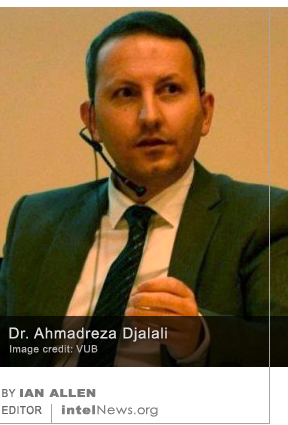
Ahmadreza DjalaliAn Iranian scientist who works at a university in Belgium has been sentenced to death in Iran, allegedly for spying. According to his family and his employer in Belgium, Dr. Ahmadreza Djalali is currently in prison in Tehran. Dr. Djalali, 45, is professor of disaster medicine at the Vrije Universiteit Brussel (VUB), a Dutch-speaking university located in the Belgian capital. For the past few years, Dr. Djalali has been based in Italy, where he teaches in the VUB’s European Master’s program in Disaster Medicine. According to an announcement on the VUB’s website, Dr. Djalali is now awaiting execution, which has been scheduled to take place later this month.
It is believed that the professor was arrested in April of last year, while visiting his family in Iran. But his family in Europe chose not to publicize his arrest, in hopes of getting him released. They spoke to the media only after Dr. Djalali was given a death sentence last week. The reason for the scientist’s arrest has not been made clear, but it is thought to relate to his collaboration with other researchers in Belgium and Italy, some of whom are Israeli citizens. Iran considers Israel an “enemy entity” and does not allow its citizens to interact with Israeli citizens. Officials at VUB claim that Dr. Djalali is has not been involved in political campaigns or discussions, and that his contacts with foreign scientists are solely research-driven.

According to his family, Dr. Djalali has protested his detention by launching hunger strikes on three separate occasions, which have severely affected his health. He also claims that he was not allowed access to lawyers and that he was not given a trial. Instead, he said he was interrogated and forced to sign a confession admitting to an offence that he does not recognize. Iranian authorities have refused comment on the matter.

Author: Ian Allen | Date: 07 February 2017 | Permalink

Comment: Europe’s answer to Brussels bombs may be more damaging than ISIS

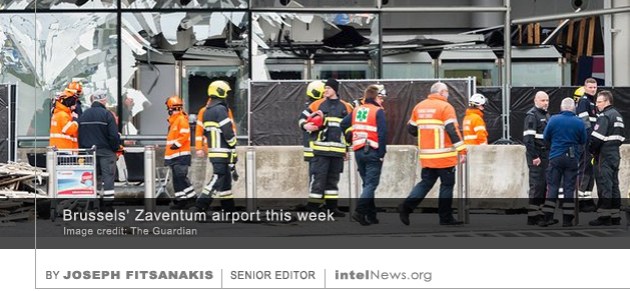
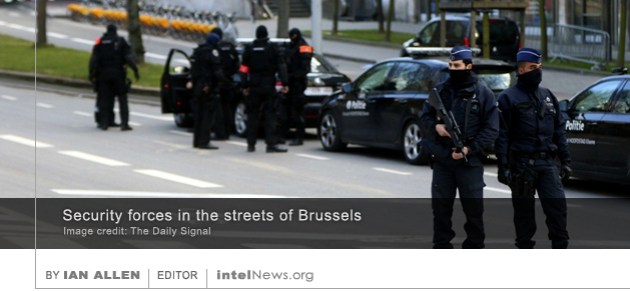
Brussels airportIn the past year, the Islamic State has claimed responsibility for at least nine terrorist attacks on foreign capitals. The growing list, which features Jakarta, Tunis, Paris, Beirut, Ankara, and Kuwait City, now includes the Belgian capital, Brussels. At least 34 people died in the attacks that rocked Brussels’ Zaventum airport and Maelbeek metro station on March 22, while another 300 were injured, 60 of them critically. This week’s bombings officially constitute the bloodiest terrorist attacks in Belgium’s history, prompting the country’s government to declare three days of national mourning.
Why did the Islamic State attack one of Europe’s smallest countries, with a population of just over 11 million? Some have suggested that Brussels was targeted by the terrorist group because it was an easy target. Observers noted that Belgium’s security and intelligence services are underfunded and demoralized —a “weak link in Europe”, in the words of one expert. There is no question that Belgium’s security apparatus is in need of serious overhaul; but the need is equally great in Amsterdam, in Athens, in Madrid, in Dublin, and elsewhere in Europe. In fact, the Islamic State could have struck any of these European capitals with the same ease that it attacked Brussels —and might still do so.

In reality, the Islamic State’s decision to attack Brussels was carefully calculated and consistent with the group’s overall strategy. The primary reason that the Islamists attacked Brussels is that Belgium is one of 30 countries that actively participate in the Combined Joint Task Force, the international group behind Operation Inherent Resolve. Led by the United States military, the operation has been targeting Islamic State forces in Iraq and Syria since October 2014. The Islamic State wished to send a message to Europeans that their military intervention in the Middle East will be costly at home. Secondly, Brussels was struck because it is the headquarters of the European Union, which last month declared the Islamic State’s campaign against religious and ethnic minorities in Syria and Iraq as an act of genocide. Third, and perhaps most importantly, Belgium was targeted because a significant percentage of its population —as much as 7 percent by some estimates— is Muslim.

What is more, the degree of integration of Belgian Muslims in mainstream life is markedly limited and partly explains why so many of them —400 by some estimates, the highest per-capita number in Europe—have emigrated to Syria and Iraq in order to join the Islamic State. It is worth remembering that the Islamic State emerged as the de facto guarantor or Sunni Muslims by essentially provoking Iraq’s Shiites to attack and marginalize the country’s Sunni Arab minority. Following a series of Shiite attacks against Sunni communities in Iraq, which were part of a broader post-2003 sectarian conflict between Sunnis and Shiites, the Islamic State emerged as the protector of Sunni Arabs and has since fought against Syrian Alawites, Hezbollah, Iranian forces, Iraqi Shiites, and others. Its popular support in Iraq and Syria stems from the fear held by Sunni Arabs that, if the Islamic State is defeated, their communities will be exterminated by vengeful and unforgiving Shiites.

Having gained from sectarianism in the Middle East, the Islamic State is now implementing the same tactic in Europe. It is thus targeting countries like France and Belgium, which have significant Muslim populations, in order to provoke aggressive reactions against domestic Muslim communities. In other words, it expects that attacks like those in Belgium will favor extremist ideologies throughout the European continent, and in turn further-marginalize European Muslims. The rise of Islamophobia, the strengthening of extremist political parties, and the disintegration of European values such as acceptance and tolerance, are likely to create a new generation of disaffected European Muslim youth, many of whom will be prime candidates for Islamic State membership.

European societies must not allow the Islamic State to change the political identity of an entire continent through violence. Along with meticulous police and intelligence work, the bombs in Brussels must be answered with concerted attempts to deepen the social integration of European Muslims, and more broadly to promote cohesion between ethnic and religious groups in Europe. Anything short of that will provide the Islamic State with the same strategic advantage it has enjoyed in the Middle East for nearly a decade.

* Joseph Fitsanakis is Assistant Professor in the Intelligence and National Security Studies program at Coastal Carolina University in the United States.

News you may have missed #893: Intelligence and the attacks in Belgium

BrusselsBelgian Intelligence Services ‘Overwhelmed and Outnumbered’. Tuesday’s deadly attacks on Brussels airport and a metro station, which left at least 30 people dead, demonstrate that the Belgian security forces are overwhelmed and outnumbered by the threat posed by radical Islamists, experts say. Belgium’s security services are not so much incompetent, say experts, as understaffed—that leaves them outnumbered by the high number of suspected radical Islamists, some home-grown and some who have traveled to Syria and back.

Belgian intelligence service seen as weak link in Europe. Following the Paris attacks last November, it became apparent that the real intelligence failure had not been French but Belgian. Before those attacks one of the Belgian intelligence services, Surete de L’Etat, had only 600 personnel to keep tabs on 900 “persons of interest”, many of them potential jihadis who have travelled to Syria and Iraq. Apart from the lack of capacity, the Belgian intel services also lack the capability to deal with an internal ISIS threat.

Belgium feared tragedy was coming but couldn’t stop it. Belgium feared tragedy was coming but couldn’t stop it. Belgium has been trying to fight a growing threat with a relatively small security apparatus. Although Brussels is the diplomatic capital of the world, Belgian state security has only about 600 employees (the exact figure is classified information). Its military counterpart, meanwhile, the Adiv, has a similar number. That makes just over a thousand intelligence officers to secure a country that hosts not just Nato and the EU institutions but countless other organisations.

Paris attack mastermind evaded Athens police raid in January

Abdelhamid AbaaoudThe man who masterminded November’s Islamist attacks in Paris was based in Athens, and last January managed to escape arrest during a joint Greek-Belgian police operation aimed at capturing him. Moroccan-born Abdelhamid Abaaoud, who had lived in Brussels for years, died in a gun battle with French police on November 18, just days after the multiple attacks in Paris that killed 130 people and injured hundreds. It is believed that the perpetrators of the attacks, who were based in Belgium, were guided and directed by Abaaoud. He, however, was not based in Belgium, but in Athens, Greece. It was from there that he directed the Islamist cells, mostly by phone, according to the BBC.

Citing “a Belgian anti-terrorism source” the BBC said on Tuesday that Belgian and Greek authorities were aware of Abaaoud’s general whereabouts and were able to trace some of his phone calls to Islamist militants in Belgium. Eventually, a senior Belgian law enforcement official traveled to Athens to help coordinate a Greek police operation aimed at capturing Abaaoud. By that time, the Moroccan-born militant had been sentenced by a Paris court to 20 years imprisonment in absentia for his role in at least four planned attacks in France —all of which had been foiled by police. Upon capture, Greek authorities planned to extradite Abaaoud to France, where he would serve his sentence. However, the militant was able to get away, though the BBC said that the circumstances of his escape remain unclear. According to the report, an Algerian associate off Abaaoud was arrested during the operation in Athens and was extradited to Belgium.

Abaaoud was not the only Islamic State-linked militant known to have operated in Greece. The two suicide bombers who tried to enter the Stade de France in Paris on November 13 had entered the European Union through the Greek island of Leros, after crossing the Aegean by boat from Turkey. Meanwhile, another of Abaaoud’s associates, Belgian-born Frenchman Salah Abdeslam, whose current whereabouts are unknown, is believed to have traveled by ferry from Italy to Greece in August.

Author: Joseph Fitsanakis | Date: 10 December 2015 | Permalink

Belgium launches official probe into alleged German-US espionage

BelgacomThe Belgian government has announced the start of an official investigation into allegations that the country’s tele- communications networks were spied on by a consortium of German and American intelligence agencies. A press release issued Friday by the Belgian Ministry of Justice said the minister, Koen Geens, had authorized an examination of claims of espionage by the United States National Security Agency and Germany’s Bundesnach-richtendienst (BND). The statement was referring to EIKONAL, an alleged collaboration between the NSA and the BND, which was revealed last month by Austrian politician Peter Pilz. Pilz told a press conference in Bern, Switzerland, that EIKONAL had targeted European telecommunications carriers for at least four years, from 2005 to 2008. The governments of Switzerland and the Netherlands have already launched their own investigations into EIKONAL.

After speaking with Pilz, Belgian politician Stefaan Van Hecke told Belgian media last month that the BND-NSA consortium had penetrated the network of Proximus, the mobile subsidiary of Belgacom, Belgium’s national telecommunications carrier. Speaking anonymously about the investigation, a Belgian official told the country’s largest French-language newspaper, Sud Presse, that if the alleged espionage is confirmed, it would have “not only legal implications, but will also affect relations between Belgium, Germany and the US”. A Justice Ministry spokeswoman said on Friday that if the allegations of espionage were confirmed “the government would take appropriate action”, but she refused to elaborate.

IntelNews regulars will remember the last time Belgacom surfaced in the news: in 2013, we reported that the company’s technicians had detected an “unidentified virus” that had infected several dozen mainframe computers. The virus specifically targeted telecommunications traffic carried by Belgacom’s international subsidiaries in Africa and the Middle East. Belgium’s Federal Prosecutor’s Office said at the time that the malware’s complexity, coupled with its grand scale, “pointed towards international state-sponsored cyber espionage”.

Author: Ian Allen | Date: 8 June 2015 | Permalink: https://intelnews.org/2015/06/08/01-1710/

Brussels Jewish museum shooting spree ‘could be tied to intelligence’

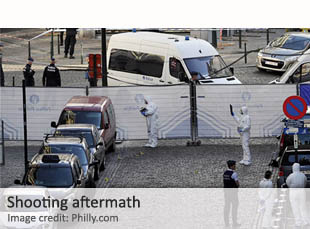
Shooting aftermathBy JOSEPH FITSANAKIS | intelNews.org
Belgian police investigating last weekend’s shooting spree at a Jewish heritage center in Brussels do not rule out the possibility that the attack may have been part of an intelligence operation directed against Israeli agents. The incident occurred on Saturday at the Musee Juif de Belgique, located in the heart of the Belgian capital. A man wearing a dark-colored jacket, baseball cap and sunglasses walked in the museum in broad daylight, pulled a Kalashnikov rifle out of a bag, and opened fire, killing three people. A fourth person remains in critical condition. Observers initially classified the shooting as an anti-Semitic attack. There is speculation, however, that the bloody assault may have been a targeted assassination that was part of a wider intelligence war between Israel, Iran, and Lebanese-based Shiite militant group Hezbollah. Several counterterrorism experts, including Claude Moniquet, Co-Director of the European Strategic Intelligence and Security Center, have expressed the view that the shooter appeared to be a trained professional. Referring to publicly available surveillance footage of the shooting, Moniquet said that the perpetrator of the attack, who remains at large, behaved as “an unemotional murderer, someone who had already witnessed death and perhaps killed before”. Moniquet’s comments came shortly after an article by Amir Oren, military affairs correspondent for Israeli daily Ha’aretz, in which he suggested that the attack may have been an act of retaliation by Iranian or Hezbollah operatives, who have been engaged in a lengthy tit-for-tat war with Israeli intelligence since at least 2009. Oren noted that two of the victims of the attack, Emmanuel and Mira Riva , were civil service accountants who had spent years in government service. Read more of this post

News you may have missed #857 (hacking edition)

Mossad sealBy IAN ALLEN | intelNews.org
►►UK spies hacked Belgian phone company using fake LinkedIn page. British spies hacked into the routers and networks of a Belgian telecommunications company Belgacom by tricking its telecom engineers into clicking on malicious LinkedIn and Slashdot pages, according to documents released by NSA whistleblower Edward Snowden. The primary aim, reports the German newsmagazine Der Spiegel, which obtained the documents, was to compromise the GRX router system that BICS controlled, in order to intercept mobile phone traffic that got transmitted by the router.
►►Indonesian hackers behind attack on Australian spy service website. Indonesian hackers are believed to have brought down the website of the Australian Secret Intelligence Service, Australia’s leading spy agency. The page was not working on Monday afternoon after hackers launched a “denial of service” attack. A “404 not found” message typically appears when a website crashes under a “denial of service” attack. The cyber attack is reportedly a response to revelations that Australia had been spying on its closest neighbor through its Jakarta embassy.
►►Hamas blasts alleged Mossad website. Hamas officials released a warning about a website called Holol (“solutions”), claiming it is a ruse set up by Israel’s Mossad intelligence agency to recruit Gazans as informants. The website’s “Employment” page states, “due to our connections with the Israeli Civil Administration, we can help you bypass the bureaucratic tape and procedural processes which prevent you from leaving Gaza”. The site also offers Israeli medical assistance, “due to connections with the Ministry of Health and the Israeli Civil Administration”. Palestinians interested in contacting the website’s officials are asked to provide their full name, telephone number, email, topic of inquiry, and an explanation of why they are asking for help. Last month, Lebanese group Hezbollah accused the Mossad of being behind a website seeking information on Hezbollah’s intelligence wing.

Israel arrests Belgian citizen for ‘spying for Iran’

Alex MansBy JOSEPH FITSANAKIS | intelNews.org
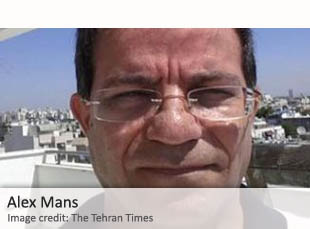
A Belgian citizen has been arrested in Israel on suspicion of spying on behalf of the Islamic Republic of Iran. The man, Alex Mans, was arrested two weeks ago, but the Israeli government kept the incident under wraps until Sunday. Israeli media reports state that Mans was arrested by Israeli Police and officers of Shin Bet, Israel’s internal security service. He was reportedly detained at Ben-Gurion International Airport as he was preparing to leave Israel. According to Israeli security officials, Mans made frequent trips to Israel, during which he presented himself as a Belgian investor interested in export opportunities in Israel. He allegedly used his business venture in selling windows and roofing material for commercial buildings in order to establish contacts with businesses in Tel Aviv. But officials at Shin Bet maintain that Mans’ business operations, which included seemingly legitimate websites and social media profiles, served as a cover for his spy activities. These are alleged to have included “intelligence gathering [and support for] terrorism”, as well as efforts to “bypass the embargo on trade and financial transactions with Iran”. Israeli security officials believe that Mans was born in Iran in 1958 and had the name Ali Mansouri. He is thought to have moved to Turkey in 1980, aged 22, where he lived for nearly 20 years. In 1997 he received an immigration visa to Belgium, where he met and married a Belgian citizen and changed his name to Mans. Soon afterwards, however, he divorced, and in 2007 he moved back to Iran, where he married a local woman. According to Israeli media reports, Mans told Shin Bet interrogators that he was approached in 2012 by the Islamic Revolutionary Guards Corps (IRGC) and offered up to $1 million to spy on Israel on behalf of the Iranian government. He reportedly agreed and was handled by Haji Mustafa, of the IRGC’s Special Operations Unit. Read more of this post

Belgian state telecom targeted by ‘international espionage’

Belgacom headquartersBy JOSEPH FITSANAKIS | intelNews.org
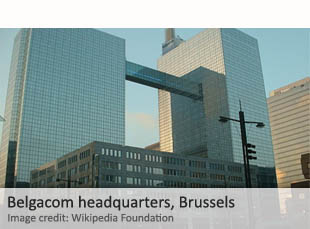
Belgium’s largest telecommunications service provider has fallen victim to a sophisticated cyberespionage operation that was most likely carried out by a government agency of another country. According to Flemish newspaper De Standaard, the operation targeted Belgacom, which is Belgium’s state-owned telecommunications company. The paper said that the cyberhacking was uncovered in June of this year during a routine maintenance check by technicians, who detected an “unidentified virus” that had infected several dozen mainframe computers. Belgacom’s technical experts seem to think that the malware had been active for at least two years on Belgacom’s computers, and that it specifically targeted telecommunications traffic carried by Belgacom’s international subsidiaries. Among them is Belgacom International Carrier Services (BCIS), which specializes in providing wholesale carrier services to over 1,000 telecommunications service providers across Africa and the Middle East. De Standaard’s article said that the sophisticated malware had been designed so as to prevent disruption of BCIS’ voice and Internet traffic, thus remaining unnoticed. Its ultimate goal, said the paper, was “not sabotage, but rather collecting strategic communications content”. Federal prosecutors told the Reuters news agency that the technical complexity of the virus meant that it must have been designed by “an intruder with significant financial and logistic means”. The malware’s complexity, coupled with its grand scale, “points towards international state-sponsored cyber espionage”, said the Federal prosecutors. Commenting on the story, De Standaard claimed that “everything points to the [United States] National Security Agency as the culprit” of the cyberespionage. Read more of this post

Belgian intelligence employees ‘outed themselves’ on LinkedIn

LinkedIn logoBy JOSEPH FITSANAKIS | intelNews.org |
Several alleged employees of Belgian security and intelligence agencies have revealed their identities on social networking sites, it has been reported. Belgian newspaper De Standaard, which made the revelation in a leading article on Tuesday, said that many LinkedIn and Facebook users appear to list their employer as Belgium’s State Security Agency (Sûreté de l’État or SE/SV) or the Coordinating Body for Threat Analysis (OCAM/OCAD). The SE is Belgium’s foremost civilian intelligence agency, operating under the country’s Ministry of Justice. OCAM is one of Belgium’s several anti-terrorist intelligence collection and analysis agencies, which operates under the joint supervision of the Justice and Interior Ministries. De Standaard contacted the two agencies, which refused to comment on whether the social networking profiles are authentic. But the paper spoke with an unnamed Belgian senior intelligence official, who said that this was potentially a very serious issue for Belgian national security. “Russian and Chinese intelligence services employ thousands of people”, said the official, “and have the resources and time to manually search for such profiles and then exploit the information they provide. Our people could, by their very presence on such sites, become the target of hostilities”. De Standaard also spoke to Belgian Senator Dirk Claes, who is a member of the country’s Parliamentary Committee on Intelligence. He told the paper that his colleagues in the Committee would be up in arms if the profiles turned out to be authentic. “These individuals have security clearances and are obligated to stay in the background, as much as possible. I will be raising this issue in the [Intelligence] Committee”, Claes told De Standaard. Read more of this post