Senior Belgian counterintelligence officer arrested on suspicion of spying for Russia
February 18, 2019 1 Comment
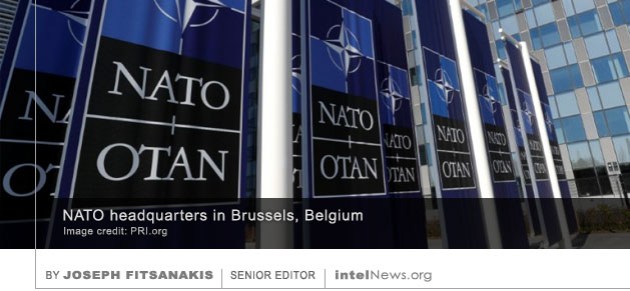 A senior counterintelligence official in Belgium’s external intelligence service is under house arrest on suspicion of sharing classified documents with Russian spies, according to a Belgian newspaper. Additionally, the chief of the agency’s counterintelligence directorate has been barred from his office while an internal investigation is underway on allegations that he illegally destroyed government documents. These allegations surfaced last Thursday in a leading article in De Morgen, a Flemish-language daily based in Brussels.
Citing anonymous sources from the General Information and Security Service —Belgium’s military intelligence agency— the paper said that the arrestee has the equivalent rank of major in the General Intelligence and Security Service. Known as GISS, the agency operates as the Belgian equivalent of the United States Central Intelligence Agency or Britain’s Secret Intelligence Service —better known as MI6. GISS officers collect information abroad and are not permitted to operate within Belgium’s borders. The man, a career counterintelligence official, is suspected of having passed secrets to Russia with the help of a woman who claims to be Serbian, but who is in fact believed to be an operative for Russian intelligence. It is not known whether the compromised information included secrets involving the North Atlantic Treaty Organization, of which Belgium is a founding member. In the same article, De Morgen also said that Clement Vandenborre, who serves as chief of GISS’s counterintelligence directorate, has been barred from his office while an investigation is taking place into allegations of mismanagement. He is also accused of having shredded classified government documents without permission. It is not believed that this case is connected with the alleged Russian penetration.
De Morgen quoted a spokesperson for Belgium’s Ministry of Defense, who confirmed that an investigation into alleged foreign espionage targeting a GISS employee was underway, but added that “no comment” would be made on the subject so as “not to hinder” the probe. Ironically, German newspaper Die Welt am Sonntag reported last week that the European Union’s diplomatic agency warned officials in Belgium to watch out for “hundreds of spies” from various foreign countries, including from Russia and China. The warning, issued by the European Union’s diplomatic agency, the European External Action Service (EEAS), said that “approximately 250 Chinese and 200 Russian spies” were operating in Brussels.
► Author: Joseph Fitsanakis | Date: 18 February 2019 | Permalink
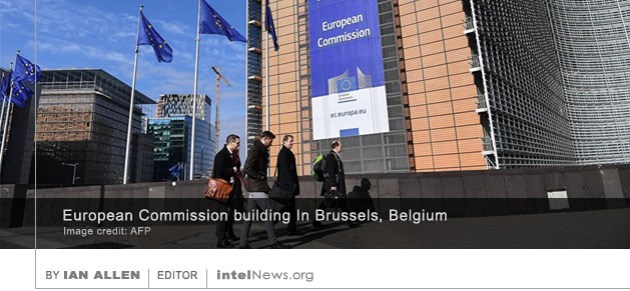 The European Union’s diplomatic agency has warned officials who are active in Belgium to watch out for “hundreds of spies” from various foreign countries, according to a German news report. The report appeared last weekend in Germany’s Welt am Sonntag newspaper, which cited a report from the European External Action Service (EEAS). Based in Brussels, the EEAS operates as the European Union’s diplomatic agency and is headed by Federica Mogherini, an Italian former government minister who has been serving as the European Union’s High Representative for Foreign Affairs and Security Policy since 2014.
 Israel helped foil an alleged Iranian-sponsored bomb attack in Paris, which involved arrests of several Iranian agents and at least one diplomat in France, Belgium and Germany, according to media reports. As intelNews
  An Iranian diplomat and members of what authorities described as an “Iranian sleeper cell” were arrested this week in Belgium, Germany and France, as they were allegedly planning to a bomb a high-level meeting in Paris. The arrests came after a complex investigation by several European intelligence agencies and were announced by Belgium’s Minister of the Interior, Jan Jambon.
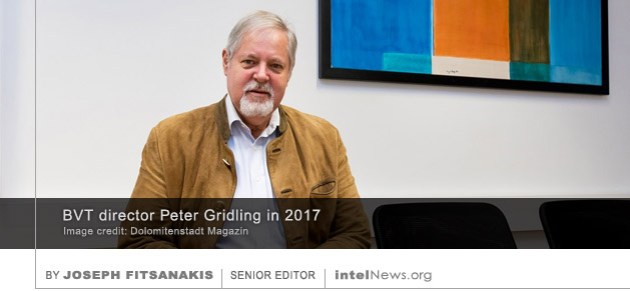 The head of Austria’s counterintelligence agency has said that Brussels has now replaced Vienna as Europe’s spy capital. For nearly a decade, this blog has published expert commentary that points to the Austrian capital being the world’s busiest spy den. In 2009, German broadsheet Die Welt
  Belgium will investigate whether Spanish intelligence spied on Carles Puigdemont, the separatist Catalan leader who escaped to Brussels after launching an unsuccessful independence bid last year. Puigdemont, 56, served as president of the Spanish region of Catalonia from January 2016 until October 2017. He was forcibly removed from office by the Spanish government, after he led the government of Catalonia in a unilateral declaration of independence from Spain. As soon as the Catalan Parliament declared that the region was independent, Madrid dissolved it, imposed direct rule on the country’s easternmost province, and declared fresh elections.
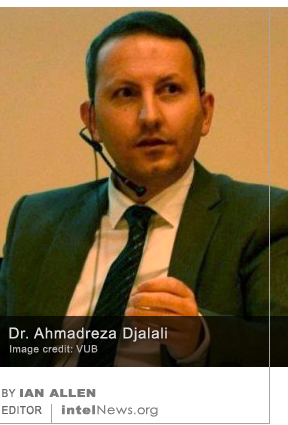 An Iranian scientist who works at a university in Belgium has been sentenced to death in Iran, allegedly for spying. According to his family and his employer in Belgium, Dr. Ahmadreza Djalali is currently in prison in Tehran. Dr. Djalali, 45, is professor of disaster medicine at the Vrije Universiteit Brussel (VUB), a Dutch-speaking university located in the Belgian capital. For the past few years, Dr. Djalali has been based in Italy, where he teaches in the VUB’s European Master’s program in Disaster Medicine. According to an
 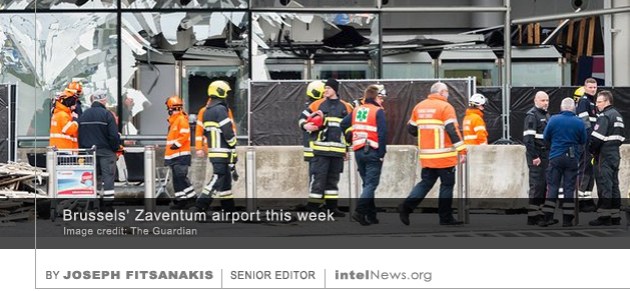 In the past year, the Islamic State has claimed responsibility for at least nine terrorist attacks on foreign capitals. The growing list, which features Jakarta, Tunis, Paris, Beirut, Ankara, and Kuwait City, now includes the Belgian capital, Brussels. At least 34 people died in the attacks that rocked Brussels’ Zaventum airport and Maelbeek metro station on March 22, while another 300 were injured, 60 of them critically. This week’s bombings officially constitute the bloodiest terrorist attacks in Belgium’s history, prompting the country’s government to declare three days of national mourning.
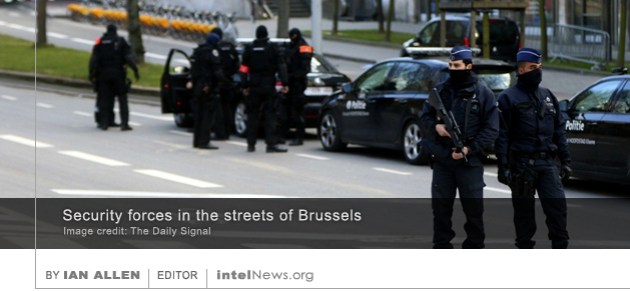 Belgian Intelligence Services ‘Overwhelmed and Outnumbered’
 The man who masterminded November’s Islamist attacks in Paris was based in Athens, and last January managed to escape arrest during a joint Greek-Belgian police operation aimed at capturing him. Moroccan-born Abdelhamid Abaaoud, who had lived in Brussels for years, died in a gun battle with French police on November 18, just days after the multiple attacks in Paris that killed 130 people and injured hundreds. It is believed that the perpetrators of the attacks, who were based in Belgium, were guided and directed by Abaaoud. He, however, was not based in Belgium, but in Athens, Greece. It was from there that he directed the Islamist cells, mostly by phone, according to the BBC.










Belgian university shuts down Chinese-funded institute due to espionage claims
December 12, 2019 by Ian Allen Leave a comment
The Confucius Institute at VUB is one of more than 500 such research bodies that the government of China has funded around the world since 2004. Their mission is to promote the language and culture of China to the world. However, numerous academic institutions in Japan, Canada, and a number of European countries, have recently shut down Confucius Institute branches, following allegations that their staff members carried out espionage tasks, or tried to stifle academic research critical of China. In Europe alone, the University of Lyon in France, Stockholm University in Sweden, and Holland’s University of Leiden have all recently terminated their cooperation with the Confucius Institute.
In October of this year, Belgium’s State Security Service (VSSE) concluded that the VUB Confucius Institute director, Dr. Song Xinning, carried out espionage tasks on behalf of the Chinese government. As a result, the Belgian government refused to renew the work visa of Dr. Song, who had lived in Belgium for over a decade. Additionally, the Chinese academic was barred from entering the European Union’s Schengen Area —which comprises 26 European countries— for eight years.
Dr. Song alleges that his work visa was revoked after he refused to cooperate with an American diplomat stationed in Brussels. He also denies that he was ever in the service of Chinese intelligence or the Chinese state. But the VUB appears to have sided with the Belgian government in this dispute. The university annulled its contract with Dr. Song and, as of January, will be terminating its relationship with the Confucius Institute. In a press statement published online, VUB Rector Caroline Pauwels said that the work of the Confucius Institute did not meet the “current policy objectives” of the university.
► Author: Ian Allen | Date: 12 December 2019 | Permalink
Filed under Expert news and commentary on intelligence, espionage, spies and spying Tagged with Belgium, China, Confucius Institute, espionage, News, Song Xinning, Vrije Universiteit Brussel, VSSE (Belgium)