News you may have missed #338

  • US intel on Iran suffering from information overload? The US National Intelligence Estimate was due last fall but has been delayed at least twice amid efforts to “incorporate information from [Iranian] sources who are still being vetted”. Some say that significant new material has come from Iranian informants, who are motivated by antipathy toward the Iranian government and its suppression of the opposition.
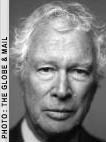
  • Canada’s ex-intel boss slams new anti-terrorism measures. Reid Morden, the former director of the Canadian Security Intelligence Service, has urged the country’s Conservative government to re-think its plans to re-introduce controversial anti-terrorism measures initially adopted in the wake of 9/11.
  • Wiretapping scandals continue in Colombia. Caracol TV reports that Colombian security agency DAS has asked opposition Senator Piedad Cordoba to hand over evidence of her claims that President Alvaro Uribe ordered DAS to spy on her.

Bookmark and Share

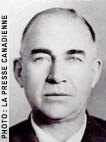
New book on Canada’s mysterious Agent 235

Johann Heinrich Amadeus de Graaf

De Graaf

By IAN ALLEN | intelNews.org |
A new book published by the Pennsylvania State University Press sheds new light into the life and work of mysterious Agent 235, Canada’s mysterious mid-20th-century spy known as ‘Johnny’. In Johnny: A Spy’s Life, R.S. Rose and Gordon Scott present the outcome of 14 years of research on ‘Johnny’, whose real name was Johann Heinrich Amadeus de Graaf. De Graaf was born in Germany in 1894, but later moved to Britain, and at the start of World War II worked as an informant for MI6. Although he conducted some of his operations in Germany, most of them took place in the UK, where he unmasked a number of native pro-Nazi sympathizers and agents of the Gestapo. Read more of this post

NSA whistleblower prosecutions continue under Obama

Thomas Drake

Thomas Drake

By JOSEPH FITSANAKIS | intelNews.org |
Legal observers were surprised late last week when a grand jury in Baltimore indicted a former senior official of the US National Security Agency (NSA) for leaking classified information to a local newspaper reporter. The indictment, which was publicized last Thursday, accuses Thomas A. Drake of exchanging hundreds of email messages with a reporter, in which he exposed aspects of the NSA’s alleged mismanagement and operational deficiencies. Court documents do not identify the reporter, or the news outlet for which she worked. But most observers have identified her as Siobhan Gorman, who now works for The Wall Street Journal. Between 2006 and 2007, while working for The Baltimore Sun, Gorman authored a series of articles on the NSA, exposing, among other things, severe mismanagement of outsourced signals collection programs, as well as the Agency’s trouble in securing enough electrical supply for its computational requirements. Read more of this post

News you may have missed #327

  • Cyberspies eyed Canadian visa applications. Personal information about Canadians applying for visas was swiped by cyberspies who hacked into Indian embassy computers in Afghanistan. The data theft was part of a wider cyberespionage operation launched by the underground hacking community in China and aimed primarily at political targets, according to academic researchers.
  • Israeli Arab jailed for spying on top general. Rawi Sultani, who is accused of informing Hezbollah of his membership in the same fitness club as Lieutenant-General Gabi Ashkenazi, as well as of methods of accessing the club, has been sentenced to nearly six years’ imprisonment.
  • CIA places American on assassination list. US-born al-Qaeda recruiter Anwar al-Aulaqi, who now lives in Yemen, has become the first US citizen to be placed on a CIA “targeted killing” list, which requires “special approval from the White House”.

Bookmark and Share

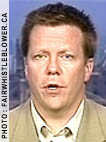
Analysis: Canada becoming a heaven for spies claims ex-CSIS agent

Michel Juneau-Katsuya

Juneau-Katsuya

By IAN ALLEN | intelNews.org |
Canada is today one of the world’s safest and most attractive environments for international spies, according to a former officer in the Canadian Security Intelligence Service (CSIS). Michel Juneau-Katsuya, who last September co-authored Nest of Spies with Montreal-based journalist Fabrice de Pierrebourg, says that Canada is doing little to combat increasing espionage activity within its borders by agents of friendly and adversary nations alike, including China, Iran, Israel, the United States, and France. Juneau-Katsuya suggests that international spying within Canada is encouraged by the country’s prosperity, its multicultural urban environment, advanced telecommunications infrastructure, as well as by its political or geographical proximity to major world powers, such as Russia and the United States. Read more of this post

News you may have missed #323 (Cold War edition)

  • Story of the Soviet Trojan seal retold. Ken Stanley, who was chief technology officer at the US State Department’s Diplomatic Security Service from 2006 to 2008, retells the story of the large wooden replica of the US Great Seal, which the Soviets gave to the US ambassador to Moscow as a present in 1945. The seal, which was, of course, bugged, hanged in the US ambassador’s office until 1952, when it was discovered.
  • Soviet spy radio found in a Welsh field. It has been revealed that a Soviet encrypted radio transmitter was found near the Welsh coastal town of Ipcress in 1960. It is speculated that it belonged to the late Goronwy Rees, an academic from Aberystwyth, who was a friend of the Cambridge Five, although his daughter disputes it.
  • 1950s-60s spy gadgets on sale at eBay. Gadgets used by British spies who trained from the 1940s to the 1960s at top-secret camp Camp X near Ontario, Canada, are being sold off on eBay. They include a camera that shoots darts, a lipstick tube containing a dagger and fake monkey dung that explodes (!).


Bookmark and Share


News you may have missed #314

  • Canadian spy agency to display cold war spy tools. The Canadian Security Intelligence Service is lifting the lid on some of Canada’s secret Cold War history with a first-ever public exhibit of the era’s exotic gadgetry and shadowy tradecraft, from a James Bond attaché case to Igor Gouzenko’s revolver.
  • Why planespotting in Egypt is a bad idea. British tourist Corbie Weastell, who was planespotting from his hotel window in Egypt, was arrested for spying, thrown in a filthy cell without food or water and left handcuffed and chained to other inmates for two days

Bookmark and Share

.

News you may have missed #307

Bookmark and Share

News you may have missed #0285

  • Canadian government resists release of Cold-War-era files. Canadian journalists are fighting for the release of Cold-War-era government files on Tommy Douglas, a prominent social democratic politician idolized in Canada for his central role in establishing the country’s public health care system. But the government argues that releasing the files would imperil national security and compromise contemporary spy sources and methods.
  • NPR launches series on confidential informants. Informants are often considered a vital crime fighting tool; but what happens if those informants go astray? Washington-based National Public Radio is launching a special investigation into this controversial subject.
  • CIA returns to US university campuses. American anthropologist David Price explains that the US intelligence community is gradually re-establishing its academic recruitment network, which was shattered in the 1970s.

Bookmark and Share

News you may have missed #0284

  • Real IRA faction killed MI5 informant, says Irish police. The Gardai have concluded that a Real IRA faction executed Denis Donaldson, a former Sinn Fein official who turned informer for MI5 and the Police Service of Northern Ireland. Last year, the Real IRA took responsibility for the 2007 killing.
  • NATO spy station up for sale. A Canadian NATO spy station in Nova Scotia that operated between 1983 and 2006 is for sale for US$1.4 million. It appears that the site’s current owner, who doesn’t want to be identified, bought it from the Canadian Defense Department after the base was closed down.
  • Analysis on the Binyam Mohamed disclosures and UK-US spy cooperation. This analysis, by Michael Clarke, director of Britain’s Royal United Services Institute, is probably the best synopsis of the meaning of the recent court order to disclose Binyam Mohamed’s torture records, which has complicated US-UK spy relations.

Bookmark and Share

News you may have missed #0282

  • Iran summons Canadian ambassador over CIA links. The Iranian government announced that it summoned the Canadian charge d’affaires in Tehran, in connection with revelations that Canada’s former ambassador to Iran secretly worked for the CIA in the late 1970s.
  • Charlie Wilson dead at 76. Charlie Wilson, a 12-term American congressional representative, who orchestrated the covert funding of Muslim mujahedeen in Soviet-occupied Afghanistan in the 1980s, has died in Texas.
  • Analysis: Is Colombia turning into a nation of informants? On January 27, Colombian President Álvaro Uribe announced his goal of putting a thousand spies in college classrooms. He offered to pay students $50 per month to report any suspicious ideas or behavior to the Colombian authorities. Forrest Hylton, who teaches at the Universidad de los Andes in Bogotá, explains the disturbing political background of Uribe’s announcement.

Bookmark and Share

News you may have missed #0280

  • Interview with Canadian ambassador who worked for the CIA. Iran’s Press TV has published an extensive interview with Ken Taylor, Canada’s former ambassador to Iran, who recently admitted that he secretly worked for the CIA in the late 1970s, after the US embassy in Iran was taken over by students during the Islamic Revolution. Part one of the interview is here. Parts two and three here, and parts four, five and six here.
  • US Pentagon’s black budget tops $56 billion. About $56 billion of the US Defense Department’s publicized 2010 budget goes simply to “classified programs” or to projects known only by their code names, like “Chalk Eagle” and “Link Plumeria”. That’s the Pentagon’s black budget, an it’s about $6 billion more than last year.
  • CIA agents working for private companies on the side. In the midst of two US wars and the fight against al-Qaeda, the CIA is offering operatives a chance to peddle their expertise to private companies on the side –a policy that gives financial firms and hedge funds access to the nation’s top-level intelligence talent.

News you may have missed #0276

  • Canadian government rejects ex-KGB agent’s deportation appeal. Vic Toews, Canada’s newly installed minister for public safety, has rejected a fresh appeal by former KGB agent Mikhail Lennikov to be allowed to remain in Canada. Lennikov, who has been living in Canada with his wife and teenage son since 1992, is described by Canadian authorities as “a threat to […] national security”.
  • Analysis: CIA and intelligence community mythologies. Former CIA analyst Melvin Goodman, currently senior fellow at the Center for International Policy and adjunct professor at Johns Hopkins University, offers a very informative checklist of what he calls “the mythology that surrounds the [US] intelligence enterprise”. Worth reading.

Bookmark and Share

News you may have missed #0275

Bookmark and Share

Canada’s ambassador in Iran was ‘CIA asset’ in 1970s

Ken Taylor

Ken Taylor

By JOSEPH FITSANAKIS | intelNews.org |
Canada’s former ambassador to Iran has admitted that he and the embassy’s head of security secretly worked for the CIA in the late 1970s. Ambassador Ken Taylor and Canadian fellow-diplomat Jim Edward became the CIA’s “most valuable asset[s]” in Iran, following the November 4, 1979, seizure of the US embassy in Tehran by student groups allied to the Islamic Revolution. The revelation was made public last weekend in a new book entitled Our Man in Tehran, by Trent University historian Robert Wright,  which examines intelligence aspects of the Iranian Revolution. In it, Dr. Wright says that ambassador Taylor became “the de facto CIA station chief” in the Iranian capital, after he and Edward accepted an American request to do so, which was communicated personally to Canadian Prime Minister Joe Clark by US President Jimmy Carter. Until he left the country, on January 27, 1980, Taylor and Edward provided the US with “aggressive intelligence” and an operations base for CIA agents, authorized the CIA’s use of false Canadian travel documents, and helped the Agency plan an “armed incursion” into Iran. Read more of this post