News you may have missed #444
October 26, 2010 Leave a comment
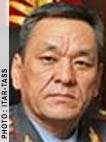
- Kyrgyz leader says spies tried to kill him. Kamchybek Tashiev, head of Kyrgyzstan’s Ata-Jurt party, which won the most votes in the recent national parliamentary elections, has accused the country’s State Security Service chief, Keneshbek Dushebayev, of organizing an attempt to assassinate him on October 23.
- Pakistan’s ISI organized Mumbai attacks, say Indians. A report by the Indian government, based on information provided by Pakistani-American informant David Headley, accuses Pakistan’s Inter-Services Intelligence agency of masterminding the 2008 Mumbai attacks.
- Russian sleeper agents receive highest state honor. Russian President Dmitry Medvedev has bestowed the country’s highest state honor on the Russian sleeper agents deported from the United States earlier this year as part of the countries’ biggest spy swap since the Cold War.











 intelNews.org
Sophisticated cyberespionage operation focused on high-profile targets
January 17, 2013 by Joseph Fitsanakis 3 Comments
After Stuxnet and Flame, two computer programs believed to have made cyberespionage history, another super-sophisticated malware has been uncovered, this time targeting classified computer systems of diplomatic missions, energy and nuclear groups. The existence of the malware was publicly announced by Russian-based multi-national computer security firm Kaspersky Lab, which said its researchers had identified it as part of a cyberespionage operation called Rocra, short for Red October in Russian. The company’s report, published on Monday on Securelist, a computer security portal run by Kaspersky Lab, said that the malware has been active for at least six years. During that time, it spread slowly but steadily through infected emails sent to carefully targeted and vetted computer users. The purpose of the virus, which Kaspersky Lab said rivals Flame in complexity, is to extract “geopolitical data which can be used by nation states”. Most of the nearly 300 computers that have so far been found to have been infected belong to government installations, diplomatic missions, research organizations, trade groups, as well as nuclear, energy and aerospace agencies and companies. Interestingly, the majority of these targets appear to be located in Eastern Europe and former Soviet republics in Central Asia. On infected computers located in North America and Western Europe, the Rocra virus specifically targeted Acid Cryptofiler, an encryption program originally developed by the French military, which enjoys widespread use by European Union institutions, as well by executive organs belonging to the North Atlantic Treaty Organization. Read more of this post
Filed under Expert news and commentary on intelligence, espionage, spies and spying Tagged with Acid Cryptofiler, Central Asia, computer hacking, cyberespionage, cybersecurity, Eastern Europe, Kaspersky Lab, News, Rocra, Russia