News you may have missed #771

Shawn HenryBy IAN ALLEN | intelNews.org |
►►Analysis: Ex FBI official says foreign spies biggest online threat. Former FBI executive assistant director Shawn Henry has warned that the biggest threat online comes not from terrorists or hackers, but from foreign intelligence organizations looking to steal intellectual property. “The threat from computer attack is the most significant threat we face as a society, other than a weapon of mass destruction”, he said in his opening keynote at the Black Hat 2012 conference in Las Vegas. “Everything we do —R&D, intellectual property, and corporate strategies— is stored or transmitted electronically. The DNA of companies is available to bad guys”.
►►Taiwanese officials jailed for espionage. Two Taiwanese former officials have been sent to prison by the Taiwan High Court for leaking state secrets to China. Presidential Office official Wang Ren-bing was jailed for two years after being found guilty of passing confidential information about President Ma Ying-jeou’s May 2008 inauguration to Chinese intelligence operatives. Chen Pin-jen, a former aide of Chinese Nationalist Party (KMT) Legislator Liao Kuo-tung, was sentenced to eight months in prison for delivering the confidential information Wang gave him to China. The two were arrested in 2009.
►►Germany charges suspected Syrian spy. A spokeswoman for federal prosecutors in Germany said Sunday that they have filed charges against suspected Syrian spy Akram O., one of two men arrested on suspicion of having spied on Syrian opposition activists in Germany for several years. The two were arrested in February during a sting operation involving over 70 German counterintelligence operatives, who searched the suspects’ apartments. The spokeswoman said she could not give further details before an official confirmation is issued that the suspect and the defense team have received the indictment.

News you may have missed #763

RedHack posterBy IAN ALLEN | intelNews.org |
►►Taiwan ex-colonel nabbed for spying for China. Cheng Lin-feng, a retired Lieutenant Colonel in the Taiwanese army, and civilian Tsai Teng-han, were taken in by Taiwanese police last week on suspicion of spying for China. Cheng was allegedly recruited by Chinese intelligence when he travelled to the mainland to do business, Taiwan’s Ministry of National Defense said in a statement, adding that he had been investigated ever since a tip-off in 2009. A court spokesman said that details of case will be held until the investigation is completed.
Russian law brands foreign-funded NGOs ‘foreign agents’. Russia’s Lower House of Parliament has approved a bill that brands non-governmental organizations receiving funding from abroad as “foreign agents”, a law that activists fear the Kremlin will use to target critics. The bill is almost certain to be approved by the Upper House before being signed into law by President Vladimir Putin, who last year accused the US State Department of funding protests against him. The bill is seen by many analysts as setting up a legal infrastructure for a crackdown on the opposition. Meanwhile, official statistics show that wiretapping in the Russian Federation has nearly doubled over the past five years. The main driver of the rise, analysts say, involves the myriad of Russia’s rival security services spying on each other.
►►Turkish hackers release names of police informants. Members of Turkey’s Marxist cyberactivist group RedHack have dumped online a 75-megabyte text file with thousands of emails from Turkish police informants. The group said it released the information in retaliation against ultra-nationalist hackers who have been threatening opposition academics and journalists. RedHack, which has been using ‘defacement hacking’ to promote a Marxist political agenda since its founding, in 1997, is included on the Turkish government’s list of terrorist organizations. In March of this year, RedHack stole data from the Turkish police’s network, forcing the police to shut down all its servers.

News you may have missed #755

Jeffrey Paul DelisleBy TIMOTHY W. COLEMAN | intelNews.org |
►►MI5 chief says al-Qaeda threatens UK from Arab Spring nations. Brittan’s domestic intelligence agency chief, Jonathan Evans, has stated that al-Qaeda is continuing to gather a foothold in nations that experienced the Arab Spring. In his speech, Evans, who directs the UK’s MI5, warned that al-Qaeda is attempting to reestablish itself in countries that had revolted, and that “a small number of British would-be jihadis [sic] are also making their way to Arab countries to seek training and opportunities for militant activity, as they do in Somalia and Yemen. Some will return to the UK and pose a threat here”. With a suspected 100-200 British born Islamist militants operating in the Middle East and Africa, the MI5 Director General warned that the coming summer Olympics in London made for an attractive target.
►►Russia to conduct airborne surveillance of Canada’s infrastructure. Canada’s National Post newspaper reports that Russian surveillance aircraft will conduct a flyover of Canada’s military and industrial infrastructure in what appears to be an annual Russian air reconnaissance mission. For the past ten years and under the Open Skies treaty, Russia is allowed to conduct flyovers of key Canadian sites. This will be the first flyover since the arrest last January of Jeffrey Paul Delisle (pictured), a Royal Canadian Navy officer, for allegedly spying on Canada on behalf of the Russians.
►►Japanese official who leaked DRPK missile info found dead. A Japanese Foreign Ministry official, who was largely thought to the source of leaked information regarding a Chinese missile technology transfer to North Korea in April, has been found dead. The official, previously under investigation for publicly disclosing national security information, was found hanged in his Chiba prefecture home on June 20. Additional details, including the individual’s name, were not made available, but Japanese government officials did indicate that the death did not appear to be suspicious.

News you may have missed #751

Leonid ShebarshinBy IAN ALLEN | intelNews.org |
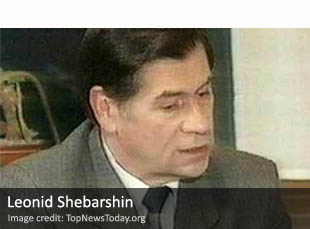
►►Ex-CIA officer remembers his KGB rival. In April, Leonid Shebarshin, a retired General of the KGB, who was often referred to as “the last Soviet spy”, was found dead in his downtown Moscow apartment. Apparently, he had committed suicide. Now Milt Bearden, who was the CIA’s Chief of the Soviet/East European Division during the final years of the USSR, has written a piece in which he remembers Shebarshin. He says that, even though Shebarshin was “the closest thing [he] had to a main adversary” in the USSR, the two became friends in the late 1990s, despite the fact that Shebarshin remained a true believer in the USSR until the very end of his life.
►►NSA won’t reveal how many Americans it spied on. Last month, US Senators Ron Wyden and Mark Udall –both members of the US Senate’s Select Committee on Intelligence– asked the NSA how many persons inside the US it had spied upon since 2008. But Charles McCullough, the Inspector General of the Office of the Director of National Intelligence, has told the two Senators that giving such a figure of how many Americans were spied on was “beyond the capacity” of NSA’s oversight mechanisms, and that –ironically– looking into this matter would violate the privacy of American citizens.
►►Russian scientist who ‘spied for China’ freed. Igor Reshetin, the former director of Russian rocket technology firm TsNIIMASH-Export, who was jailed in 2007 for selling state secrets to China, has been released on parole. Reshetin had been initially sentenced to nearly 12 years, for illegally selling state-controlled technology secrets to a Chinese firm, and with stealing 30 million rubles (US$925,000) through a scheme involving bogus companies. His initial sentence was later reduced on appeal.

Russian professors jailed for passing military secrets to China

The R-30 BulavaBy IAN ALLEN | intelNews.org |
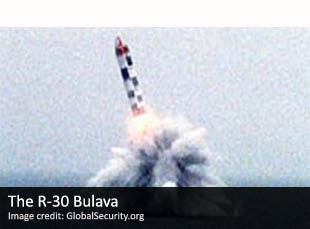
Two Russian professors were convicted yesterday of handing over to Chinese government agents highly classified technical details about one of Russia’s most secretive military projects. Svyatoslav Bobyshev and Yevgeny Afanasyev, both employees of the military-affiliated Baltic State Technological University in St. Petersburg, had been arrested in March 2010 on suspicion of spying for a foreign government. The two have now been sentenced by the St. Petersburg City Court to 12 and 12 ½ years in prison respectively, after having been found guilty of treason. According to the court documents, Bobyshev and Afanasyev traveled to China in 2009, where they passed on to Chinese military intelligence officers highly secret technical details about Russia’s R-30 Bulava ballistic missile. Specifically, the two professors are accused of sharing information relating to Bulava’s underwater launch specifications. Additionally, the Russian government prosecutor said that the two were preparing to provide the Chinese with information about two of Russia’s land-based missile systems, the Topol-M and Iskander. The R-30 Bulava (the Russian word for “mace”) is the name for Moscow’s latest-generation submarine-based ballistic missile technology. It is widely considered to be one of the future cornerstones of Russia’s nuclear weapons capability, and is thought to be the most expensive weapons project currently being developed in the country. The missile was approved for production last year, and is expected to come to service this coming October, when it will begin to replace Russia’s Soviet-era stock of submarine-launched nuclear missiles. Read more of this post

News you may have missed #748 (US edition)

Michael HaydenBy IAN ALLEN | intelNews.org |
►►US lawmakers probe China companies over spy concerns. In letters sent last week to Chinese communications hardware firms Huawei Technologies and ZTE Corporation, a group of senior members of the US House of Representatives Intelligence Committee have outlined concerns about the companies’ ties with the Chinese government, including the role of a “party committee” at Huawei. The lawmakers have also asked about Huawei’s relationships with five US consulting firms and requested an expansive collection of documents, including the contracts between the firms and Huawei.
►►Lone Senator resists Bush/Obama NSA wiretapping plan. The Obama administration wanted a quick, no-questions-asked-or-answered renewal of broad electronic eavesdropping powers that largely legalized the Bush administration’s illegal warrantless wiretapping program. That’s despite President Barack Obama’s campaign promise to revisit and revise the rules to protect Americans’ rights. Everything seemed to be going to plan after a Senate committee approved the re-authorization in secret last month. But Senator Ron Wyden (D-Oregon) has stepped in to stop the bill because the government refuses to say how often the spy powers are being used.
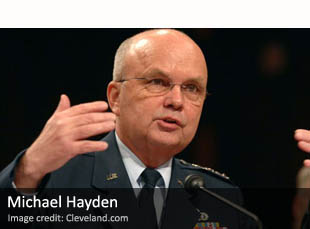
►►What did Hayden tell Obama in January 2009? In December of 2008, a meeting took place between the incoming US Presiden Barack Obama and the departing CIA Director Michael Hayden. Several days later, on January 15, Hayden told journalists that Obama had privately assured him that “no plans to launch a legal inquiry” into the CIA’s use of controversial interrogation methods during the Bush administration. Now, several years later, Salon has published an insider’s account of what was said in that meeting between Obama and Hayden, as well as during the days that followed.

News you may have missed #747

Israeli athletes at the 1972 Munich OlympicsBy TIMOTHY W. COLEMAN | intelNews.org |
►►Dutch media reportedly spied on China. Dutch media participated in a clandestine intelligence collection effort on behalf of the Netherlands General Intelligence and Security Service (AIVD) during the 2008 Summer Olympic Games in Beijing. According to Dutch sources, at least seven reporters attending the Olympics were coaxed into, and were paid for, collecting information and taking photos of targeted Chinese officials interested in speaking with Dutch company and industry representatives. The AIVD did not comment on the allegations but did remark that Dutch law allows them to contact anyone who could provide or has access to intelligence.
►►Nicaragua arrests Colombian national for espionage. According to the Spanish-language weekly newspaper Semana, General Julio Cesar Aviles, the head of Nicaragua’s Army, announced the arrest of Colombian national Luis Felipe Rios, for seeking to “obtain Nicaraguan state documents about defense and national security”. The 34-year old Rios was apparently captured in Managua on Tuesday after having been under the surveillance of Nicaraguan counterintelligence officials for over a year. Rios was in Nicaragua under the guise of being a Spanish national working for a media outlet. The lead prosecutor in Nicaragua, Armando Juarez, claimed that there was “sufficient proof” to prosecute Rios. Colombian officials, including President Juan Manuel Santos, have stated they are investigating the matter.
►►Neo-Nazi linked to 1972 Munich Olympic terrorists. Recently released files by Germany’s security service, the Federal Office for the Protection of the Constitution (BfV), links neo-Nazi Willi Pohl to forged passports provided to Black September terrorists who perpetrated the 1972 attack at the Munich Olympics. The attack resulted in the deaths of 11 Israeli athletes. According to German magazine Der Spiegel, over 2,000 documents were released in which the BfV asserts that Pohl assisted and even chauffeured one Black September member around Germany in the weeks leading up to the attack. German police arrested Pohl in 1972 for “unauthorized possession of firearms” and sentenced him to two years’ incarceration for possessing grenades and weapons. He was released only a few days after his conviction and he fled the country, ending up in Lebanon.

CIA ‘seriously damaged’ China’s overseas spy network, sources say

Ministry of State Security branch office in Hubei Province, ChinaBy JOSEPH FITSANAKIS | intelNews.org |
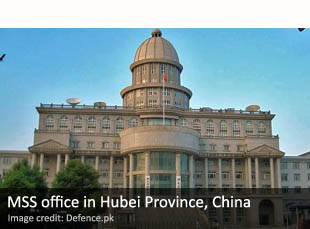
A high-level Chinese security official, who was arrested earlier this year in China for spying for the United States, compromised several Chinese agents operating on American soil, according to sources. Reuters news agency, which broke the initial story of the Chinese official’s arrest earlier this month, published last week a lengthy update on the spy affair. The article quoted “two sources with direct knowledge on the matter”, who claimed the issue was considered serious enough in Beijing to prompt the personal intervention of Chinese President Hu Jintao. Jintao, who is also General Secretary of the Communist Party of China, personally ordered an investigation into the case, said Reuters. The investigation focused on China’s Ministry of State Security (MSS), China’s primary intelligence agency, where the accused spy was reportedly working at the time of his arrest. Although Chinese media have remained silent on the issue, the arrested official is said to have worked as a senior aide to MSS Vice Minister Lu Zhongwei. The Reuters article alleges that the investigation, which is said to be continuing, has concluded that the aide had been a paid informant of the US Central Intelligence Agency, and that the information he provided to the CIA included “political, economic and strategic intelligence”. But the sources also told Reuters that some of the government secrets that the MSS aide gave the CIA related to China’s network of spies operating on American soil. The latest Reuters article strengthens the widespread view that the latest espionage scandal caused serious damage to China’s espionage network in the US. Some observers now argue that this represents China’s most damaging espionage scandal since 1985, when Yu Qiangsheng, a senior Chinese intelligence official, defected to the United States. Read more of this post

US State Department silent on ‘massive’ China spy revelations

Hillary ClintonBy JOSEPH FITSANAKIS | intelNews.org |
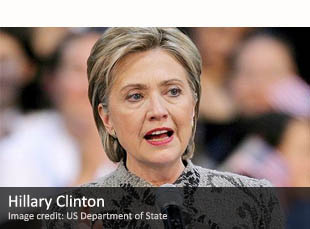
The United States Secretary of State, Hillary Clinton, has declined to comment publicly on the arrest of a senior Chinese government aide, who is said to have conducted “massive” spying for Washington. According to Reuters news agency, who broke the story last week, the aide was arrested several months ago, but both the US and China have chosen to keep the issue under wraps in order “to prevent a fresh crisis in relations” between the two countries. Reuters cited “three sources [with] direct knowledge of the matter”, who said that the aide was employed at a critical post in the office of a vice minister in China’s Ministry of State Security (MSS). The MSS is China’s foremost intelligence agency, with responsibility for both domestic and international intelligence collection. According to the sources quoted by Reuters, the unnamed aide was arrested “sometime between January and March” of 2012 and stands accused of supplying his American handlers with classified information on Chinese espionage activities abroad. According to the report, the accused spy had been working for the US “for several years” and his case could represent the worst breach of China’s MSS in two decades; according to one source, the damage inflicted to the MSS’ operations by this case “has been massive”. Reuters said that the aide, who speaks English, was recruited by the US Central Intelligence Agency, and was paid “hundreds of thousands of US dollars” to provide “political, economic and strategic intelligence” to American intelligence officers. Read more of this post

Japan investigates senior Chinese diplomat for spying

Chinese embassy in TokyoBy IAN ALLEN | intelNews.org |
Japanese authorities are investigating a senior Chinese diplomat for having engaged in “activities in violation of the Vienna Convention on Diplomatic Relations”, which is technical language for espionage. The diplomat, who has been named by the Associated Press as Li Chunguang, and is fluent in Japanese, was posted at the Chinese Embassy in Tokyo in July of 2007 as the Embassy’s Second Secretary in charge of economic affairs. But Japan’s Public Security Intelligence Agency, which serves as the country’s primary counterintelligence organization, secretly monitored Li’s activities almost from the moment he was posted in Tokyo, eventually reaching the conclusion that the Chinese diplomat had ties to “an intelligence division of the Chinese People’s Liberation Army”. Earlier this year, the Agency determined that Li had used fraudulent information and had failed to disclose his diplomatic status while applying for an alien registration certificate from the Japanese government. According to news reports, he used the fraudulent certificate to open a bank account in Tokyo, where he deposited ¥100,000 (about US$ 1,300). According to Japanese investigators, Li he planned to “use [the money] for intelligence activities”. In mid-May of this year, the Japanese Ministry of Foreign Affairs, acting on a tip from Tokyo’s Metropolitan Police Department, requested from the Chinese Embassy that Li turned himself in “for questioning”. However, instead of presenting himself to Japanese authorities, as requested, Li left his Tokyo Embassy post for good on May 23, and is presumed to be Read more of this post

News you may have missed #735

Blast site in Deir Ezzor, SyriaBy IAN ALLEN | intelNews.org |
►►Pakistan imposes new restrictions on CIA operatives. The government of Pakistan has issued a set of new rules and regulations for officials, ambassadors and contractors of the United States Central Intelligence Agency (CIA). According to Pakistani news reports, Pakistan and the US finalized these new rules in the course of 13 meetings between representatives of both countries. Under the new rules, CIA officers deployed in Pakistan “must prove their identity” to Pakistani counterintelligence officials. Some officials, including former Pakistani ambassador to the United States Sherry Rehman, are already talking of a “new beginning for US-Pakistani relations”.
►►Car bomb strikes near Syrian intelligence agency. The Syrian Observatory for Human Rights confirmed reports on Saturday of an explosion in the Ghazi Ayyash neighborhood of the eastern Syrian city Deir al-Zour. The site of the blast, which killed at least seven people and injured 100 others, was close to the city branches of the Military Intelligence Directorate and Air Force Intelligence, the London-based activist group reported. There has been no immediate claim of responsibility for the attack.
►►China denies US cyberespionage claims. The Chinese government has hit back at a US Pentagon report that said it is carrying out aggressive cyber-spying as part of a military build-up. Chinese Foreign Ministry spokesman Hong Lei said “China’s justified and normal military development” had been unjustly criticized in the annual report, which was released on Friday. The development of China’s “limited” military force was only geared towards safeguarding its independence, sovereignty and territorial integrity, said the spokesman.

News you may have missed #724

Shakil AfridiBy IAN ALLEN | intelNews.org |
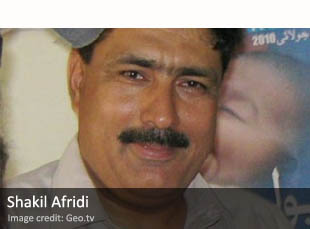
►►Aid group denies link to US intelligence in Pakistan. Aid group Save the Children denied accusations it has ties to US intelligence agencies in Pakistan. The organization’s denial came shortly after Dr. Shakil Afridi, a doctor the CIA recruited to help in the search for Osama bin Laden, told Pakistani interrogators that Save the Children played a role in his becoming involved with the CIA. Following Afridi’s interrogation, the Pakistani government banned some Save the Children members from leaving the country and aid supplies –including medical supplies– have been blocked by customs.
►►Is MI6 double spy’s case linked with Gareth Williams’ death? In 2010, British authorities jailed for a year MI6 employee Daniel Houghton, after he was caught trying to sell classified documents to MI5 spooks posing as foreign agents. According to newspaper The Daily Mirror, British police are now “probing a possible link between the Houghton’s case and the death of MI6 employee Gareth Williams, who was found dead in his London apartment in 2010. According to the paper, police detectives “want assurances from MI6 that Williams’ details [and] identity were not compromised” by Houghton.
►►Fears of spying hinder US license for China Mobile. China Mobile, the world’s largest mobile provider, applied in October for a license from the Federal Communications Commission to provide service between China and the United States and to build facilities on American soil. But officials from the FBI, the Department of Homeland Security and the Justice Department’s National Security Division are concerned that the move would give the company access to physical infrastructure and Internet traffic that might allow China to spy more easily on the US government and steal intellectual property from American companies. This is according to The Los Angeles Times, which cites “people familiar with the process who declined to be identified because the deliberations are secret”. US officials and lawmakers have expressed similar concerns about a Chinese telecommunications hardware manufacturer Huawei Technologies, which is alleged to have contacts with the Chinese People’s Liberation Army and the Ministry of State Security.

Comment: Britain denies murdered businessman was MI6 spy

Neil HeywoodBy JOSEPH FITSANAKIS | intelNews.org |
Britain has officially denied allegations that a British businessman, who was found dead in China last November, was an intelligence operative. Neil Heywood, a financial consultant and fluent Chinese speaker, who had lived in China for over a decade, was found dead on November 14, 2011, in his room at the Nanshan Lijing Holiday Hotel in Chongqing. Widespread speculation that Heywood may have been a spy for MI6, Britain’s external intelligence service, eventually prompted the House of Commons Foreign Affairs Committee to ask Britain’s Foreign Secretary to clarify whether Haywood was a spy. The Committee wanted to know whether the late businessman had ever supplied intelligence “on a formal or informal basis” to Britain’s embassy in Beijing or its consulate in the city of Chongqing. Responding yesterday to the Committee’s query, British Foreign Secretary William Hague noted that “it is long established government policy neither to confirm nor deny speculation of this sort”. However, he added, the interest in this case made it “exceptionally appropriate” for him to “confirm that Mr Heywood was not an employee of the British government in any capacity”. In response to the second part of the Committee’s question, on whether the British expat shared information with British diplomatic officials, Mr Hague said that Heywood “was only an occasional contact of the embassy, attending some meetings in connection with his business”. He added that Heywood “was not known” to the British consulate-general in Chongqing. In its report on the story, British quality broadsheet The Guardian noted that Mr Hague’s response “did not fully answer the committee’s question”. Read more of this post

News you may have missed #717

Lieutenant General Michael FlynnBy IAN ALLEN | intelNews.org |
►►CIA wants more drone strikes in Yemen. The CIA is seeking permission to launch more airborne drone strikes in Yemen, even when there is a risk the victims might not always be terrorists, The Washington Post reports. The paper quotes an unnamed Obama administration official saying that “there is still a very firm emphasis on being surgical and targeting only those who have a direct interest in attacking the United States”. But critics of the drone program say killings of innocent victims could become more common if the strikes are expanded. The CIA proposal for the “signature strikes” is awaiting a decision by the National Security Council, The Post quotes unnamed US officials as saying.
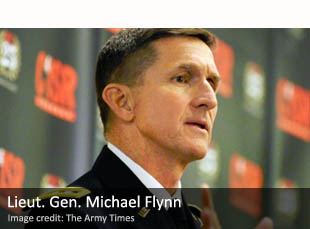
►►US military intelligence critic to lead spy agency. Lieutenant General Michael Flynn, who once blasted the work of US military spies in Afghanistan as “only marginally relevant”, has been nominated to take over the Defense Intelligence Agency, which is the US Pentagon’s intelligence organization. Flynn was a scathing public critic of military intelligence in Afghanistan, where he served as a top intelligence officer in 2010, saying it failed to provide decision makers with a clear picture of conditions on the ground. Flynn is credited with playing an influential role during his tenure at Joint Special Operations Command (JSOC), the secretive headquarters that oversees elite commandos like the team that killed Osama bin Laden in May 2011.
►►Taiwanese man detained for spying for China. A Taiwanese businessman, identified by his surname Cheng, has been detained for allegedly spying for China. He was allegedly recruited by China when he moved to the southeastern coastal province of Fujian to do business a few years ago, prosecutors said. Cheng is accused of trying to lure a former classmate, who is now a military officer, to meet with Chinese officials abroad for money; but the officer turned him in to Taiwanese authorities.

UK Foreign Secretary asked if murdered businessman was MI6 spy

Neil HeywoodBy JOSEPH FITSANAKIS | intelNews.org |
Britain’s Foreign Secretary has been officially asked by a parliamentary committee whether Neil Heywood, the British businessman who was found murdered in China last November, was spying for British intelligence. There is no question that Heywood, a financial consultant and fluent Chinese speaker, who had lived in China for over a decade, maintained contacts with intelligence insiders. In the past, he had collaborated with Hakluyt, a business intelligence firm established and staffed by former officers of MI6, Britain’s external intelligence agency. British government sources have denied that the murdered businessman had ever been employed by the British state. But Heywood’s background —his schooling at Harrow, his background in international relations, his contacts with senior Chinese Communist Party apparatchiks, and his language skills— have given rise to intense speculation that he may have been an asset for British intelligence. Yesterday British newspaper The Daily Mail cited “a well-placed source” in claiming that Heywood “passed information to MI6 as an agent of influence”. Speculation about Heywood’s alleged contacts with British intelligence is bound to increase following news of an official request on the subject, issued to British Foreign Secretary William Hague, by the House of Commons Foreign Affairs Committee. The request, submitted in the form of a letter (.pdf) authored by Committee Chairman Ricahrd Ottaway, urges Hague to address “speculation” about the murdered Englishman’s profession. In the letter, Ottaway asks the Foreign Secretary to clarify whether Haywood had ever supplied intelligence “on a formal or informal basis” to Britain’s embassy in Beijing or its consulate in the city of Chongqing, where Heywood was found dead last November. Read more of this post