News you may have missed #733

Stella RimingtonBy IAN ALLEN | intelNews.org |
►►Women in US intelligence seek balance in life. Nada Bakos (photo) was one of many women serving as CIA analysts before 9/11, who then moved to the operations side after the terrorist attacks. She didn’t yet have a family when she accepted her assignment as a targeting officer in Iraq. After a couple of years, as Bakos was deep into her career on the operations side, she decided she wanted to start a family. That was a problem. At least 160 other women feel her pain. Women from the CIA, the National Security Agency, Naval Office of Intelligence and dozens of other agencies met last week at the Women in National Security conference in McLean, Virginia, to try and find a better way.
►►Interview with ex-MI5 Director Stella Rimington. Australian Radio hosts an interesting audio interview with Dame Stella Rimington, who headed MI5, Britain’s domestic intelligence agency, from 1992 to 1995. She speaks about the experience of being the first director of MI5 to be publicly identified and the sometimes sinister invasions to her privacy as a result. Moreover, she says the only thing that surprised her about the Leveson inquiry into phone hacking and the conduct of the British media is that nobody recognized it was going on before.
►►US government think-tank warns against strikes on Iran. The RAND Corporation, a think tank which advises the United States Department of Defense, warned last week Tuesday against an Israeli or American attack on Iran’s nuclear reactors, and recommended that the administration of Barack Obama try to “quietly influence the internal Israeli discussion over the use of  military force”. In 2009, before Stuxnet, a RAND report had argued that the US may be better off focusing on cyber-defense instead of resorting to cyberattacks.
News you may have missed #731 (Henry Crumpton edition)

Henry 'Hank' CrumptonBy IAN ALLEN | intelNews.org |
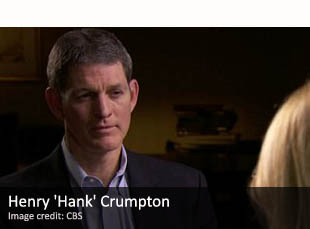
►►Ex-CIA officer says more spies in US than ever before. Henry “Hank” Crumpton, who served as Deputy Director of the CIA’s Counter-Terrorism Center, and led the US intelligence response to 9/11, spoke to CBS’ 60 Minutes about his life as a spy. He told the program that “I would hazard to guess there are more foreign intelligence officers inside the US working against US interests now than even at the height of the Cold War”. IntelNews regulars may recall the last time Crumpton spoke on 60 Minutes.
►►Introduction to Crumpton’s The Art of Intelligence. The introduction to Hank Crumpton’s The Art of Intelligence, which came out earlier this week, has been republished by MSNBC, by arrangement with the Penguin Press, a member of Penguin Group. There are at least 20 pages of the book available on the MSNBC website.
►►Can the FBI understand intelligence? Editorial by Hank Crumpton for Politico, in which he says that “the FBI is still measuring success based on arrests and criminal convictions –not on the value of intelligence collected and disseminated to its customers”. He makes a ten-point argument to claim that the FBI, unlike the CIA, does “not understand intelligence”.

News you may have missed #726

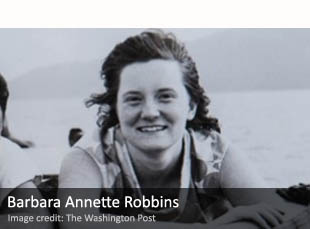
Barbara Annette RobbinsBy IAN ALLEN | intelNews.org |

►►Portrait of first female CIA officer to die in line of duty. In 1965, a 21-year-old American woman, Barbara Annette Robbins (photo), was among the victims of a car bombing at the US Embassy in Saigon, South Vietnam. Washington said she was a diplomat. But, at a ceremony last year, the CIA admitted she was an employee of the Agency. This makes her the first woman at the male-dominated CIA killed in the line of duty. She is also the youngest CIA employee ever killed. And she appears to be the first American woman to die in the Vietnam War. The Washington Post has an interesting article about her short life and career.
►►US Jewish leader says release of Israeli spy Pollard ‘inevitable’. The release of Jonathan Pollard, who is serving a life sentence in a US prison for spying on the US for Israel, is “inevitable” and could take place shortly on “technical grounds”, according to Jack Rosen, a prominent Jewish leader and supporter of US President Barack Obama. A New York City real estate executive who hosted Obama at his Upper East Side home for a Democratic Party fundraiser last November, Rosen said that “there are some technical reasons, I’m told, why [Pollard] will be released. I think there’s an inevitability to that happening”.
►►Senior reshuffle at South Korean spy agency. South Korean President Lee Myung-bak reshuffled two top posts at South Korea’s main intelligence agency Monday in a shake-up that also affected five other vice-ministerial posts. Nam Joo-hong, a former well-known security scholar who has so far served as ambassador to Canada, was named the first deputy chief of the National Intelligence Service, while Cha Moon-hee, a veteran intelligence official, was tapped as the agency’s second deputy chief. The spy agency’s first and second deputy chiefs are in charge of its overseas and domestic operations, respectively.

Would be al-Qaeda bomber was Saudi double agent

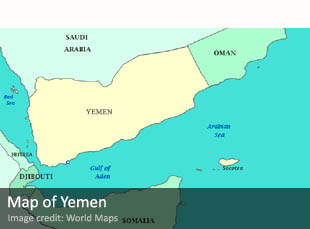
YemenBy JOSEPH FITSANAKIS | intelNews.org |
The man tasked by al-Qaeda’s Yemeni branch to blow up an airliner bound for the United States last month, was a mole who had been recruited by Saudi intelligence. IntelNews understands that the double agent is a Saudi citizen who volunteered to act as an informant for Saudi authorities. The latter eventually tasked him with traveling to Yemen, joining al-Qaeda in the Arabian Peninsula (AQAP), and convincing its leaders that he was willing to carry out a suicide mission against Western targets. It is not known at this point whether the Saudis kept the United States Central Intelligence Agency in the loop from the moment the mole was sent to Yemen to join AQAP. What is known is that the man did indeed manage to penetrate AQAP and was eventually entrusted with attacking a civilian airliner with a custom-built bomb designed to fit seamlessly around his scrotum. However, instead of carrying out the suicide mission as agreed, the man left Yemen for Saudi Arabia and delivered both himself and the bomb to Saudi intelligence. The Saudis eventually notified the CIA of the foiled plot, before forwarding the deactivated explosive device to the Federal Bureau of Investigation, which is now studying it. Thus, initial media reports claiming that the CIA had foiled the attack appear somewhat stretched at this point, in light of the critical role of the Saudi mole inside AQAP. Read more of this post

News you may have missed #725 (al-Qaeda edition)

Fahd al-QusoBy IAN ALLEN | intelNews.org |

►►Al-Qaeda airline bomb plot thwarted by CIA. US intelligence services foiled a plot hatched by al-Qaeda in the Arabian Peninsula (al-Qaeda’s Yemeni affiliate) to blow up a plane bound for America using a more sophisticated version of the underwear bomb deployed unsuccessfully in 2009, according to the White House and the FBI. The Associated Press quoted unnamed US officials as saying that the would-be bomber, based in Yemen, had been given the bomb by al-Qaida, which had left the choice of plane and the timing to him. The CIA intervened to seize the bomb. The fate of the alleged bomber is still unknown.
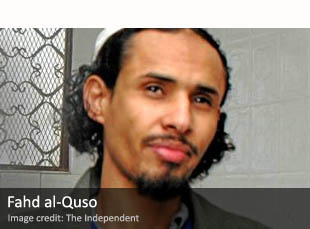
►►CIA kills al-Qaeda man wanted for attack on USS Cole. Fahd al-Quso, who was on the FBI’s most-wanted list for his part in the bombing of the warship USS Cole in 2000, was hit by a missile fired from the unmanned CIA aircraft on Sunday as he and another al-Qaeda operative stepped out of a vehicle in the southern province of Shabwa, Yemen. Al-Quso (photo) had served more than five years in a Yemeni prison for his role in the USS Cole attack and was released in 2007.
►►Al-Qaeda attacks Yemeni base hours after CIA strike. Al-Qaeda militants staged a surprise attack Monday on a Yemeni army base in the south, killing 20 soldiers and capturing 25 just hours after a US drone strike killed Fahd al-Quso, one of its senior figures, who had participated in the 2000 bombing of the USS Cole in Yemen. The militants managed to reach the base both from the sea and by land, gunning down troops and making away with weapons and other military hardware after the blitz attack.

News you may have missed #724

Shakil AfridiBy IAN ALLEN | intelNews.org |

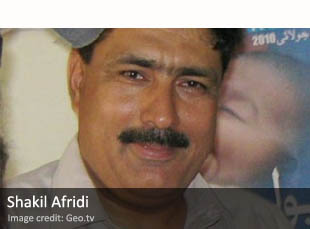
►►Aid group denies link to US intelligence in Pakistan. Aid group Save the Children denied accusations it has ties to US intelligence agencies in Pakistan. The organization’s denial came shortly after Dr. Shakil Afridi, a doctor the CIA recruited to help in the search for Osama bin Laden, told Pakistani interrogators that Save the Children played a role in his becoming involved with the CIA. Following Afridi’s interrogation, the Pakistani government banned some Save the Children members from leaving the country and aid supplies –including medical supplies– have been blocked by customs.
►►Is MI6 double spy’s case linked with Gareth Williams’ death? In 2010, British authorities jailed for a year MI6 employee Daniel Houghton, after he was caught trying to sell classified documents to MI5 spooks posing as foreign agents. According to newspaper The Daily Mirror, British police are now “probing a possible link between the Houghton’s case and the death of MI6 employee Gareth Williams, who was found dead in his London apartment in 2010. According to the paper, police detectives “want assurances from MI6 that Williams’ details [and] identity were not compromised” by Houghton.
►►Fears of spying hinder US license for China Mobile. China Mobile, the world’s largest mobile provider, applied in October for a license from the Federal Communications Commission to provide service between China and the United States and to build facilities on American soil. But officials from the FBI, the Department of Homeland Security and the Justice Department’s National Security Division are concerned that the move would give the company access to physical infrastructure and Internet traffic that might allow China to spy more easily on the US government and steal intellectual property from American companies. This is according to The Los Angeles Times, which cites “people familiar with the process who declined to be identified because the deliberations are secret”. US officials and lawmakers have expressed similar concerns about a Chinese telecommunications hardware manufacturer Huawei Technologies, which is alleged to have contacts with the Chinese People’s Liberation Army and the Ministry of State Security.

News you may have missed #719

Benny GantzBy IAN ALLEN | intelNews.org |
►►Iran says it has cracked US spy drone secrets. Iran claims it has cracked the encryption on the computer software onboard a US RQ-170 Sentinel drone which crashed in the country in December. General Amir Ali Hajizadeh, head of the Revolutionary Guards aerospace division, said engineers were decoding the last pieces of data from the spy plane, which came down near the Afghan border. An Iranian defense official recently said that Tehran has had several requests for information on the craft and that China and Russia have shown an interest.
►►Israel steps up covert operations says defense chief. Israel’s defense chief, Lieutenant General Benny Gantz, has confirmed his forces are carrying out increased special operations beyond the country’s borders. In an interview published on Wednesday to mark the eve of Israel’s Independence Day, Gantz said Israel was ready to attack Iran’s nuclear sites if ordered to do so. But he added that did not mean he was about to order the air force to strike. He also said that he had increased the number of covert Israeli operations in other countries, but gave no details. “I do not think you will find a point in time where there is not something happening, somewhere in the world”, he said.
►►US Pentagon plans new intelligence-gathering service. The US Pentagon is revamping its spy operations to focus on high-priority targets like Iran and China in a reorganization that reflects a shift away from the war zones of Iraq and Afghanistan that have dominated America’s security landscape for the past decade. Under the plan approved last week by Defense Secretary Leon E. Panetta, case officers from the new Defense Clandestine Service would work more closely with counterparts from the Central Intelligence Agency at a time when the military and spy agency are increasingly focused on similar threats.

News you may have missed #717

Lieutenant General Michael FlynnBy IAN ALLEN | intelNews.org |
►►CIA wants more drone strikes in Yemen. The CIA is seeking permission to launch more airborne drone strikes in Yemen, even when there is a risk the victims might not always be terrorists, The Washington Post reports. The paper quotes an unnamed Obama administration official saying that “there is still a very firm emphasis on being surgical and targeting only those who have a direct interest in attacking the United States”. But critics of the drone program say killings of innocent victims could become more common if the strikes are expanded. The CIA proposal for the “signature strikes” is awaiting a decision by the National Security Council, The Post quotes unnamed US officials as saying.
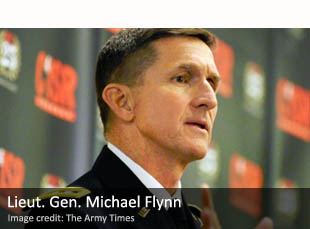
►►US military intelligence critic to lead spy agency. Lieutenant General Michael Flynn, who once blasted the work of US military spies in Afghanistan as “only marginally relevant”, has been nominated to take over the Defense Intelligence Agency, which is the US Pentagon’s intelligence organization. Flynn was a scathing public critic of military intelligence in Afghanistan, where he served as a top intelligence officer in 2010, saying it failed to provide decision makers with a clear picture of conditions on the ground. Flynn is credited with playing an influential role during his tenure at Joint Special Operations Command (JSOC), the secretive headquarters that oversees elite commandos like the team that killed Osama bin Laden in May 2011.
►►Taiwanese man detained for spying for China. A Taiwanese businessman, identified by his surname Cheng, has been detained for allegedly spying for China. He was allegedly recruited by China when he moved to the southeastern coastal province of Fujian to do business a few years ago, prosecutors said. Cheng is accused of trying to lure a former classmate, who is now a military officer, to meet with Chinese officials abroad for money; but the officer turned him in to Taiwanese authorities.

Ex-CIA officer sheds light on 1977 spy arrests in Moscow

Martha D. PetersonBy JOSEPH FITSANAKIS | intelNews.org |
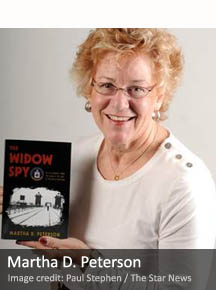
A recently retired CIA officer has spoken publicly for the first time about the 1977 arrest and eventual suicide of a Soviet double agent considered one of the Central Intelligence Agency’s most important assets during the Cold War. Aleksandr Dmitryevich Ogorodnik was an official in the Soviet diplomatic service who, while stationed at the Soviet embassy in Bogotá, Colombia, was compromised and later blackmailed by Colombian intelligence into spying on Moscow. Ogorodnik was initially handled by the Colombians, with little success. Later, however, when he was moved to a sensitive post in the Soviet Ministry of Foreign Affairs in Moscow, the Colombians turned him over to the CIA. He was handled by CIA officer Aldrich Ames —himself a double spy for the Soviet KGB— who gave Ogorodnik the codename TRIGON. After establishing contact with him in Moscow, the CIA provided Ogorodnik with a miniature camera and other essentials, which he used regularly to take photographs of classified Soviet documents. As a go-between, the Agency selected Martha D. Peterson, the first female CIA case officer ever to be posted in Moscow. Peterson was a fresh CIA recruit, who had completed her Career Training program in 1974, less than a year before being sent to the Soviet capital. Having retired in 2003, after 31 years with the CIA, Peterson has now published a memoire entitled The Widow Spy. In it, she reveals that she coordinated regular dead-drops with Ogorodnik for nearly two years, picking up his used film while supplying him with fresh film and other espionage accessories. On July 15, 1977, however, her mission was abruptly terminated after she was arrested by a large team of KGB officers underneath a railway bridge in Moscow, a few minutes after conducting a dead-drop for Ogorodnik. She was taken to the KGB’s Lubyanka prison, where she says she was interrogated for three days before being released by way of her diplomatic immunity, and ordered to leave the USSR. Ogorodnik was not so fortunate. A few months prior to his arrest, he had requested that the CIA provide him with a poison pill, which he could take in case he was arrested by the KGB. Read more of this post

Analysis: Biometric passports, iris scanners, worry undercover spooks

Biometric passportBy JOSEPH FITSANAKIS | intelNews.org |
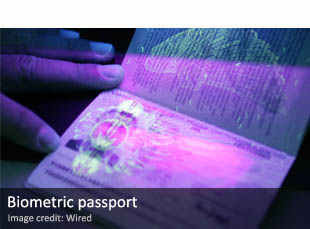
False passports are to intelligence operatives what petrol is to automobiles. In the absence of forged travel documentation, intelligence officers working undercover are unable to operate internationally without revealing their identity. This is why, traditionally, intelligence operatives are known to “use and discard false passports like hand wipes”, in the words of one knowledgeable source. But according to a fascinating article by veteran intelligence correspondent Jeff Stein, authored for Wired magazine’s Danger Room blog, “the day of the trench-coated spy easily slipping in and out of countries on false papers multiple times [may be] coming to an end”. The reason is “the electronic curtain [that] is descending all over the world”, most notably the increasing deployment of iris recognition devices and biometric passports at airports and hotels around the world, says Stein. Over the coming decade, iris scanners, which employ mathematical pattern-recognition techniques to identify individuals by their irides, will become increasingly common at international airports. The same applies to biometric passports, namely travel documents with embedded microchips that store a massive amount of personal information. These technologies are ostensibly being introduced in international transport hubs in order to combat transnational terrorism and organized crime. But they are also expected to heavily interfere with the work of undercover intelligence operatives, says Stein, especially as they are being introduced in popular spy routes, in countries such as India, Jordan, United Arab Emirates, as well as in several European Union entry points. He quotes an unnamed “career spook” currently working for the Central Intelligence Agency as a consultant, who explains that an undercover officer’s biometric identity will be forever linked to the passport that he or she first uses to enter these countries. If the officer were to try to enter these countries again, using a different alias, alarm bells will ring: “you can’t show up again under a different name with the same data”, says the CIA consultant. Read more of this post

News you may have missed #712

Abdel Hakim BelhajBy IAN ALLEN | intelNews.org |
►►New US spy satellite could include ‘domestic surveillance. Last week, a new US spy satellite was launched into orbit as part of a secretive military program enabling the surveillance of Earth from space. An official at the Vandenberg base told The Los Angeles Times that the NROL-25 was part of a “national security payload”, which could mean it is to be used for any number of purposes, possibly including domestic surveillance.
►►US steps up intelligence and sabotage missions in Iran. American intelligence agencies are ramping up intelligence and sabotage missions focused on Iran’s nuclear program, according to The Washington Post. Officials from the National Security Agency have increased efforts to intercept email and electronic communications coming from Tehran, according to reports in The Post‘s Sunday edition. The CIA and other agencies have also ramped up sabotage missions in the country, geared toward disrupting Iran’s ongoing nuclear work, the paper reports.
►►MI6 ‘considers paying off’ Libyan official. Britain’s MI6 chiefs allegedly plan to offer more than £1 million ($1.6 million) hush money to a Libyan who claims British spies sent him to be tortured by the Gaddafi regime. The Secret Intelligence Service is scrambling to prevent Abdel Hakim Belhaj releasing details of his case following the revelation that a Labour Party minister sanctioned his extraordinary rendition —contravening UK policy on torture.

News you may have missed #711 (ex-spy edition)

Glenn L. CarleBy IAN ALLEN | intelNews.org |
►►Egypt ex-spy chief to run for President. Omar Suleiman, 74, announced his candidacy on Friday and collected around 72,000 signatures of eligible voters in one day, more than twice the 30,000 required. Hosni Mubarak’s former intelligence chief insisted that his bid for the presidency does not have the support of Egypt’s military rulers and accused Islamists of sending him death threats. Mr Suleiman, made vice-president by Mubarak in the last days of his three-decade rule, symbolizes that era’s tough security regime and poses a threat to Islamists, who were routinely harassed and arrested during Mubarak’s era, and to liberals, who spearheaded Mubarak’s ouster. But his candidacy might appeal to some Egyptians hoping for an end to political instability.
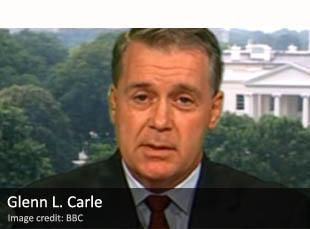
►►Ex-CIA officer says evidence in alleged case was flawed. Information from the US Central Intelligence Agency used by Canada to link accused Ottawa terrorist Mohamed Harkat to al-Qaeda was untrue, according to Glenn Carle, a retired CIA case officer who interrogated Harkat at secret CIA black site prisons in 2002. Speaking to promote his blistering memoir about the case, The Interrogator: An Education, Carle said that Harkat, who was thought to be Osama bin Laden’s main financial administrator, “wasn’t the senior member of al-Qaeda that we had assessed. He wasn’t even a member of al-Qaeda”. Yet as recently as 2010, Canadian Security Intelligence Service evidence and testimony before the Federal Court of Canada continued to point to Harkat’s relationship with Haji Pacha Wazir as evidence of Harkat’s ties to the bin Laden terror network.
►►Ex-KGB agent wins South Ossetia vote. Former senior KGB agent Leonid Tibilov has won a tense run-off to lead Georgia’s rebel pro-Russian region of South Ossetia, after two earlier polls ended in turmoil. Tibilov won 54.12 percent of the vote with all ballots counted against human rights commissioner David Sanakoyev’s 42.65 percent. The peaceful end to the election contrasts sharply with the angry protests that followed a November 27 ballot in which Alla Dzhioyeva, a female candidate who opposed the local administration was disqualified after coming out ahead in the poll. Dzhioyeva was then hospitalized in February after being interrogated and allegedly beaten by police following allegations that she planned to seize power.

News you may have missed #708

Bertil StrobergBy IAN ALLEN | intelNews.org |
►►Swedish Cold War spy dies at 79. Bertil Stroberg, a former Swedish air force officer, who was convicted of spying for Poland during the Cold War, but always maintained his innocence, has died, following a yearlong battle against cancer. He was sentenced to six years in prison for spying in 1983, but released on parole after serving three years. The key evidence in his case was a letter the prosecution said he had written to the Polish embassy offering to sell military secrets. The letter was signed Sven-Roland Larsson and asked that money be sent in that name to the Central Post Office. Stroberg was arrested when he went to the post office to collect Larsson’s mail.
►►US keeping Britain in the dark on intel issues. American intelligence agencies are increasingly keeping their British counterparts in the dark on key information, for fear those secrets could end up on full display in UK courts. “The Americans have got nervous that we are going to start revealing some of the information and they have started cutting back, I’m sure, on what they disclose”, Ken Clarke, the United Kingdom’s justice secretary, said in a Wednesday interview with the BBC. The American intelligence community has become wary about sharing sensitive intelligence with the UK ever since a 2008 court case forced the British government to disclose specific details on terror detainee operations.
►►Bush official says CIA ‘committed war crimes’. Philip Zelikow, who was a top adviser to former Secretary of State Condoleezza Rice, warned the Bush administration that its use of “cruel, inhuman or degrading” interrogation techniques like waterboarding were “a felony war crime”. What is more, newly obtained documents reveal that State Department counselor Zelikow told the Bush team in 2006 that using the controversial interrogation techniques were “prohibited” under US law —“even if there is a compelling state interest asserted to justify them”. Zelikow’s memo was an internal bureaucratic push against an attempt by the Justice Department to flout long-standing legal restrictions against torture.

News you may have missed #705

Neil HeywoodBy IAN ALLEN | intelNews.org |
►►UK man found dead in China had links to intel company. It has emerged that Neil Heywood, a British citizen and China expert, who was recently found dead in a hotel room in China, was an adviser to Hakluyt, a corporate intelligence firm founded by former MI6 officers. Hakluyt has confirmed that Heywood prepared periodic reports for it, but said he had not been working for the company at the time of his death.
►►Analysis: Iraq war ghosts haunting CIA in tackling Iran. At America’s top spy agency, the ghosts of Iraq are never far away. One CIA analyst who had helped develop some of the intelligence about Saddam Hussein’s supposed weapons of mass destruction had a breakdown, months after the Iraq war began; he had participated in the post-invasion hunt there that found the weapons did not exist. When he eventually was given a new assignment assessing Iran’s nuclear program, he confided a fear to colleagues: that the intelligence community might get it wrong again.
►►Interview with African-American CIA official. Starting in the early 1980s, as a standout undergraduate student at Colgate University, Harvard-trained lawyer and master of several languages, Justin Jackson is now the most senior African-American at the CIA. From 1983 to 2010, he served under five presidents and 10 CIA directors. “My job was to collect foreign intelligence from those human sources who were reporting on the plans and intentions of our adversaries. I also conducted covert action as directed by the administration and I ran counterintelligence operations to detect efforts that foreign countries were making against us”, he says.

News you may have missed #704: Caught-red-handed edition

Zbigniew SiemiątkowskiBy IAN ALLEN | intelNews.org |
►►Would be CIA spy uses Tweeter to attack CIA. Lynnae Williams was on track to become a CIA agent. Today, the 35-year-old aspiring journalist and would-be CIA spy uses Twitter to expose what she feels are corrupt and unethical practices by the mysterious organization. In 2009, Williams spent more than three months training to become a CIA spy. She says she was sent to the CIA’s “psychological prison”, a public mental-health hospital in Virginia. There, she says, doctors pushed drugs for schizophrenia and manic depression in a white-walled environment with inedible food. Eventually, the CIA stopped paying her and suspended her security clearance. She’s now looking to sue the agency for wrongful termination. And in the meantime, she’s using BlogSpot and her @wlynnae account to post tweets.
►►US ambassador says Russia is spying on him. US Ambassador to Russia Michael McFaul suggested yesterday that the Russian government is spying on him. “Everywhere I go [Russian television station] NTV is there”, he tweeted. “Wonder who gives them my calendar? They wouldn’t tell me. Wonder what the laws are here for such things? I respect [the] press’ right to go anywhere and ask any question. But do they have a right to read my email and listen to my phone?”. McFaul also posted on his Twitter feed yesterday: “When I asked these ‘reporters’ how they knew my schedule, I got no answer”.
►►Poland ex-spy boss charged over CIA prison. Zbigniew Siemiątkowski, the former head of Poland’s foreign intelligence service faces charges of illegal detention and use of corporal punishment at an alleged secret CIA ‘black site’ used to house high-ranking terrorism suspects. Investigators allege the spy boss exceeded his powers and breached international law through the use of “unlawful deprivation of liberty” and “corporal punishment” against prisoners of war.