September 1, 2011
by Joseph Fitsanakis

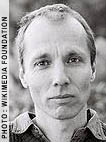
Nicky Hager
By JOSEPH FITSANAKIS | intelNews.org |
A Kiwi “peacekeeping” and “civil reconstruction” base in Afghanistan was a secret station for the US Central Intelligence Agency, according to a new book by New Zealand’s preeminent investigative writer. Nicky Hager first made international headlines in 1996, with his groundbreaking book Secret Power: New Zealand’s Role in the International Spy Network. In it, he revealed the existence of the UK-USA Security Agreement and of ECHELON, a US-managed signals intelligence (SIGINT) collection and analysis platform that serves as an intelligence-sharing mechanism between UK-USA signatories. The publication of his latest book, entitled Other People’s Wars: New Zealand in Afghanistan, Iraq and the War on Terror, is scheduled to coincide with the ten-year anniversary of 9/11. The book focuses on —among other things— the Bamyan Province base in central Afghanistan, which serves as the center of operations for the New Zealand Provincial Reconstruction Team in the Central Asian country. It serves as a symbol of New Zealand’s cautious contribution to the NATO-led war in Afghanistan, by allowing Kiwi forces to participate with boots on the ground, while performing strictly noncombatant functions, officially described as “peacekeeping” and “civil rebuilding”. But Hager’s book alleges that the “noncombatant” mission of the Bamyan base was simply a cover, devised by the New Zealand Defence Forces’ public relations apparatus, and aimed at pacifying the country’s population. The real mission of the Bamyan base, says Hager, was to “help the Americans” by essentially concealing a covert CIA station. The author further alleges that the Kiwi forces at Bamyan were instructed to keep the presence of the CIA team secret. This they did, even as they shared daily meals with American spies in civilian clothes, who refused to disclose even basic details of their mission to their New Zealand guardians. Hager alleges that New Zealand’s defense establishment took the decision to help the CIA as part of a broader strategy of rapprochement between Wellington and Washington. Why rapprochement? It was in 1984, when, under mounting popular pressure, New Zealand’s Labour government of David Lange voted to bar nuclear-powered or nuclear-armed ships from entering New Zealand territorial waters. At the time, the nuclear ban imposed by New Zealand was heralded by the global nuclear disarmament movement as a major victory. But Washington did not see it this way. Read more of this post







 intelNews.org
Analysis: CIA retains special operations role in post-9/11 era
September 12, 2011 by Joseph Fitsanakis Leave a comment
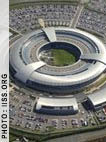
CIA HQ
By JOSEPH FITSANAKIS | intelNews.org |
Despite its ‘shoot ’em-up’ image in popular culture, the Central Intelligence Agency is predominantly responsible for collecting and analyzing intelligence for the benefit of US policymakers. The Agency’s paramilitary tasks —also known as ‘special operations’— form a somewhat smaller part of its overall mission. The CIA is America’s only government agency that can legally authorized by the President to perform special operations. The question is, should it? One of the 9/11 Commission Report’s chief recommendations was that the CIA should be stripped of its special operations function, and that the latter should be surrendered to the Department of Defense, in the form of the Joint Special Operations Command (JSOC). Clearly, JSOC has played an important role in post-9/11 counterterrorist operations. Yet it is equally clear that, not only has the CIA not been stripped of its paramilitary tasks, but the latter have actually been drastically augmented by the Obama administration —not least through the continuing unmanned drone program in Afghanistan and Pakistan. A well-written analysis by Politico’s Josh Gerstein correctly notes that recommendations to eliminate the CIA’s paramilitary role and transfer it to the Pentagon “remain unpopular in the highest echelons”. The article quotes Philip Zelikow, a University of Virginia professor and former executive director of the 9/11 Commission, who is one of the few intelligence planners that favor transferring special operations from the CIA to the Department of Defense. He says that military functions “ought to be performed by trained military organizations […]. Do you want the CIA operating a combatant command responsible for fighting our twilight wars, especially in a world when twilight wars are the wars we mainly fight?”. The argument seems to be that, as special operations become increasingly central in America’s ‘war on terrorism’, they should be commanded by a military, rather than a civilian, agency. An unnamed former CIA official puts forward the Agency’s view in the article: what do you do “if you have a [host] country that wants to deny a program”? In other words, how do you exercise plausible deniability through the Department of Defense? “[T]he CIA is going to [have to] move to the front of the queue”, he answers. Read more of this post
Filed under Expert news and commentary on intelligence, espionage, spies and spying Tagged with 9/11, Analysis, CIA, covert action, covert operations, Joint Special Operations Command, JSOC, Michael Leiter, Philip Zelikow, special operations, United States, US DoD, US National Counterterrorism Center