News you may have missed #463

  • Iranian spy minister admits hacking emails. Iran’s Intelligence Minister Heydar Moslehi has publicly admitted that the Iranian government has hacked into the emails of Iranian opposition members. He claimed the hacking, conducted by Iran’s Intelligence Ministry, revealed messages exchanged between “foreigners and their elements inside Iran”.
  • Details on CIA officer killed in Afghanistan. An interesting article in The Washingtonian offers an interesting background story on Jennifer Matthews, a CIA officer who was killed nearly a year ago in Afghanistan in a suicide bombing by Taliban double-agent Humam Khalil Abu-Mulal al-Balawi.
  • China jails South Korean alleged spy. China is getting tougher with South Korean spies caught on Chinese soil collecting intelligence on North Korea, and has jailed one of them for more than a year, despite pleas from Seoul, according to news reports.
News you may have missed #462

  • CIA secrets could surface in Swiss nuclear case. A seven-year effort by the CIA to hide its relationship with the Tinners, a Swiss family who once acted as moles inside the world’s most successful atomic black market, hit a turning point on Thursday when a Swiss magistrate recommended charging the men with trafficking in technology and information for making nuclear arms.
  • Pakistan spy chief to ignore US summons. The Pakistani government has announced that hat there is “no possibility” that Lt. Gen. Ahmad Shuja Pasha, the head of Pakistan’s powerful Inter-Services Intelligence Directorate, would obey a summons requesting his appearance before a court in the United States relating to the 2008 Mumbai terrorist attacks.
  • Australia told to prioritize spy recruitment. Carl Ungerer, from the Australian Strategic Policy Institute, has advised the Australian intelligence agencies to “look at ways to improve information gathering from human sources”, as they undergo a period of reform.

Largest Afghan narcotrafficker was CIA, DEA informant

Haji Juma Khan

Haji Juma Khan

By JOSEPH FITSANAKIS | intelNews.org |
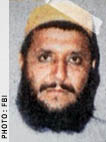
The history of operational collision between the Central Intelligence Agency and illicit narcotics traders is both long and largely documented. But new revelations published in The New York Times this week come to add a new chapter in this ever-expanding saga. The revelations this time concern Haji Juma Khan, perhaps the most notorious of Afghanistan’s drug lords, who has been described by US federal officials as arguably the most dangerous narcotrafficker in Central Asia. In 2008, Khan was finally arrested in New York, where he was charged with conspiracy to fund terrorist operations through trading in narcotics. American prosecutors allege that Khan literally “helped keep the Taliban in business”, providing them with weapons and cash on a systematic basis. But The Times reveal that, over a number of years, Khan also acted as an informant for both the CIA and the Drug Enforcement Administration and was “paid a large amount of cash” in return for his services. Read more of this post

News you may have missed #459 (Russia edition)

  • Son of CIA double spy strikes deal with FBI. Nathan Nicholson, son of CIA officer Harold James Nicholson, who in 1997 was jailed for spying for Russia, has avoided a prison sentence after promising to help the FBI build a new case against his father. The latter has pleaded guilty to enlisting his son from prison to sell the Russians more secrets and collect money owed to him by the Russian spy services.
  • Moscow warns UK of tit-for-tat expulsions. Alexander Sternik, the Russian government’s senior official in Britain, has hinted that any attempt to deport parliamentary assistant Katia Zatuliveter, detained by MI5 for allegedly spying for Russia, could result in tit-for-tat expulsions.
  • Kim Philby honored by plaque at Moscow SVR HQ. Russia has honored British Cold War spy Kim Philby with a plaque at the headquarters of the country’s foreign intelligence agency. Philby, who defected to the Soviet Union in 1963, is depicted in a sculptured portrait on the plaque as the two-faced Roman god Janus.

News you may have missed #455

  • Israel says it did not kill German politician. Israel has rejected a claim by a Swiss chemistry professor that the 1987 murder of German politician Uwe Barschel had the hallmarks of a Mossad assassination. For more on Barschel see previous intelNews story here.
  • Foreign cyber spies targeted UK defense official. Foreign spies, probably working for the People’s Republic of China, targeted senior British defense official Joanna Hole, in a sophisticated spear phishing operation that aimed to steal military secrets. The plan was foiled last year when Hole became suspicious of an email she received from a contact she had met at a conference.
  • The 10 most interesting CIA-backed startups. America’s only federally funded venture capital firm, In-Q-Tel, was created in 1999 during the tech boom. The company invests in startups developing technologies that could prove useful to the CIA and other intelligence agencies.

News you may have missed #453

  • France accuses Iran of violence at Tehran embassy. A diplomatic standoff between France and Iran has ensued, after Paris accused Iran’s security services of committing “unacceptable acts of violence” on French diplomatic personnel at the French embassy in Tehran. The alleged incident happened as guests gathered at the embassy for a traditional Persian music concert. Iranian plainclothes security forces and uniformed police stopped about two-thirds of 130 invited guests from entering the building, and an unknown number of people were seen being taken away in unmarked vans.
  • CIA picks Air Force general to lead military ops office. The CIA announced Monday that it has chosen an Air Force Lt. Gen. Kurt A. Cichowski, who has extensive experience in Predator drones, to head its military affairs office. In 2009, Cichowski called the CIA drone assassination program a “phenomenal […] success”.
  • Aussie spies spooked out by student filmmakers. Three media students filming a tourist site near the controversial new headquarters of Australia’s spy organization, ASIO, in Canberra, prompted a late-night police check, apparently over security concerns.

News you may have missed #452

  • Britain’s GCHQ turns to Google for help. GCHQ, Britain’s Cheltenham-based signals intelligence agency, is recruiting an expert on MapReduce, the patented number-crunching technique developed by Google to distribute the load of billions of web searches across its cluster of hundreds of thousands of commodity servers.
  • CIA double agent pleads guilty from prison. CIA officer Harold James Nicholson, who in 1997 was jailed for spying for Russia, has pleaded guilty to enlisting his son Nathan to sell the Russians more secrets and collect money owed to him by the Russian spy services.
  • Georgia offers to negotiate with Russia over spies. Tbilisi is ready for negotiations with Moscow on the repatriation of several alleged Russian spies arrested in Georgia, the country’s Deputy Foreign Minister Nino Kalandadze has said.

News you may have missed #450

  • Nuke bomb material found in Georgia black market. Highly enriched uranium that could be used to make a nuclear bomb is on sale on the black market along the fringes of the former Soviet Union, according to evidence emerging from a secret trial in the Republic of Georgia.
  • CIA Director warns against leaks. Asserting that lives have been endangered and sources compromised by “a damaging spate of media leaks” in recent months, CIA Director Leon E. Panetta reminded the spy agency’s employees Monday that unauthorized disclosures of classified information “cannot be tolerated”.
  • US issues new unclassified information policy. The White House has issued an executive order to establish a uniform policy for handling “controlled unclassified information” (CUI), which is information that is restricted from disclosure because it involves personal privacy, proprietary data or law enforcement investigations not relating to national security.

News you may have missed #449

  • Damning report on CIA attack on missionary plane. US Central Intelligence Agency officers involved with a secret counternarcotics mission in the Peruvian jungle routinely violated agency procedures, tried to cover up their mistakes, and misled Congress immediately after a missionary plane was accidentally shot down in 2001, according to a blistering CIA internal report released on Monday.
  • Israeli legislators call on US to release Jewish spy. Members of the Israeli Knesset are calling on US President Barack Obama to pardon American-born spy Jonathan Pollard, having been jailed in a maximum-security facility since 1985. George Bush refused to pardon Pollard in the last days of his presidency.
  • Analysis: Britain’s MI6 operates a bit differently than CIA. “Like the CIA, MI6 has a website, but while the U.S. agency site is only in English, MI6’s is also in Arabic, Russian, French, Spanish and Chinese. Another sign of British sophistication: while the CIA site has games and quizzes for kids, the MI6 site gives short tests to allow potential recruits to assess their analytical and administrative skills”. Interesting comparative assessment by Walter Pincus.

US considering CIA targeted killings in Yemen

Yemen

Yemen

By JOSEPH FITSANAKIS | intelNews.org |
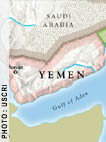
The White House is considering an unprecedented expansion of operations by the Central Intelligence Agency in Yemen, following last week’s foiled toner cartridge bomb plot. There are reports that the plot, which appears to have originated in Yemen, and was foiled through a last-minute tip from Saudi intelligence, may tip the balance in Washington in favor of those wishing to enhance the CIA’s activities in Yemen’s Sunni areas. According to The Wall Street Journal, the Obama Administration is close to authorizing the CIA’s use of unmanned drones to bomb suspected targets in Yemen, something that the Agency has been doing for over a year in Pakistan. But there also appears to be a wider consensus forming in favor of authorizing covert targeted killings inside Yemen by Special Forces operating on the ground under Langley’s command. This consensus appears to be forming in both civilian and military circles in Washington, despite fears that such tactics may backlash, leading to a severance of ties between the United States and the Yemeni government of President Ali Abdullah Saleh. The Journal article mentions that the White House is now considering authorizing the CIA to conduct targeted killings “even without the explicit blessing of the Yemeni government”. Read more of this post

News you may have missed #447

  • UK MI6 chief speaks publicly for the first time. Sir John Sawers, the head of Britain’s Secret Intelligence Service, also known as MI6, has delivered what he said was the first public address by a serving chief of the agency in its 101-year history.
  • WikiLeaks to release secret Russia, China logs. Whistleblower website WikiLeaks, which has published hundreds of US war logs, is preparing to release secret files from Russia and China, Russian newspaper Kommersant said on Tuesday.
  • Renegade CIA agent’s papers acquired by NYU. The private papers of the late Philip Agee, the disaffected CIA operative whose unauthorized publication of agency secrets 35 years ago was arguably far more controversial than anything WikiLeaks has produced, have been obtained by New York University, which plans to make them public next spring.

WikiLeaks documents reveal CIA’s role in Iraq

CIA HQ

CIA HQ

By IAN ALLEN | intelNews.org |
Along with unprecedented inside information on American military operations in Iraq, the 400,000 US military reports recently released by whistleblower site WikiLeaks provide several interesting snippets of the role of the Central Intelligence Agency in that ongoing conflict. Wired magazine’s Danger Room blog correctly notes that, unlike Afghanistan, where the CIA’s role has been relatively clear almost from the very start of the US invasion, the Agency’s function in Iraq has been something of a mystery for most outside observers. There has even been some speculation that the CIA has been sidelined in Iraq by a host of Pentagon-managed special operations outfits, including the Joint Special Operations Command. But the WikiLeaks documents, which are primarily composed of incident reports authored by US troops on the ground in Iraq, include frequent references to operations by “Other Government Agency” or “OGA” —a term usually reserved for the CIA in internal military documents. Collectively, the reports referring to OGA activities reveal significant paramilitary functions performed by CIA personnel until as recently as 2009. Read more of this post

News you may have missed #446

  • American pleads guilty to spying for China. Glenn D. Shriver acknowledged on Friday that he accepted $70,000 from Chinese spies as he attempted to secure jobs with the CIA and US Foreign Service that would have allowed him to expose US government secrets. He apparently spent two years going through the CIA hiring process and reached the final security screenings. But US intelligence sources say Shriver was discovered very early in the hiring process.
  • Obama widens CIA operations in Pakistan. The US is pushing to expand secret CIA operations in Pakistan. But Islamabad is so far rebuffing US requests to allow additional CIA officers and special operations military trainers to enter the country.
  • US spy balloons blew towards Iran. The latest WikiLeaks revelations show that on two occasions in 2006 American JLens spy balloons broke from their moorings in Iraq and drifted toward the Iranian airspace. No information on the balloons’ fate is reported in the war logs. Did Iran get hold of them?

News you may have missed #443

  • First budget cuts in a decade for UK spy agencies. Spending on Britain’s intelligence agencies is set to fall by 7%, for the first time in more than a decade. This is be expected to force MI5, MI6 and GCHQ to cap staff numbers, merge some of their operations, and scrap plans to modernize some of their buildings. Looks like even more British spies will be moving to Australia.
  • South Koreans arrested for trying to defect to North. Three South Koreans, including a medical doctor, are being investigated after allegedly trying to defect to North Korea from China. It is extremely unusual for South Koreans or other nationals to attempt to defect to the North.
  • Plame calls Fair Game movie ‘accurate portrayal’. CIA agent Valerie Plame has said the movie Fair Game, based on her book, is a “really good, accurate portrayal of what we went through, both personally and in the political maelstrom that we live through”. The Bush administration was accused of blowing Plame’s cover as retaliation after her diplomat husband openly challenged the reasoning behind the Iraq War.

CIA sues former officer for publishing unauthorized book

The Human Factor book cover

The Human Factor

By IAN ALLEN | intelNews.org |
The US Central Intelligence Agency has announced a lawsuit against a former officer who authored a book without the Agency’s prior approval. The book, The Human Factor: Inside the CIA’s Dysfunctional Intelligence Culture (published in 2008), was written by a former CIA deep cover operative going by the pseudonym Ishmael Jones. Jones first submitted the book’s manuscript, which offers a highly unsympathetic account of the CIA, to the Agency’s review board. However, when it became clear that the board’s decision would have been unfavorable, he published the book without approval, thus breaking what the CIA claims is his legal obligation to abide by the review board’s decisions. The CIA filed a lawsuit against Jones in July, but only announced it this week. It seeks access to the financial proceeds of The Human Factor, as well as to prohibit further exposés from Jones. Read more of this post




