CIA denies Trump’s mishandling led to alleged exfiltration of senior Russian asset
September 10, 2019 8 Comments
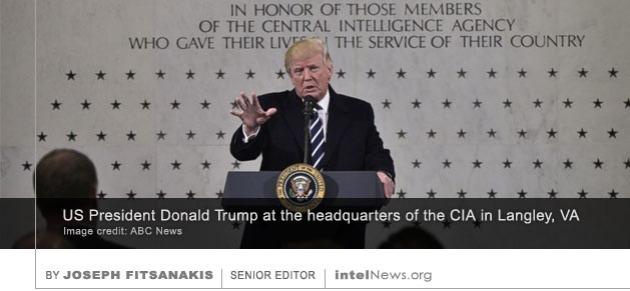 The United States Central Intelligence Agency has questioned the accuracy of a media report, which claimed that “repeated mishandling” of intelligence by President Donald Trump resulted in the exfiltration of a high-level source from Russia. According to the American news network CNN, the CIA carried out the exfiltration operation in 2017. Despite the success of the operation, the removal of the asset has left the US without this high-level source at a time when it is most needed, said CNN. The network cited “a person directly involved in the discussions” to exfiltrate the asset, but said it was withholding key details about the case in order to “reduce the risk of the person’s identification”.
According to CNN, the CIA asset was so highly placed inside the Kremlin that the US had “no equal alternative” inside the Russian government. The asset was in a position to provide “both insight and information” on Russia’s secretive President, Vladimir Putin. But by 2016, the sheer length of the asset’s cooperation with the CIA had caused some intelligence officials at Langley to consider exfiltrating him from Russia. Typically agents-in-place have short careers; they are either captured by their adversaries or are exfiltrated once their handlers start to believe that they are burned out or that their life may be in danger. But exfiltration operations in so-called “denied areas” —regions or countries with formidable counterintelligence resources that make it difficult for the CIA to operate there— are rare.
The CNN report claims that the decision to exfiltrate the high-level source was taken after a May 2017 meeting between Trump and Putin, with the participation of senior American and Russian officials. The latter included Foreign Minister Sergei Lavrov and then-Ambassador to Washington Sergey Kislyak. Citing an American “former senior intelligence official”, CNN alleges that Trump “repeatedly mishandled classified intelligence” at that meeting, which could have led to the exposure of the CIA’s asset. At that time, the CIA decided that it was time to exfiltrate the asset and proceeded to do so successfully.
But the CIA disputed the accuracy of CNN’s story. The agency’s Director of Public Affairs, Brittany Bramell, dismissed what she called “CNN’s narrative” as “inaccurate”. She added that the agency’s judgements about exfiltrations of agents are “life-or-death decisions” that are based solely on “objective analysis and sound collection”, not on “misguided speculation that the President [mishandled] our nation’s most sensitive intelligence —which he has access to each and every day”. CNN said on Monday that Trump and “a small number of senior officials” were told about the exfiltration in advance. The news network also said that it was not privy to details about the extraction operation or about the current whereabouts of the exfiltrated asset.
► Author: Joseph Fitsanakis | Date: 10 September 2019 | Permalink
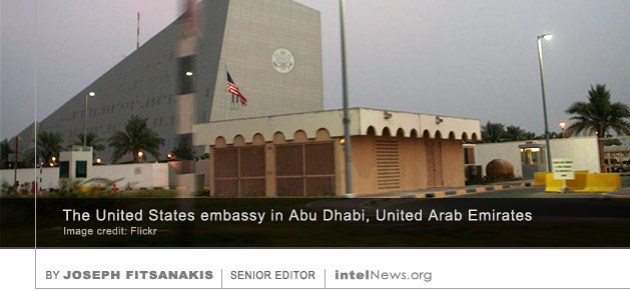 The United States Central Intelligence Agency will not collect human intelligence on the United Arab Emirates, even though the oil kingdom’s actions often run directly counter to American interests, according to sources. The CIA’s policy, which some sources described as “highly unusual”, fails to recognize the growing distance between American interests and the UAE’s foreign policies, according to Reuters. The news agency cited “three former CIA officials familiar with the matter” who claimed that the CIA’s policy is out of touch and may be endangering US national security.
 The United States Central Intelligence Agency plans to retain a strong presence on the ground in Afghanistan, despite reports that American troops may soon be leaving the country following a deal with the Taliban. Several news outlets
 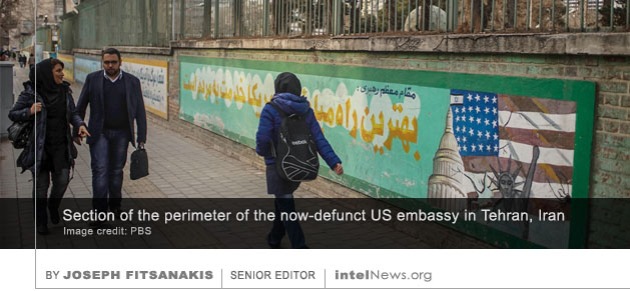 If the announcements from Tehran are to be believed, the United States Central Intelligence Agency lost at least 17 spies in Iran in the months leading up to March 2019. According to Iran’s Ministry of Intelligence, the Islamic Republic busted an alleged “CIA network” operating in sensitive private sector companies and government agencies that relate to defense, aerospace and energy. At least some of the 17 alleged spies have reportedly been sentenced to death, though their exact number remains unknown.
 made to look like rocks, which were located “in parks and other mountainous areas” in Iran and elsewhere in the Middle East, according to Iranian officials. Some of the assets communicated with their handlers while attending science conferences through- out Europe, Africa and Asia.
 Iranian state media announced on Sunday the arrest of 16 officials in the country’s Ministry of Petroleum, allegedly for sabotaging Iranian energy policy. It is not known whether these arrests are in any way connected with Tehran’s announcement last week that it had dismantled “one of the most complicated” espionage operations by the United States Central Intelligence Agency in several countries. According to the state-owned Fars News Agency, the 16 officials were arrested over the weekend in synchronized pre-dawn raids. All of them had managerial positions in Iran’s oil industry —including in the areas of exploration, production and distribution of Iran’s oil and petrochemical products inside the country as well as abroad.
 A senior Iranian security official said on Monday that Tehran had dismantled “one of the most complicated” espionage operations by the United States Central Intelligence Agency, leading to “arrests and confessions” of suspects in several countries. The announcement was made by Ali Shamkhani (pictured), secretary of the Supreme National Security Council of Iran, the Islamic Republic’s highest security decision-making body, which is chaired by the country’s president.
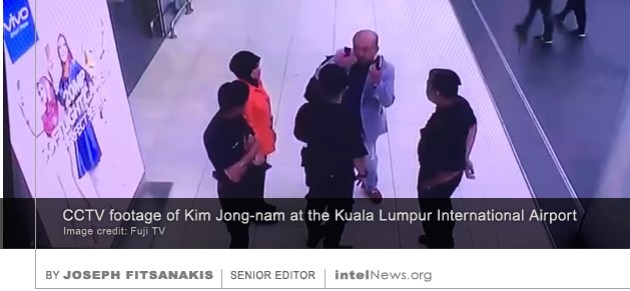 Kim Jong-nam, the half-brother of North Korean leader Kim Jong-un, held regular meetings with American intelligence officers before he was assassinated with VX nerve gas at a busy airport terminal in Malaysia. Two women
  A new star that was recently added to the United States Central Intelligence Agency’s memorial wall is seen by some as a way to draw attention to the mental pressures that come with the job, while others view it as disrespectful to the Agency’s mission. The specially designated wall is located at the main entrance lobby of the CIA’s headquarters in Langley, Virginia. It was created in 1974 and displays a star for each of the CIA’s personnel who have perished in the line of duty while working for the Agency. Today it displays nearly 130 stars, which span the CIA’s 72-year history.
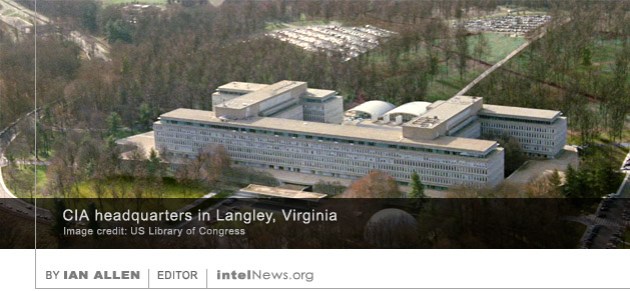 An untypical high-level meeting was convened at the headquarters of the United States Central Intelligence Agency last week to discuss Iran, according to NBC News. The meeting, which NBC
 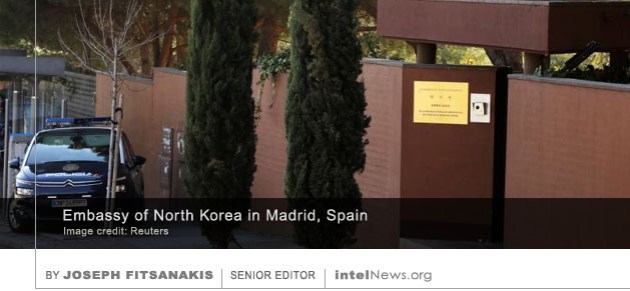 An obscure North Korean dissident group was most likely behind a violent raid on North Korea’s embassy in Madrid on February 22, which some reports have pinned on Western spy agencies, including the Central Intelligence Agency. The group, known as the Cheollima Civil Defense, is believed to be the first North Korean resistance organization to declare war on the government of Supreme Leader Kim Jong-un.
 said in English that all was fine inside the embassy. But a few minutes later, two luxury cars belonging to the North Korean embassy sped away from the building with the ten assailants inside, including the man who had earlier appeared at the front door.
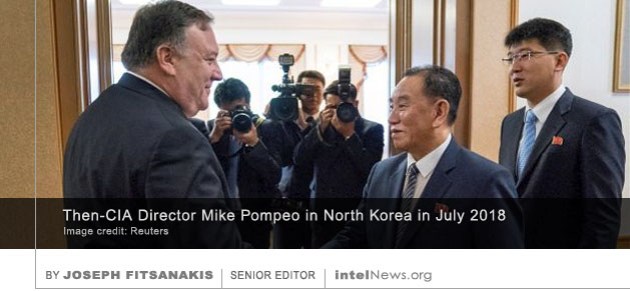 With presidential approval, the United States Central Intelligence Agency has maintained a secret channel of communication with North Korea since at least 2009, according to The Wall Street Journal. Many were surprised in 2018, when the then CIA director Mike Pompeo made a sudden visit to Pyongyang to speak with senior North Korean officials. But according to The Wall Street Journal, the CIA channel with the North Koreans had been there since at least 2009 and Pompeo simply “re-energized it” after being instructed to do so by the White House.
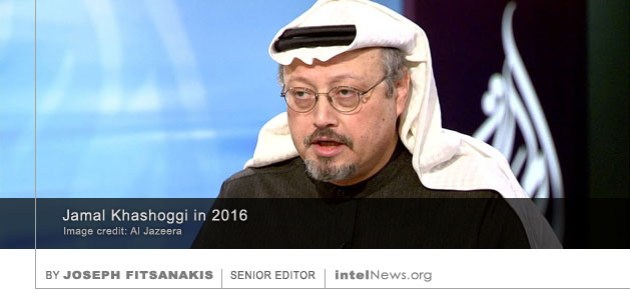 An international law center based in New York is suing the United States Central Intelligence Agency for access to classified files relating to the death of the Saudi journalist Jamal Khashoggi. Khashoggi, 59, was a Saudi government adviser who became critical of the Kingdom’s style of governance. He moved to the United States and began to criticize Saudi Arabia from the pages of The Washington Post. He was
 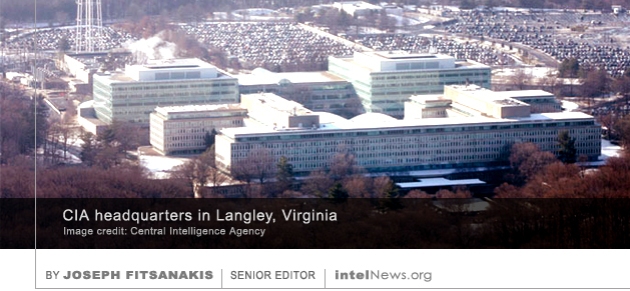 In a surprising departure from established practice, the United States Central Intelligence Agency has publicized the name of its incoming head of operations. Beth Kimber, a 34-year veteran of the Agency, will become the first woman in the CIA’s 70-year history to lead the Directorate of Operations. Officers in the Directorate of Operations, formerly known as the National Clandestine Service, spend their careers recruiting foreign agents to spy for the United States, while also carrying out covert operations around the world. This is also the first time that the CIA has chosen to publicly identify its Deputy Director for Operations —Kimber’s official title, abbreviated as DDO. Previous DDO have been undercover officers whose namse have remained undisclosed. Kimber’s promotion was






 intelNews.org
White House whistleblower is a CIA officer, report claims
September 27, 2019 by Joseph Fitsanakis 6 Comments
The whistleblower’s report states that Trump asked Zelensky to investigate the business dealings of Democratic presidential hopeful Joe Biden and his son Hunter Biden in Ukraine. The implication of the whistleblower’s allegation is that Trump sought to subvert the election effort of one of his main rivals for the US presidency. The whistleblower report, along with transcripts and memoranda that describe the July 25 telephone conversation between the two heads of state, form the basis of an impeachment inquiry that has been launched by Trump’s political rivals in Congress.
On Thursday, The New York Times cited what it said were three people who knew the identity of the whistleblower. The paper said that the whistleblower is a male employee of the CIA. In the past, the man had been assigned to work in the White House, said The Times. The secondment of CIA personnel to the White House is a regular occurrence. CIA personnel are temporarily assigned to perform duties relating to National Security Council meetings, or manage the White House Situation Room. They also monitor and help manage the White House secure communications system. The paper said that the CIA officer’s White House secondment had ended and that he had returned to the CIA headquarters by the time the July 25 telephone call between Trump and Zelensky took place. In his report [.pdf], the whistleblower states that he was “not a direct witness to most of the events described”. However, he cites accounts of these events by “multiple officials” who shared the information with him “in the course of official interagency business”.
Some have criticized The Times for leaking information about the whistleblower’s place of employment and past assignments. They argue that the information could allow the White House to identify the source of the complaint. By law, whistleblowers in the US have the right to remain anonymous, and thus be protected from possible retaliation from those whom they accuse of abusing their power. But the paper claims that the American public has a right to information about the whistleblower’s “place in government”, so as to assess his credibility and evaluate the significance of his allegations.
► Author: Joseph Fitsanakis | Date: 27 September 2019 | Permalink
Filed under Expert news and commentary on intelligence, espionage, spies and spying Tagged with CIA, Donald Trump, News, United States, Volodymyr Zelensky, whistleblowing