Western companies provide Syrian regime with monitoring systems

Syria

Syria

By JOSEPH FITSANAKIS | intelNews.org |
An Italian communications company is working with the Syrian government to provide it with a sophisticated email surveillance system, using equipment created by American, French and German firms. The Syrian regime has come under sustained pressure by Western governments in recent months. The latter urge Syria’s President, Bashar al-Assad, to stop using lethal violence against protesters, citing independent reports that over 3,000 civilians have been killed by government forces since March. But Bloomberg News Agency cites an unnamed insider who claims Area SpA, a telecommunications surveillance company based in Milan, Italy, has technicians in several Syrian cities working feverishly to provide the  Syrian authorities with a state-of-the-art email surveillance system. According to the unnamed source, when completed, the surveillance system will be able to “intercept, scan and catalog virtually every e-mail that flows through the country”. The project, which has been codenamed ASFADOR, is directed by senior Syrial intelligence officials, who are supervising the work of several Italian technicians working in Damascus and elsewhere. Bloomberg reports that numerous Area SpA technicians have been traveling to Syria “in shifts”, as the company is anxiously trying to accommodate pressures by Syrian officials, who say “they urgently need to track people”. The Italian company, known for providing Italian law enforcement with telephone surveillance hardware and software, is apparently using equipment by European and American firms, including France’s Qosmos SA, Germany’s Ultimaco Safeware AG, and America’s NetApp Inc. Bloomberg, which claims it has seen blueprints of the surveillance system, contacted Area SpA’s chief executive officer, Andrea Formenti, who refused to comment on the case, except to say that his company “follows all laws and export regulations”. Wondering where you’ve heard all this before? Read more of this post

German government admits using Trojan to spy on private computers

CCC logo

CCC logo

By JOSEPH FITSANAKIS | intelNews.org |
The local government of at least one German federal state has admitted using specially designed computer software to spy on citizens, after a hacker group revealed the existence of the software. On Saturday, the German Chaos Computer Club (CCC), one of the world’s most reputable ‘white hat’ hacker groups, said that German authorities regularly employ the so-called ‘Bundestrojaner’ (‘Federal Trojan’) virus in order to spy on the users of targeted computers. Club member Frank Rieger told German newsmedia that the virus, which was revealed to the Club via an anonymous tipster, was developed by German police experts, and is used by government agents it to intercept electronic information during investigations. The Trojan is reportedly capable of surreptitiously taking screenshots of infected computers, keylogging, recording Skype conversations, and taking control of networked webcams or microphones, thus permitting physical eavesdropping of a person’s home or workplace. In doing so, the Trojan would appear to facilitate warrantless communications interception that exceeds legal limits set under German law. Moreover, according to CCC, the virus acts as a backdoor to infected systems, thus allowing the uploading and execution of unauthorized programs, and potentially may even facilitate the planting of incriminating evidence on targeted computers. Initially, German government officials denied the CCC’s allegations; on Monday, however, officials in the southern German state of Bavaria confirmed that local police forces have been using the Bundestrojaner virus since at least 2009. Read more of this post

News you may have missed #584

Nicky Hager

Nicky Hager

►►Billing dispute reveals details of secret CIA flights. On August 12, 2003, a conracted Gulfstream IV aircraft carrying six passengers took off from Dulles International Airport for Bangkok. When it returned four days later, it carried Indonesian terrorist Riduan Isamuddin, who had been captured in Thailand and would spend the next three years in various secret CIA prisons. The Gulfstream IV’s itinerary, as well as the $339,228 price tag for the journey, are among the details of shadowy CIA flights that have emerged in a New York courthouse, in a billing dispute between contractors. Incidentally, even the airplanes’ owners didn’t always know that the CIA was using them.
►►French admit secret service spied on reporter. French interior minister Claude Guéant has admitted that the secret service spied on investigative reporter Gérard Davet, from the newspaper Le Monde, in order to trace the source of a leak about the so-called “Bettencourt party funding scandal“, which has been a source of embarrassment for President Nicolas Sarkozy’s party.
►►NZ let Israeli spies go free in return for passports. Another revelation from Nicky Hager’s book Other People’s Wars (see previous intelNews coverage here). The investigative reporter claims that New Zealand’s Security Intelligence Service released captured Mossad spies Eli Cara and Uriel Zoshe Kelman, in return for Read more of this post

News you may have missed #582

John Yoo

John Yoo

►►US government conceals Bush surveillance memos. The Justice Department is refusing to release legal memos by lawyer John Yoo, which the George W. Bush administration used to justify its warrantless surveillance program, one of the most contentious civil liberties issues during the Republican president’s time in office.
►►Ex-CIA bin Laden Unit boss wants rendition back. Michael Scheuer, a former insider and vocal critic of the US intelligence establishment, has described the Arab revolutions as “an intelligence disaster for the US and for Britain, and other European services”. Speaking from Scotland, he also urged for a return to the Bush administration’s rendition program, in order to gather new intelligence on Middle Eastern and North African groups.
►►French firm helped Gaddafi spy on opposition. We have written before about technical intelligence support provided by Western firms to some of the world’s most brutal regimes, including Iran and Bahrain. We can no add Libya to the long list. The Wall Street Journal reports that Amesys, a subsidiary of French telecommunications firm Bull helped the Gaddafi regime spy on the emails and chat messages of its opponents.

News you may have missed #580

Baroness Manningham-Buller

Manningham-Buller

►►Ex-MI5 director says Iraq posed not threat to UK. Iraq posed no threat to the UK when then Prime Minister Tony Blair took Britain to war there, according to Baroness Manningham-Buller, former Director of MI5, Britain’s domestic intelligence agency. In an interview, she described the Iraq war as an unnecessary action that increased the domestic threat to the UK, and “a distraction from the pursuit of al-Qaeda”. No kidding.
►►Interview about DAS wiretaps with Colombia Attorney General. This blog has covered extensively the wiretapping program against opposition politicians, journalists and civil rights activists, by Colombia’s disgraced DAS domestic intelligence agency. This Washington Post interview with Colombia’s new attorney general, Vivian Morales, displays the toothless nature of the government’s ‘investigation’ into the scandal. Morales says that her investigation has “nothing to do” with allegations that the Colombian government used funds provided by Washington to implement the wiretapping. She also says that she cannot “legally investigate” the question of whether former President Alvaro Uribe knew about the wiretaps.
►►Taiwan losing spy game with China. The deputy news editor of The Taipei Times argues that the United States is scaling back its sales of defense equipment to Taiwan because of “the penetration of almost every sector of Taiwanese society by Chinese intelligence”. Accordingly, “any arms sale to Taiwan carries the risk that sensitive military technology will end up in Beijing”, he says.

News you may have missed #577

Waihopai base

Waihopai base

►►Interview with Michael Hayden. The former director of the CIA and the NSA gave a lengthy interview in preparation for his keynote speech at the Raleigh Spy Conference. Among other things, he says that he does “not immediately conclude that senior levels of the Pakistani government knew about” Osama bin Laden’s whereabouts.
►►CIA denies helping police spy on NY Muslims. The Central Intelligence Agency is denying a news report that it helped the New York Police Department conduct covert surveillance on Muslims. The agency said suggestions that it engaged in domestic spying were “simply wrong” and that the report “mischaracterized the nature and scope” of the CIA’s support for the New York police.
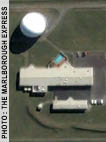
►►Spy base reservoir not a pool after all... A journalist at New Zealand’s Marlborough Express newspaper noticed what looked suspiciously like a swimming pool on a satellite photo (pictured) of the super-secret Waihopai listening base near Blenheim. Do spies go swimming on the base, he asked? It turns out they don’t. According to Government Communications Security Bureau Waihopai station chief Chris Farrow, the landmark is in fact a water reservoir, to be used in case of fire.

Western companies help Bahrain spy on democracy activists

NSN Logo

By JOSEPH FITSANAKIS | intelNews.org |
While Western governments preach to the world about the benefits of democracy, Western companies supply some of the most detestable dictatorial regimes with surveillance technologies for use against pro-democracy activists. One example in point is the repressive government of Bahrain, which, according to Amnesty International, is responsible for some of the most extensive human rights violations anywhere in the Middle East. Bahrain is the kind of place where even medical professionals who treat people wounded by police or soldiers in demonstrations are charged with “incitement”. Despite the fervor of the pro-democracy movement that has risen as part of the Arab Spring, the oil-rich royal clique that rules the nation has managed a series of debilitating hits against the reformists. The success of the crackdown is largely due the use of sophisticated telecommunications surveillance systems that allow Bahraini authorities to spy on cell phones and social networking platforms used by members of the pro-democracy opposition. Who supplied the Bahraini dictators with this equipment? Step forward German engineering conglomerate Siemens AG, and Finnish multinational Nokia. An article published this week in Bloomberg’s Markets magazine, fingers the German company as the primary supplier of telecommunications surveillance systems to the Bahraini royals. The latter rely on contracts with Nokia’s Trovicor GmbH subsidiary to maintain the sophisticated software and hardware. Bloomberg says it was notified of the Nokia Siemens Networks (NSN) partnership by two unnamed insiders, “whose positions at the companies gave them direct knowledge of the installations and the sale and maintenance contracts”. Read more of this post

News you may have missed #575

IARPA logo

IARPA logo

►►Inquest into death of MI6 spy to go ahead. The inquest into the bizarre death of MI6 and GCHQ officer Gareth Williams will go ahead before Christmas without a jury, according to London-based newspaper The Express. The paper says that “12 spy chiefs will attend [the inquest] to explain the background to the case”.
►►Colombia’s ex-president denies role in spy scandal. Alvaro Uribe has denied, during a 3½-hour appearance before a Colombian congressional committee, that he ordered the country’s domestic intelligence agency to spy on judges, journalists and political foes. More than 20 agents of the DAS intelligence agency have been imprisoned for alleged roles in the spying. Two more have pleaded guilty in exchange for reduced sentences.
►►US spy research firm eyes stock market. IARPA, the US intelligence community’s research arm, plans to introduce a new program to develop tools to help analysts “quickly and accurately assess petabytes of complex anonymized financial data”. According to a conference presentation, the program would help spies “analyze massive amounts of data to spot indicators of market behavior, find relationships between seemingly unrelated transactions across hundreds of global markets, and provide insight into specific events and general financial trends”.

News you may have missed #567

Thuraya satellite telephone

Thuraya phone

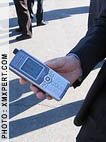
►►Libya bans unauthorized cell phone use. The government of Libya warned Thursday that any of its citizens found using a Thuraya satellite phone without a permit will be treated as spies for NATO, and may face the death penalty. The reason, according to an official statement, is that “spies [of] NATO use the Thuraya telephones to give crusaders the coordinates of some locations to be bombed, which has caused the deaths of a large number of civilians”. Thuraya is a popular satellite phone provider based in the United Arab Emirates, with over a quarter of a million subscribers in the Middle East and Africa.
►►Uzbekistan jails senior mining scientist for spying. A court in Uzbekistan has convicted Said Ashurov, who worked as chief metallurgist for British mining company Oxus Gold, to 12 years in prison on charges of industrial espionage. Ashurov was arrested in March as he tried to cross the border into Tajikistan. A lawyer for the mining company described Ashurov’s case as a fabrication and said that the Uzbek government was using him as a pawn in their battle to take control of the Amantaytau Goldfields project, which is developing “some of the world’s most promising gold fields”.
►►Ex-White House official claims CIA tried to recruit 9/11 hijackers. Richard Clarke, who served in two US administrations as a White House counterterrorism adviser, says he now suspects the CIA hid its knowledge that two of the September 11 hijackers had entered the United States Read more of this post

News you may have missed #565 (United States edition)

DHS seal

DHS seal

►►Secret watch-list proposal causes US privacy groups protests. The US Department of Homeland Security (DHS) is planning to duplicate the FBI’s Terrorist Screening Database to expand an extensive database called Watchlist Service. The proposed database will include names, birthdays, photos and biometrics of targeted individuals. But the DHS has proposed to exempt the database from Privacy Act provisions, which means that a person can never know if they are on it.
►►US blacklists Syrian banks over WMD ties. The Obama administration unveiled punitive measures on Wednesday against two Syrian financial institutions for their alleged ties to nuclear proliferation in Syria and North Korea. The government-run Commercial Bank of Syria and a subsidiary, the Syrian-Lebanese Commercial Bank, are now prohibited from engaging in transactions with US individuals and from accessing any assets under US control. The US Department of the Treasury alleges that the banks have carried out transactions on behalf of the Scientific Studies and Research Center in Syria and the Tanchon Commercial Bank in North Korea, both of which the US blacklisted several years ago for supporting “WMD proliferation activities”.
►►FBI revises surveillance exam after cheating revelations. About a year ago, the US Federal Bureau of Investigation revealed that hundreds of its agents were caught having cheated on an examination about new surveillance guidelines (known as Read more of this post

News you may have missed #563 [updated]

Mike McConnell

Mike McConnell

►►Colombia spy official imprisoned for illegal wiretapping. Gustavo Sierra Prieto, the former analysis chief of Colombia’s soon-to-be-dismantled DAS intelligence agency, has been sentenced to eight years and four months in jail for his role in the illegal wiretapping of government opponents, judges and journalists. But the main culprit in the wiretapping scandal, former DAS Director Maria Pilar Hurtado, is still hiding in Panama.
►►Cold War documents detail CIA interest of Canada. The CIA has declassified some of its Cold-War-era reports on Canada. The documents show that the Agency’s interest in America’s northern neighbor was mostly related to the its satellite R&D, as well as its economic sector, with a particular focus on Canada’s energy and minerals sector. There is also discussion in some documents of how to best utilize Canada’s energy resources in a possible war with the Soviet Union.
►►Ex-intel official says US must engage in cyberspying. Is it just me, or is there a calculated echo chamber developing by former senior US spy officials? Read more of this post

News you may have missed #553 (Canada edition)

Northrop Frye

Northrop Frye

►►Analysis: Are Chinese spies getting an easy ride in Canada? Carl Meyer, of Embassy magazine, asks why Canada’s counterintelligence agencies are unwilling or unable to bring Chinese spies to court in recent years. Readers of this blog may recall controversial comments made last year by the director of CSIS, Richard Fadden, who claimed that some Canadian politicians work for foreign powers.
►►Canadian agency ‘illegally spying on Canadians’. Canada’s ultra-secret Communications Security Establishment, which engages in electronic communications interception, is prohibited from spying on Canadian citizens. But a new Canadian government report appears to instruct it to engage in mining ‘metadata’ from digital communications of Canadians. Readers of this blog may remember that, in 2009, a court permitted for the first time the CSE and the Canadian Security Intelligence Service to eavesdrop on Canadian nationals traveling overseas.
►►RCMP spied on Canadian academic Northrop Frye. Speaking on spying on Canadians… Read more of this post

News you may have missed #533

María del Pilar Hurtado

María Hurtado

By IAN ALLEN | intelNews.org |
The government of Colombia will –finally– officially request from Panama the extradition of Maria Pilar Hurtado, former director of Colombia’s disgraced DAS intelligence agency, who was granted political asylum in the Central American country last year. The Colombian government has been contemplating this move for some time, as the investigation into illegal activities by the DAS is progressing extremely slowly. In Iran, the government says that it plans to try dozens of American intelligence officials in absentia. The announcement has raised the possibility that Tehran may out US spies which the Iranians claim attempted to recruit locals as part of a sophisticated intelligence-gathering operation. One former CIA operative, Glenn Carle, voluntarily came out a few years ago, following retirement, and made news headlines last month, in connection with alleged CIA spying on American academic Juan Cole. Carle, who worked for the CIA for 23 years, in Africa, the Balkans and Latin America, among other locales, has written a book. It focuses on a several-month period he spent questioning a suspected leader of al-Qaeda. The interrogations took place in two countries, which he says he is not permitted to name.

News you may have missed #495

Israel to revoke citizenship for spying under new law

Avigdor Lieberman

Avigdor Lieberman

By IAN ALLEN | intelNews.org |
A new law passed by the Israeli parliament, the Knesset, allows courts for the first time in Israel’s history to revoke the Israeli citizenship of those convicted of espionage, treason, or aiding “enemy organizations”. The new law, which the Knesset enacted on Monday night by a vote of 37 to 11, amends the country’s revered Citizenship Law, which was first enacted in 1952. Along with citizenship rights, judges will be allowed to revoke the permanent residency permits of individuals found guilty of assisting organizations designated as terrorist by the Israeli government. The legislation was primarily sponsored by the ultraconservative Yisrael Beiteinu (Israel is Our Home) party, which is led by Israel’s current Minister of Foreign Affairs, Avigdor Lieberman. During the 2009 national elections, Mr. Lieberman campaigned on a so-called “no loyalty, no citizenship” political platform. This ultranationalist stance formed the basis of the citizenship revocation legislation enacted on Monday. The new law is in fact a watered down version of Yisrael Beiteinu’s original proposal, which included a requirement for loyalty oaths administered to all non-Jews living in Israel. Read more of this post