News you may have missed #459 (Russia edition)

  • Son of CIA double spy strikes deal with FBI. Nathan Nicholson, son of CIA officer Harold James Nicholson, who in 1997 was jailed for spying for Russia, has avoided a prison sentence after promising to help the FBI build a new case against his father. The latter has pleaded guilty to enlisting his son from prison to sell the Russians more secrets and collect money owed to him by the Russian spy services.
  • Moscow warns UK of tit-for-tat expulsions. Alexander Sternik, the Russian government’s senior official in Britain, has hinted that any attempt to deport parliamentary assistant Katia Zatuliveter, detained by MI5 for allegedly spying for Russia, could result in tit-for-tat expulsions.
  • Kim Philby honored by plaque at Moscow SVR HQ. Russia has honored British Cold War spy Kim Philby with a plaque at the headquarters of the country’s foreign intelligence agency. Philby, who defected to the Soviet Union in 1963, is depicted in a sculptured portrait on the plaque as the two-faced Roman god Janus.

News you may have missed #451 (history edition)

News you may have missed #447

  • UK MI6 chief speaks publicly for the first time. Sir John Sawers, the head of Britain’s Secret Intelligence Service, also known as MI6, has delivered what he said was the first public address by a serving chief of the agency in its 101-year history.
  • WikiLeaks to release secret Russia, China logs. Whistleblower website WikiLeaks, which has published hundreds of US war logs, is preparing to release secret files from Russia and China, Russian newspaper Kommersant said on Tuesday.
  • Renegade CIA agent’s papers acquired by NYU. The private papers of the late Philip Agee, the disaffected CIA operative whose unauthorized publication of agency secrets 35 years ago was arguably far more controversial than anything WikiLeaks has produced, have been obtained by New York University, which plans to make them public next spring.

News you may have missed #434 (book news edition)

News you may have missed #428 (history edition)

  • US government study of Soviet-era spy services released. A historiographic blog has released a study by the US Federal Office of Criminal Investigations on Practices and Methods of East-Bloc Intelligence Services, which examines the spy craft and operations of Soviet-aligned secret services active in Germany.
  • Simon Wiesenthal worked for Mossad, claims book. A new book claims that famous Israeli Nazi hunter Simon Wiesenthal worked as an informant for Israel’s Mossad spy agency. Written by Tom Segev, the book, entitled Wiesenthal: The Life and Legends, claims that Wiesenthal gave the Mossad valuable information during Operation DAMOCLES.
  • UK spies did ‘very bad things’ in Cold War, says Le Carre. But even though they assassinated individuals and engaged in “a lot of direct action”, “decent humanitarian instincts came into play” in Western intelligence agencies’ operations, claims the former MI5 and MI6 spy and novelist. Raw Story‘s Daniel Tencer offers an interesting response.

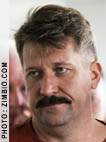
‘Lord of War’ weapons smuggler enjoys Russian protection

Viktor Bout

Viktor Bout

By JOSEPH FITSANAKIS | intelNews.org |
The case of notorious arms smuggler Viktor Bout is well known. Born in Dushanbe, Soviet Tajikistan, in 1967, Bout served in the GRU (Soviet military intelligence) until the collapse of the USSR, at which point he began supplying weapons to shady groups, ranging from Congolese rebels and Angolan paramilitaries to the Taliban and al-Qaeda. In March of 2008, Bout, known as ‘Lord of War’, was finally arrested by the Royal Thai Police, after a tip by US Drug Enforcement Administration (DEA) officers. The latter had managed to lure Bout to Thailand by pretending to be Colombian FARC arms procurers. Recently, Washington scored a second victory by convincing Thai authorities to extradite Bout to the United States on terrorism charges. Presumably, Bout will be tried as an arms smuggler acting on his own accord. But is this right? Read more of this post

News you may have missed #409

  • Probe unearths secrets of Bulgaria’s assassination bureau. Previously unknown details on Service 7, Bulgaria’s Cold War-era assassination bureau, have been unearthed by one of Bulgaria’s leading newspapers, following a probe into 5,000 pages of declassified archives from the country’s former communist intelligence service, the First Directorate of the Committee on State Security.
  • US Pentagon bars troops from reading WikiLeaks. Any citizen, any foreign spy, any member of the Taliban, and any terrorist can go to the WikiLeaks web site, and download detailed information. Members of that same military, however, are now banned from looking at those internal military documents, because “doing so would introduce potentially classified information on unclassified networks”.
  • Analysis: Chasing Wikileaks. “[W]hatever the imperfections of WikiLeaks as a startup, its emergence points to a real shortcoming within our intelligence community. Secrets can be kept by deterrence –that is, by hunting down the people who leak them […]. But there are other methods: keep far fewer secrets, manage them better –and, perhaps, along the way, become a bit more like WikiLeaks. An official government Web site that would make the implementation of FOIA quicker and more uniform, comprehensive, and accessible”.

Bookmark and Share

News you may have missed #407

Bookmark and Share

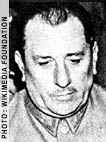
CIA killed Chile Army commander, says Pinochet’s spy chief

Carlos Prats

Carlos Prats

By JOSEPH FITSANAKIS | intelNews.org |
The convicted former chief of Chile’s intelligence services during the dictatorship of Augusto Pinochet has accused the CIA of murdering the deposed leader of the Chilean army and former Vice-President of Chile, in 1974. General Carlos Prats González was a close political ally of Chilean President Salvador Allende, who was toppled by a CIA-assisted military coup in 1973, led by General Augusto Pinochet. General Prats managed to escape with his family to neighboring Argentina. It was there where, in 1974, he was killed along with his wife, Sofia Cuthbert, in a massive car bomb. A Chilean court has convicted General Manuel Contreras, who headed Pinochet’s feared DINA secret police, for the murder of General Prats and his wife. But Contreras, 81, who has been in prison since 1995, servicing over 100 years for several kidnappings and murders of anti-Pinochet dissidents, now accuses the CIA of the Prats murders. Read more of this post

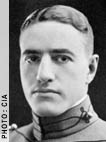
Documents detail history of previously unknown US spy agency

John V. Grombach

J.V. Grombach

By IAN ALLEN | intelNews.org |
A collection of tens of thousands of documents discovered in a barn in a small Virginia town, have brought to light the history and operations of a previously unknown US spy agency that competed for prominence with the CIA during the early stages of the Cold War. The secrecy-obsessed agency was known at various times as the Secret Intelligence Branch, the Special Service Branch, the Special Service Section, or the Coverage and Indoctrination Branch; but insiders referred to it simply as “the Lake” or “the Pond”. It was created in late 1942 by the then newly established US Department of Defense, whose officials did not approve of the civilian character of the Office of Strategic Services (OSS), forerunner of the CIA. In its 13-year existence, the Pond operated on a semi-autonomous base under the Departments of Defense and State, but maintained a poor relationship with the CIA, which it considered too “integrated with British and French Intelligence and infiltrated by Communists and Russians”. This information is contained in the files, which were stored in several safes and filing cabinets by the organization’s secretive leader, US Army Colonel John V. Grombach, who died in 1982. Read more of this post

News you may have missed #392

  • Soviet spy stood ready to poison DC’s water, says Ex-KGB general. A Soviet deep-cover agent, who was in the United States from around 1963 to 1965, had orders to poison Washington DC’s water and to sabotage its power supply if war with the United States became imminent, according to Oleg Kalugin, former chief of KGB operations in North America.
  • Two interesting interviews. George Kenney, of Electric Politics, has aired two interesting interviews, one with Dr. Thomas Fingar, former US Deputy Director of National Intelligence, touching on a variety of issues, and one with Philip Alston, the United Nations Special Rapporteur on extrajudicial killings, who comments on the CIA drone attacks in Afghanistan and Pakistan.
  • Lawyers who won NSA spy case want $2.63 million. Eight lawyers, who managed to prove that Saudi charity al-Haramain was illegally wiretapped by the US National Security Agency (see here for previous intelNews coverage), are demanding millions of dollars in damages from the US government.

Bookmark and Share

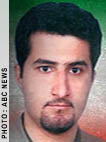
Comment: Defector’s Wish to Return to Iran Not Unusual

Shahram Amiri

Shahram Amiri

By IAN ALLEN | intelNews.org |
This website has covered extensively the case of Dr. Shahram Amiri, a scientific researcher employed in Iran’s nuclear program, who disappeared during a religious pilgrimage to Mecca in May or June of 2009. Tehran maintains that Dr. Amiri was abducted by CIA agents. However, most intelligence observers, including this writer, believe that the Iranian researcher willfully defected to the West, following a long, carefully planned intelligence operation involving the CIA, as well as French and German intelligence agencies.

Read more of this post

News you may have missed #391 (Russia-US spy swap edition II)

  • Expelled spies to experience life in changed Russia. Like those before them, the sleeper spies who were deported to Russia last week in one of the biggest espionage exchanges in decades will probably miss the United States, picket fences and all. But what perhaps most distinguishes this affair from its cold war precursors is what awaits these Russians in their motherland.
  • Past Russian spies have found post-swap life gets a bit sticky. While life in Moscow may be duller than New York, Boston, New Jersey, Seattle and Washington, DC, where the 11 Russians charged last week allegedly lived as long-term, deep-penetration agents, it won’t be too bad, either, if their predecessors’ experience is any guide.
  • Life a nightmare for spies returning to Russia, says Soviet dissident. Vladimir Bukovsky, 67, a Soviet dissident exiled to Europe in a 1976 prisoner swap, says the Russian spies expelled from America to Russia last week “will go from living affluent lives with real freedom, to living under constant surveillance by the Russian secret services”.

Bookmark and Share

News you may have missed #389

  • Secrecy over attack on Syrian nuclear plant unjustified, says ex-CIA chief. The secrecy surrounding the Israeli attack on the nuclear plant in eastern Syria in September 2007 was justified only for the period immediately after the operation, according to the CIA head at the time, Gen. Michael Hayden. That secrecy had been meant to save Syrian President Bashar al-Assad from embarrassment that could have provoked him to retaliate, argues Hayden in an authorized scholarly journal article.
  • No proof yet of Colombian spying, says Ecuador. Ecuadorean Security Minister Miguel Carvajal said Thursday that allegations that Colombian security agency DAS spied on Ecuadorean President Rafael Correa and other officials is “so far just a newspaper story”. Late last month, the Ecuadorean government threatened to break off diplomatic ties with Colombia over the media revelations.
  • GCHQ releases Stalin-era Soviet intercepts. A series of newly released telegrams and telephone conversations, intercepted by the UK’s General Communications Headquarters, paint a picture of Joseph Stalin’s regime in the immediate aftermath of the Second World War.

Bookmark and Share

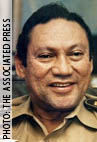
Ex-Panama dictator Noriega describes ‘friendly ties’ with CIA

Manuel Noriega

Manuel Noriega

By JOSEPH FITSANAKIS | intelNews.org |
Panama’s notorious former dictator, Manuel Noriega, has described what he called his “long, friendly relationship” with the CIA in court testimony in France where he is defending charges of money laundering. Speaking on the second day of his trial in Paris, Noriega argued that millions of dollars he deposited in several French bank accounts were CIA payments for his services, not income from illicit drug sales. Panama’s former strongman described in his testimony how he gained power with the help of the CIA in the small but strategically important Central American nation, in 1983. He also listed the services he provided to the CIA during the closing stages of the Cold War, in relation to Cuba, Nicaragua and Iran. But Noriega, who was deposed during the 1989 US invasion of Panama, said the US leadership and the CIA turned against him after he repeatedly refused to take part in a series of covert operations against the leftist Sandinistas government in neighboring Nicaragua. Read more of this post