Ex-KGB agent shot dead in downtown Moscow

Kalmanovic

Kalmanovic

By JOSEPH FITSANAKIS | intelNews.org |
A former KGB agent, who was jailed in Israel in the 1980s for spying for the Soviet Union, was gunned down in downtown Moscow on Monday afternoon. Shabtai von Kalmanovic was shot repeatedly from close range in an apparent contract killing operation, as his chauffeur-driven Mercedes car was stopped at a red light a few blocks away from the Kremlin. Kalmanovic, 62, was a citizen of Lithuania, Russia and Israel. He was born in Soviet Lithuania in 1947, and permitted to emigrate to Israel with his Jewish parents in 1971. In 1987, Israeli authorities arrested Kalmanovic for allegedly giving Israeli military secrets to the KGB. Read more of this post

News you may have missed #0162

  • South Korean 1967 spy case was “trumped up”, report finds. A national truth commission set up by South Korea’s primary intelligence organization, the National Intelligence Service, has concluded that the so-called Tongbaengnim spy ring case was “grossly trumped up”. The case culminated in a public show-trial of 194 South Korean academics, artists and students, accused of spying for North Korea.
  • CIA torture sparked rift with FBI. The Associated Press is reporting what intelNews readers have known since July 20; namely that the CIA’s use of “harsh interrogation techniques” against captured terror suspects made FBI interrogators wary of the legality of the methods. As a result, FBI agents were barred from the interrogations.
  • Analysis: Friendship is no bar to espionage. As relations between Taiwan and China improve, would it be reasonable to expect that China will temper espionage activity against Taiwan, and vice-versa?

Bookmark and Share

News you may have missed #0161

  • No new clues in released Cheney FBI interview. Early in October, a US federal judge ordered the FBI to release the transcript of an interview with former US vice-president Dick Cheney, conducted during an investigation into who leaked the identity of CIA operative Valerie Plame. There were rumors that the classified transcript pointed to George W. Bush as the source of the incriminating leak. But the released interview transcript contains nothing of the kind.
  • Sir Hollis not a Soviet agent, says MI5 historian. “Sir Roger Hollis was not merely not a Soviet agent, he was one of the people who would least likely to have been a Soviet agent in the whole of MI5″, according to Professor Christopher Andrew, author of the recently published In Defense of the Realm. Dr. Andrew’s comments were in response to the book Spycatcher, by former MI5 officer Peter Wright, which alleges that Sir Hollis, former head of MI5, had been a KGB agent.
  • New report says nuclear expert’s death was not suicide. A new autopsy into the death of British nuclear scientist Timothy Hampton has concluded that “he did not die by his own hands”, as previously suggested. The post-mortem examiner said Hampton “was carried to the 17th floor from his workplace on the sixth floor” of a United Nations building in Vienna, Austria, “and thrown to his death”.

Bookmark and Share

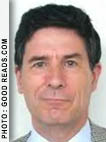
New research reveals extent of East German spying in Canada

Helmut Muller-Enbergs

Muller-Enbergs

By JOSEPH FITSANAKIS | intelNews.org |
Previously unknown aspects of East German intelligence-gathering operations in Canada will be presented this coming Saturday at the annual conference of the Canadian Association for Security and Intelligence Studies in Ottawa. The new data was unearthed in Berlin by Helmut Müller-Enbergs, a researcher with Germany’s Office of the Federal Commissioner Preserving the Records of the Ministry for State Security of the German Democratic Republic (BStU). His findings show that the Stasi (Hauptverwaltung Aufklärung), the main foreign intelligence department of the German Democratic Republic (GDR), was able to gain “deep insights into the domestic and foreign affairs of Canada”. The feat appears impressive when considering that the GDR had no embassy in Canada until 1987. Read more of this post

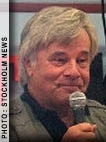
Swedish journalist, author, admits KGB ties

Jan Guillou

Jan Guillou

By IAN ALLEN | intelNews.org |
One of Sweden’s most famous journalists has admitted having had ties with the KGB in the 1960s and 1970s. Jan Guillou, a veteran newspaper correspondent known in Sweden for his hugely popular spy novels, admitted meeting with a KGB handler after allegations surfaced in a Swedish newspaper. Stockholm-based daily Expressen said it had in its possession several declassified files belonging to Sweden’s security service (SAPO), which revealed that Guillou was recruited by the KGB in 1967. The files are reportedly based on the testimony of the late Arne Lemberg, Guillou’s friend and fellow-reporter, who told SAPO that Guillou held regular meetings with KGB rezident in Stockholm Yevgeny Ivanovich Gergel. Read more of this post

News you may have missed #0154 [updated]

  • Breaking news: Castro’s sister says she spied for the CIA. Juanita Castro, Fidel and Raúl Castro’s sister, says she voluntarily spied for the CIA from 1961 to 1964, when she left the island for Miami. She said she met a CIA officer called “Enrique” at a hotel in Mexico City in 1961; she was then given the codename “Donna” and codebooks so she could receive encoded instructions from Washington.
  • Was Milan Kundera a communist police informant? Documents unearthed by Czech academics allegedly show that the Czech-born author of The Unbearable Lightness of Being denouncing a Western spy to Czechoslovakia’s StB secret police during his student days.
  • Afghans complain about US spy balloon. A US spy balloon (see previous intelNews coverage) flying over the city of Kandahar in Afghanistan, is prompting privacy complaints from residents.

Bookmark and Share

News you may have missed #0152

  • Madoff befriends Israeli-handled spy in prison. According to legal papers filed last Tuesday, Bernard Madoff, imprisoned for masterminding one of history’s largest financial frauds, is sharing a cell with Jonathan Pollard, an American convicted of selling military secrets to Israel over two decades ago.
  • Polish undercover agent has cover blown. An undercover agent of Poland’s controversial Anti-Corruption Agency (CBA), known simply as Tomek K. (a.k.a. Tomasz Malecki or Tom Piotrowski) has had his cover blown after seducing Polish television star Weronika Marczuk-Pazura during an anti-corruption investigation. Whoever said undercover work was boring?
  • Finnish former prime minister says KGB tried to recruit him. In his political memoirs published last week, Paavo Lipponen, who was Finland’s prime minister from 1995 to 2003, reveals the Soviet KGB tried unsuccessfully to recruit him in 1966 and again in the early 1970s.

Bookmark and Share

News you may have missed #0144

  • Cuban Five convict’s sentence cut to 22 years. As intelNews reported on October 12, Antonio Guerrero, a member of the Cuban Five spy ring, has had his life sentence cut to 22 years, following a successful appeal. Given the time he has already served since his 1998 arrest, and benefits for good behavior, Guerrero could be released in seven years. The Cuban Five were sentenced in 2001 for spying on the US for Cuba.
  • Was British MP a Czech agent during Cold War? A recently published book on MI5’s history by Cambridge historian Dr. Christopher Andrew has reignited rumors that Labour Party parliamentarian John Stonehouse worked as an agent for the Czech StB intelligence agency in the 1960s.
  • West German spies collected East German jokes during Cold War. West German spies diligently recorded popular East German jokes about communism during the Cold War, in an attempt to gain insights into the public mood, according to recently released intelligence files.

Bookmark and Share

News you may have missed #0143

  • Documents shed light on secret US-Japan nuclear deal. The George Washington University’s National Security Archive has published a number of declassified US government documents, as well as interviews with and memoirs of diplomats, which appear to confirm the existence of a rumored secret nuclear agreement between Washington and Tokyo. Both sides have for years denied the existence of the agreement, which is said to allow US military vessels and aircraft carrying nuclear weapons to enter Japanese territorial waters, as long as Japan is protected by the US nuclear umbrella.
  • Man killed by Houston Police was not our agent, says CIA. Roland Vincent Carnaby, who was shot dead by police on a Houston highway at the end of a high-speed chase in 2008, was not an undercover CIA operative, Langley has said. It also said that it holds no files or other materials relating Carnaby. But Carnaby’s widow’s lawyer, Randall Kallinena, insists the deceased did “a whole lot of counterintelligence work at the highest level where it was helpful to the United States”.

Bookmark and Share

News you may have missed #0135

  • More revelations in “unprecedented” book on MI5 history. More revelations in Christopher Andrew’s In Defense of the Realm include the disclosure that Margaret Thatcher tried to get MI5 to spy on British trade union activists when she was Prime Minister (MI5 refused). Meanwhile, Professor Andrew has begun serializing selected chapters of the book in The London Times, here and here.
  • Court lets Canadian spies snoop on targets overseas. A court ruling has permitted the Canadian Security Intelligence Service and the Communications Security Establishment to eavesdrop on Canadian nationals traveling overseas. Until now, the two agencies could spy on Canadians so long as they were within the country’s borders.
  • CIA endorses cloud computing. The CIA is emerging as one of the US government’s strongest advocates of cloud computing, even though “cloud computing as a term really didn’t hit our vocabulary until a year ago”, according to Jill Tummler Singer, the CIA’s deputy Chief Intelligence Officer. This article, however, fails to mention that the NSA is also moving to cloud computing in a big way.

Bookmark and Share

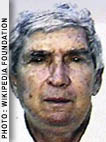
Anti-Castro terrorist was CIA informant, declassified documents show

Luis Posada Carriles

Posada Carriles

By JOSEPH FITSANAKIS | intelNews.org |
An anti-Castro operative, who has admitted planting bombs against civilian targets in Cuba, and currently faces immigration fraud charges in the US, was a CIA informant, newly declassified documents show. Five CIA memoranda from 1965 and 1966 reveal that Luis Posada Carriles, code name “A15”, acted as an information link between Langley and violent anti-Castro groups in Miami, Florida, in which he was active. The five documents were declassified by the CIA between 1998 and 2003 and were made public on Tuesday by Peter Kornbluh, who heads the National Security Archive’s Cuba Documentation Project at George Washington University. Remarkably, the documents show that Posada’ handler at the CIA, Grover T. Lythcott, believed that the Cuban exile was a “moderate force” who could be counted on not to embarrass the US government or the CIA with his actions. Read more of this post

“Unprecedented” history of MI5 published

Dr. Andrew

Dr. Andrew

By JOSEPH FITSANAKIS | intelNews.org |
The MI5, Britain’s foremost counterintelligence organization, made headlines in 2002, when it appointed Cambridge University history Professor Christopher Andrew to produce an authorized account of its long history. The 1,032-page-long book, entitled Defense of the Realm, was published this week by Allen Lane, as announced last March, in time to mark the agency’s centennial. Despite the fact that Defense of the Realm has been officially sanctioned by MI5, (ex-director-general Stephen Lander was sitting next to Dr. Andrew during Monday’s press conference), the book makes some interesting revelations. Among them is that MI5 considered assassinating V.K. Krishna Menon, post-colonial India’s first High Commissioner (an ambassador within the British Commonwealth of Nations) to Britain. Read more of this post

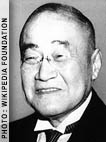
Documents show Japan government aide was CIA mole

Shigeru Yoshida

Shigeru Yoshida

By JOSEPH FITSANAKIS | intelNews.org |
A senior military aide to Japanese Prime Minister Shigeru Yoshida in the 1950s was an informant for the CIA, according to documents unearthed at the US National Archives. A CIA memorandum dated November 26, 1956, describes Lt. Gen. Eiichi Tatsumi (ret.), who advised the Japanese Prime Minister on defense matters, as “one of the best, safest, most qualified persons in Japan today for CIA use”. Waseda University professor Tetsuo Arima, who unearthed the documents, said the CIA codenamed Tatsumi POLESTAR-5. Bearing fresh memories from Japan’s destructive participation in World War II, the government of Prime Minister Yoshida refused calls to remilitarize Japan. But a hardcore group of senior military officials, including Tatsumi, who had fought in the war, wished to see Japan rearm. Washington, which interpreted Yoshida’s refusal to rearm as a friendly gesture to Russia, also wanted to see Japan remilitarize. Read more of this post

News you may have missed #0129

  • Romanian communist spy boss dead at 80. General Nicolae Plesita, who directed Romania’s Securitate during the country’s communist period, has died. While heading the Securitate’s foreign intelligence service, from 1980 to 1984, Plesita hired the Venezuelan-born operative Ilich Ramirez Sanchez, known as Carlos the Jackal, to assassinate Romanian dissidents in France and bomb the US-owned Radio Free Europe offices in Munich, in 1981. In 1998, Plesita revealed that he had orders from the Romanian government to find temporary shelter for Carlos in Romania after the RFE bombing.
  • Settlement reached in DEA-CIA spying dispute. A tentative settlement has been reached in a lawsuit brought 15 years ago by a former US Drug Enforcement Administration agent who accused a CIA operative of illegally bugging his home. In a court filing, lawyers for the government and the DEA agent said they “had reached an agreement in principle to settle the underlying litigation”. See here for previous intelNews coverage of this case.
  • Federal judge denies request for CIA secret documents. Hundreds of documents detailing the CIA’s defunct overseas secret detention program of suspected terrorists, including extreme interrogation methods have remained secret after U.S. District Judge Alvin K. Hellerstein on Wednesday refused to release them “in order to protect intelligence methods and sources”. The ACLU argues that the CIA secret program was illegal under international and US law, that it involved the torture and deaths of some inmates, and therefore should not be shielded from public view.

Bookmark and Share

News you may have missed #0128

  • US government appeals judge’s order in Cuban Five spy case. US government officials are contending a judge’s order because they say it would be detrimental to US national security. The order requires the US government to turn over any national security damage assessments in the Cuban Five case. Washington accuses the Five of spying on the US for Cuba. Three of the five are to be given new sentences on October 13 after an appeals court ruled that the initial sentences they received (ranging from 19 years to life) were too long.
  • Indian spies want access to missed calls. Indian security agencies have told the country’s Department of Telecommunications that they need access to missed calls because “anti-social elements” may be using the system to communicate without actually making a call. Last month, India’s Intelligence Bureau asked for all VOIP (internet-based) calls in the country to be blocked until it figures out a mechanism to track them. It also said it wants access to the content of all mobile phone calls in the country.
  • New book investigates Stasi’s scientific espionage. Documents from the vaults of HVA (Hauptverwaltung Aufklärung), the foreign department of the Stasi, the East German Ministry for State Security, which were purchased by the CIA from a German informant in 1992, were made available in 2005 to Kristie Macrakis professor of history at the Georgia Institute of Technology in Atlanta. Her book, Seduced by Secrets: Inside the Stasi’s Spy-Tech World, offers a rare look into the Stasi’s secret technical methods and sources. Macrakis’s analysis of the CIA material reportedly reveals that about 40% of all HVA sources planted in West German companies, research institutions and universities were stealing scientific and technical secrets.

Bookmark and Share