News you may have missed #637

Dmitri Bystrolyotov

D.A. Bystrolyotov

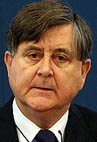
►►South African spy boss to quit. Director General of the State Security Agency Jeff Maqetuka, who has been entangled in a never-ending war with Minister Siyabonga Cwele, is expected to step down this week, according to South Africa’s Sunday Independent. The paper claims that that plans are afoot to expedite Maqetuka’s departure from the country’s intelligence infrastructure by placing him on summer leave and then making sure he would not return to work in 2012.
►►Slovakian defense minister resigns over wiretap scandal. The interception of journalists’ telephone calls by the Slovakian Defense Ministry’s counterintelligence arm has cost the country’s Defense Minister, Lubomír Galko, his job. The scandal involved Slovakia’s Military Defense Intelligence (VOS). It has also emerged that the VOS operation involved wiretapping of the head of TV news channel TA3 and two senior Defense Ministry employees, according to leaked documents obtained by Slovak media outlets.
►►Book on Soviet spy Dmitri Bystrolyotov. Excerpt from Emil Draitser’s book Stalin’s Romeo Spy: The Remarkable Rise and Fall of the KGB Most Daring Operative (Northwestern University Press, 2010), about one of the 20th century’s most outstanding undercover operatives. Bystrolyotov acted in Western Europe in the interwar period, recruiting and running several important agents in Great Britain, France, Germany, and Italy.

Leaked documents show capabilities of new surveillance technologies

Net Optics logo

Net Optics logo

By JOSEPH FITSANAKIS | intelNews.org |
A trove of hundreds of documents, obtained by participants in a secretive surveillance conference, displays in unprecedented detail the extent of monitoring technologies used by governments around the world. The Wall Street Journal, which obtained the leaked documents, says they number in the hundreds; they were reportedly authored by 36 different private companies that specialize in supplying government agencies with the latest surveillance hardware and software. They were among dozens of vendors that participated in an unnamed conference near Washington, DC, in October, which attracted interested buyers from numerous government agencies in America and beyond. The Journal, which has uploaded scanned copies of the leaked documents, says that many include descriptions of computer hacking tools. The latter enable government agencies to break into targeted computers and access data stored in hard drives, as well as log keystrokes by the targeted computers’ users. Other applications target cellular telecommunications, especially the latest models of so-called ‘smartphones’; one vendor in particular, Vupen Security, gave a presentation at the conference, which describes how its products allow for electronic surveillance of cell phones by exploiting security holes unknown to manufacturers. Some of the most popular products at the conference related to what the industry calls “massive intercept” monitoring, namely large-scale software systems designed to siphon vast amounts of telephonic or email communications data, or to capture all Internet exchanges taking place within a country’s computer network. One conference participant, California-based Net Optics Inc., bragged in its presentation about having enabled “a major mobile operator in China” to conduct “real-time monitoring” of all cell phone [and] Internet content on its network. The stated goal of the surveillance was to “analyze criminal activity” and “detect and filter undesirable content”. Read more of this post


German government admits using Trojan to spy on private computers

CCC logo

CCC logo

By JOSEPH FITSANAKIS | intelNews.org |
The local government of at least one German federal state has admitted using specially designed computer software to spy on citizens, after a hacker group revealed the existence of the software. On Saturday, the German Chaos Computer Club (CCC), one of the world’s most reputable ‘white hat’ hacker groups, said that German authorities regularly employ the so-called ‘Bundestrojaner’ (‘Federal Trojan’) virus in order to spy on the users of targeted computers. Club member Frank Rieger told German newsmedia that the virus, which was revealed to the Club via an anonymous tipster, was developed by German police experts, and is used by government agents it to intercept electronic information during investigations. The Trojan is reportedly capable of surreptitiously taking screenshots of infected computers, keylogging, recording Skype conversations, and taking control of networked webcams or microphones, thus permitting physical eavesdropping of a person’s home or workplace. In doing so, the Trojan would appear to facilitate warrantless communications interception that exceeds legal limits set under German law. Moreover, according to CCC, the virus acts as a backdoor to infected systems, thus allowing the uploading and execution of unauthorized programs, and potentially may even facilitate the planting of incriminating evidence on targeted computers. Initially, German government officials denied the CCC’s allegations; on Monday, however, officials in the southern German state of Bavaria confirmed that local police forces have been using the Bundestrojaner virus since at least 2009. Read more of this post

News you may have missed #583

Chiou I-jen

Chiou I-jen

►►Ex-Akamai worker pleads guilty to spy charge. Elliot Doxer, an American employee of Massachusetts-based Akamai Technologies, is charged with providing inside company information to an FBI agent posing as an Israeli spy. Ironically, Israel may have helped the Bureau nab Doxer.
►►Taiwan ex-spy cleared of corruption charge. Chiou I-jen, Taiwan’s ex-spy chief and right-hand man of jailed former president Chen Shui-bian, was cleared Tuesday of embezzling diplomatic funds during Chen’s term in office. The former head of the National Security Bureau, was acquitted of pocketing $500,000 –earmarked for expanding Taiwan’s participation in international affairs– in 2005, due to a lack of evidence.
►►Wiretaps seen as key in hunt for Gaddafi. “There are some groups who are looking for him and also trying to listen to his calls. Of course he doesn’t use the phone, but we know the people around him who use the phones”. This is according to Hisham Buhagiar, a senior military official in Libya’s National Transitional Council, who is coordinating efforts to find Muammar al-Gaddafi.

News you may have missed #556

David Irvine

David Irvine

►►Australian computer networks spied ‘massively’. Cyberespionage is being used against Australia on a “massive scale” and some foreign spies are using Australian government networks to penetrate the cyberdefenses of allies such as the United States. This according to the Director of the Australian Security Intelligence Organisation (ASIO) David Irvine. Speaking at a business forum, Mr. Irvine said that “it seems the more rocks we turn over in cyberspace, the more [cyberespionage] we find”.
►►US to give Iraq wiretapping system. The US will give the government of Iraq a wiretapping system that will allow it to monitor and store voice calls, data transmissions and text messages from up to 5,000 devices simultaneously. The system is to be installed with the acquiescence of the three current cellular communications providers in Iraq, according to the US Air Force. A similar system was set up by a US contractor three years ago in Afghanistan.
►►Judge says NSA whistleblower faced ‘tyrannical’ US government. This blog has kept an eye on the case of Thoma Drake, a former US National Security Agency employee  who was taken to court for leaking secrets about the agency to a journalist. But the judge in his case, Richard D. Bennett, refused Read more of this post

News you may have missed #554

Bat Khurts

Bat Khurts

►►UK and US tried to delay Pakistan nuclear weapons program. We have written before about attempts by the CIA to delay or stop Pakistan’s nuclear program. Now newly declassified documents show that the United States and Great Britain undertook a coordinated secret diplomatic campaign between 1978 and 1981 to prevent Pakistan’s attempted covert purchasing of “gray area” technology for its nuclear weapons program.
►►FBI monitoring new phone technologies. According to an internal FBI document, obtained by the Federation of American Scientists through a FOIA request, the FBI continuously monitors the surveillance challenges posed by new mobile phone technologies. The document highlights the Bureau’s concerns that that 4G will require agencies to “deal with significantly higher data rates than in current wireless network intercepts”.
►►Mongolian ex-spy chief to be extradited to Germany. Britain has decided to extradite Bat Khurts, former director of the General Intelligence Agency of Mongolia, to Germany. Read more of this post

Nixon White House may have bugged Pentagon leadership

Richard Nixon

Richard Nixon

By JOSEPH FITSANAKIS | intelNews.org |
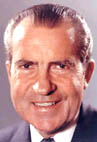
Everyone familiar with American political history knows about the ‘White House Plumbers’, a covert special investigations unit established during the Presidency of Richard Nixon, and tasked with spying on his political opponents. The unit’s bungled attempt to burgle the Watergate offices of the Democratic National Committee, in 1972, eventually led to Nixon’s resignation. But the Watergate burglary was but one of many operations conducted by the ‘Plumbers’, who were one of several ‘dirty tricks’ units managed by the Nixon White House. Now, nearly 40 years after the Watergate scandal erupted, veteran intelligence correspondent Jeff Stein provides new information that suggests the Nixon White House may have bugged the Pentagon telephones of senior American military officials. Stein managed to track down Dave Mann, a former member of the Pentagon’s Counterintelligence Force, who in 1971 stumbled upon a classified report claiming that listening bug signals had been detected emanating from offices in the Joint Chiefs of Staff. The signals had been picked up by a technical surveillance countermeasures (TSCM) team during a routine sweep of the Pentagon, in search of unauthorized interception devices. Mann run some tests to verify the TCM team’s report, and discovered that the bug signals originated from the personal office telephone line of General William Westmoreland, who was then the US Army’s Chief of Staff. He also discovered that the telephone of his assistant had been compromised, as well as the telephone lines belonging to the US Army’s assistant secretary, its logistics director, and at least one general. Mann’s personal conclusion was that the phone lines were most likely bugged with the cooperation of the Chesapeake and Potomac Telephone Company, which was at that the time considered an operational wing of the FBI, under Director J. Edgar Hoover. Read more of this post

News you may have missed #532

Viru Hotel

Viru Hotel

By IAN ALLEN | intelNews.org |
A new exhibition in Tallinn, called The Viru Hotel and the KGB, showcases the Soviet KGB operations in the Estonian capital’s most prestigious Soviet-era hotel. According to the curators, the 23rd floor of the hotel served as the KGB’s operational center in the city. The exhibition focuses specifically on KGB bugging technology during the last stages of the Cold War. Speaking of the Cold War, The Oak Ridger hosts an interesting interview with Francis Gary Powers Jr., son of the CIA pilot who was shot down over the USSR and later captured by the Soviets in 1960. Powers insists his father “never divulged America’s secrets” during his two-year imprisonment in Moscow. Interestingly, declassified documents from that time show that the CIA doubted Powers’ plane had been shot down by the Soviets, and believed the pilot had willingly defected to the USSR. In Canada, meanwhile, a new report to parliament by the Canadian Security Intelligence Service’s (CSIS), claims that cyber-spying is fastest growing form of espionage in the country. The report also states that, as a matter of policy, CSIS views some private-sector cyberattacks as a national security issue.

News you may have missed #531 (US edition)

  • US spy agencies looking into cloud computing. In-Q-Tel, the investment arm of the US intelligence community, recently sunk money into a cloud-based storage company called Cleversafe. The CIA has emerged as one of the US government’s strongest advocates of cloud computing, but some US intel insiders are not so hot on the idea.
  • Obama administration drops most CIA torture probes. So, this is how one of the darkest chapters in US counterterrorism ends: with practically every instance of suspected CIA torture dodging criminal scrutiny. Wired’s Danger Room blog calls it “one of the greatest gifts the Justice Department could have given the CIA as David Petraeus takes over the agency”.
  • US report shows increase in authorized wiretaps. US federal and state applications for orders authorizing or approving the interception of wire, oral or electronic communications increased 34 percent in 2010, compared to the number reported in 2009.

News you may have missed #527

  • Has Microsoft broken Skype’s encryption? The US Congress has finally discovered Skype. But the timing may be bad, since there are rumors that Microsoft has found a way to break the encryption behind Skype communications, rendering all Skype calls potentially open to surveillance by governments. The company (Microsoft) has even filed a related patent application. Communications interception experts have been trying for some time to achieve this.
  • Ex-CIA agent loses legal battle over ‘unauthorized’ book. A former CIA deep-cover operative, who goes by the pseudonym ‘Ishmael Jones’, may have to financially compensate the Agency for publishing a book without the CIA’s approval, after a US judge ruled against him. Jones maintains that the CIA is bullying him because of his public criticism of its practices.
  • Family of accused Australian spy seeks support. The family of Australian-Jordanian citizen Eyad Abuarga, who has been charged with being a technical spy for Hamas, have called on the Australian government to do more to help him, with less than a month before he is due to face trial in Israel.

Bulgarian spy services intercept PM assassination plot

Boyko Borisov

Boyko Borisov

By JOSEPH FITSANAKIS | intelNews.org |
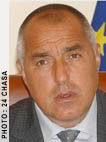
A conspiracy to assassinate the Prime Minister of Bulgaria has been intercepted in its planning stage by the country’s intelligence services, according to information published yesterday in the Bulgarian press. The Sofia-based 24 Chasa daily alleges that Bulgarian intelligence agents were able to intercept telephone conversations leading to a meeting of conspirators, which took place four months ago. The meeting, held at the luxury King George Palace Hotel in downtown Athens, Greece, was reportedly attended by several Bulgarian “participants [who] came onboard yachts, accompanied by numerous bodyguards”. The meeting centered on plans to fund an operation to “eliminate” Bulgarian Prime Minister, Boyko Borisov, of Bulgaria’s conservative GERB party, who has led the country since the summer of 2009. According to 24 Chasa, participants at the meeting pledged the sum of €400,000 to fund the assassination of the Prime Minister of Bulgaria, a country that has been a member of the European Union since 2007. Read more of this post

Location of massive Israeli eavesdropping site uncovered

Nicky Hager

Nicky Hager

By JOSEPH FITSANAKIS | intelNews.org |
An author and investigative journalist from New Zealand has uncovered one of the world’s biggest government-sponsored eavesdropping sites in a desert in Israel. Writing in French monthly review Le Monde Diplomatique, Nicky Hager reveals that the site acts as a base for the Israel Defense Forces (IDF) Central Collection Unit of the Intelligence Corps, also known as Unit 8200, which is responsible for collecting and decrypting signals intelligence. In his article, written in French, Hager describes the base as one of the world’s largest, and says it is located near the Urim kibbutz, about 30 kilometers west of Beersheba, in Israel’s Negev desert region. Read more of this post

News you may have missed #392

  • Soviet spy stood ready to poison DC’s water, says Ex-KGB general. A Soviet deep-cover agent, who was in the United States from around 1963 to 1965, had orders to poison Washington DC’s water and to sabotage its power supply if war with the United States became imminent, according to Oleg Kalugin, former chief of KGB operations in North America.
  • Two interesting interviews. George Kenney, of Electric Politics, has aired two interesting interviews, one with Dr. Thomas Fingar, former US Deputy Director of National Intelligence, touching on a variety of issues, and one with Philip Alston, the United Nations Special Rapporteur on extrajudicial killings, who comments on the CIA drone attacks in Afghanistan and Pakistan.
  • Lawyers who won NSA spy case want $2.63 million. Eight lawyers, who managed to prove that Saudi charity al-Haramain was illegally wiretapped by the US National Security Agency (see here for previous intelNews coverage), are demanding millions of dollars in damages from the US government.

Bookmark and Share

News you may have missed #370

  • Ukrainians ‘not spying any more’ on Russian FSB. Ukrainian counterintelligence services have stopped monitoring Russian Federal Security Service (FSB) officials stationed in Ukraine, according to a leading Ukrainian weekly. Ukrainian-Russian relations have dramatically improved since February, when Ukraine’s pro-Moscow leader Viktor Yanukovych was elected President.
  • US House votes to allow auditing of spy agencies. Despite several veto threats from the White House, the US House of Representatives has adopted an amendment to defense authorization bill HR 5136, which would give the Government Accountability Office the power to audit intelligence agencies.
  • Leading Turkish daily wiretapped. Turkish former deputy police chief Emin Aslan, who was arrested in 2009 in a drug trafficking investigation, says he was told in 2008 that the phone lines at Turkey’s leading daily Milliyet were wiretapped. The wiretapping appears to be connected to the notorious Ergenekon affair.

Bookmark and Share